Japandi Bathroom Ideas: Create Your Serene Spa Oasis at Home
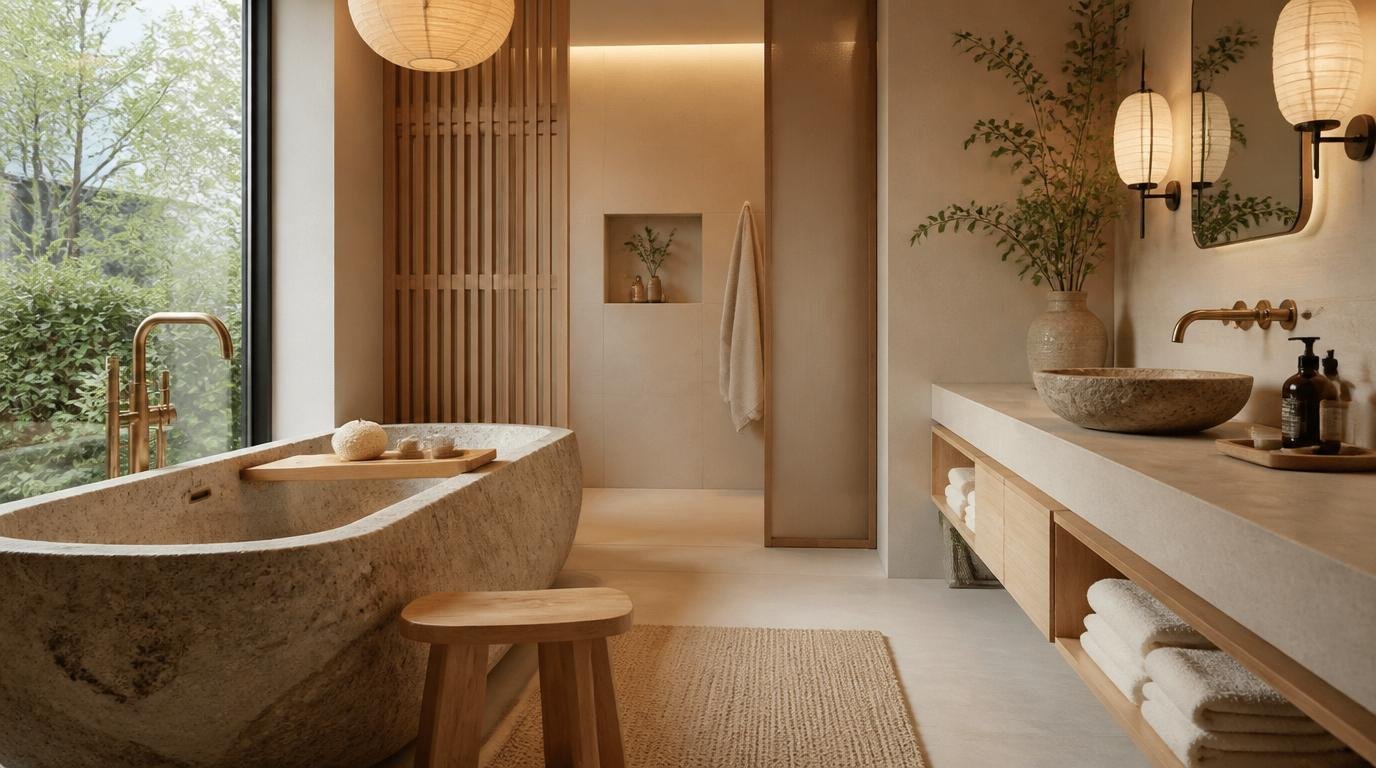
Ever feel like you need a quiet moment after a long day? I get it! That’s why I’m excited to share Japandi bathroom ideas. This style blends Japanese minimalism with cozy Scandinavian vibes. It’s about creating a space that feels like a warm hug. Let’s turn your bathroom into a relaxing sanctuary!
Key Takeaways
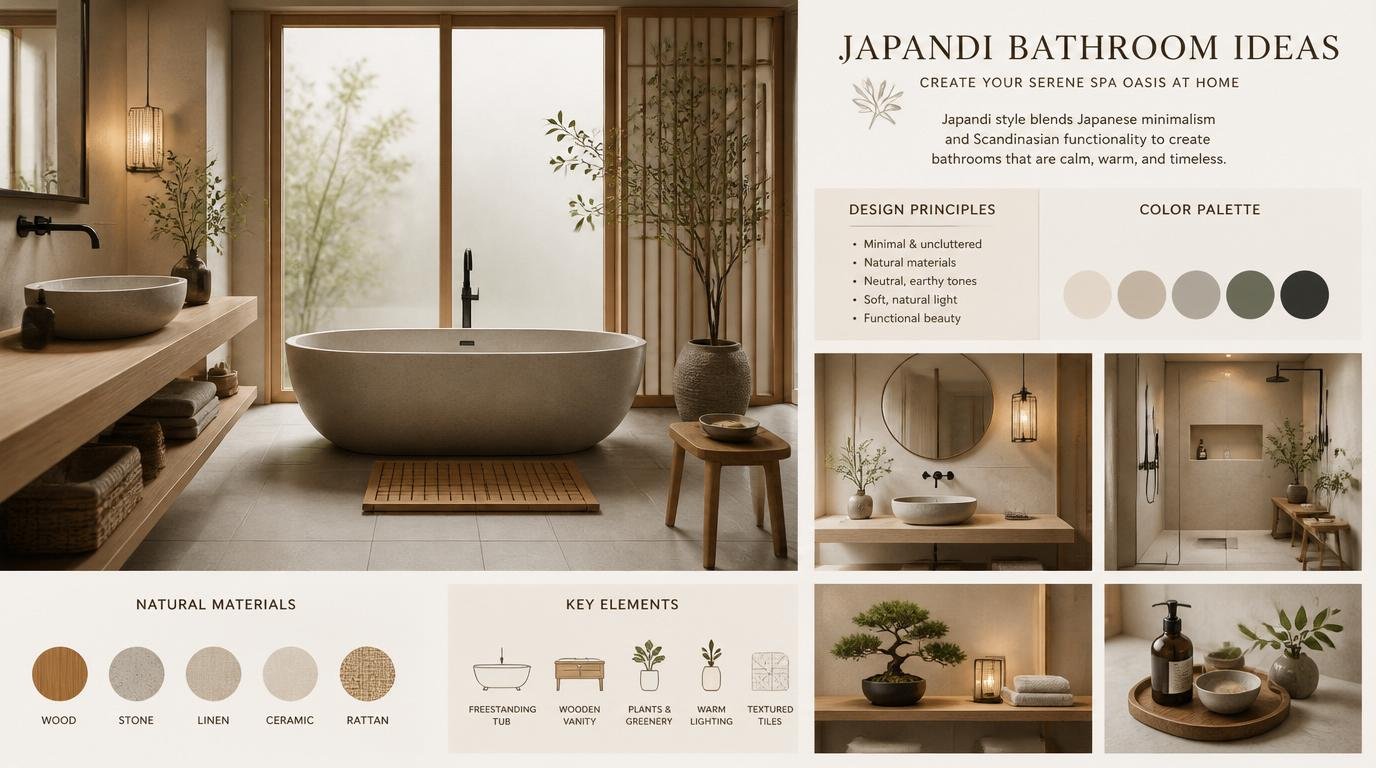
- Embrace Natural Materials: Think warm woods, natural stone, and bamboo to ground your space.
- Stick to Earthy Tones: Use soft beiges, warm whites, and muted grays for a calming vibe.
- Keep It Minimalist: Choose clean lines and simple fixtures to reduce visual clutter.
- Add a Touch of Wabi-Sabi: Celebrate the beauty of imperfection with handmade ceramics and organic shapes.
- Bring Nature Indoors: Add some greenery to create a fresh, spa-like atmosphere.
1. Embrace Natural Materials
When it comes to a Japandi bathroom, natural materials are your best friends! They bring so much warmth and texture to the space. Think about incorporating elements like light oak, walnut, and natural stone. These materials really help to ground the room and create that essential connection to nature.
Wood and Stone Elements
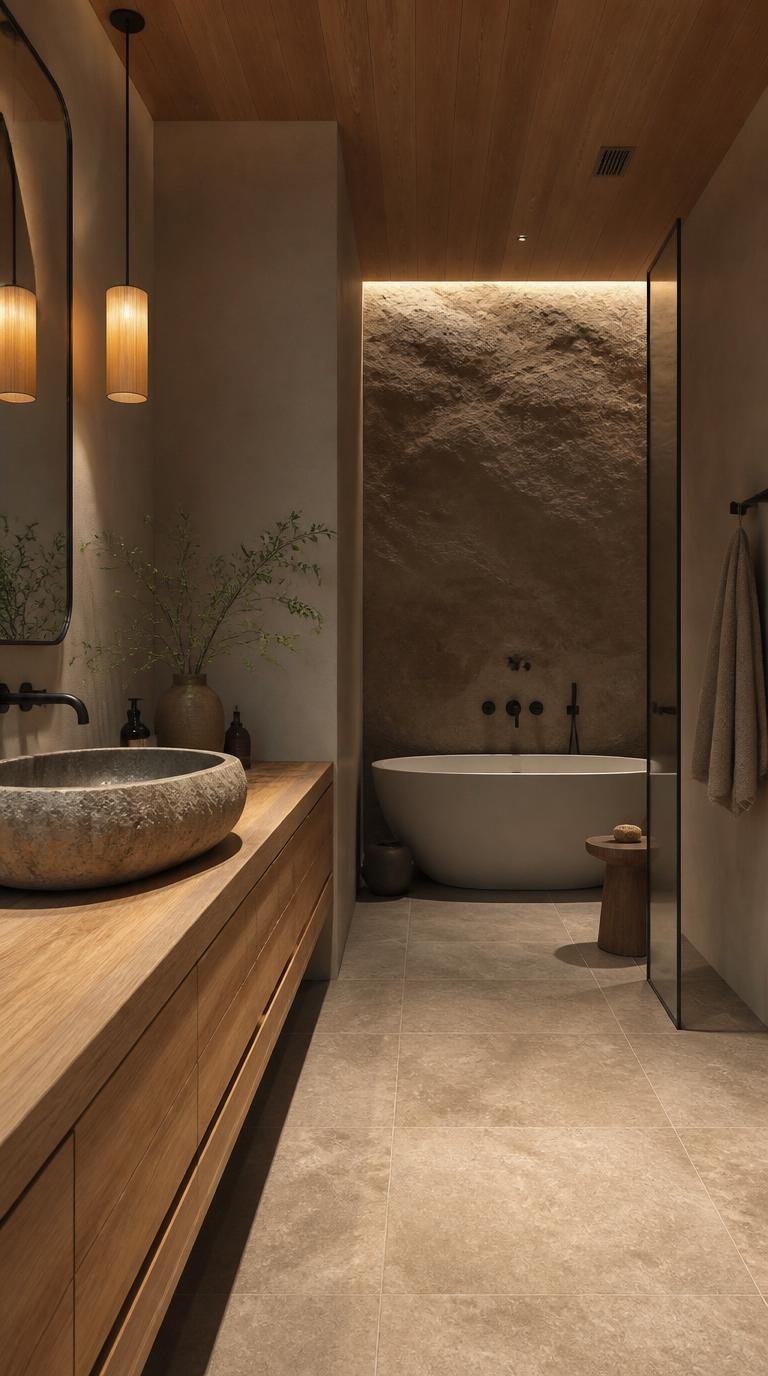
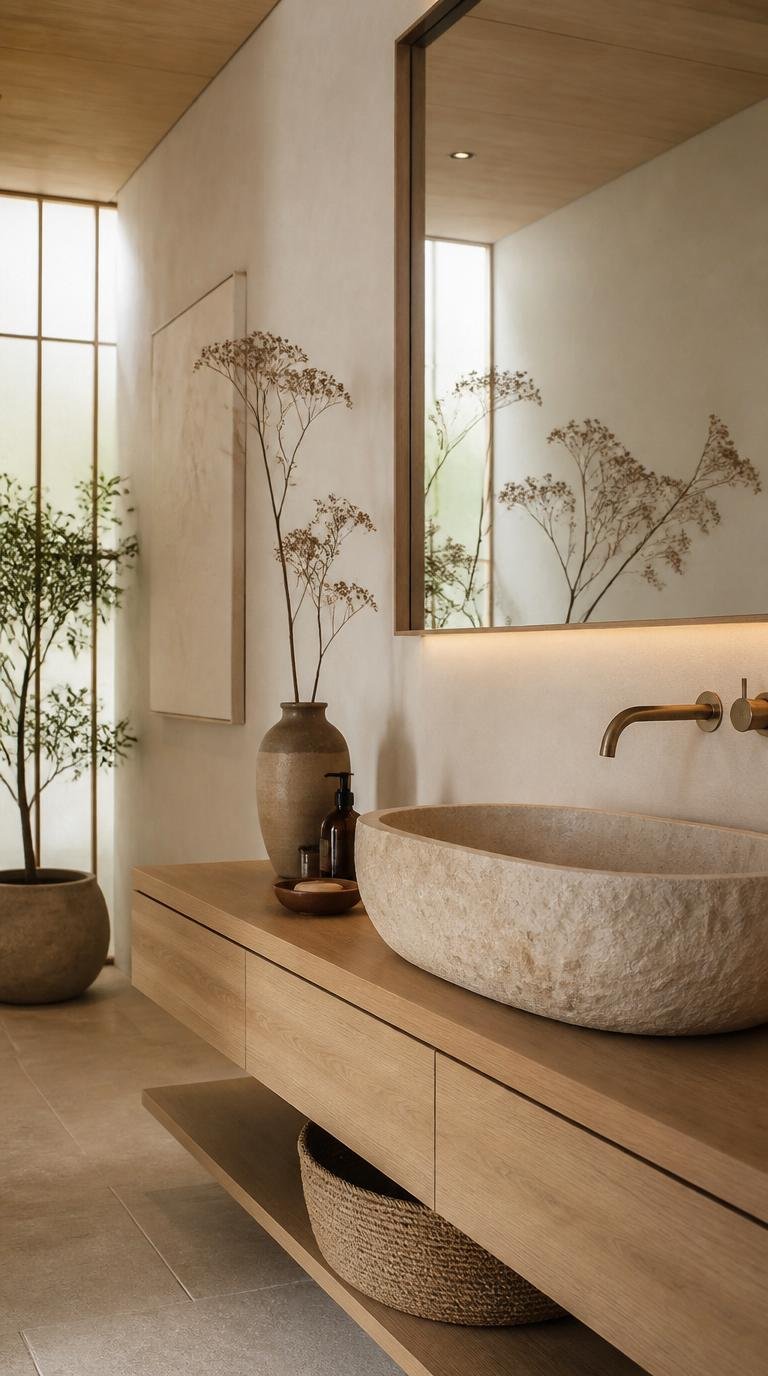
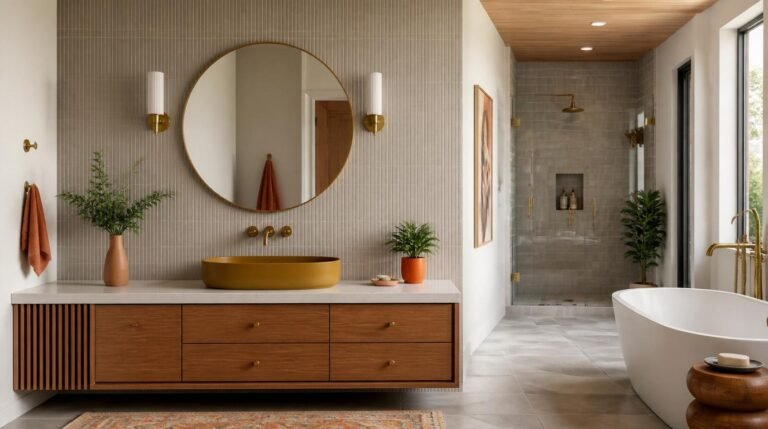
Wood and stone together are classic Japandi. A wooden vanity with a stone sink looks incredible. It creates a lovely, modern, yet organic contrast.
Bamboo Accessories
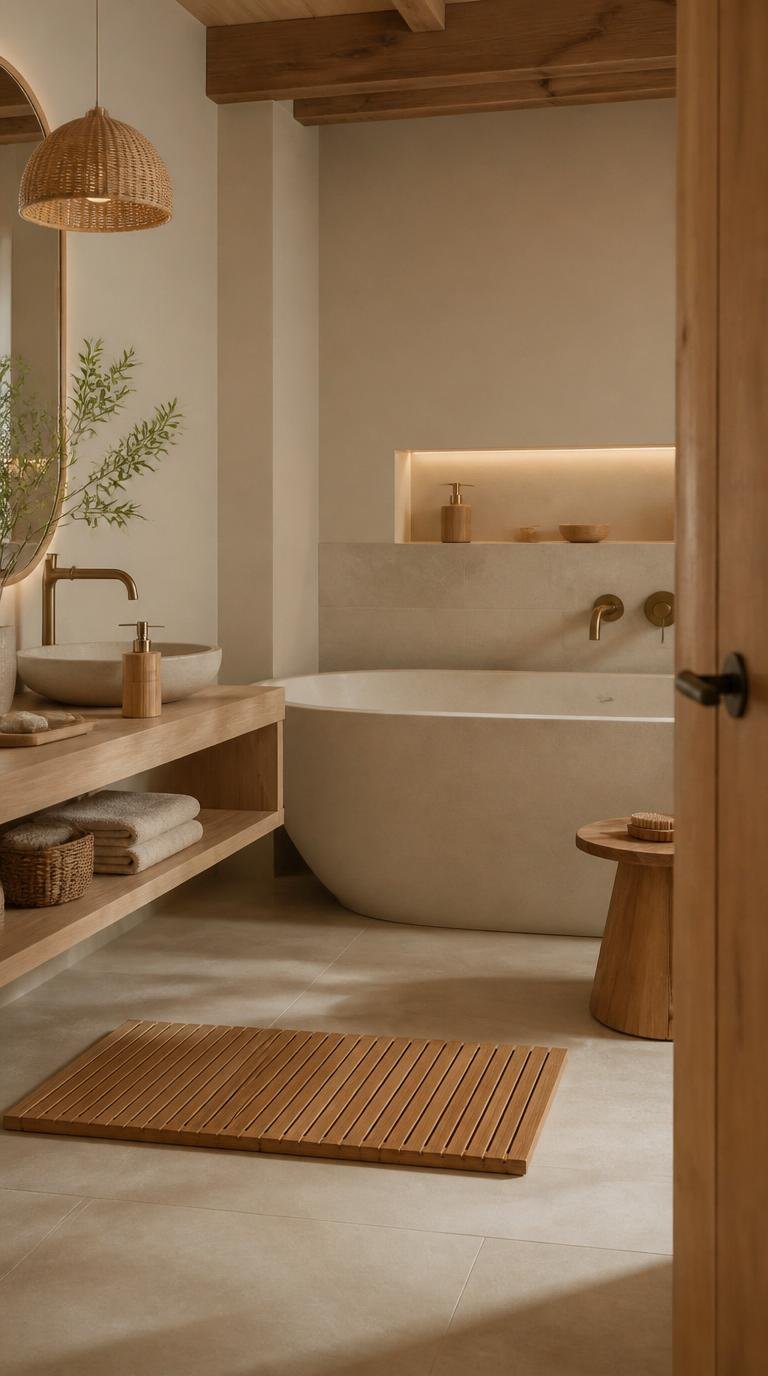
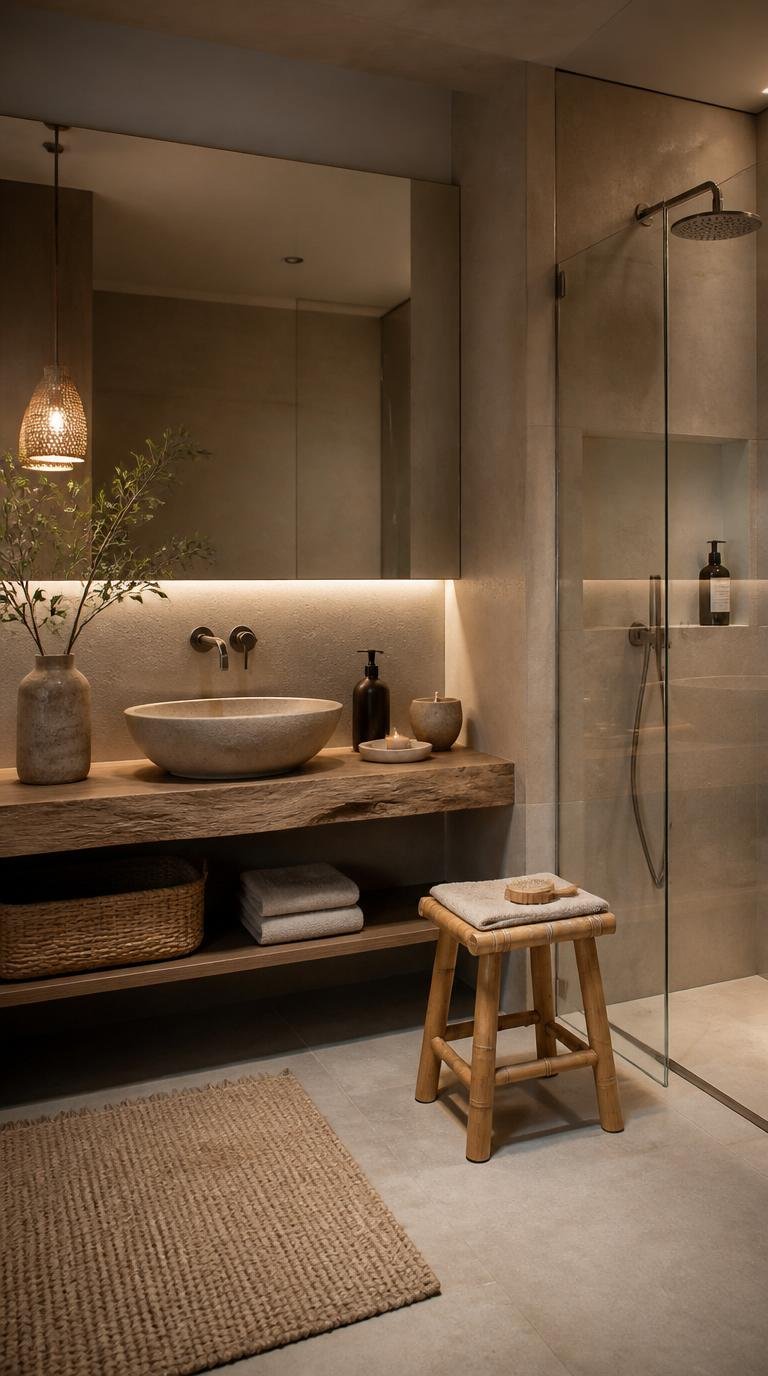
Don’t forget bamboo! It’s sustainable and adds an earthy touch. Bamboo bath mats, soap dispensers, or a simple stool enhance that spa-like feel.
2. Choose a Calming Color Palette
The colors you choose for your Japandi bathroom can totally change the mood. You want to aim for a palette that feels soothing and peaceful. Earthy neutrals are the way to go here. They help to reduce visual noise and create a serene backdrop for your daily routines.
Warm Whites and Beiges
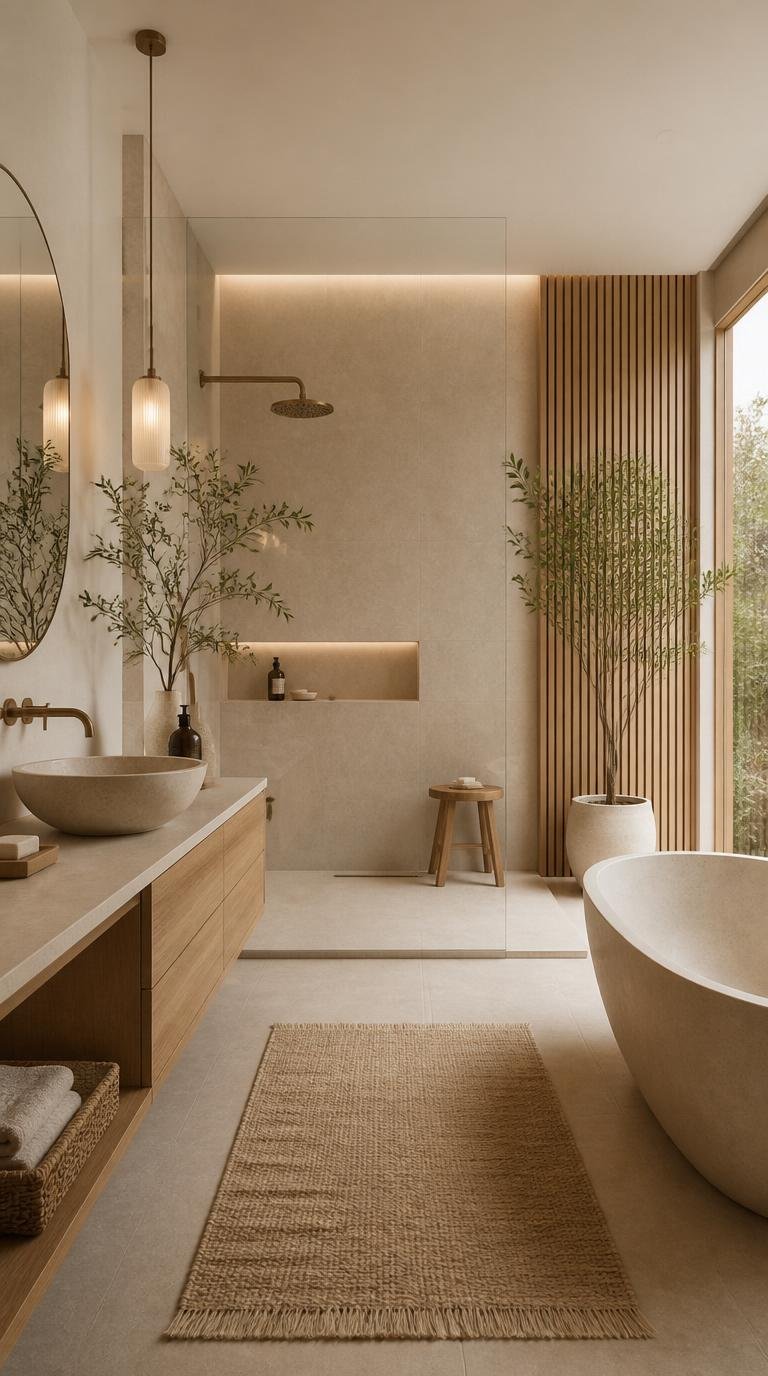
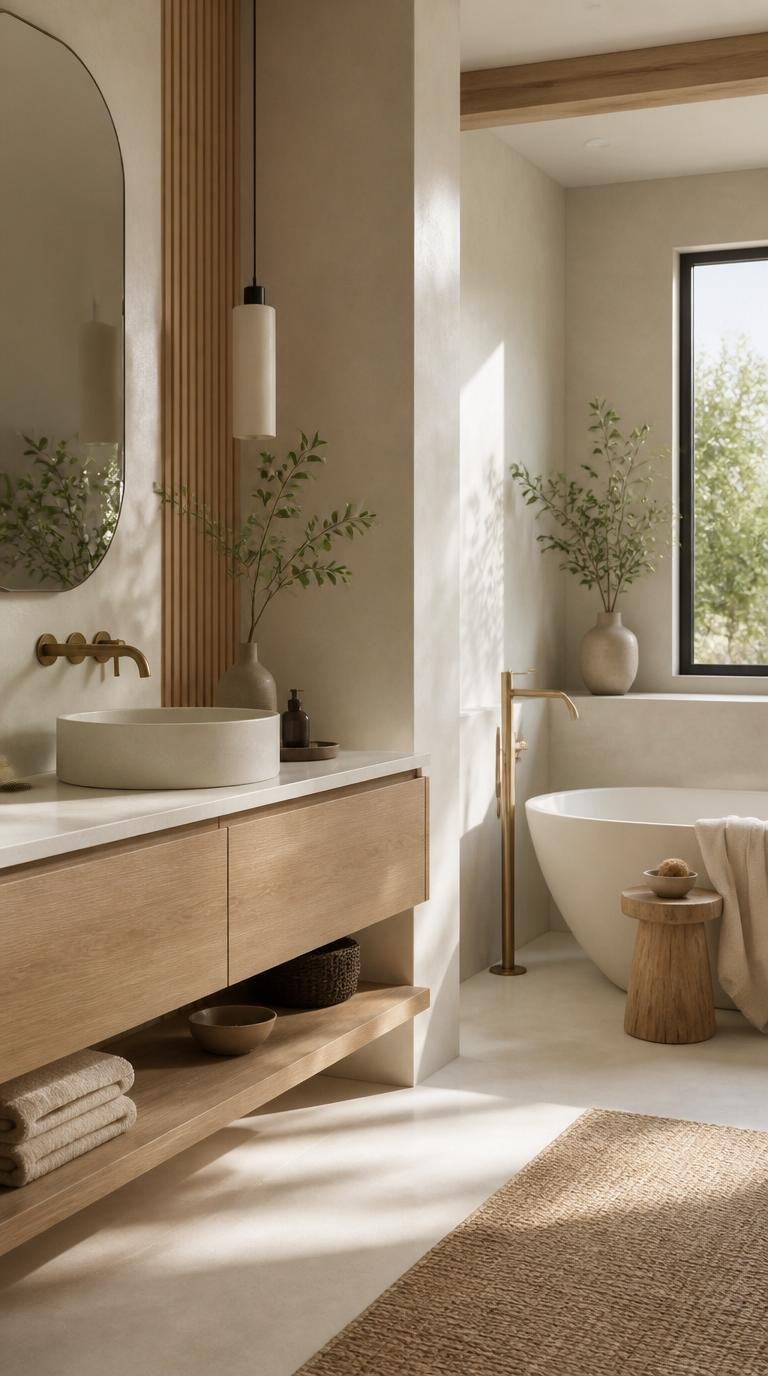
Start with warm whites and soft beiges. These colors make the space feel bright and airy. They reflect light beautifully, creating a welcoming atmosphere.
Muted Grays and Accents
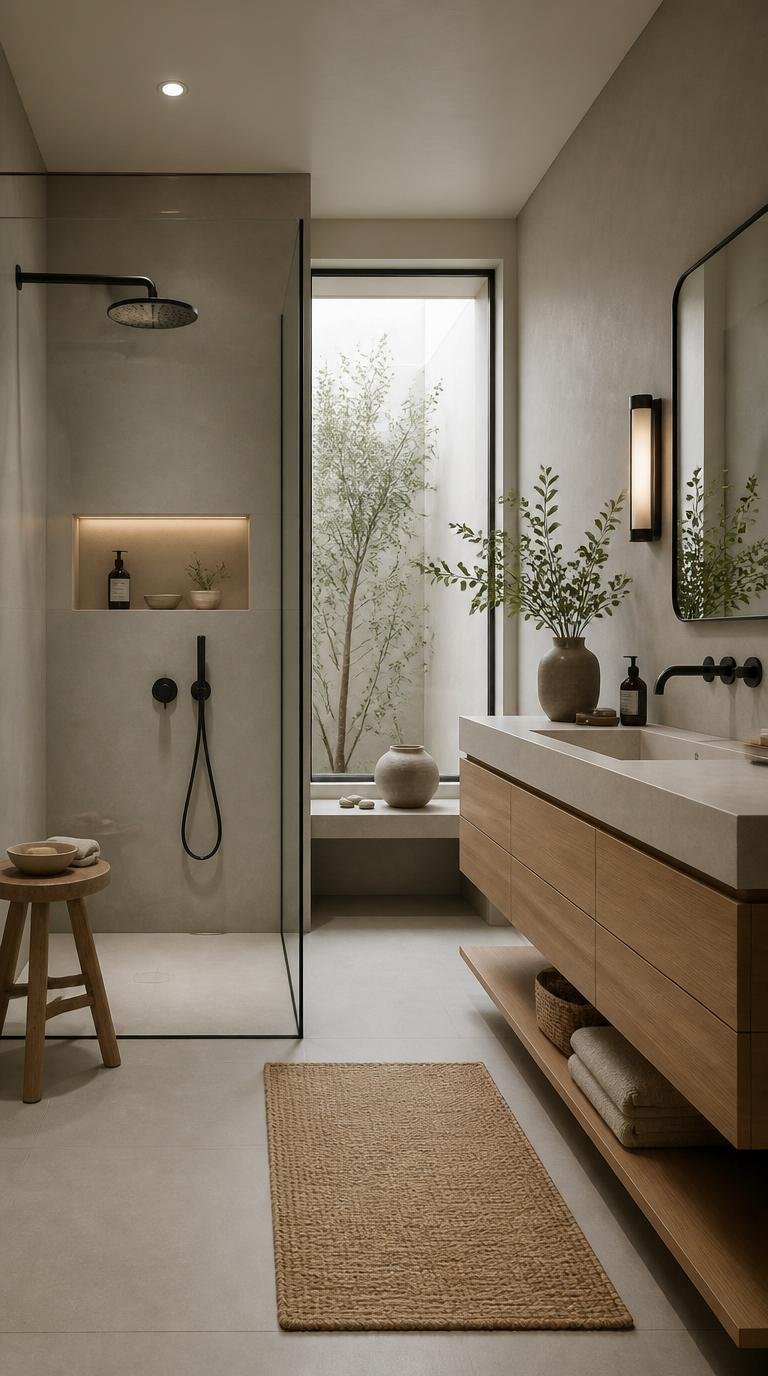
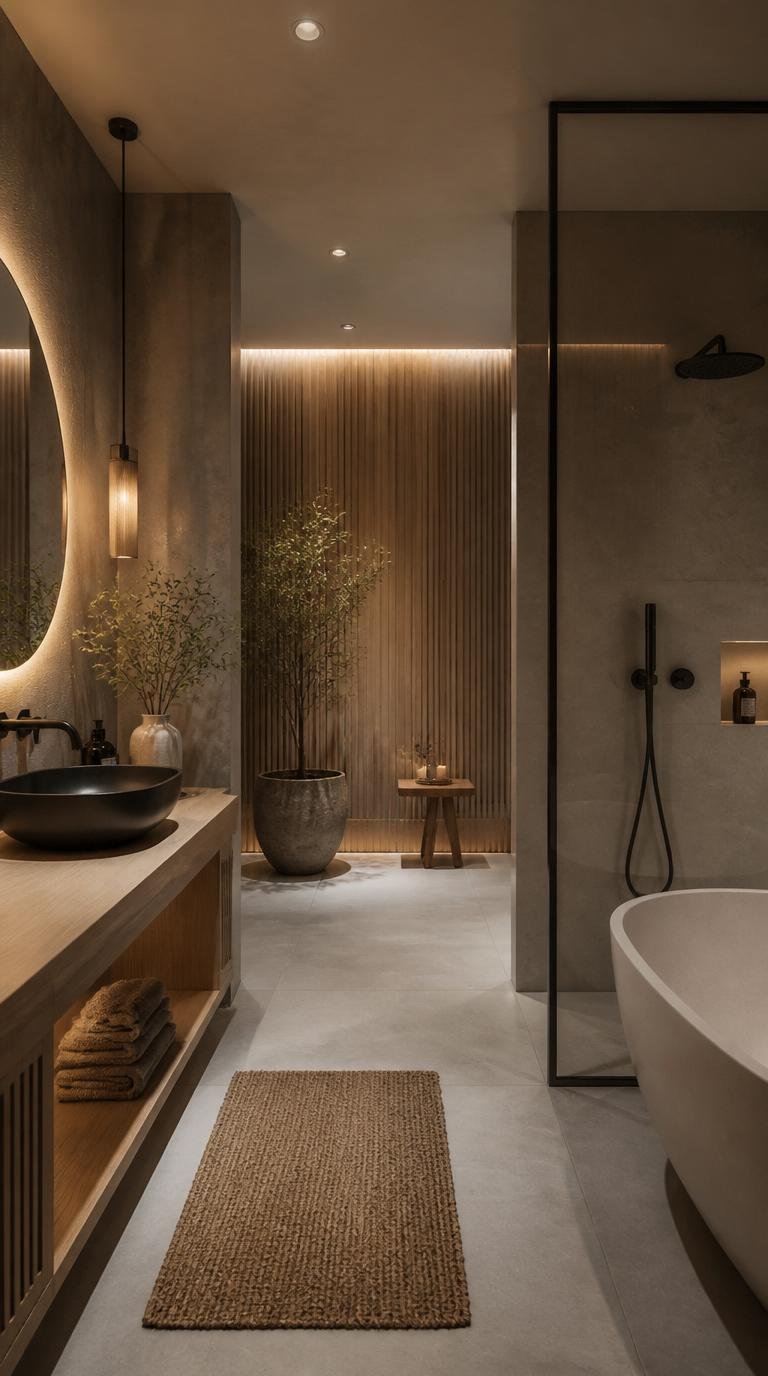
Muted grays add depth. Matte black fixtures offer a subtle accent. This adds modern sophistication without overwhelming the calm vibe.
3. Clean Lines and Minimalist Fixtures
One of the core ideas behind Japandi design is “less is more.” This means keeping things super clean and uncluttered. Every fixture and piece of furniture is chosen for its simple, elegant form and its practical use. It’s all about creating a calm, orderly space where your eyes can rest.
Wall-Mounted Vanities and Toilets
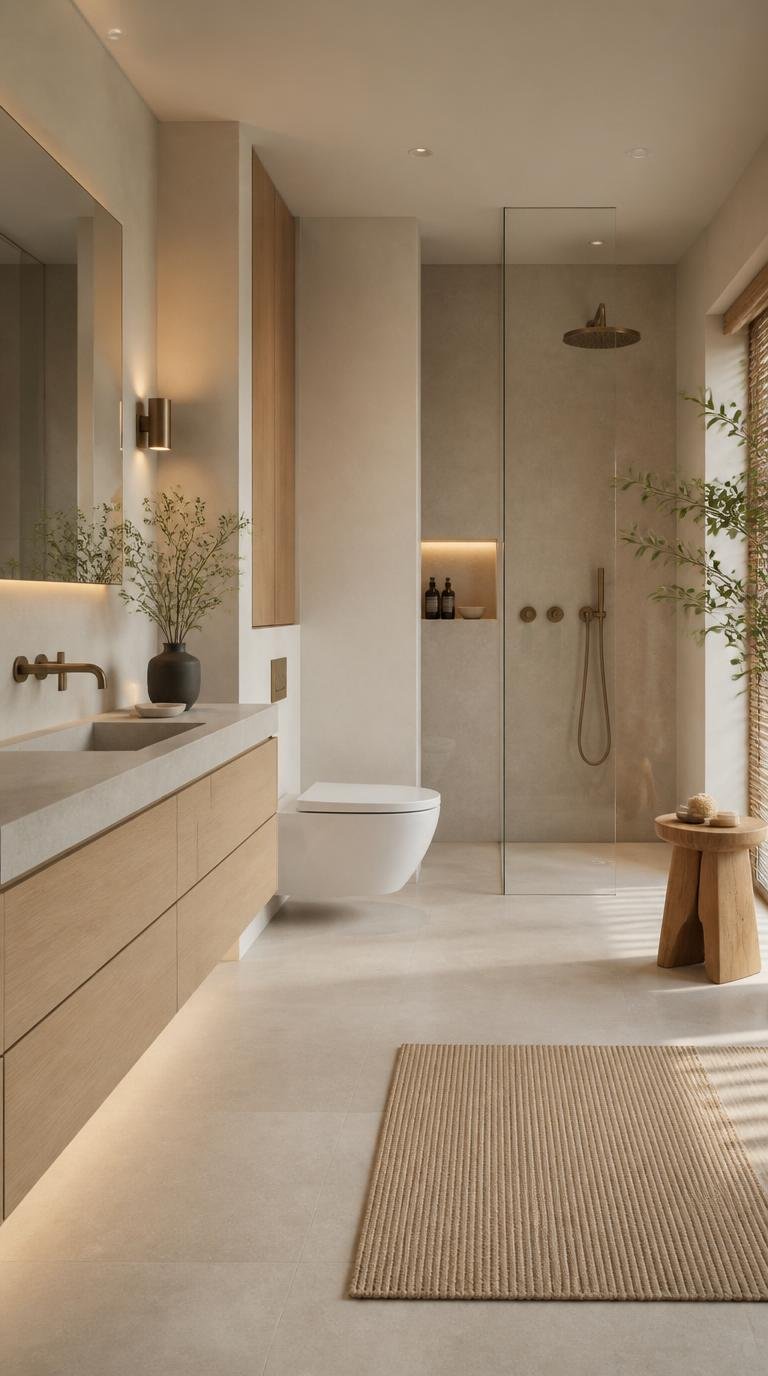
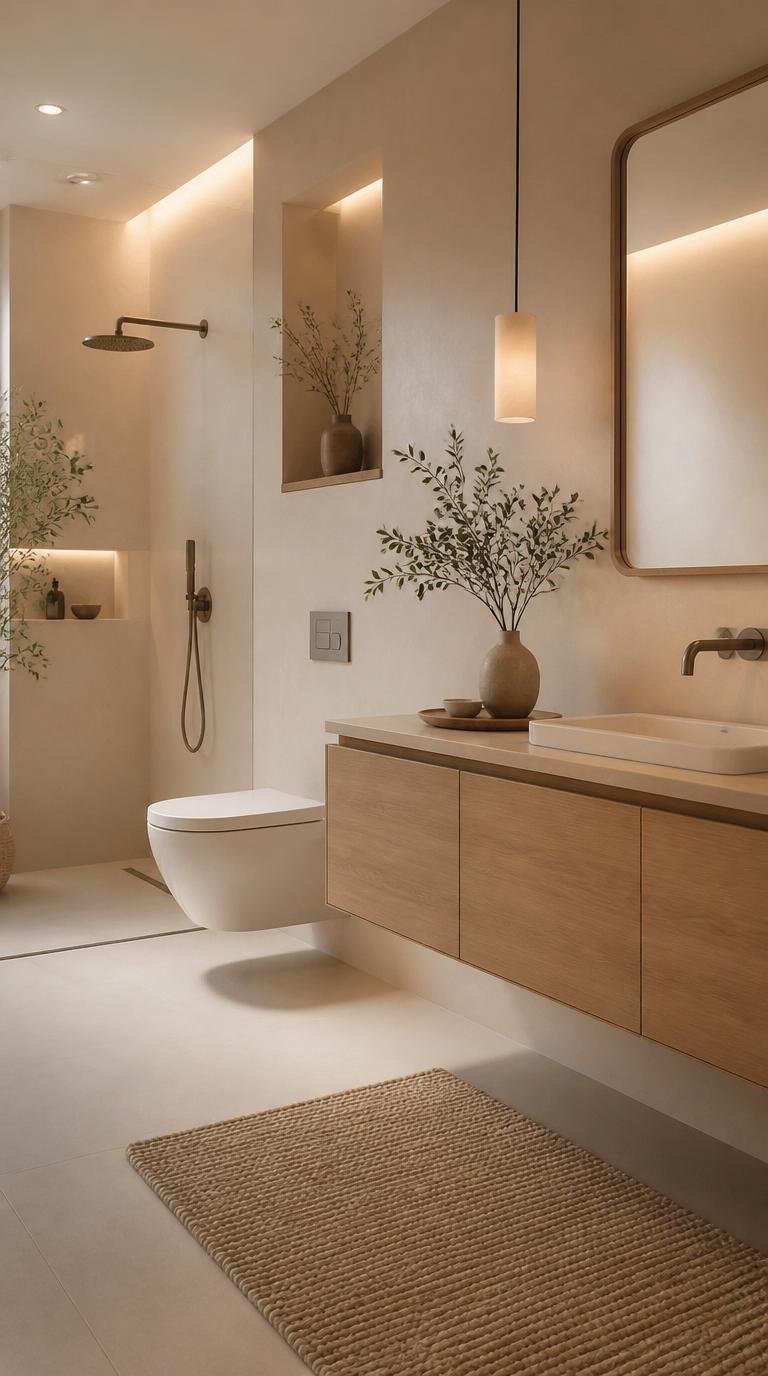
Wall-mounted vanities and toilets offer a sleek, minimalist look. They free up floor space, making your bathroom feel bigger and cleaning a breeze. Style and practicality, a win-win!
Frameless Glass Showers and Soaking Tubs
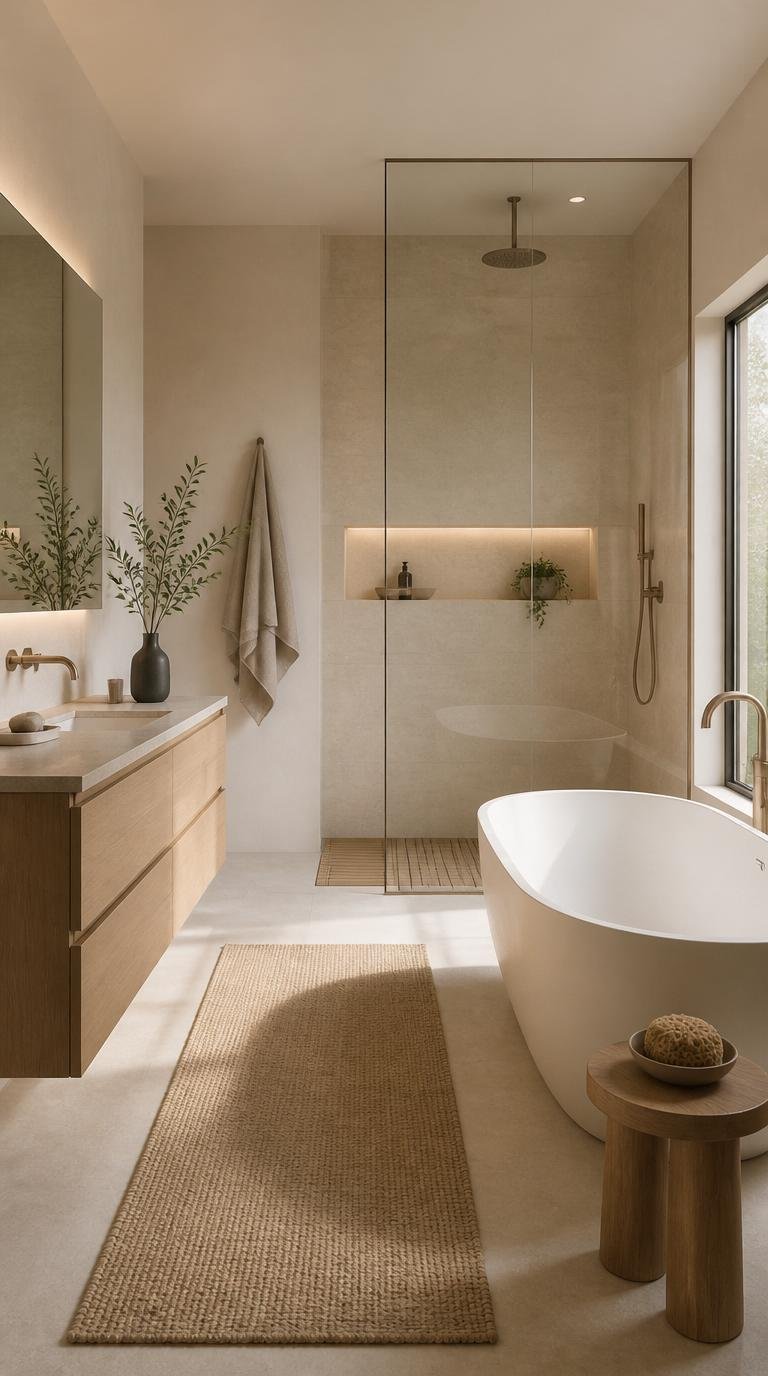
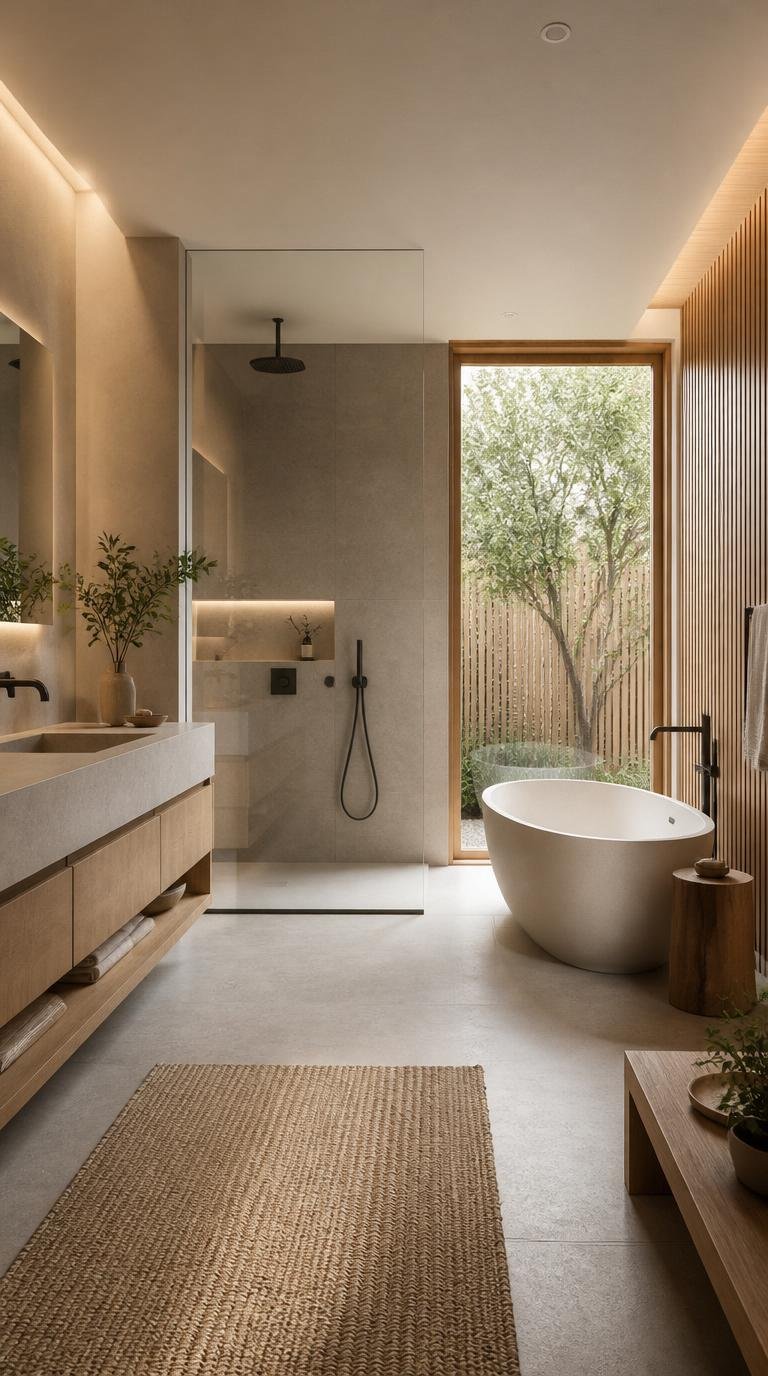
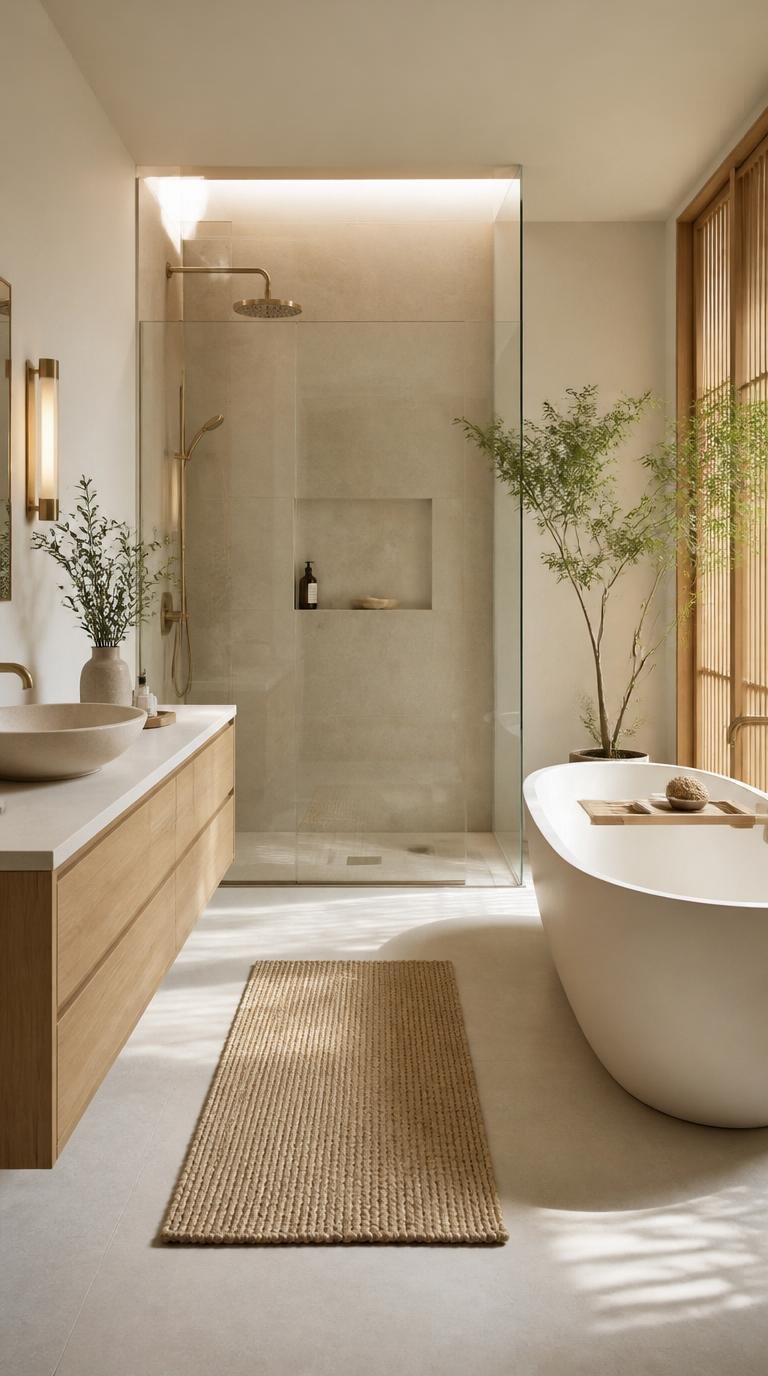
Frameless glass enclosures create a seamless, light-filled shower. For relaxation, a freestanding soaking tub is a must-have. Its elegant shape invites you to unwind.
4. Wabi-Sabi and Biophilic Design
Japandi design beautifully embraces the Japanese concept of Wabi-Sabi. This means finding beauty in imperfection and appreciating the natural cycle of growth and decay. It’s about celebrating organic elements and things that aren’t perfectly symmetrical. This philosophy brings a unique, soulful touch to your Japandi bathroom.
Embracing Imperfection
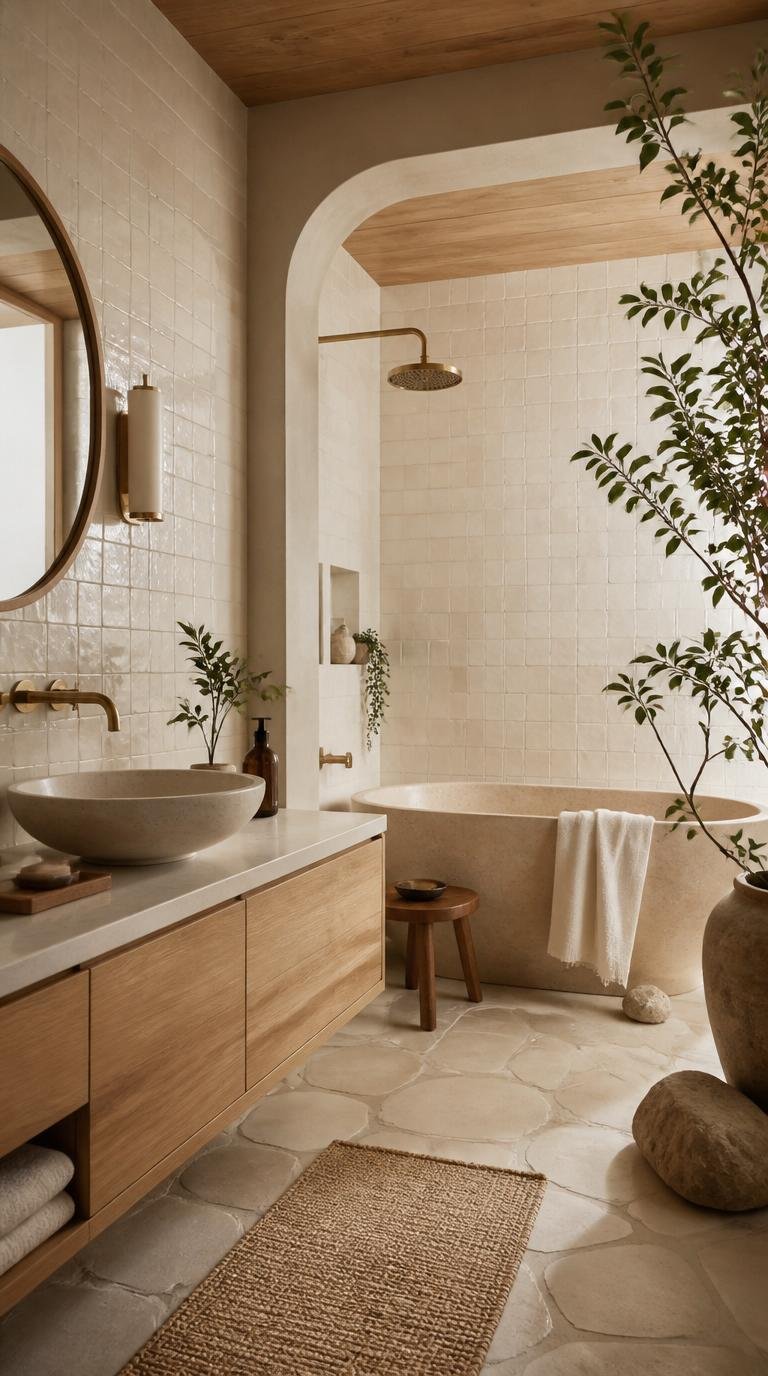
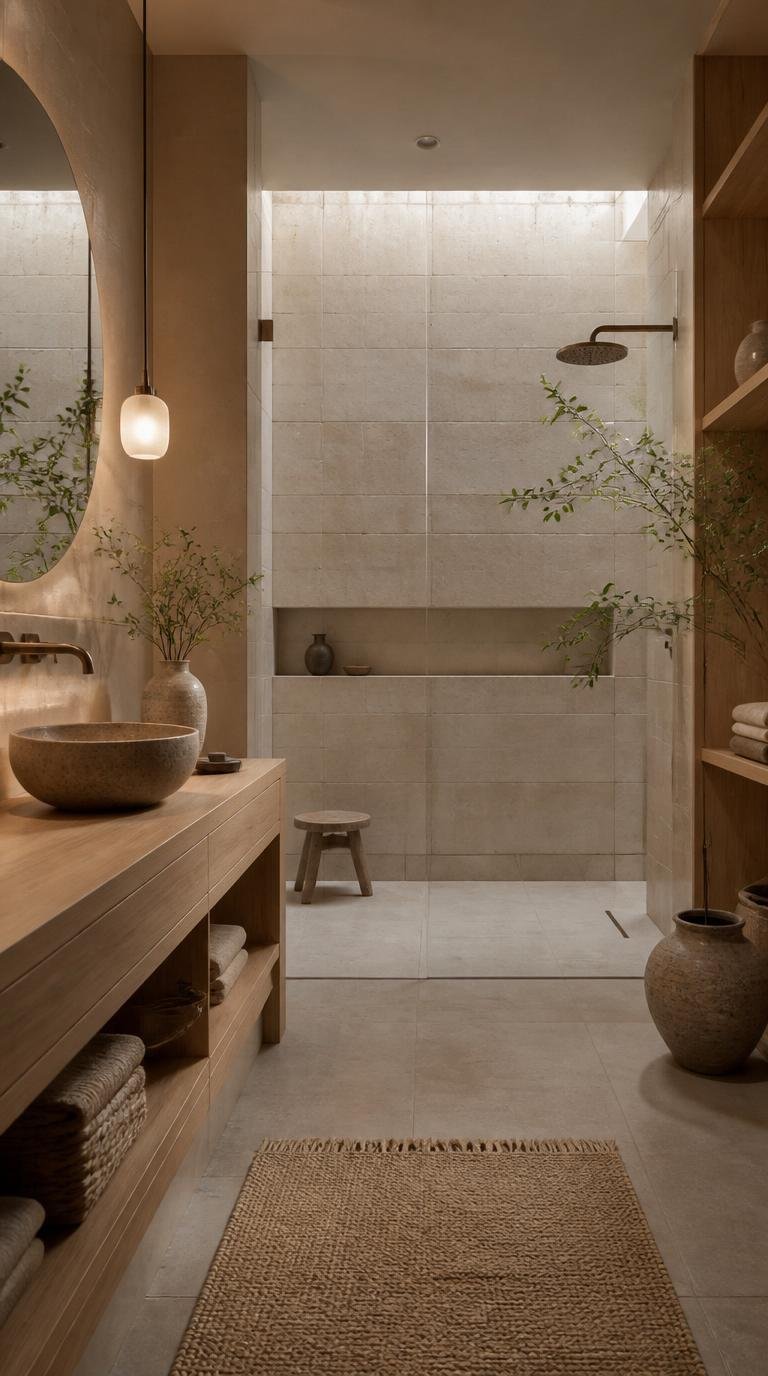
Handmade pottery or tiles with slight texture variations add character and authenticity. These imperfections tell a story, making your space unique and lived-in.
Connecting with Nature (Biophilic Design)
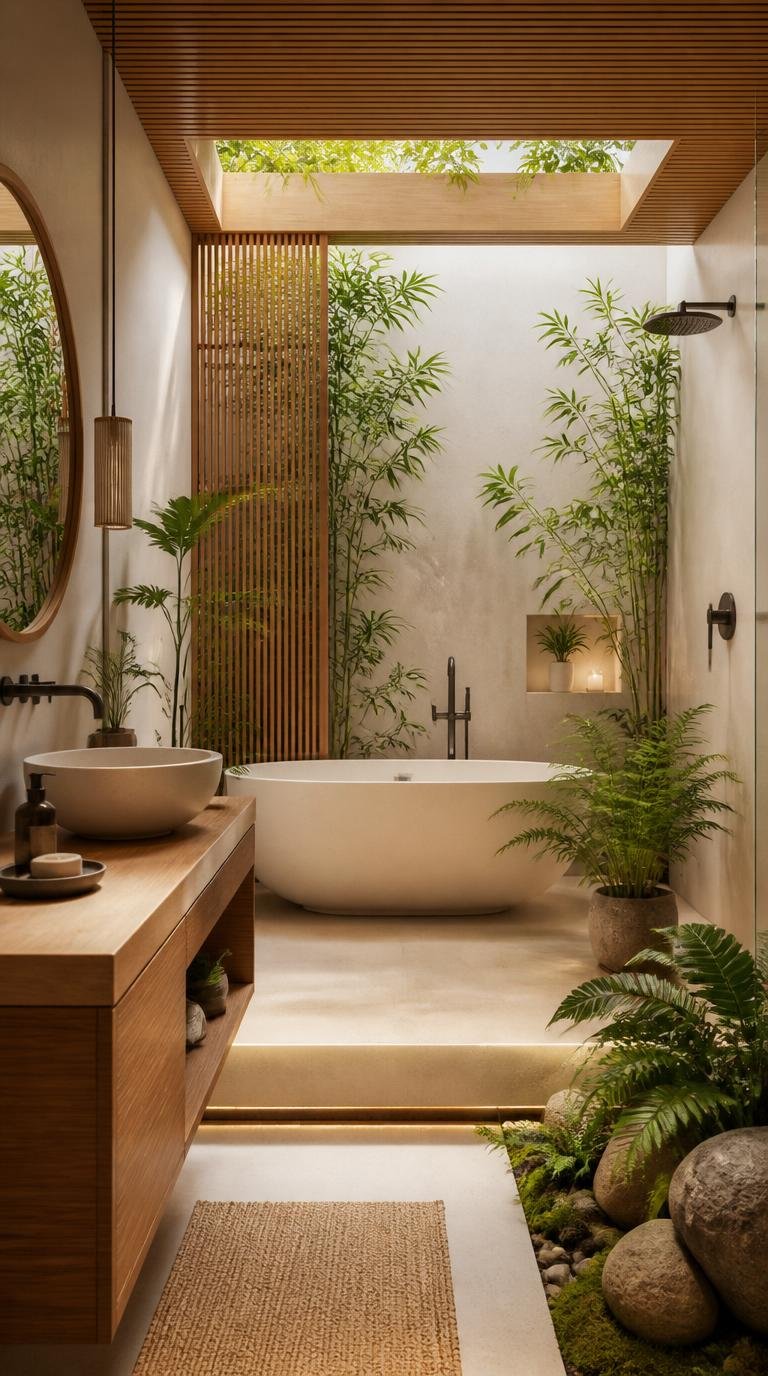
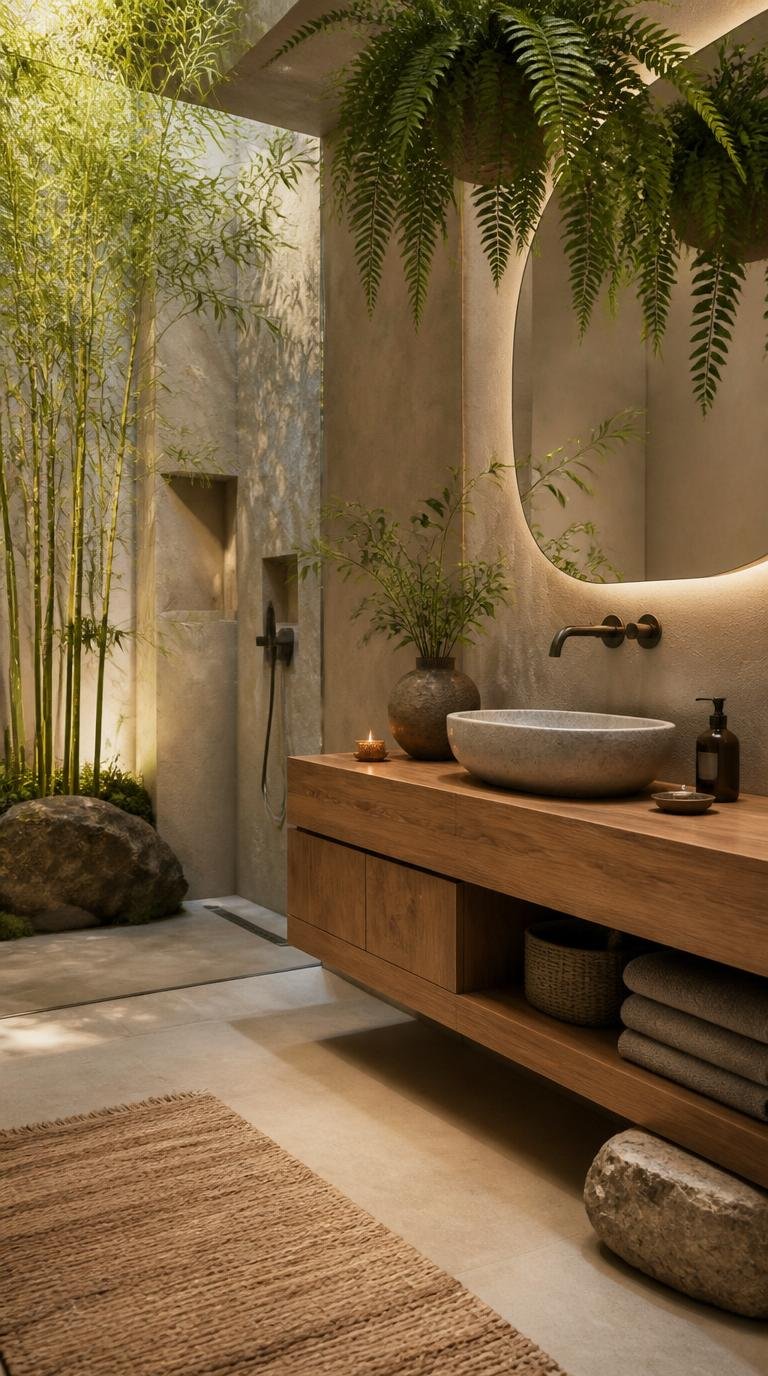
Bringing nature indoors is key to Japandi. Biophilic design, with plants like ferns or bamboo, creates a fresh, calming atmosphere. Feel more connected to nature, even inside.
5. Thoughtful Storage Solutions
In a Japandi bathroom, keeping things tidy is super important. It’s all about creating a calm, uncluttered space where everything has its place. Smart storage isn’t just practical; it’s a key part of the minimalist aesthetic. You want to hide away daily essentials so your beautiful materials and clean lines can truly shine.
Integrated Storage
Vanities with hidden drawers or built-in shelves blend seamlessly. They keep countertops clear and serene. Amazing storage without bulk or mess!
Open Shelving with Purpose
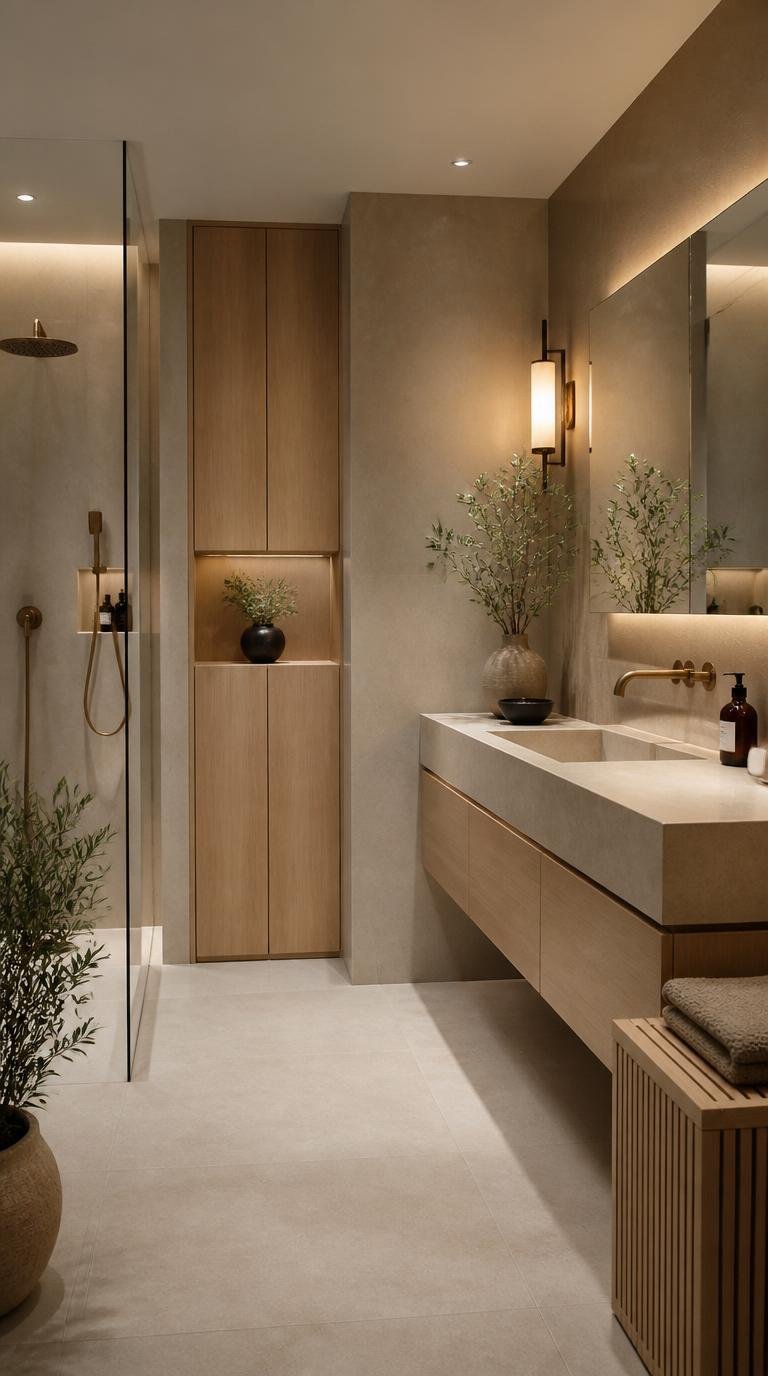
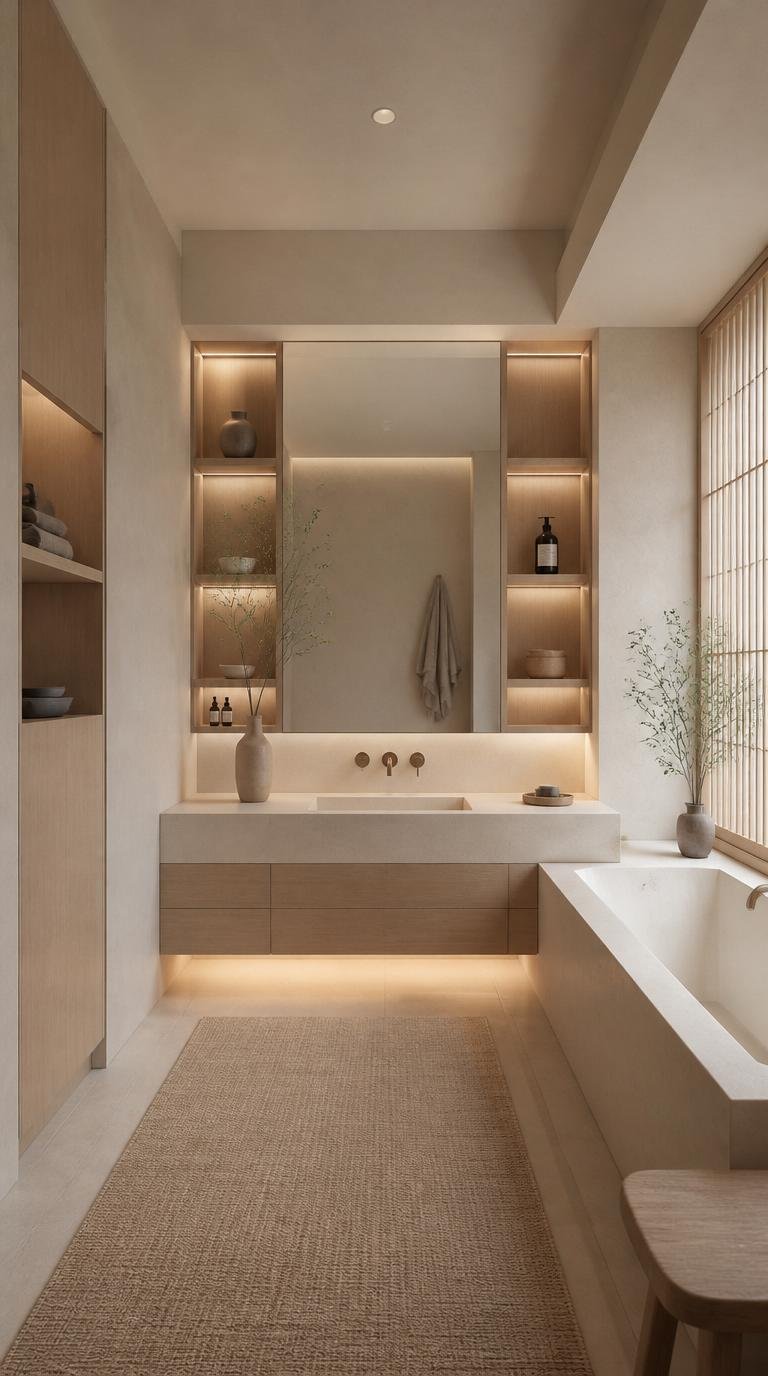
Use open shelving intentionally. Display chosen items like a ceramic vase or linen towels. This adds personality without clutter, maintaining the peaceful Japandi vibe.
6. Illuminating Your Japandi Bathroom: The Art of Light
Lighting in a Japandi bathroom is about so much more than just brightness; it’s about creating an atmosphere. Think of it as painting with light to evoke feelings of calm and serenity. The goal is a soft, diffused glow that makes the space feel warm and inviting, perfectly blending Japanese tranquility with Scandinavian coziness.
Soft, Diffused Illumination
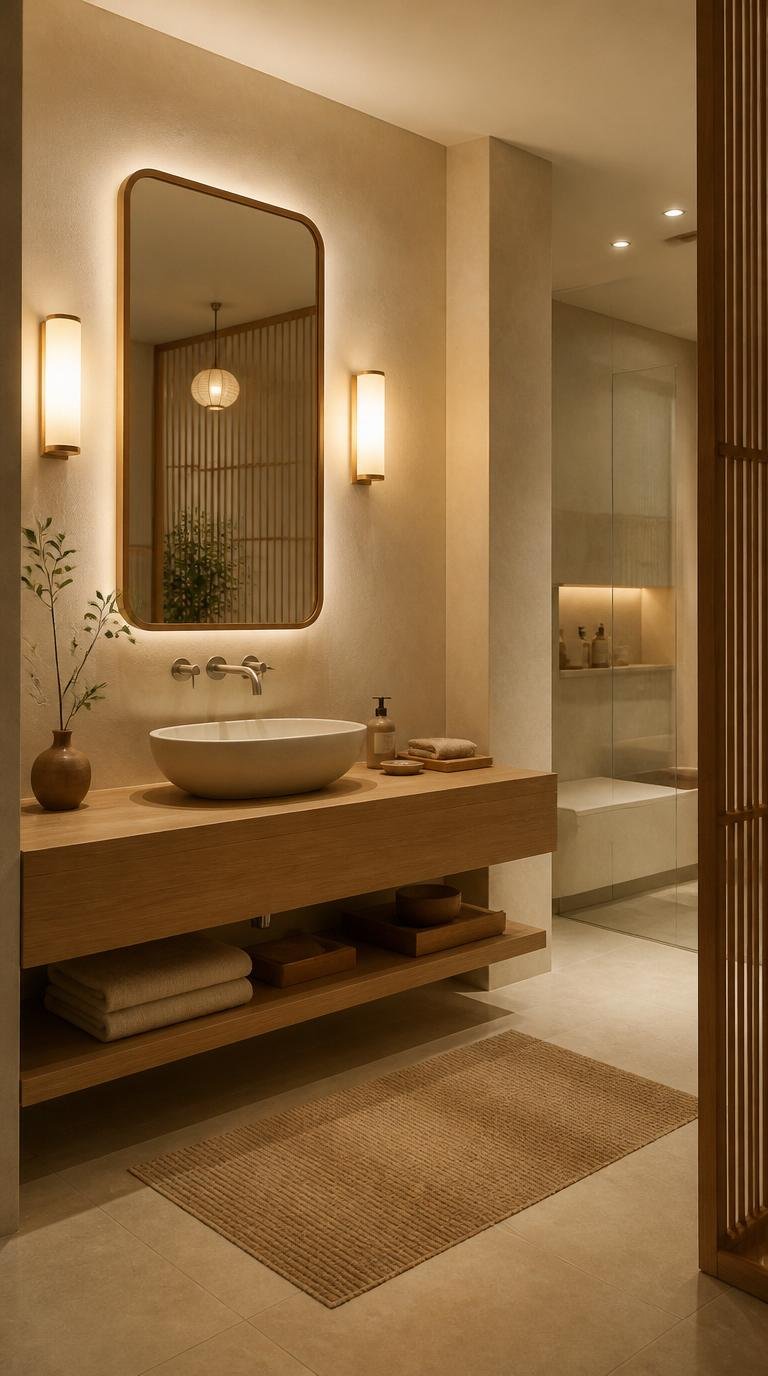
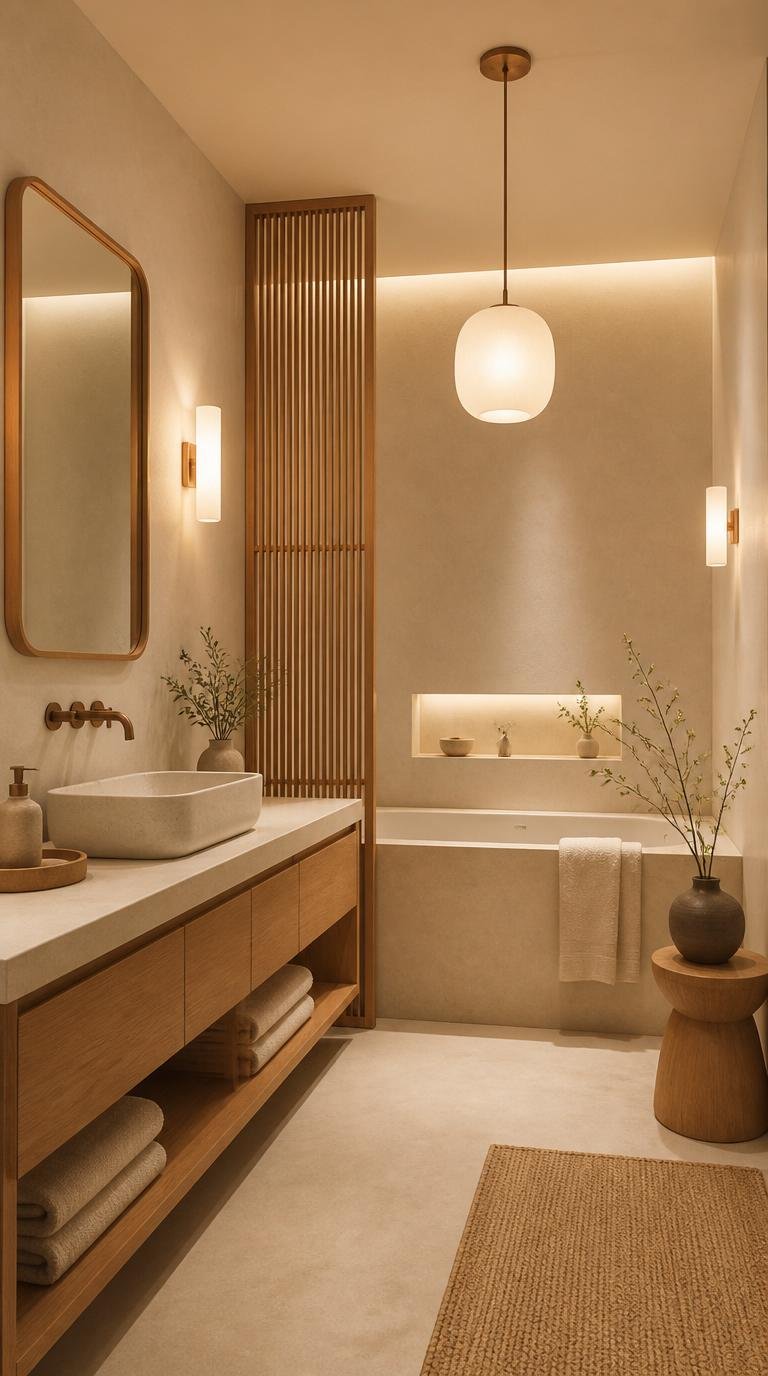
Forget harsh overhead lights! Japandi lighting favors warm, diffused illumination. This means using fixtures that spread light gently, avoiding glare and sharp shadows. It’s all about creating a soothing ambiance that helps you relax and unwind after a long day.
Natural Materials in Lighting Fixtures
Just like with furniture, natural materials are key for lighting fixtures. Look for pendants or sconces made from light oak, ash wood, or bamboo. Rice paper diffusers, inspired by traditional Japanese lanterns, are fantastic for creating that signature soft glow. Stone and ceramic bases also add an organic touch.
Warm Color Temperatures
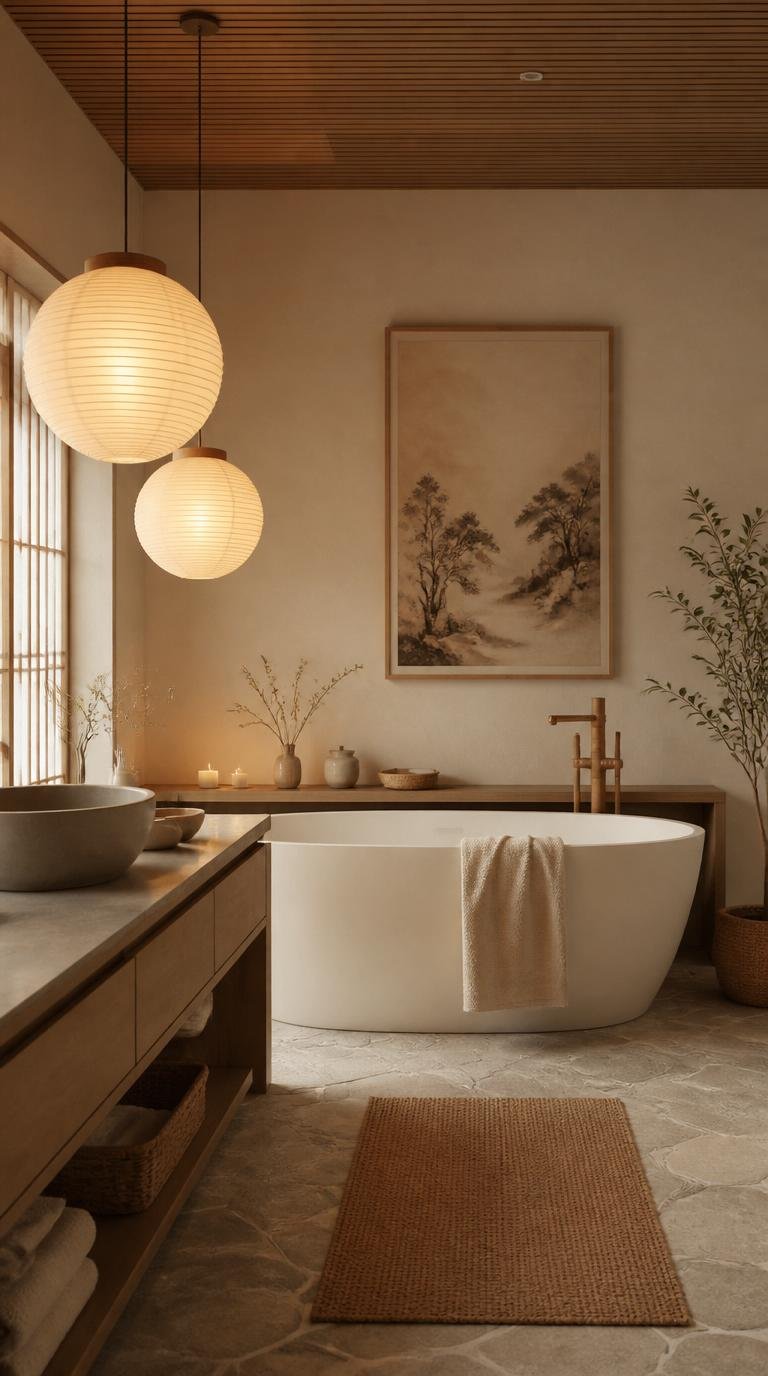
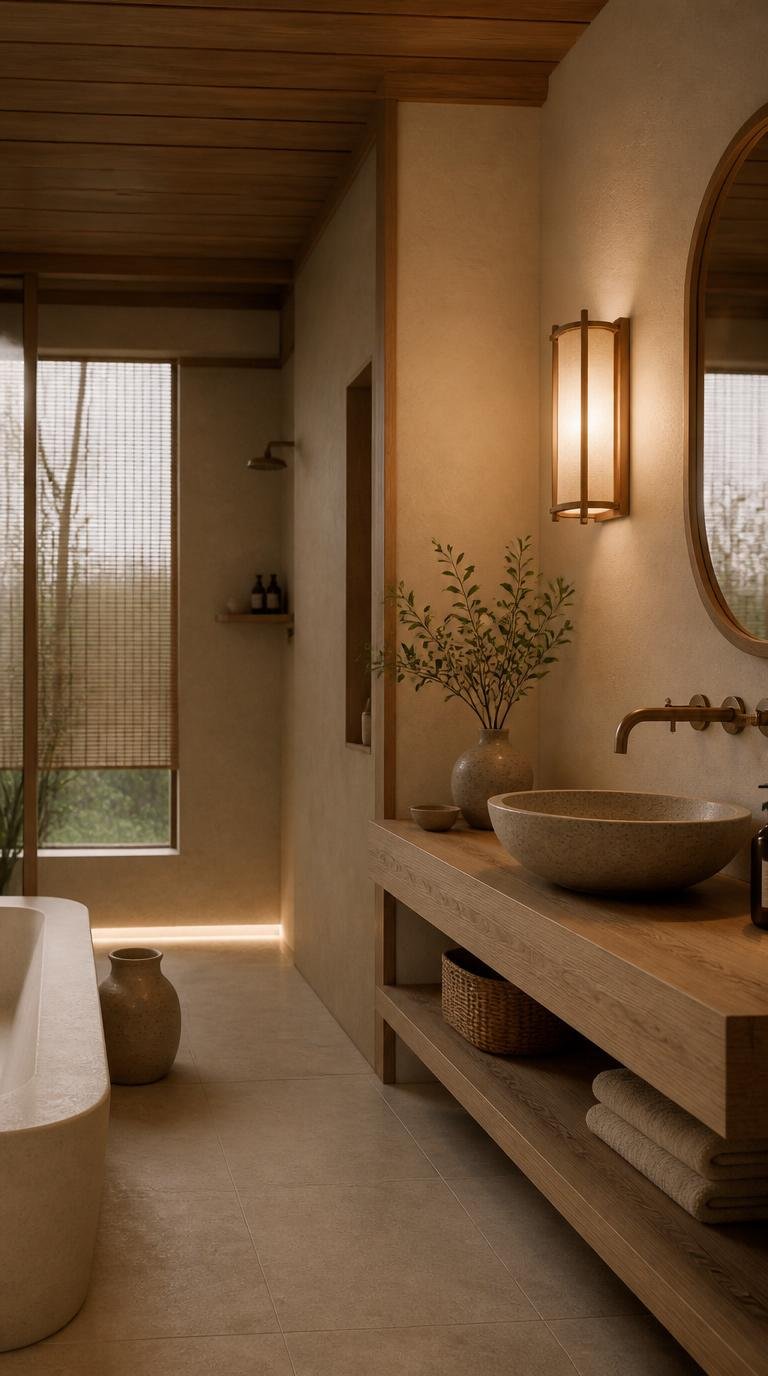
To achieve that cozy, inviting feel, opt for warm color temperatures, typically between 2700K and 3000K. This range emits a soft, yellowish light that mimics natural candlelight or a sunset, making your Japandi bathroom feel like a true sanctuary. It’s perfect for winding down.
Layered Lighting for Depth
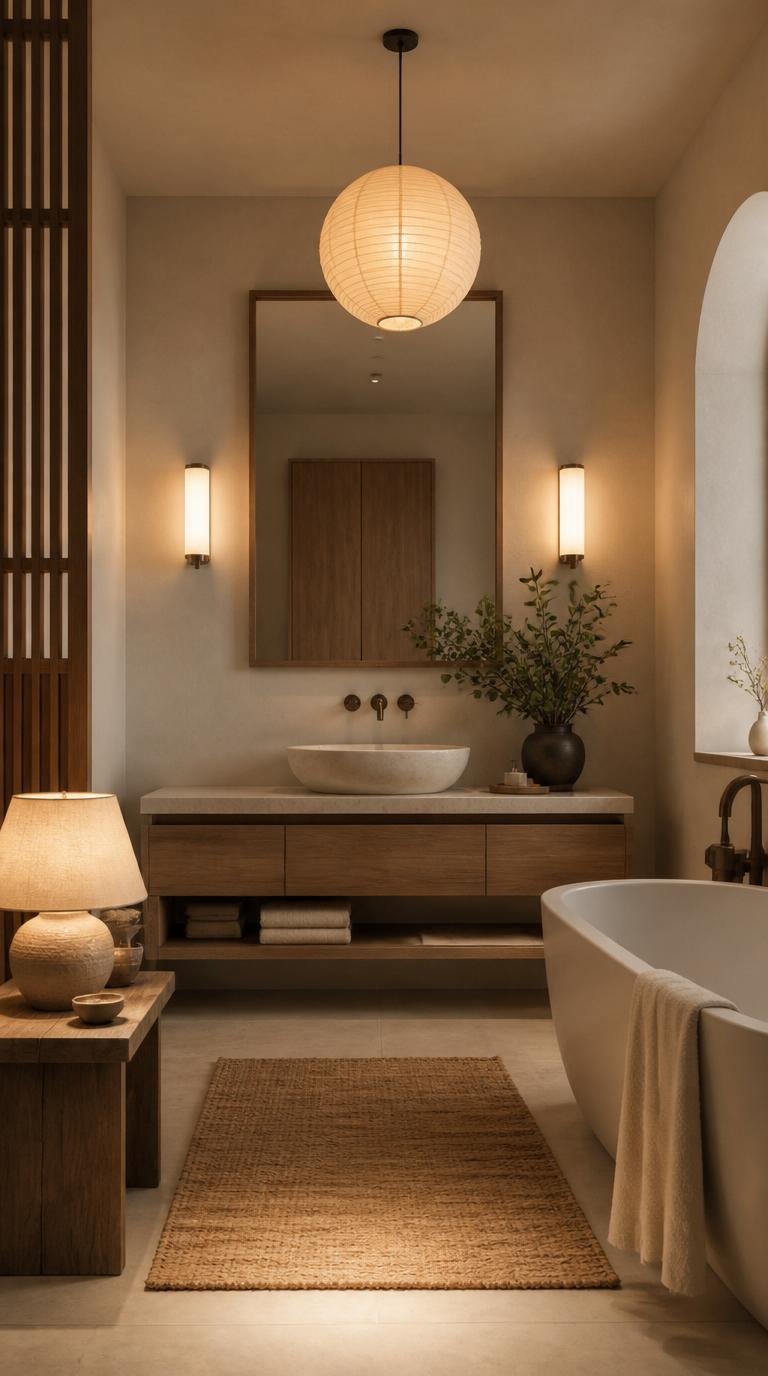
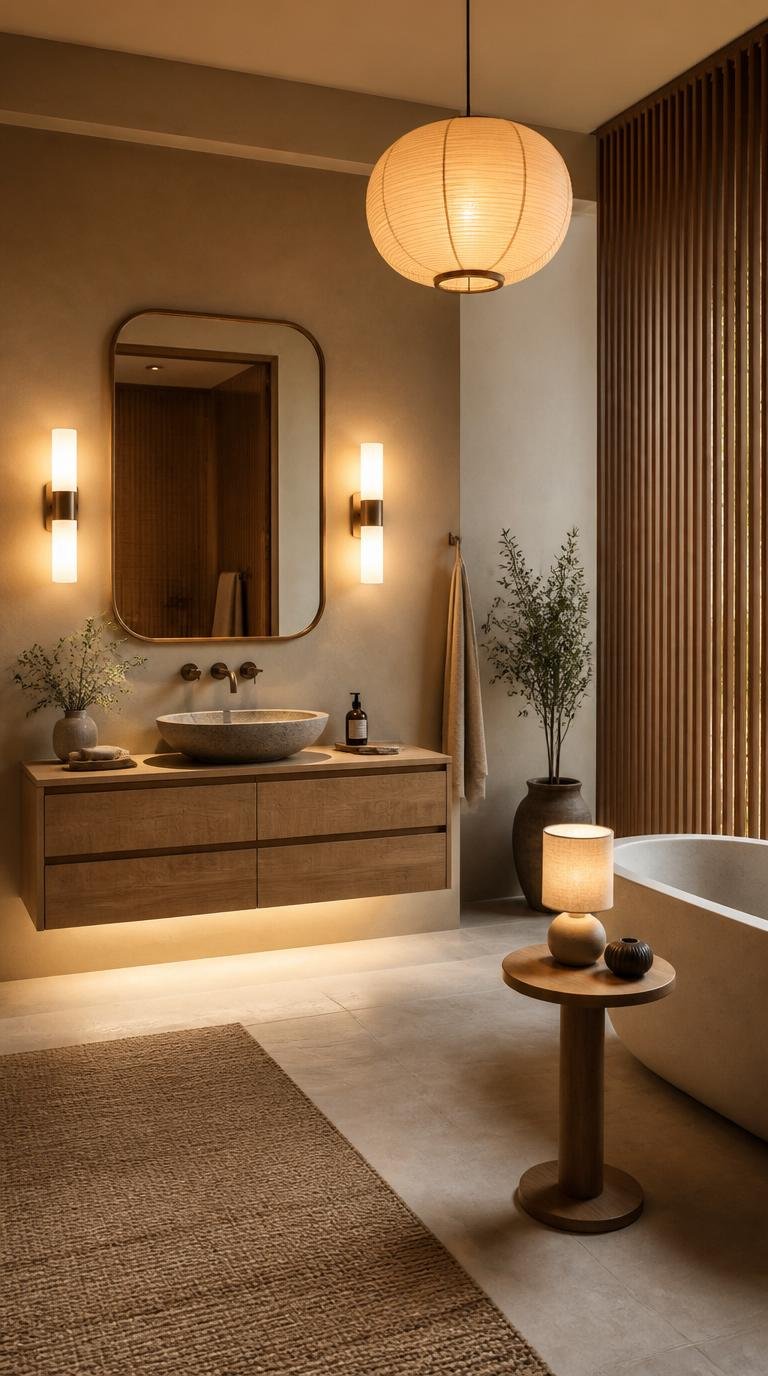
Layering different types of lighting adds depth and functionality. Combine ambient lighting (like a central pendant) with task lighting (such as sconces around a mirror) and accent lighting (perhaps a small table lamp). This allows you to adjust the mood and brightness for any occasion.
7. Cozy Comfort: Textiles and Soft Goods
Textiles play a huge role in bringing warmth and comfort to your Japandi bathroom. They soften the clean lines and natural materials, adding layers of texture and coziness. Think about materials that feel good to the touch and are also sustainable. It’s all about creating a tactile experience that enhances the serene atmosphere.
Natural Fibers for a Soft Touch
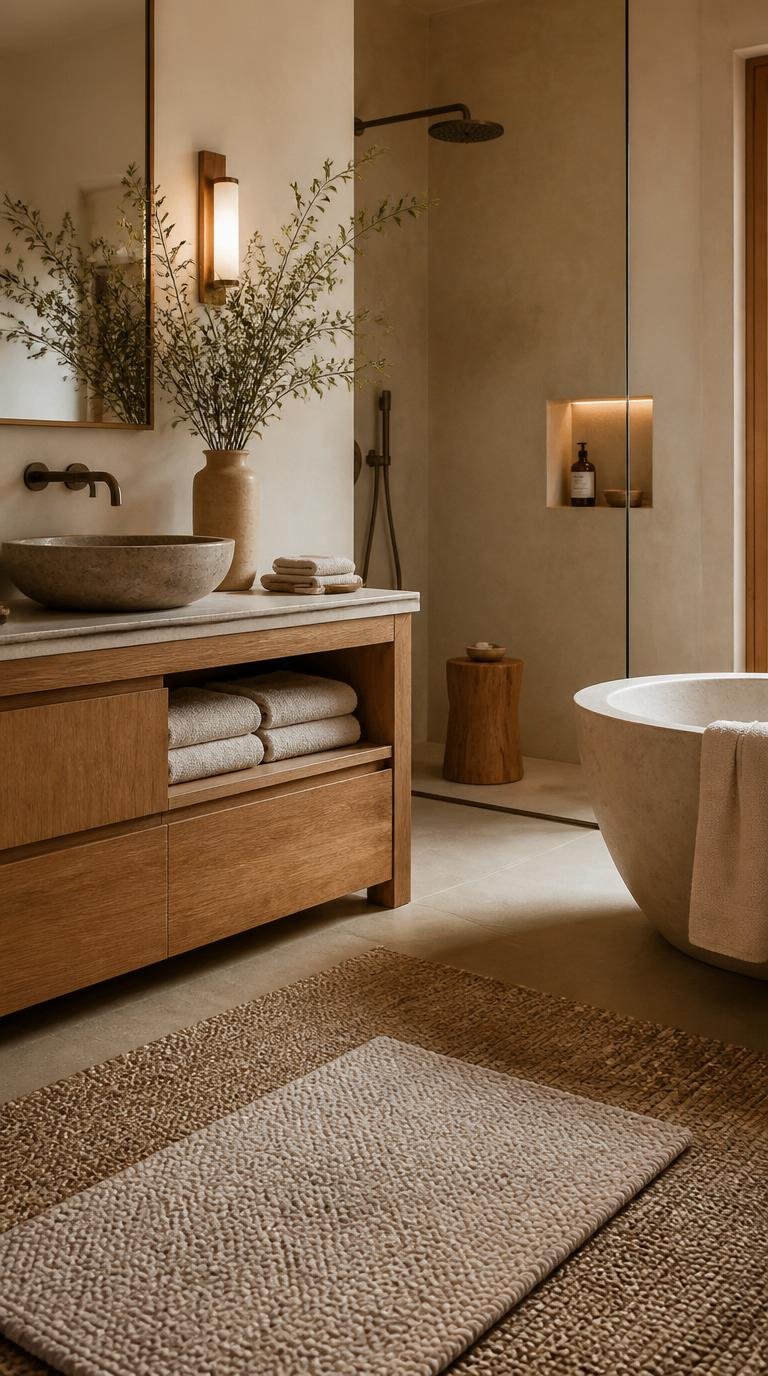
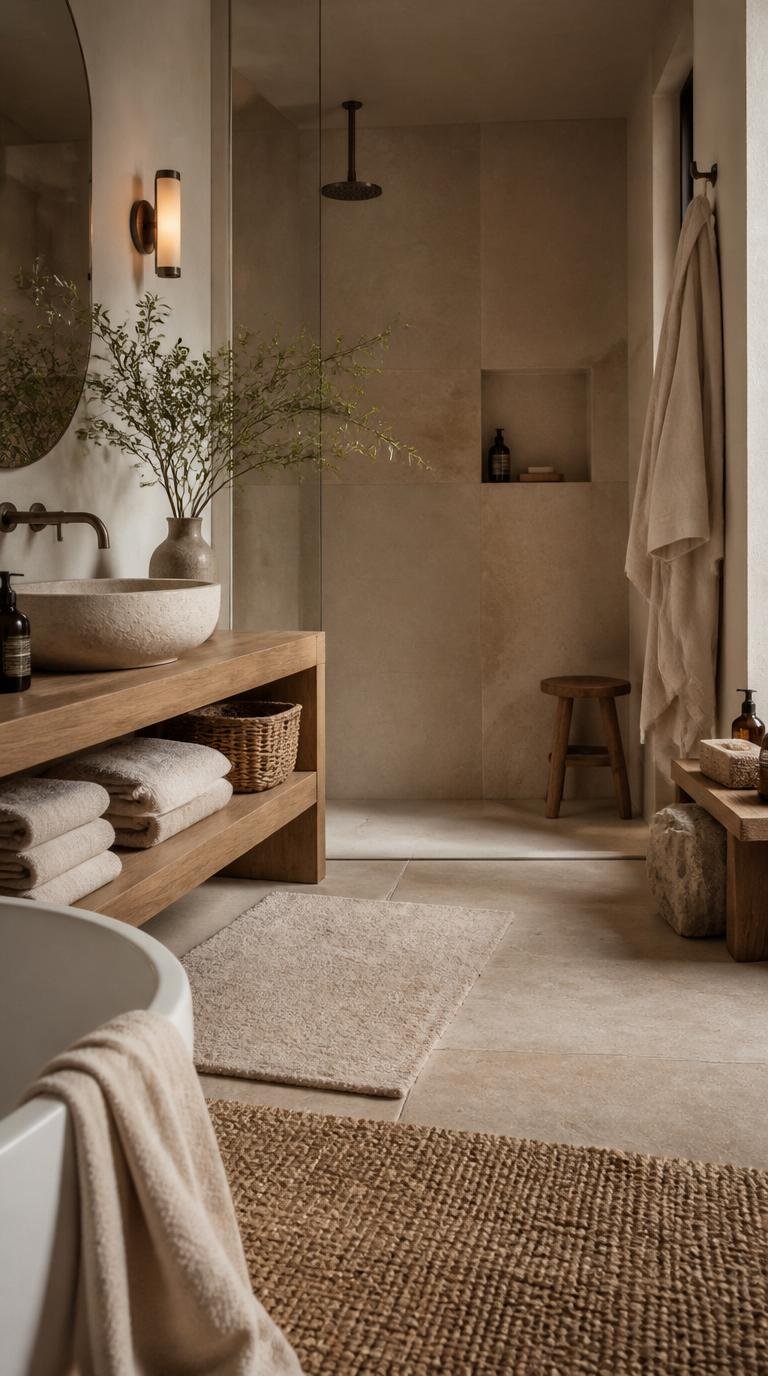
Opt for natural fibers like linen, organic cotton, and jute. Linen towels, for example, are not only highly absorbent but also develop a beautiful, soft texture over time. Organic cotton bath mats feel luxurious underfoot, while jute rugs can add an earthy, grounding element to the space.
Muted Tones and Subtle Patterns
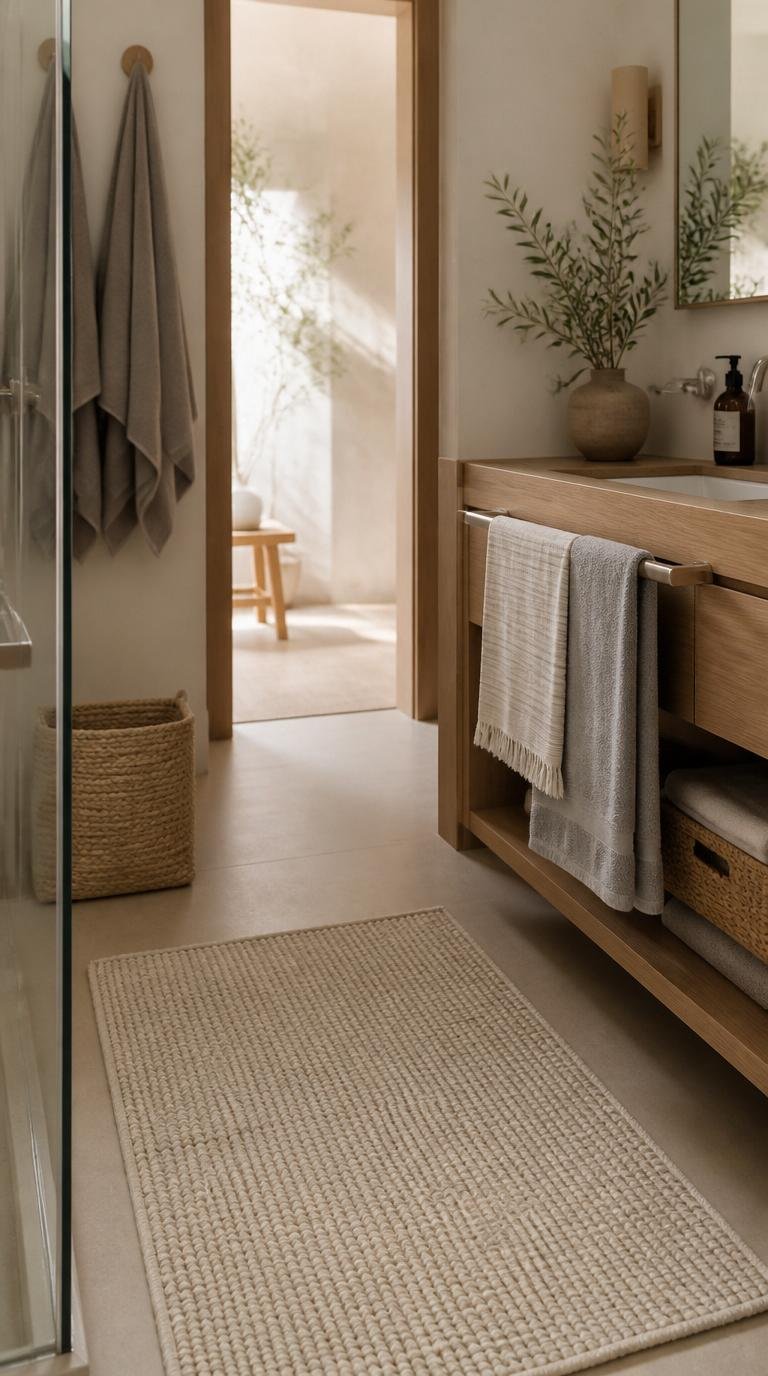
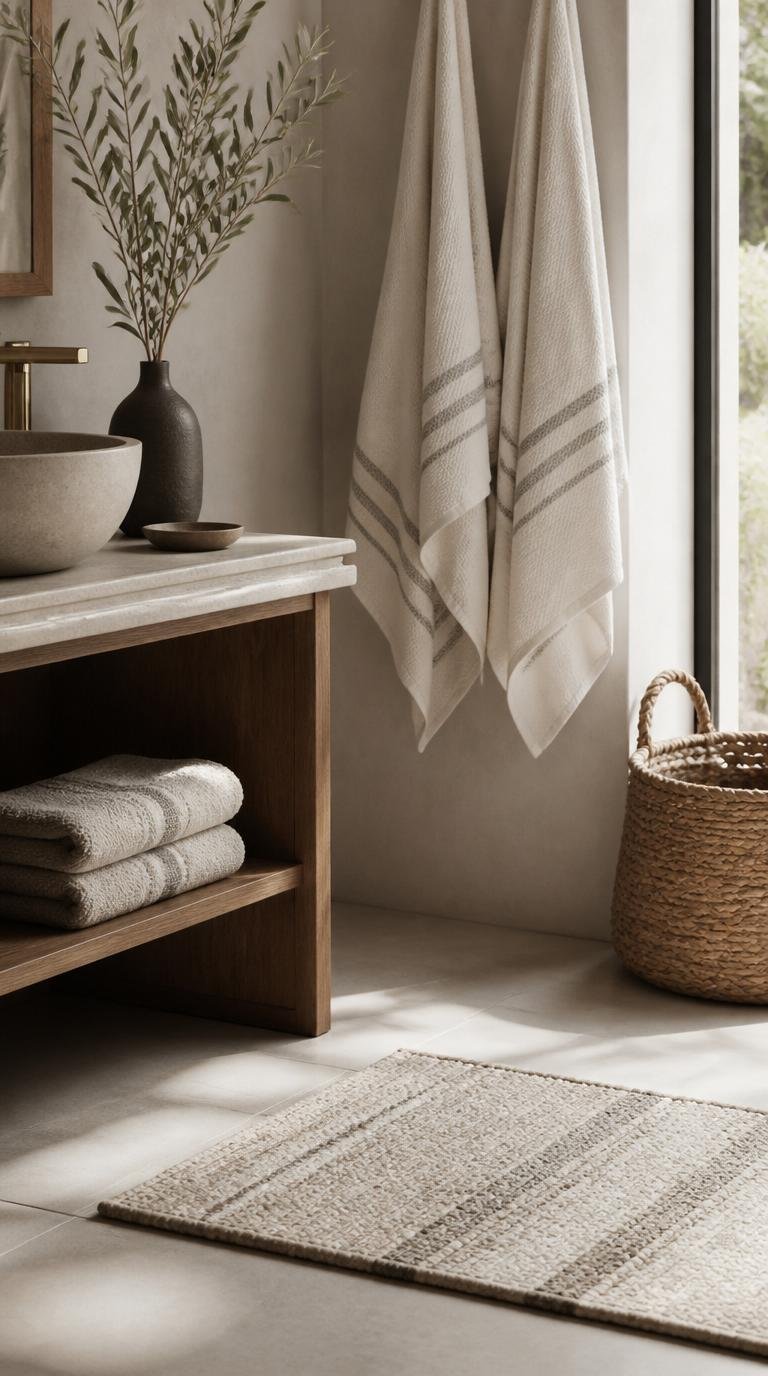
Keep your textile colors in line with the Japandi palette: warm whites, soft grays, and muted earth tones. If you introduce patterns, make them subtle and organic, like a delicate stripe or a woven texture. The idea is to add visual interest without creating any distraction from the overall calm and minimalist aesthetic.
Thoughtful Placement of Soft Goods
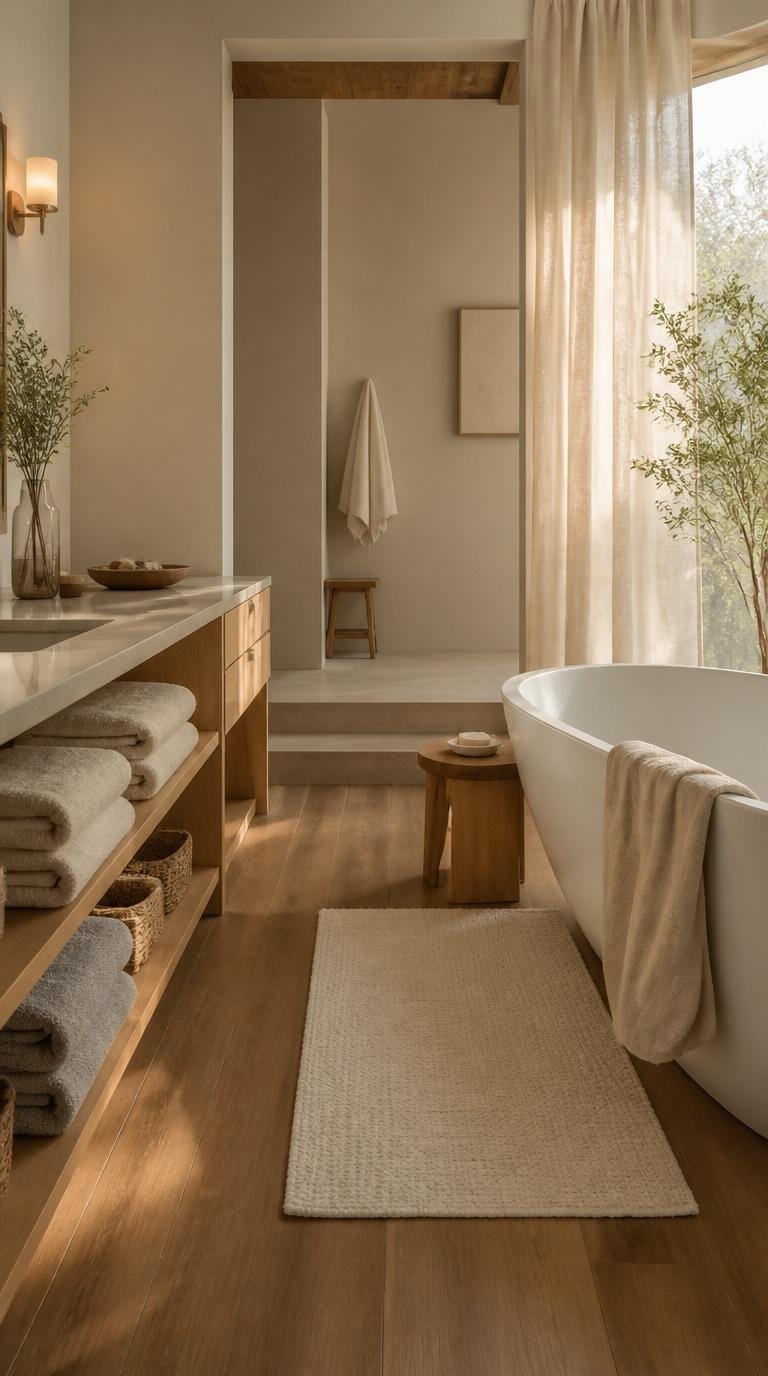
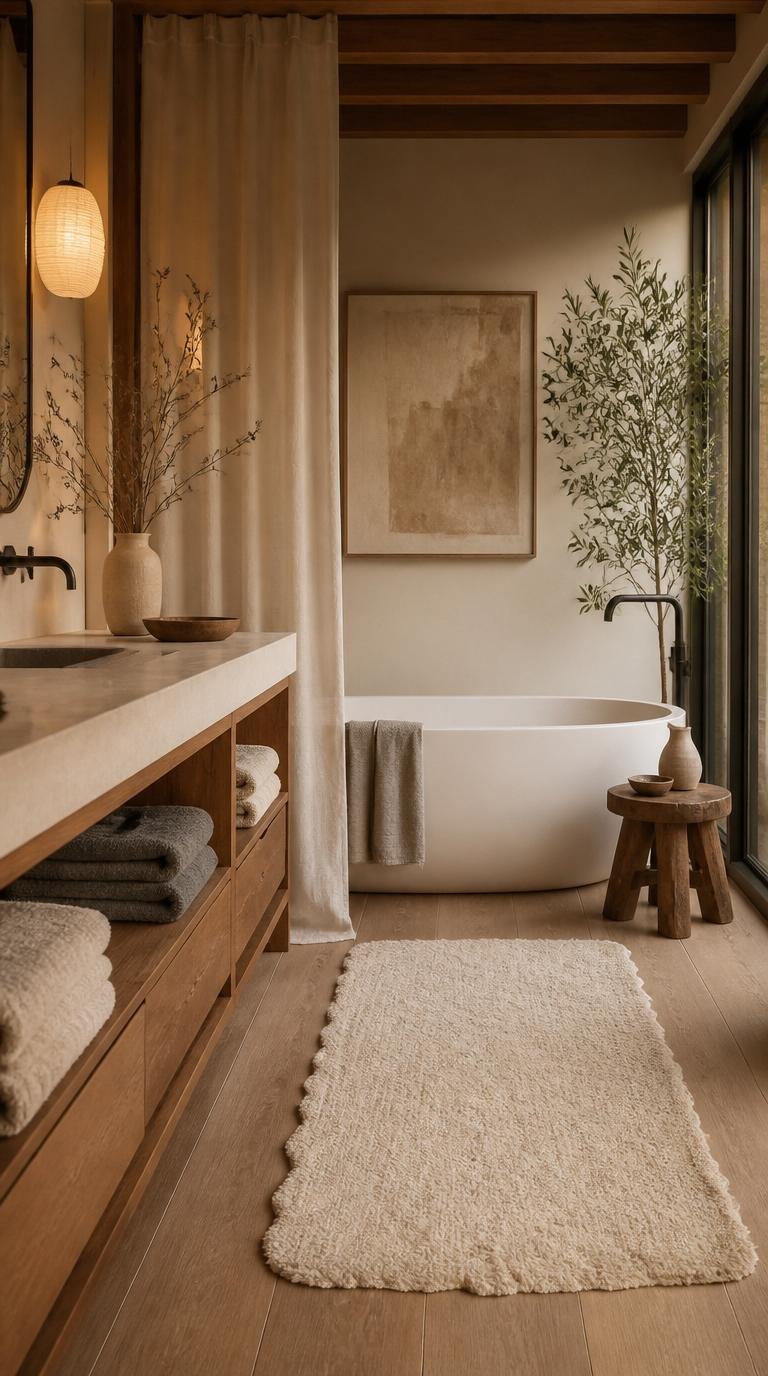
Place your textiles thoughtfully. Neatly folded towels on an open shelf, a soft bath mat by the tub, or a simple linen curtain can make a big difference. These small touches contribute to the feeling of a well-curated and inviting Japandi bathroom.
8. Sensory Design: Engaging All Your Senses
A truly serene Japandi bathroom goes beyond just what you see; it engages all your senses. It’s about creating an immersive experience that calms your mind and rejuvenates your spirit. Think about how different textures feel, what subtle scents fill the air, and even the sounds you hear (or don’t hear!). This holistic approach elevates your bathroom from a functional space to a personal sanctuary.
The Scent of Hinoki Wood
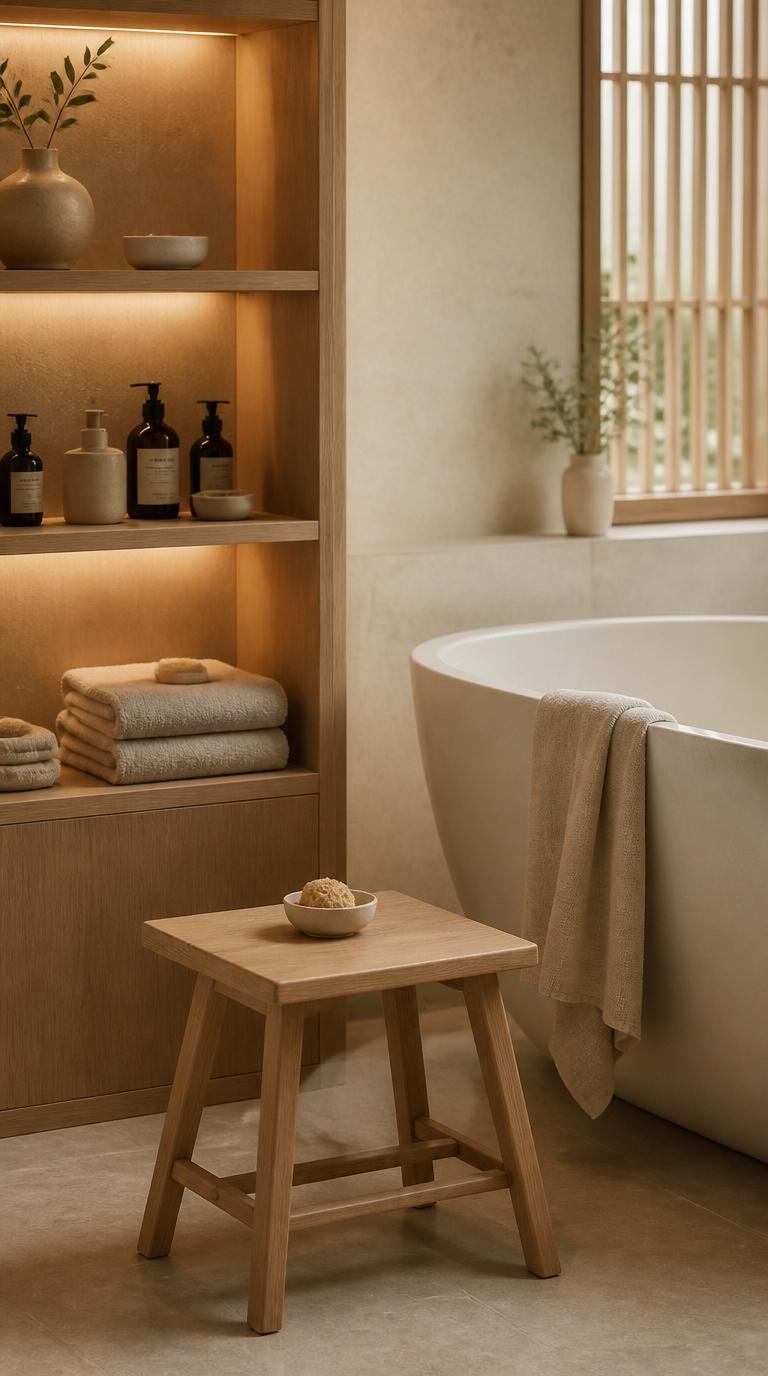
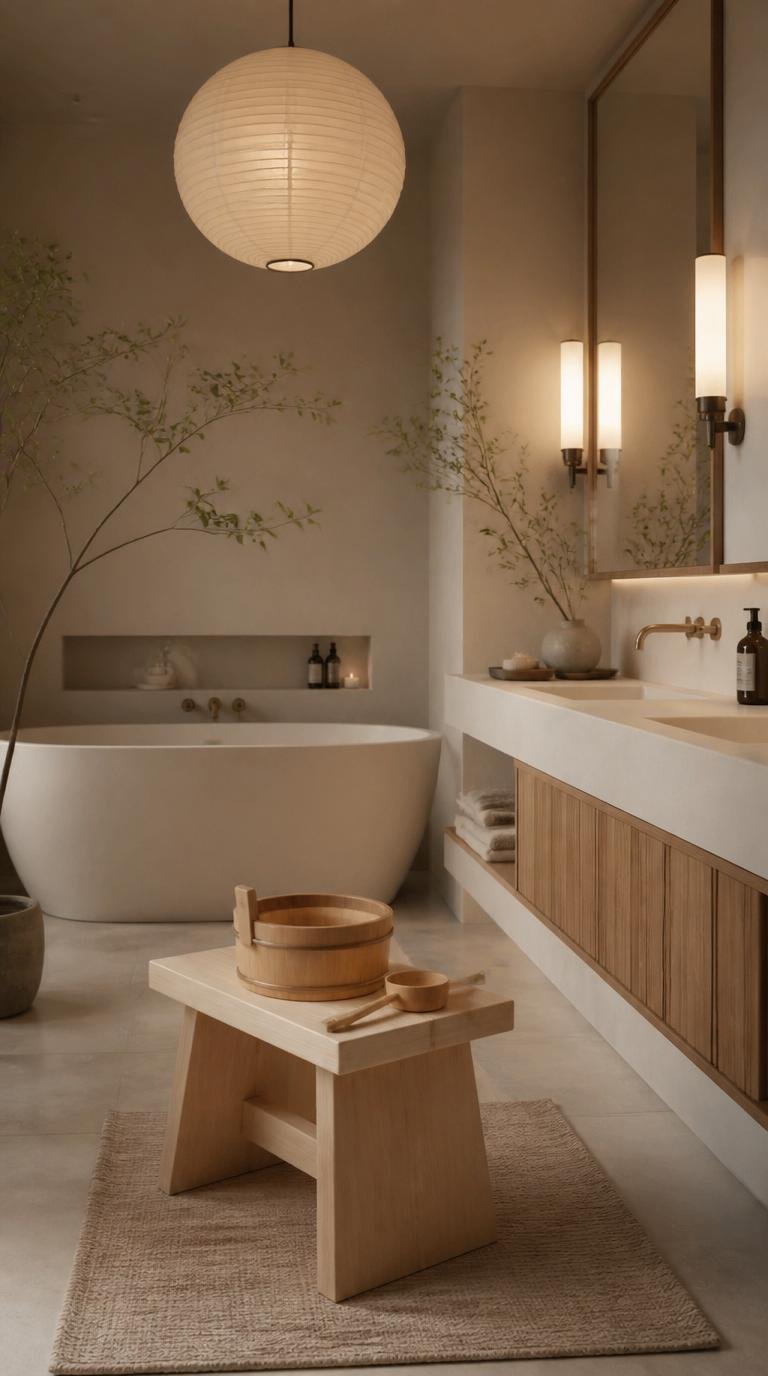
One of the most exquisite sensory elements you can introduce is the scent of Hinoki wood. This Japanese cypress is renowned for its calming, citrusy, and slightly spicy aroma. Incorporating Hinoki through a small stool, bath accessories, or even essential oils can transform your Japandi bathroom into a truly authentic Japanese spa experience. It’s a subtle yet powerful way to connect with nature.
Tactile Textures and Sounds
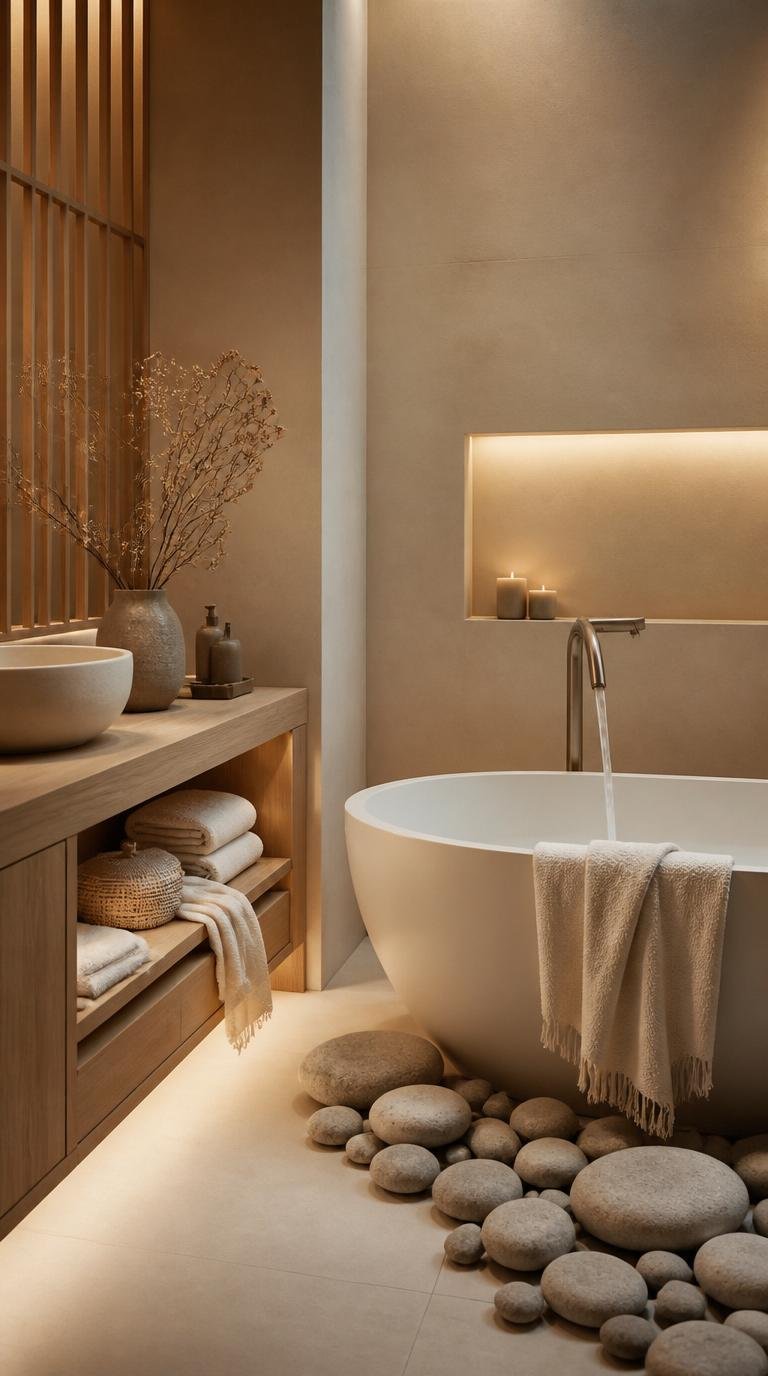
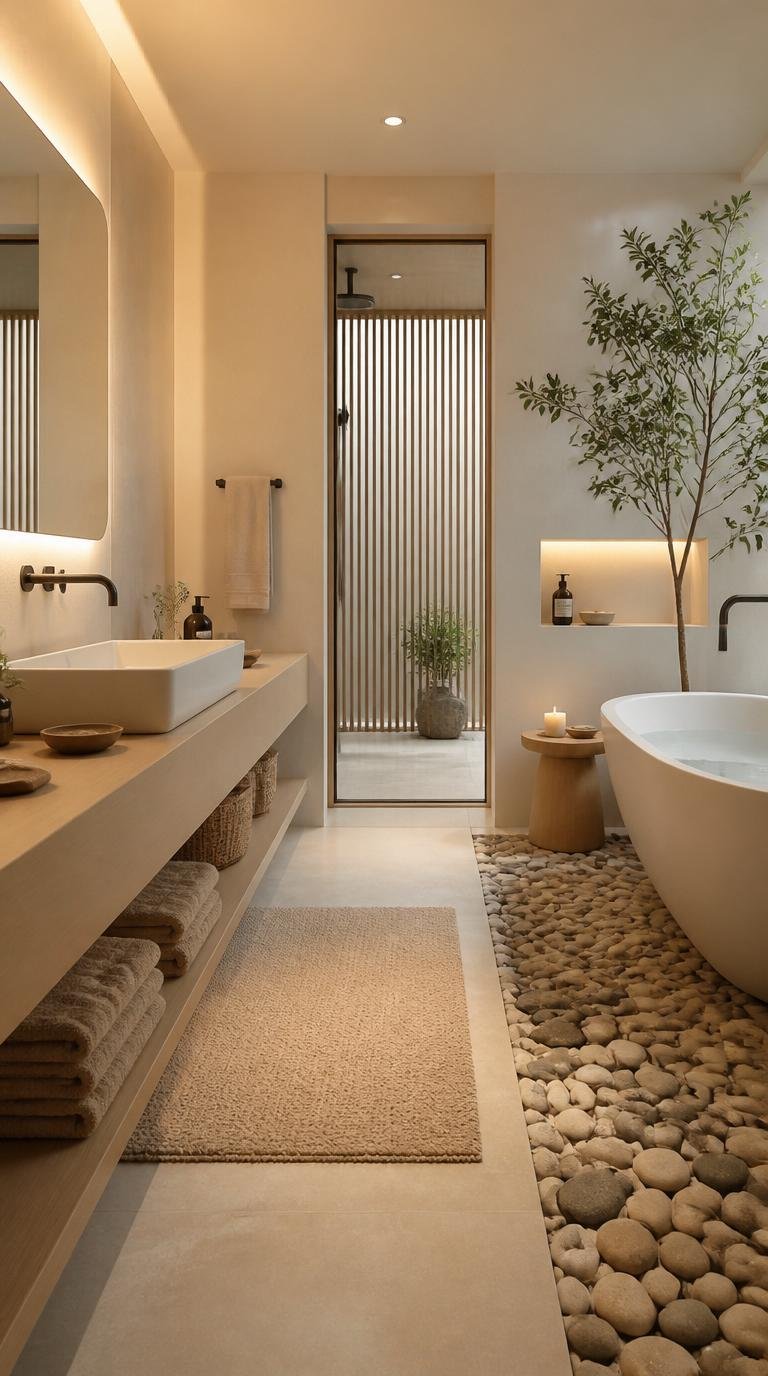
Beyond sight, consider the feel of smooth river stones underfoot, the softness of linen towels against your skin, or the gentle sound of water from a minimalist faucet. Even the quietness of a well-designed space contributes to the sensory experience. These thoughtful details create a rich, multi-sensory environment that encourages deep relaxation and mindfulness.
9. Sustainable Choices for Your Japandi Bathroom
Sustainability is a natural fit for the Japandi bathroom aesthetic. Both Japanese and Scandinavian design philosophies emphasize longevity, quality, and a deep respect for nature. By making eco-conscious choices, you not only create a beautiful and healthy space but also contribute to a more sustainable lifestyle. It’s about thoughtful consumption and minimizing your environmental footprint.
Eco-Friendly Materials
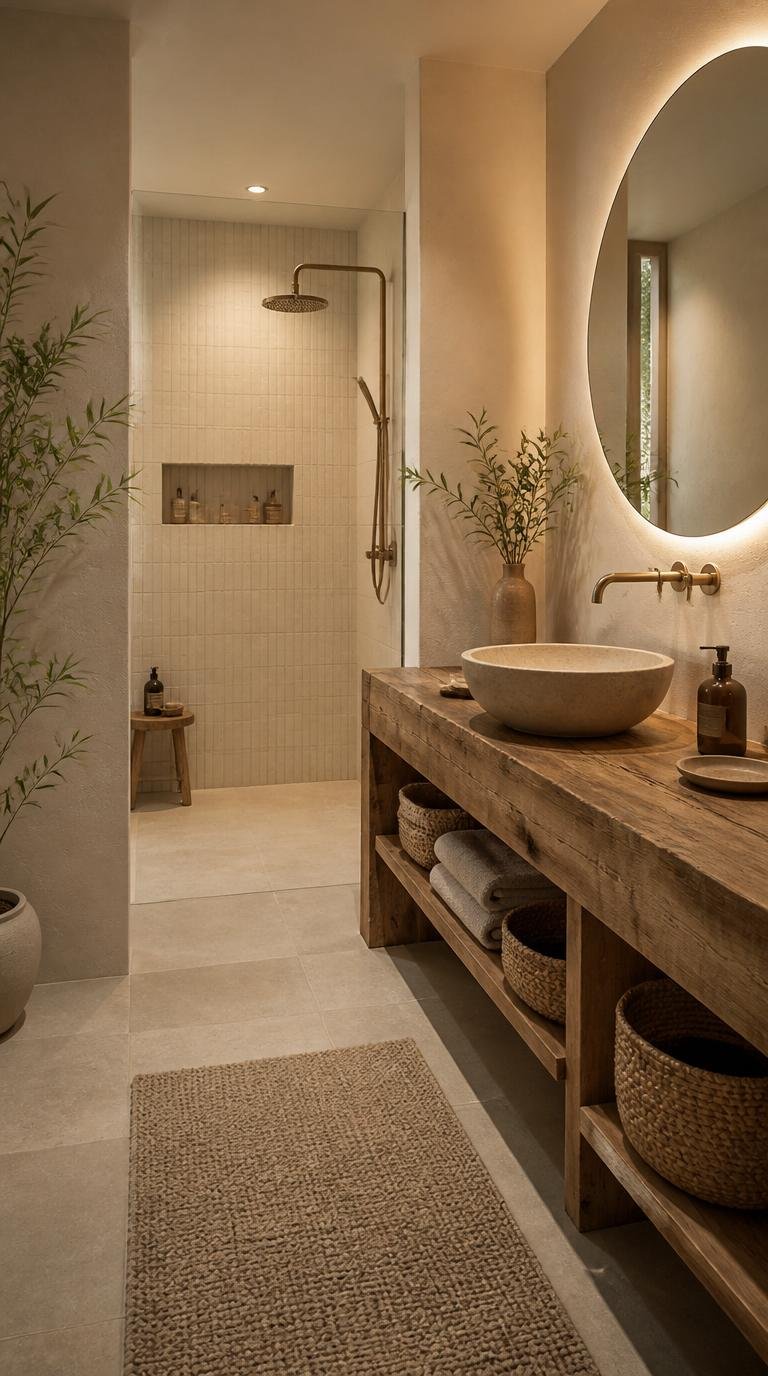
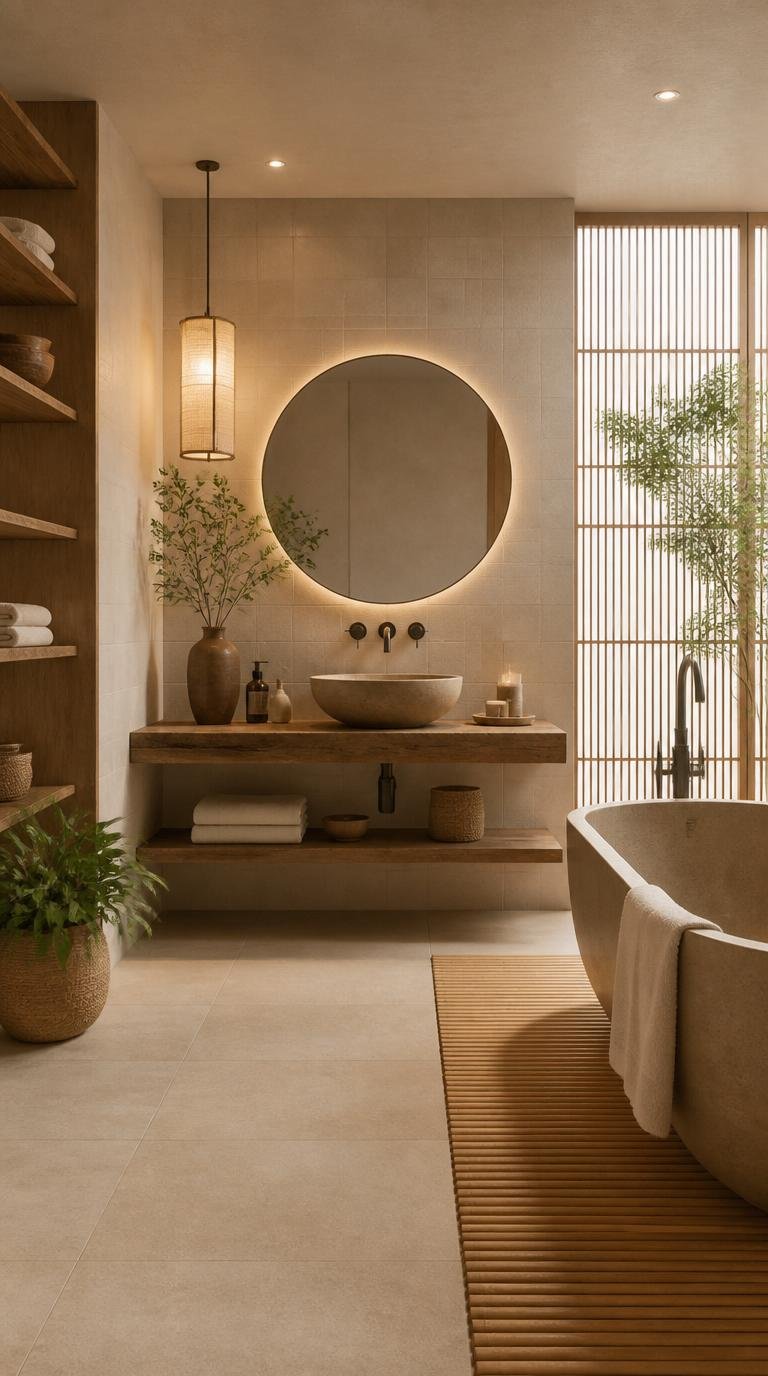
Prioritize materials that are renewable, recycled, or responsibly sourced. Bamboo, for instance, is a rapidly renewable resource perfect for accessories or even flooring. Reclaimed wood for vanities or shelving adds character and reduces waste. Look for tiles made from recycled content or natural, abundant materials like clay and stone. These choices align perfectly with the Japandi ethos of living in harmony with nature.
Water-Saving Fixtures
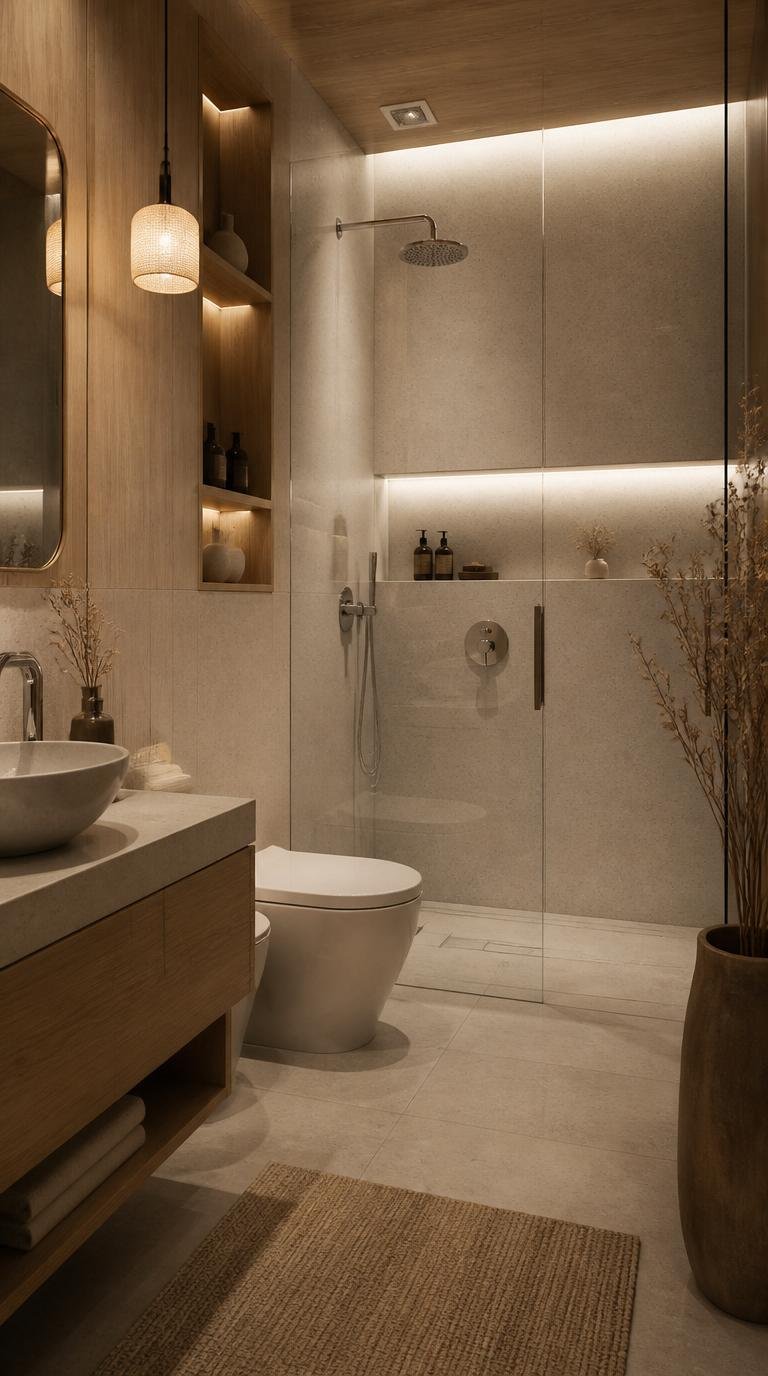
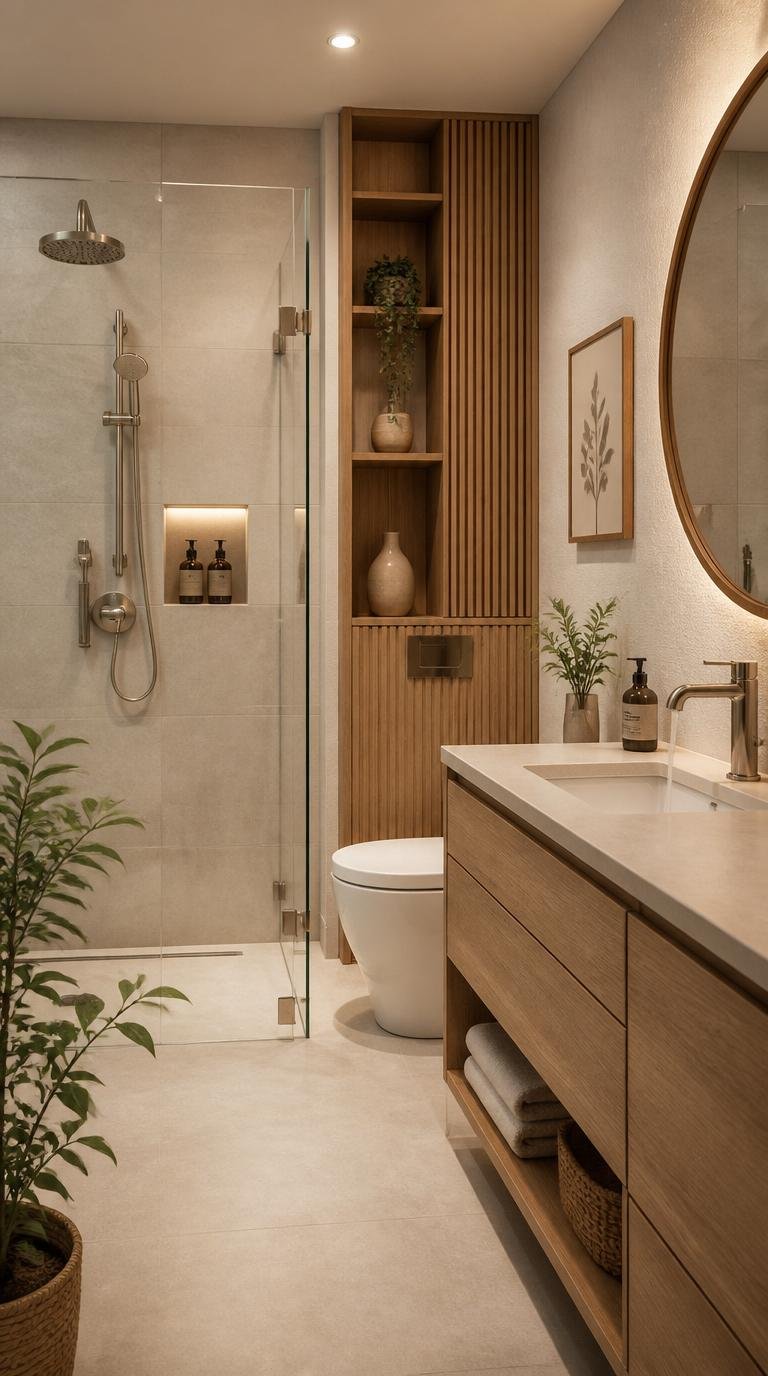
Integrating water-saving fixtures is a practical and impactful way to enhance sustainability. Low-flow showerheads, dual-flush toilets, and aerated faucets reduce water consumption without compromising performance. Many modern, minimalist designs are inherently water-efficient, making it easy to find options that fit the Japandi aesthetic while being kind to the planet.
Durability and Timeless Design
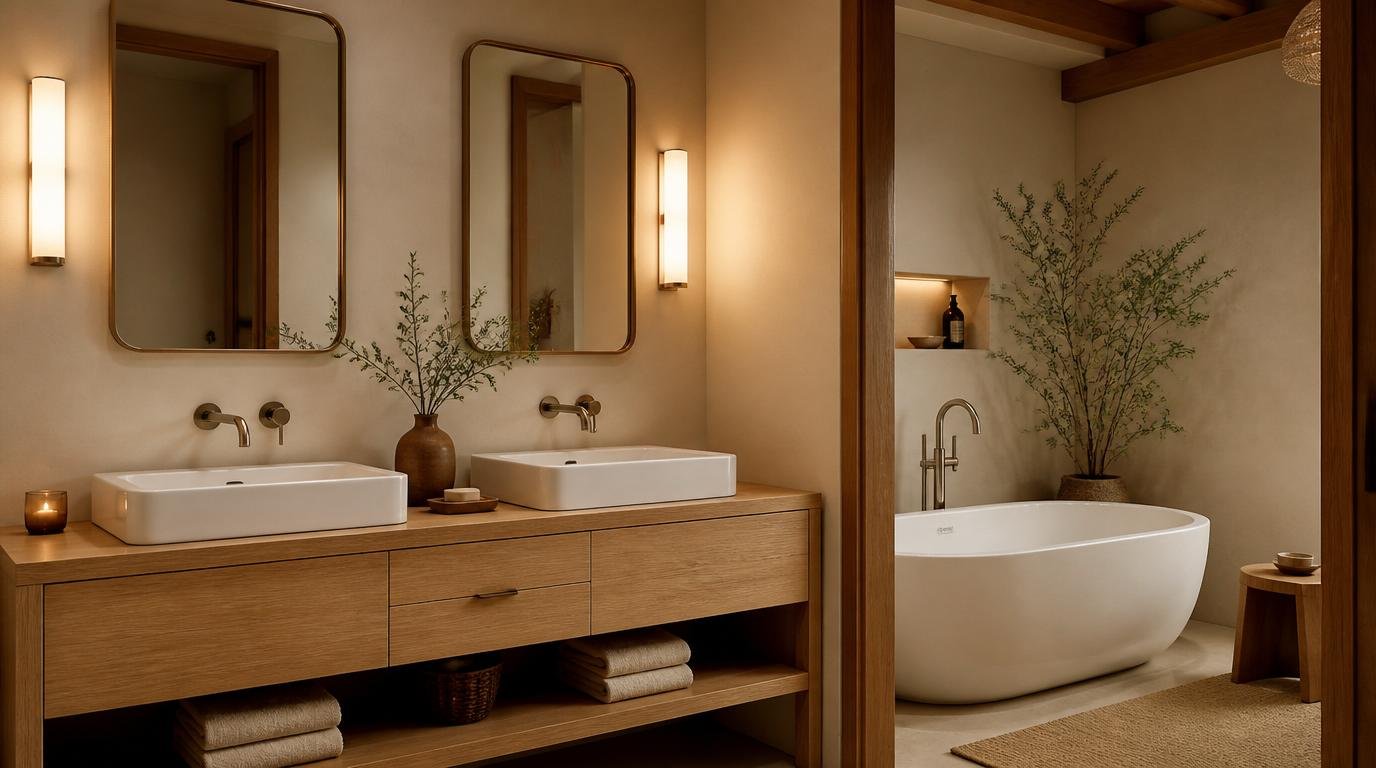
Japandi design champions durability and timelessness. Investing in high-quality pieces that are built to last reduces the need for frequent replacements, thus minimizing waste. Choosing classic, understated designs ensures your Japandi bathroom remains stylish and functional for years to come, avoiding fleeting trends and promoting a more sustainable approach to home decor.
Japanese-Style Baths: Small Bathroom Layout Ideas
The beauty of Japandi design is how it welcomes authentic Japanese traditions into contemporary bathrooms. If you’re drawn to the ritual and philosophy of Japanese bathing, consider incorporating traditional Japanese bath styles. Three standout options bring genuine spa-like serenity to your Japandi bathroom.
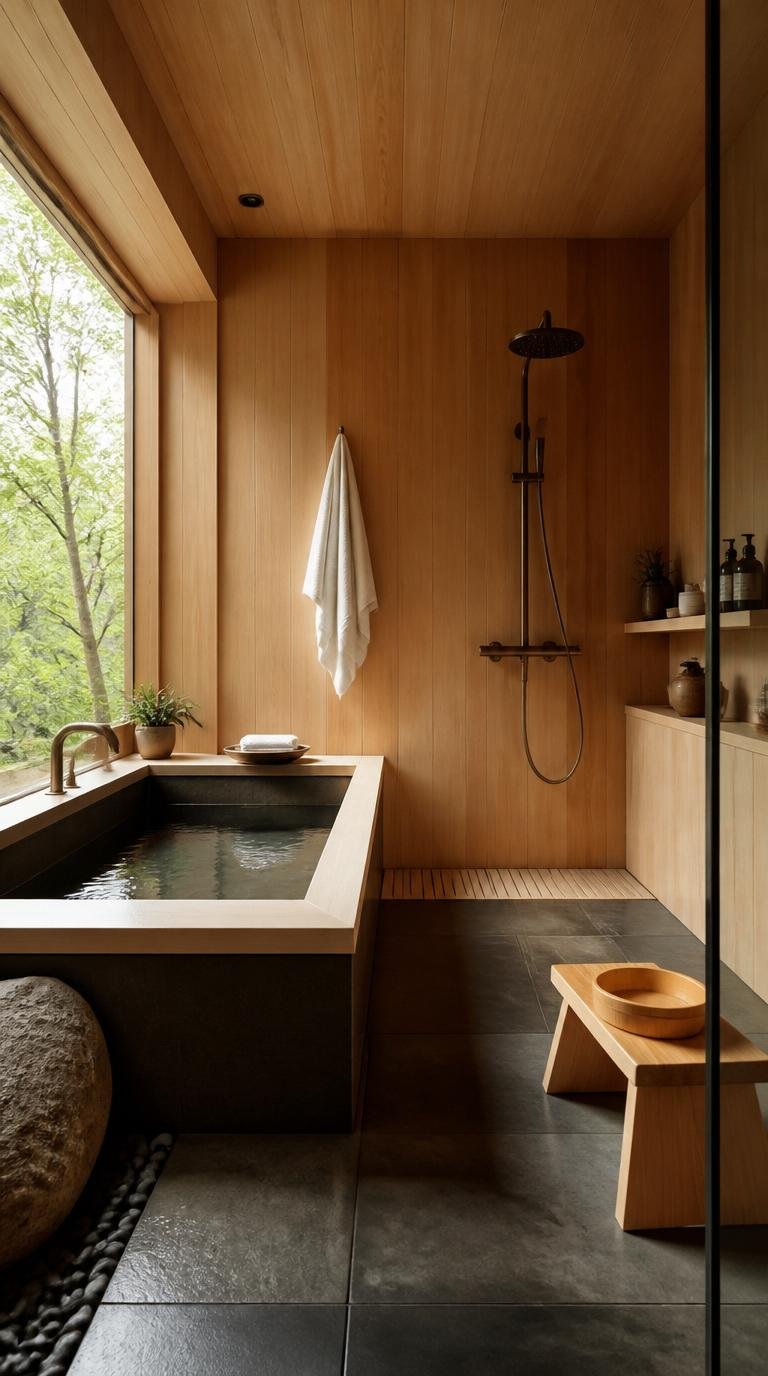
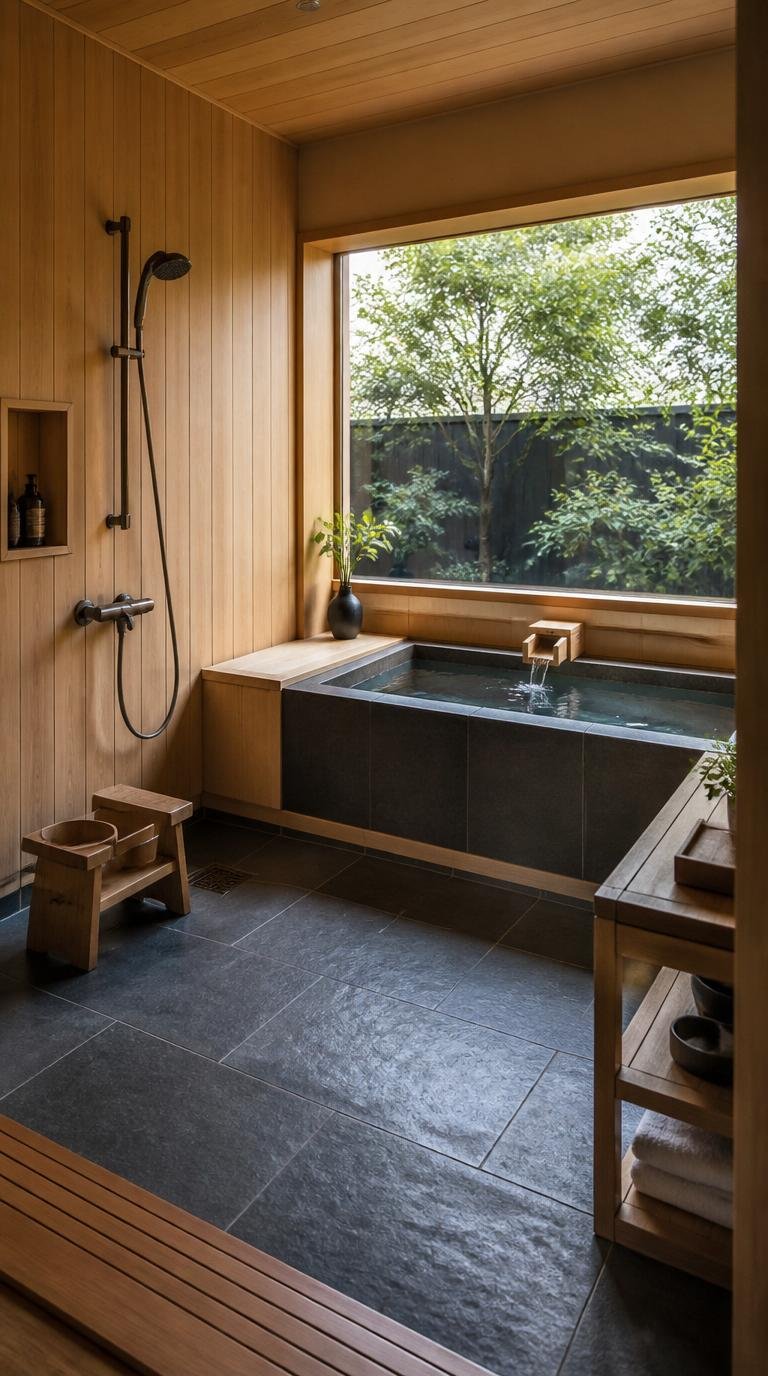
Stone Baths (Stone Soaking Experience)
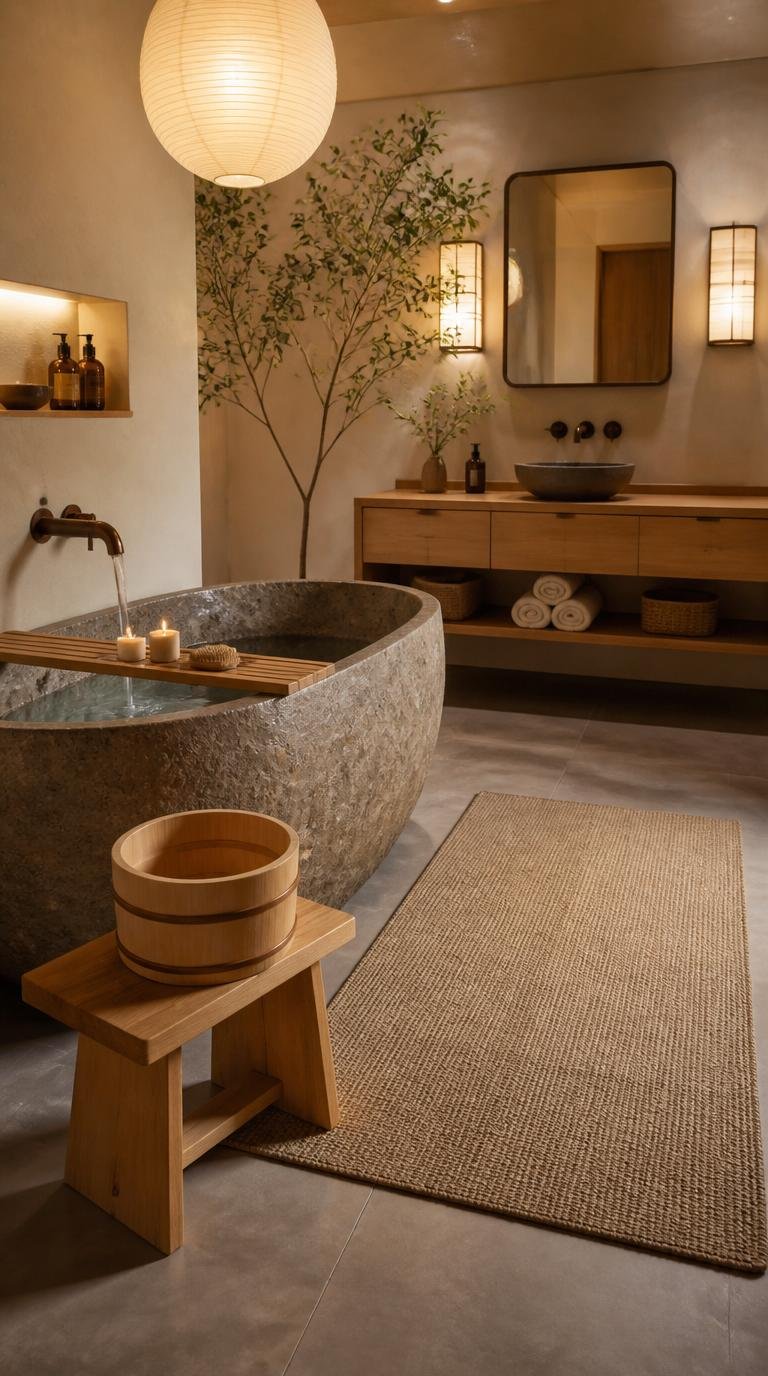
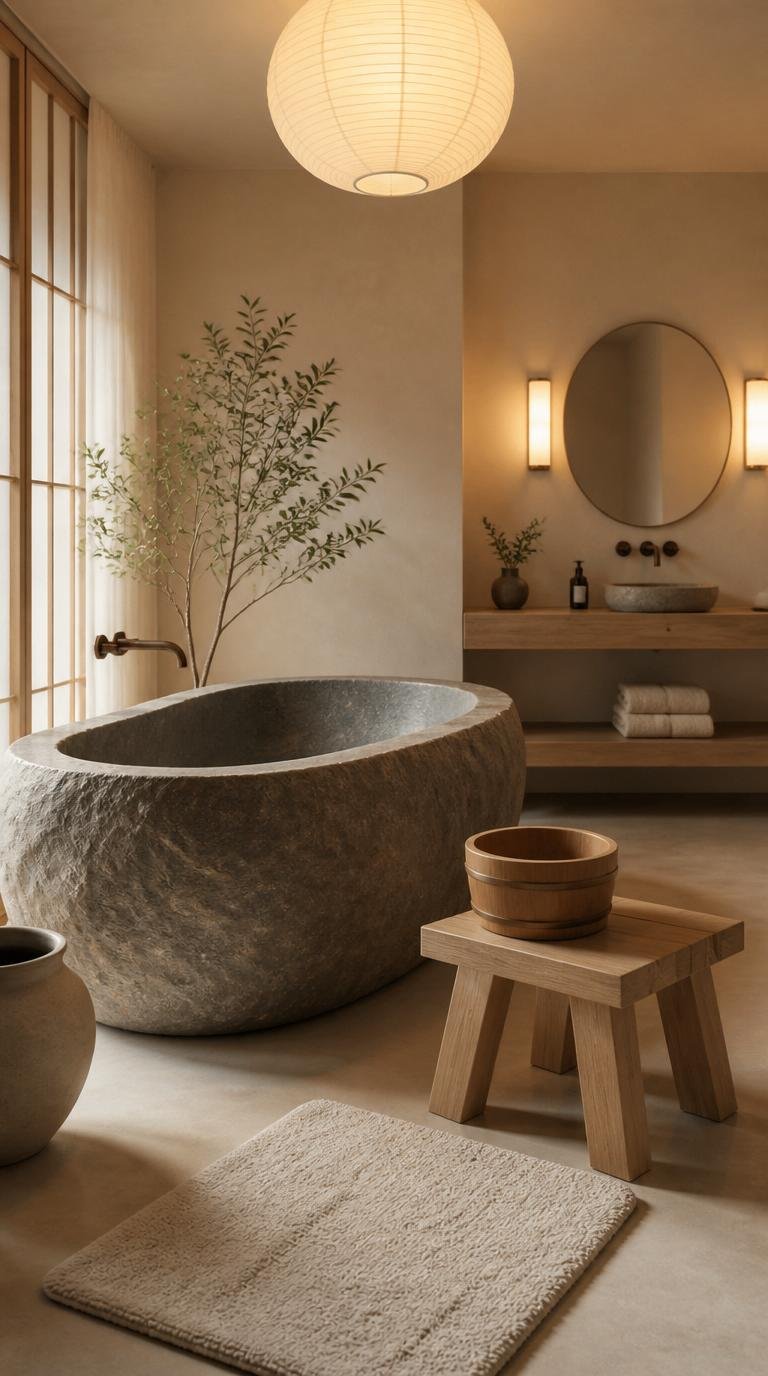
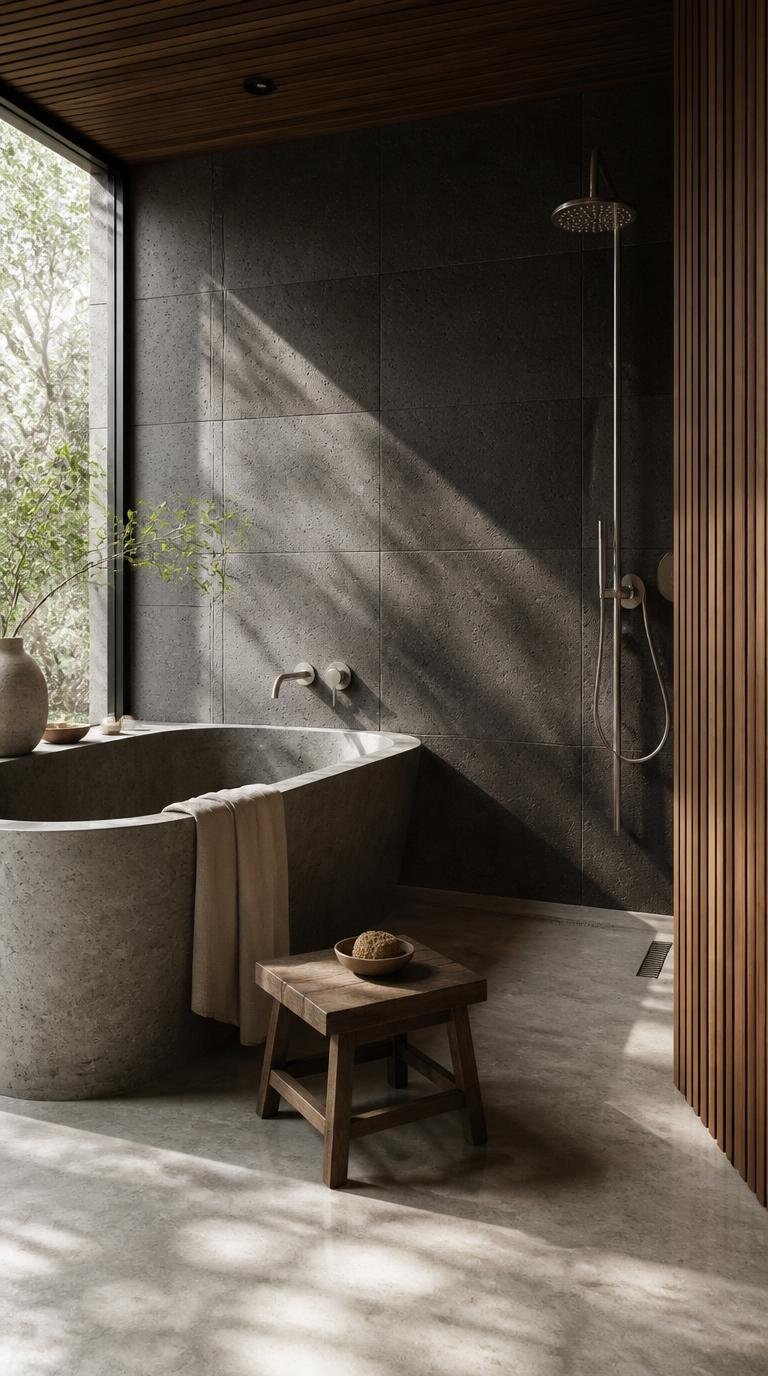
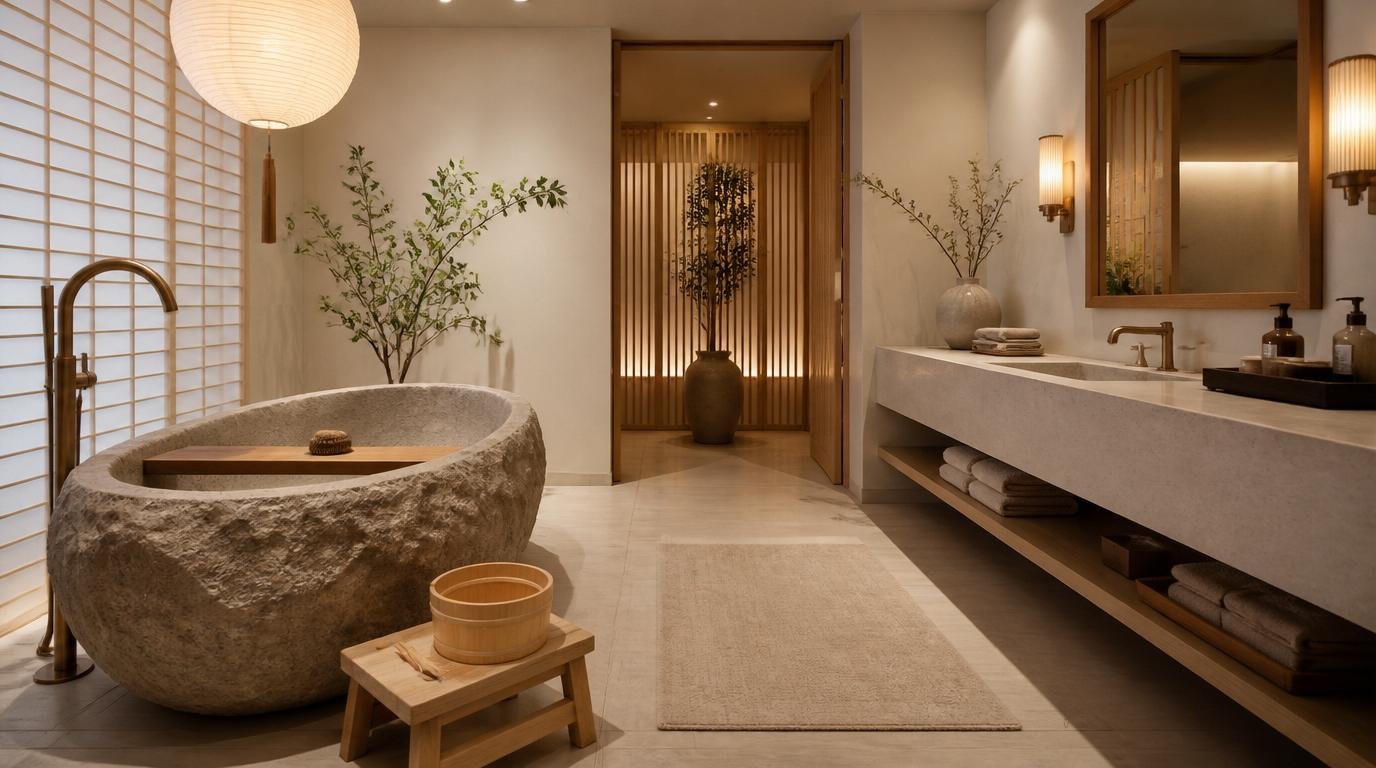
Stone baths have been cherished in Japanese bathing culture for centuries. They’re carved from natural stone—often granite or marble—creating a timeless, grounded aesthetic that perfectly complements Japandi design. What makes a stone bath special isn’t just its look; it’s the experience. Stone retains heat beautifully, keeping your water warm longer and creating an enveloping warmth that encourages deep relaxation.
A stone bath as your centerpiece becomes a sculptural statement. Its organic, slightly irregular surfaces celebrate the Wabi-Sabi philosophy of embracing natural beauty. Pair it with simple wood accents or minimalist fixtures, and you’ve created an authentic sanctuary that feels both ancient and contemporary.
Hinoki Wood Baths (The Cypress Experience)
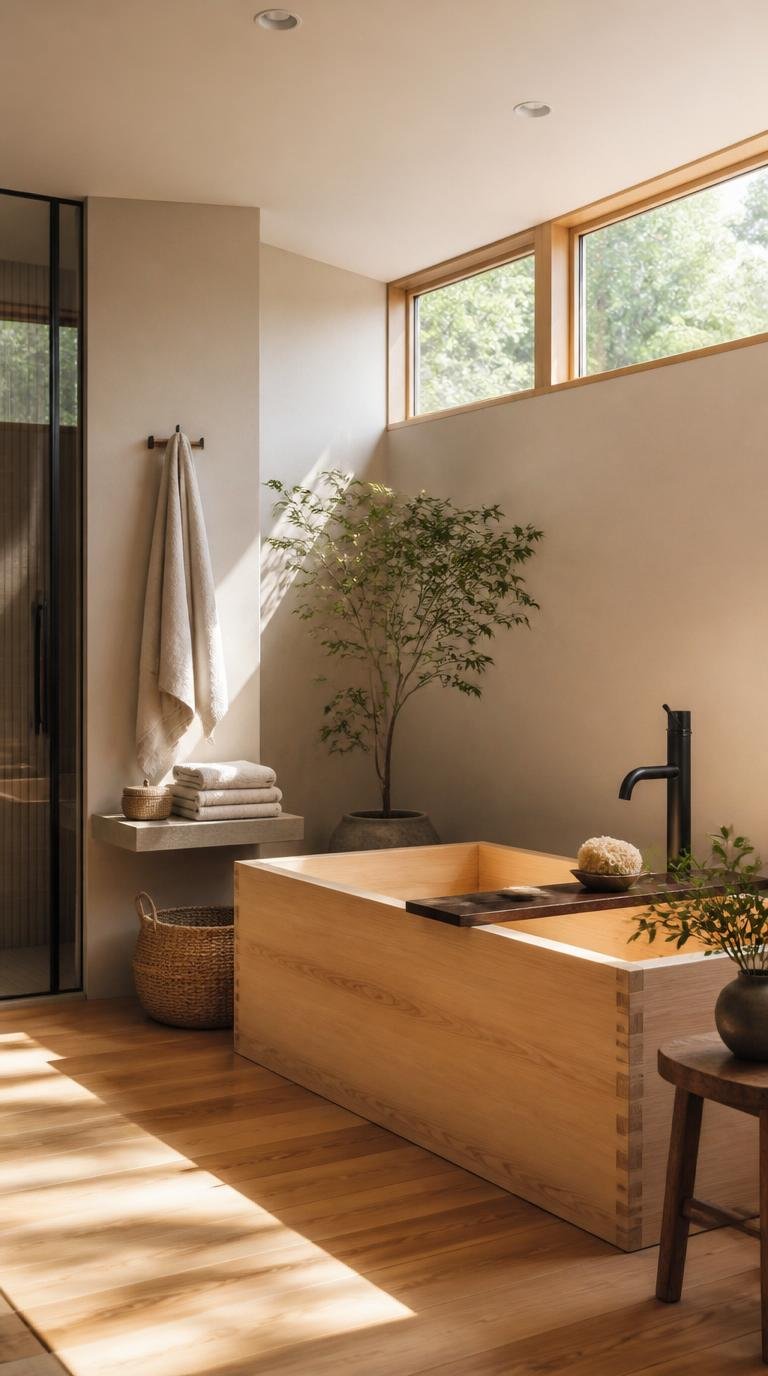
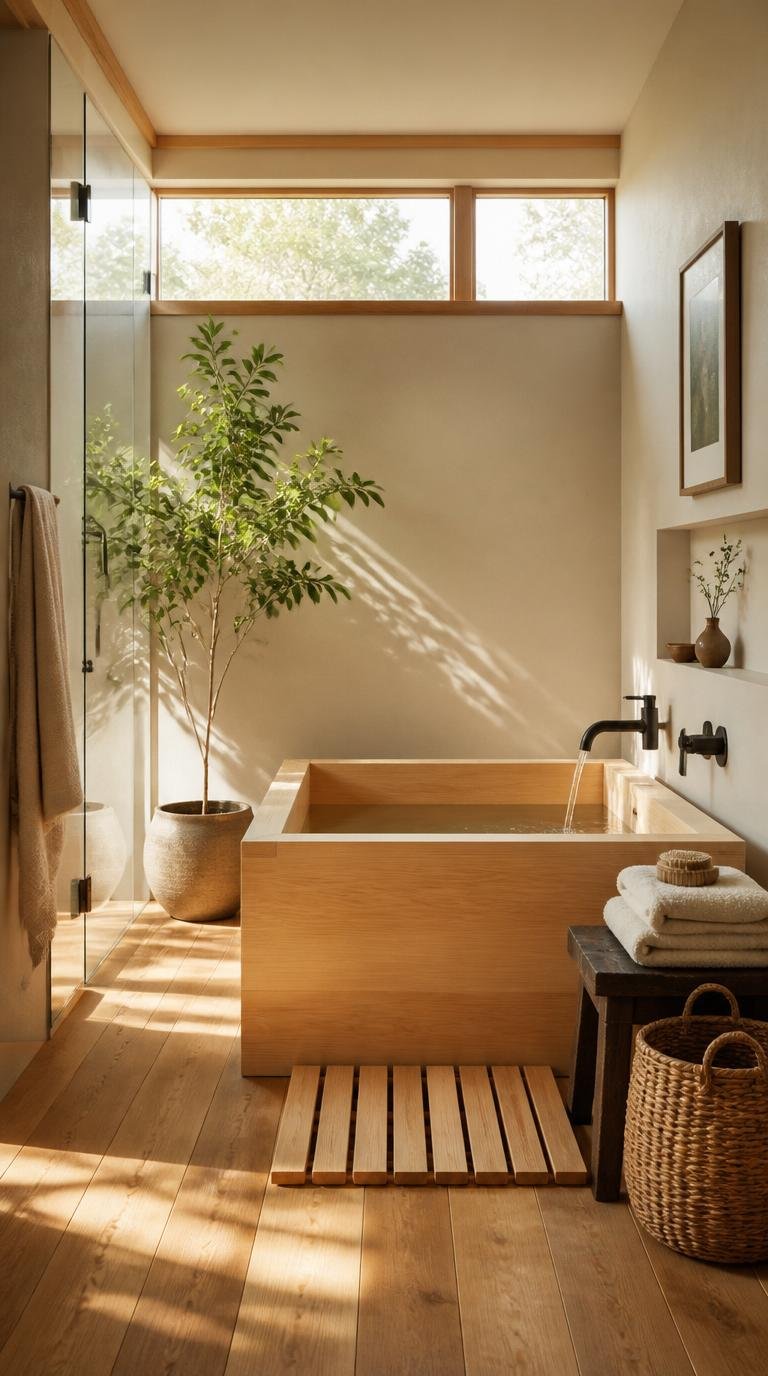
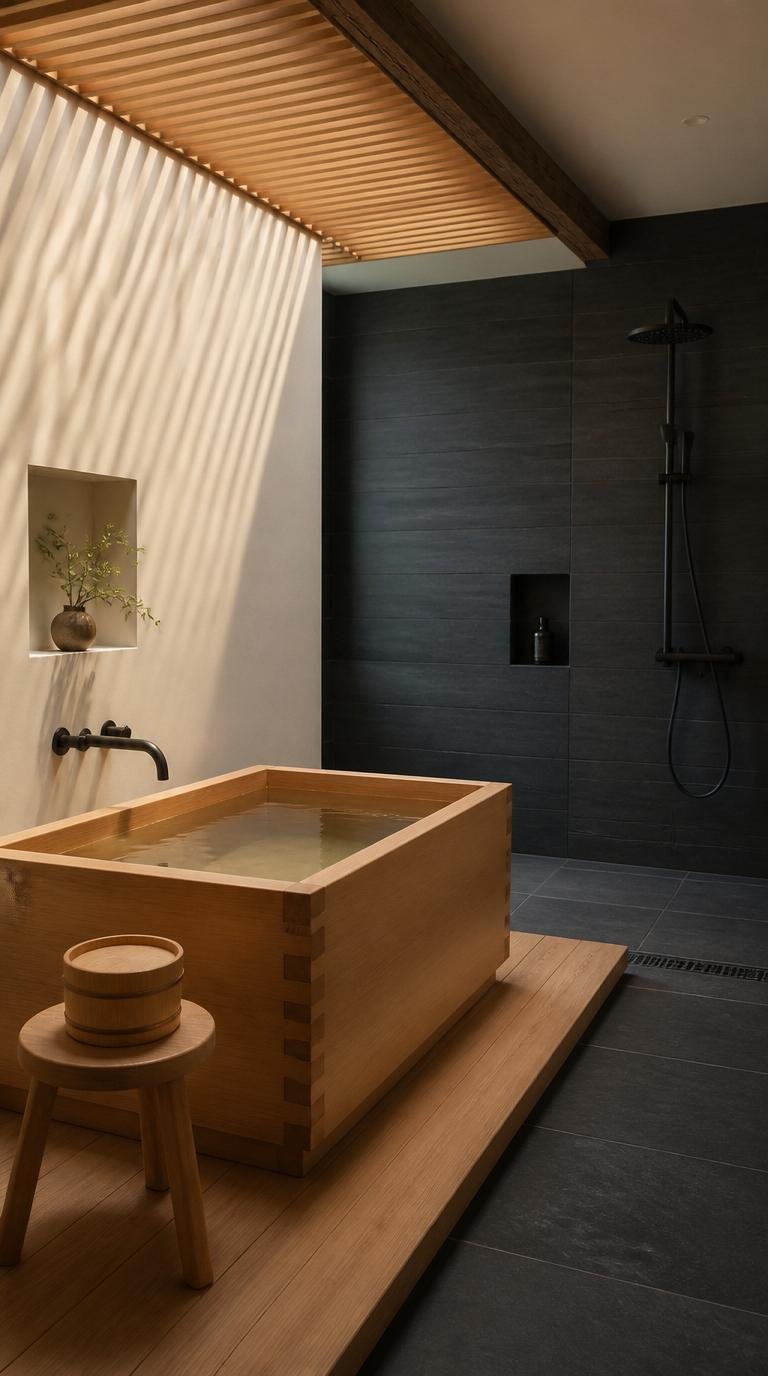
Hinoki wood baths are the crown jewel of Japanese bathroom luxury. Crafted from Japanese cypress, these baths infuse your space with the calming, citrusy aroma of Hinoki itself—no oils or diffusers needed. The wood develops a beautiful patina over time, embodying the Japandi appreciation for aging gracefully.
Soaking in a Hinoki bath isn’t just about the water; it’s a multisensory ritual. The subtle grain patterns, the gentle wood scent, the warmth-retaining properties—everything contributes to an immersive experience. While Hinoki baths are an investment, they’re considered heirloom pieces that elevate your Japandi bathroom to genuine Japanese spa status.
Integrated Bath-Shower Layout (Wet Room Style)
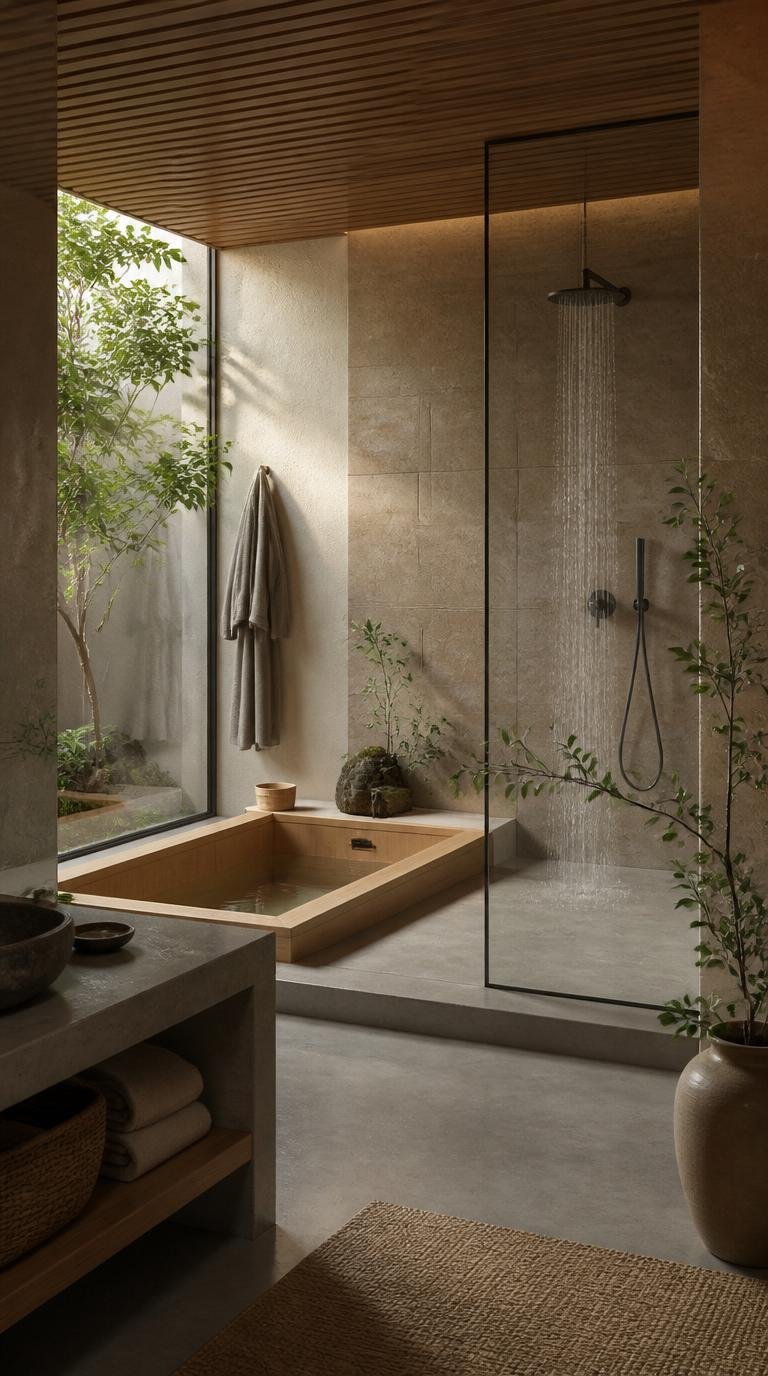
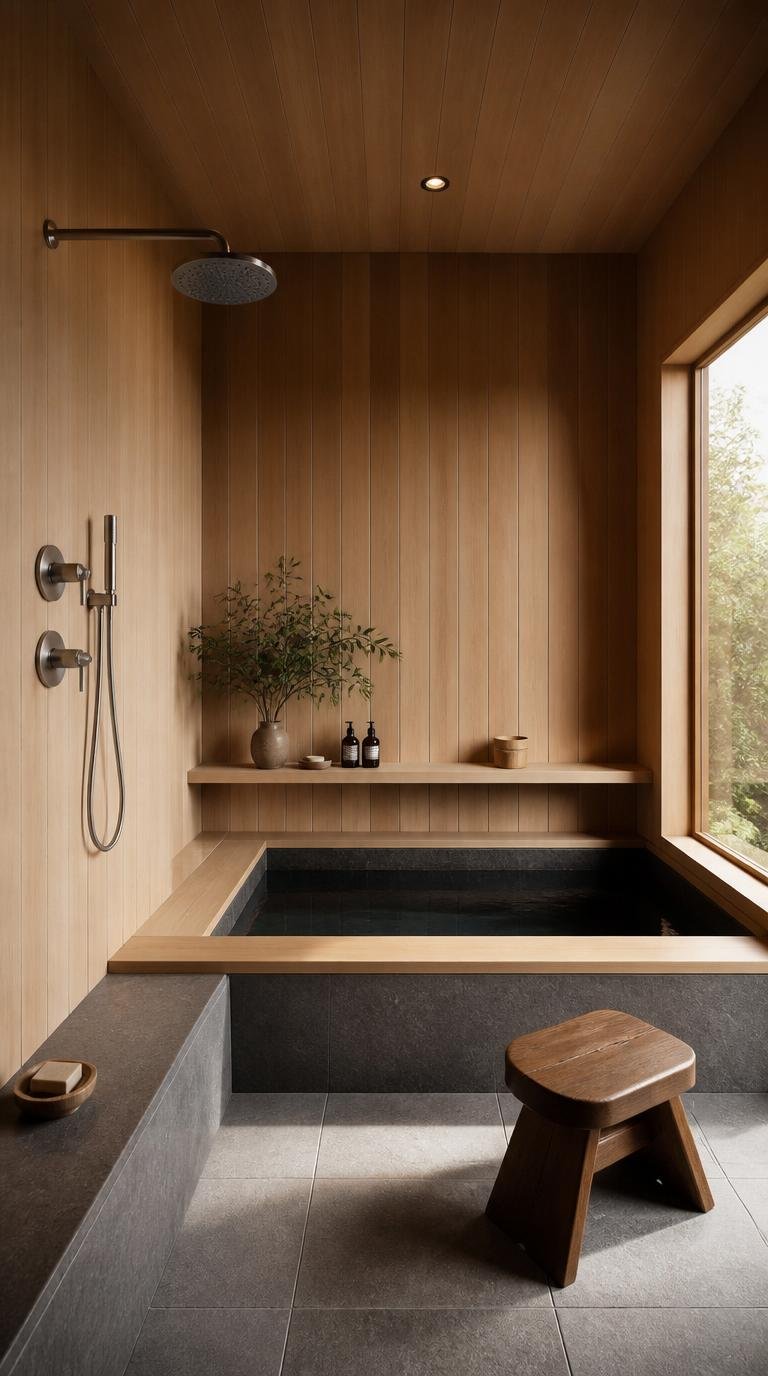
One of the most practical Japanese innovations is the integrated bath-shower space. In this style, the bathtub and shower occupy the same open area, often on a slightly lowered or waterproofed floor. This approach maximizes functionality while maintaining clean lines and an uncluttered aesthetic.
The beauty of this layout is efficiency without sacrificing calm. You can soak deeply, then rinse off—all in one flowing, minimal space. It’s particularly brilliant for smaller bathrooms, as it eliminates the need for a separate shower enclosure. Add a low wooden stool (for that authentic Japanese bathing ritual), keep fixtures minimal and wall-mounted, and you’ve created an authentic yet modern Japanese bathing experience that feels spacious and serene.
10. Your Japandi Bathroom Transformation: A Step-by-Step Guide
Ready to bring the serene beauty of a Japandi bathroom into your home? It might seem like a big project, but breaking it down into manageable steps makes it totally achievable. Here’s a simple guide to help you transition your current bathroom into a tranquil Japandi oasis, one thoughtful decision at a time.
Step 1: Declutter and Simplify
The first and most crucial step is to declutter. Japandi embraces minimalism, so get rid of anything that doesn’t serve a purpose or bring you joy. Think about clear countertops, hidden storage, and only keeping essentials. A clean slate is the foundation for your serene Japandi bathroom.
Step 2: Introduce Natural Materials Gradually
You don’t have to overhaul everything at once. Start by swapping out a few items for natural materials. Maybe a bamboo bath mat, a wooden stool, or some stone accessories. These small changes can make a big impact and help you ease into the Japandi aesthetic without feeling overwhelmed.
Step 3: Adopt a Calming Color Palette
Begin to incorporate warm whites, soft beiges, and muted grays through paint, towels, or shower curtains. These neutral tones create a peaceful backdrop. You can also add subtle accents with matte black fixtures to introduce a touch of modern sophistication.
Step 4: Upgrade Lighting for Ambiance
Replace harsh overhead lights with fixtures that offer soft, diffused illumination. Consider adding dimmer switches to control the mood. Warm-toned LED lights (2700K-3000K) will instantly make your Japandi bathroom feel more inviting and spa-like, perfect for unwinding.
Step 5: Bring in Greenery and Art
Finally, add a touch of biophilic design with simple, elegant plants like snake plants or ferns. Choose minimalist pots. If you want art, opt for abstract pieces or nature-inspired prints with muted colors. These elements complete the serene, natural feel of your Japandi bathroom.
11. Japandi vs. Other Styles: What Makes It Unique?
While Japandi shares similarities with both Scandinavian and Japanese design, it truly stands out as its own unique aesthetic. Understanding these subtle differences can help you appreciate the nuanced beauty of a Japandi bathroom and ensure your design choices perfectly capture its essence. It’s about finding that sweet spot where two beautiful philosophies meet.
Japandi vs. Pure Scandinavian
Pure Scandinavian design often embraces brighter, whiter palettes and a more rustic, cozy feel (think hygge!). While Japandi incorporates hygge, it introduces deeper, more muted earth tones and a greater emphasis on raw, imperfect textures.
Scandinavian might use more patterns, whereas Japandi prefers clean lines and subtle, organic variations. A Japandi bathroom feels more grounded and serene.
Japandi vs. Traditional Japanese (Wabi-Sabi)
Traditional Japanese design, particularly Wabi-Sabi, deeply values imperfection and natural aging. Japandi adopts this appreciation but blends it with Scandinavian functionality and comfort.
Traditional Japanese spaces can sometimes feel more austere or formal. A Japandi bathroom softens this with cozy elements, making it more approachable and livable for everyday use, without losing its profound connection to nature and simplicity.
Japandi vs. Modern Minimalist
Modern minimalist design often leans towards stark, often cold, aesthetics with sharp lines and a limited color palette. While Japandi is minimalist, it prioritizes warmth, natural materials, and a human touch. It avoids the sterile feel that some modern minimalist spaces can have.
A Japandi bathroom is minimalist with soul, inviting you to relax rather than just admire its cold counterparts.

My Top Tips for Your Japandi Bathroom
Creating a Japandi bathroom is such a fun and rewarding project! To help you get started, here are my personal top tips for bringing that perfect blend of Japanese tranquility and Scandinavian comfort into your own home.
These little insights can make a big difference in achieving that serene spa-like feel you’re dreaming of.
Tip 1: Focus on Quality Over Quantity
Choose a few high-quality pieces instead of many. A wooden vanity or stone basin makes a huge impact, embodying Japandi’s minimalist spirit.
Tip 2: Embrace the Power of Texture
Japandi embraces subtle sensory experiences. Mix smooth stones with rough linen, or polished wood with matte ceramics. Textures add depth without bold colors, creating an inviting space.
Tip 3: Let Natural Light Shine
Maximize natural light. Keep windows uncluttered. Light enhances wood’s warmth and neutral colors’ calm, making your Japandi bathroom feel open and airy. Essential for serenity.
Tip 4: Integrate Greenery Thoughtfully
Plants are a must for biophilic design! Choose simple plants like snake plants or ferns in minimalist pots. They add life, freshness, and connect your space with nature.
Tip 5: Create a Ritual Space
Design your bathroom to support daily rituals. A cozy meditation spot or organized skincare area. A Japandi bathroom is more than functional; it’s a sanctuary for well-being.
FAQ
Got questions about your Japandi bathroom? No worries, I’ve got answers! Let\’s clear doubts so you can confidently move forward with your design.
What are the essential elements of a Japandi bathroom?
Clean lines, natural materials (wood, stone, bamboo), geometric tiles, functional fixtures, and a focus on natural light. Simplicity, warmth, and purposeful design.
Can I achieve a Japandi look on a budget?
Yes! Focus on key pieces: a vintage-inspired mirror, geometric floor tiles, or a clean-lined vanity. Repurposing furniture, DIY accent walls, and smart lighting help on a budget.
What kind of tiles are best for a Japandi bathroom?
Terrazzo, hexagonal, penny, and subway tiles (stacked patterns) are great. Muted, earthy tones or classic black and white. Matte finishes give an authentic Japandi feel.
How can I add modern tech without losing the Japandi vibe?
Integrate technology subtly. Sleek, frameless vanity mirrors with lights or minimalist smart toilets blend modern convenience seamlessly. Technology helps, not takes over.
Is Japandi suitable for small bathrooms?
Yes! Japandi suits small bathrooms and powder rooms. Its focus on clean lines, floating vanities, wall-mounted fixtures, and clever storage maximizes space, creating an open, airy, luxurious feel.
Bottom Line
The lasting charm of Japandi bathroom spaces blends timeless elegance with practical functionality. This is its essence. Embrace natural materials, geometric harmony, streamlined fixtures, and thoughtful lighting.
Create a Japandi bathroom that goes beyond trends, a serene, stylish sanctuary. Your Japandi bathroom will be a timeless retreat. Japandi principles offer an awesome framework for your unique space.
Explore more ideas
View All

ABOUT the AUTHOR
TOKI; INTERIOR DESIGN & lifestyle CONTENT CREATOR.
Hey there! I’m Toki—the design-obsessed brain behind Dwell Studio 24. I’m a content creator passionate about interior design, photography, and creativity, living in a 77-year-old house with my husband and our awesome three kids. I write about interior design, furniture, home topics, and my lifestyle, including travel, recipes, skincare, and daily routines. I hope to inspire your next project and lifestyle!
ABOUT the AUTHOR
TOKI; INTERIOR DESIGN & lifestyle CONTENT CREATOR.
Hey there! I’m Toki—the design-obsessed brain behind Dwell Studio 24. I’m a content creator passionate about interior design, photography, and creativity, living in a 77-year-old house with my husband and our awesome three kids. I write about interior design, furniture, home topics, and my lifestyle, including travel, recipes, skincare, and daily routines. I hope to inspire your next project and lifestyle!
ABOUT the AUTHOR
TOKI; INTERIOR DESIGN & lifestyle CONTENT CREATOR.
Hey there! I’m Toki—the design-obsessed brain behind Dwell Studio 24. I write about interior design, furniture, home topics, and my lifestyle, including travel, recipes, skincare, and daily routines. I hope to inspire your next project and lifestyle!