
Japandi Dining Rituals: serene Spring Tableware Curation
Does your dining table feel out of touch with nature? Imagine eating in a space that doesn’t reflect spring’s fresh start. Japandi Dining Rituals combines Japanese minimalism and Scandinavian design.
This mix uses handcrafted ceramics, raw wood trays, and seasonal flowers to make spaces for mindfulness. Copabu’s woven bowls and Sewu vessels show this perfect blend. They mix simplicity with a touchable beauty.
Candlelit dinners under paper lanterns or terracotta backsplashes connect us to nature’s flow. By choosing Japandi tableware, you turn meals into special moments. These moments honor tradition and the now.
Key Takeaways
- Japandi merges Japanese minimalism and Scandinavian functionality for balanced dining spaces.
- Natural materials like wood and clay enhance mindful eating through texture and simplicity.
- Seasonal shifts inspire decor—try Copabu’s raffia vases or shibori-dyed linens for spring.
- Low-profile lighting and handcrafted ceramics create intentional, tranquil atmospheres.
- Japandi design prioritizes craftsmanship and timeless pieces that celebrate imperfection.
Understanding the Japandi Aesthetic
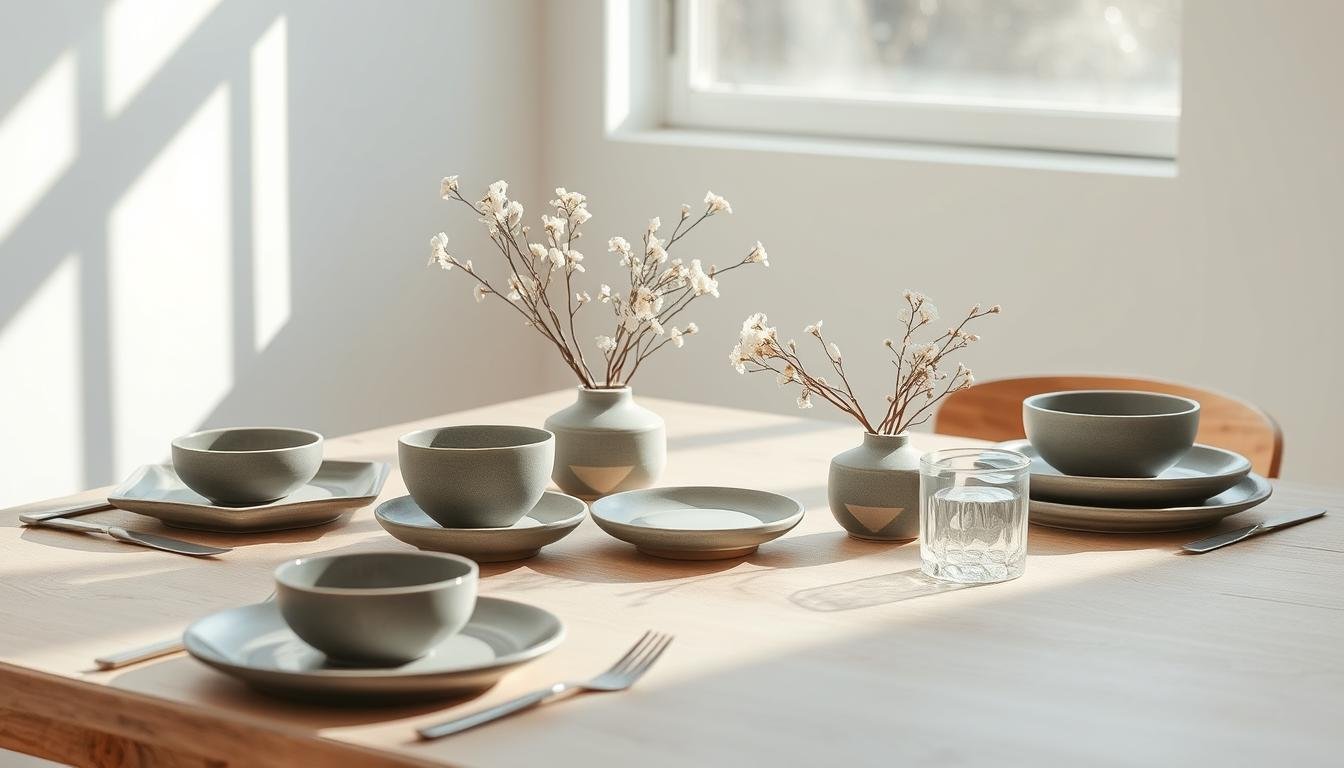
Imagine a space where Japanese minimalism meets Scandinavian practicality. This is the heart of Japandi style. It’s a design philosophy that brings together simplicity and harmony with nature.
Spring Inspiration for Your Dining Table
It has roots in Japan’s wabi-sabi, which loves imperfection, and Denmark’s hygge, which values coziness. Together, they create a serene and welcoming dining experience.
The Origins of Japandi Design
Japanese design focuses on emptiness and intention. Scandinavian design values function and light. Over time, these merged into Japandi’s signature balance.
Think handcrafted ceramics with sleek, clean-lined furniture. This blend is not just visual. It’s about merging cultural values into everyday spaces.
Key Characteristics of Japandi Style
Neutral color palettes dominate Japandi style. Soft grays, beiges, and whites create calm backdrops. Natural textures like woven jute mats or linen tablecloths add warmth without clutter.
Look for dining tables made of untreated wood. Their grains are left visible to celebrate imperfection. Even flatware matters—sleek minimalist designs in stainless steel contrast with organic elements like potted plants.
Every piece, from glassware to woven baskets, serves a purpose. It honors craftsmanship while doing so.
Spring brings new life to Japandi Dining Rituals. It mixes Scandinavian interior with nature’s awakening. Start with colors like soft pastels and earthy neutrals. These colors remind us of flowers and leaves, fitting Japandi’s love for nature.
Seasonal Colors and Textures
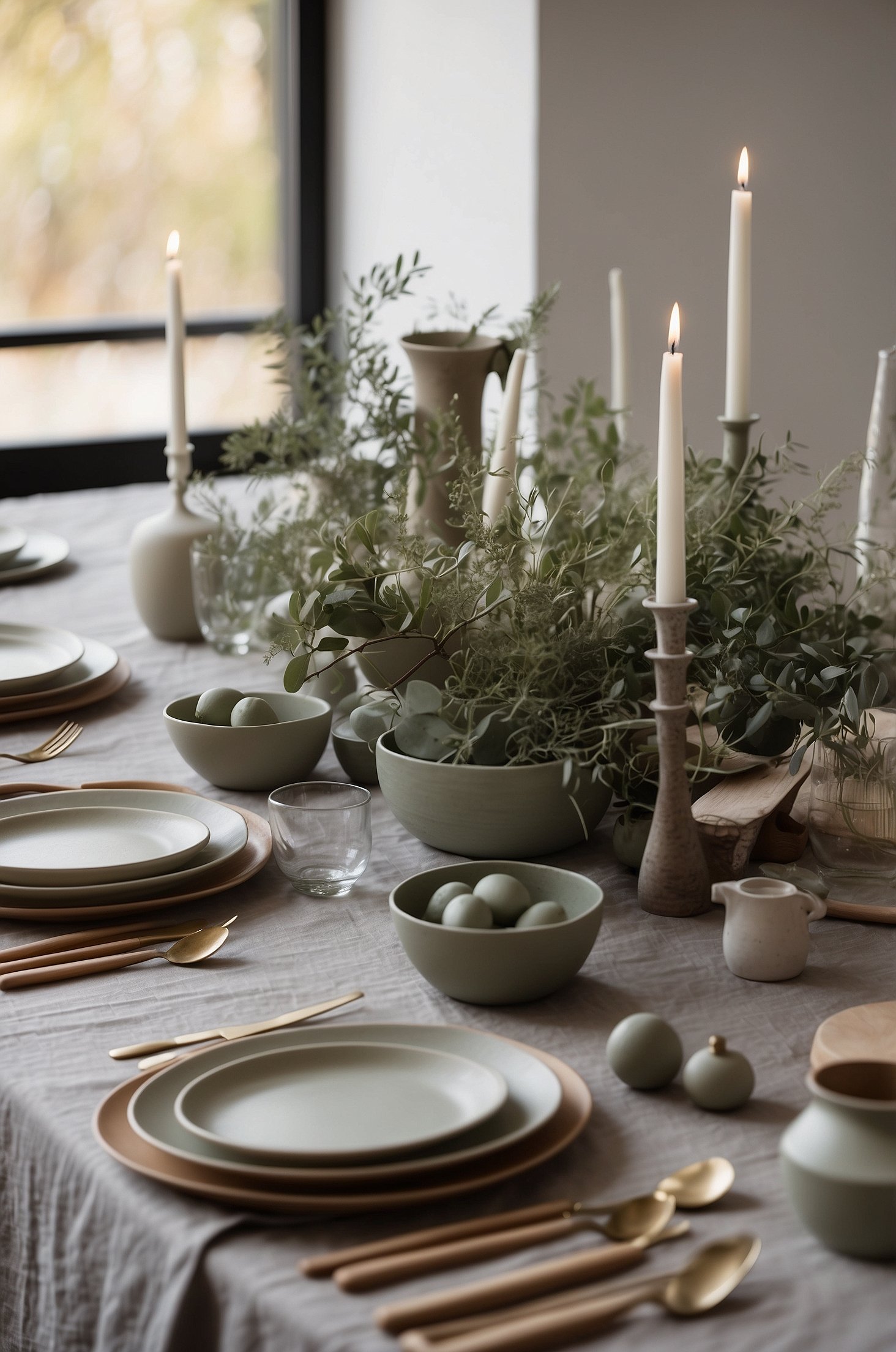
Choose tableware in muted colors like terracotta or celadon. Add warm wood accents for depth. Linen napkins and woven rattan placemats bring texture without clutter.
Scandinavian design’s clean lines work well with organic materials. This mix brings simplicity and warmth together.
Incorporating Nature into Table Settings
Bring nature to your table with small potted herbs or a vase of daffodils. Use river stones or moss as simple place markers. A bowl of wildflowers adds fun.
These touches show Japandi’s love for nature. They make your dining area feel alive and calm.
Essential Japandi Tableware for Spring
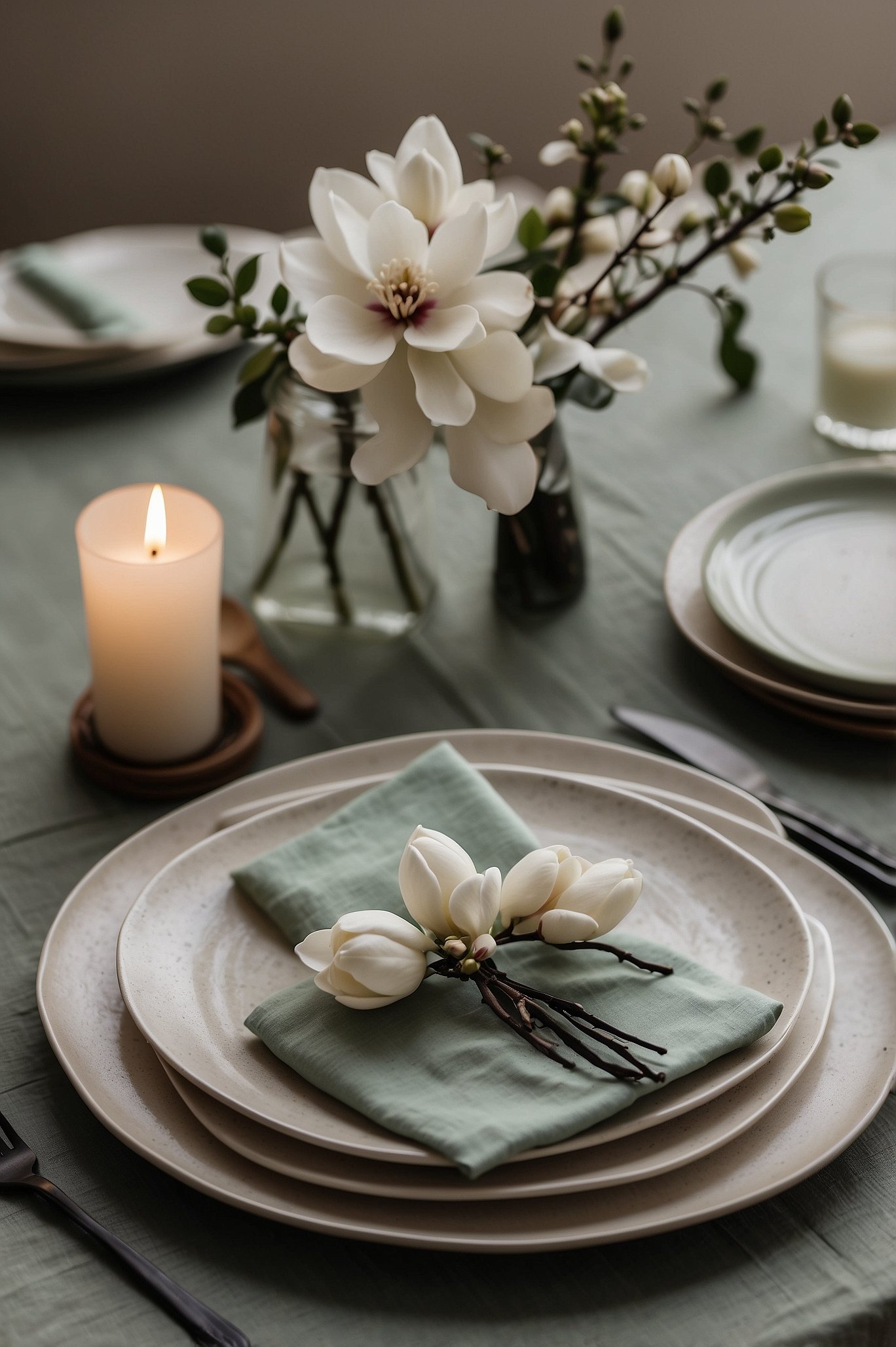
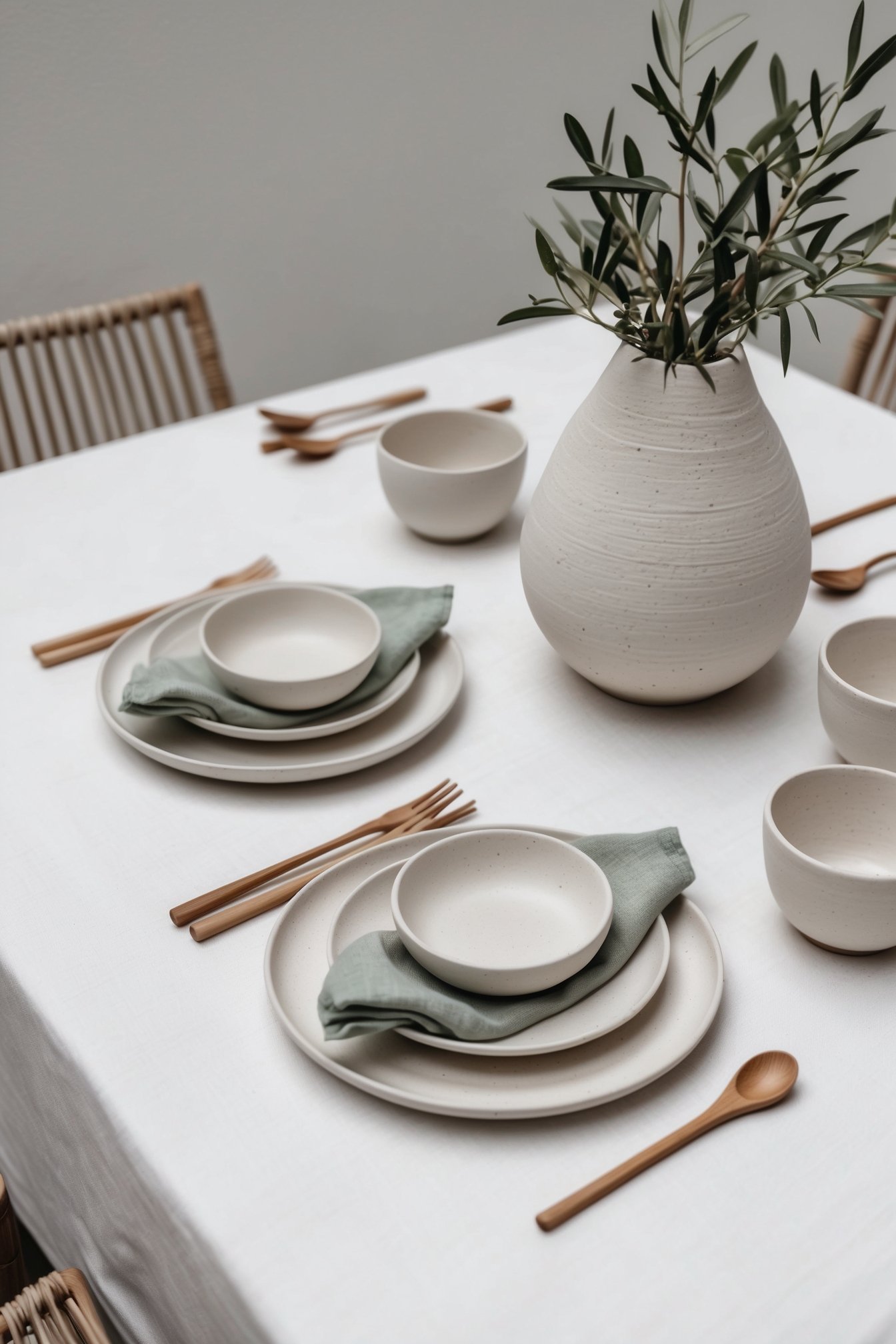
When setting your Japanese table setting, pick items that are simple yet useful. The right tableware makes both look and function better. It shows the harmony that Japandi style is all about. Let’s see how to choose items that show this idea.
Minimalistic Plates and Bowls
Go for plates and bowls made from enameled stoneware. Look at sets from Tunisia for subtle flaws and natural colors. Each piece, like dinner plates at 11.2″ and side plates at 9.4″, has organic shapes and rough edges. This celebrates wabi-sabi, the beauty of imperfection.
These items are safe from harmful metals. They’re made to last, getting better with age.
Elegant Cutlery Choices
Choose different materials for a richer look. Match shiny stainless steel forks and spoons with bamboo or horn chopsticks. Brands like Muji or Ferm Living offer designs that are both simple and crafted with care. Their 4-piece sets with matte finishes are perfect. They fit Japandi’s idea of simplicity.
Choosing the Right Centerpiece
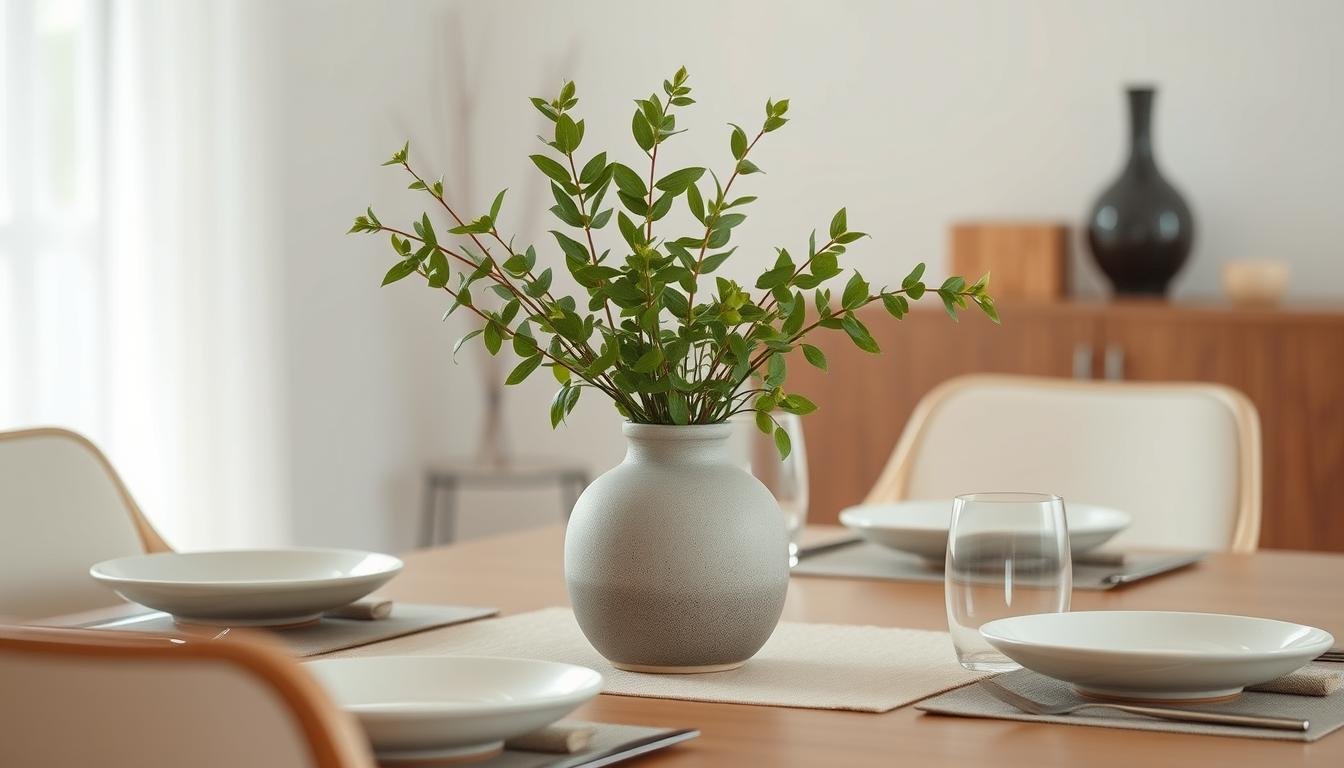
When picking a centerpiece for Japandi Dining Rituals, balance is crucial. Let nature inspire your choices and follow Japanese minimalism. A simple ikebana-inspired setup in a ceramic vase can make the table look great. Think of a single cherry branch or a few early tulips for a big impact.
For flower arrangements, mix asymmetrical designs with soft colors. Ferm LIVING’s Hourglass pots are great with ivy or a small bonsai. They blend function with beauty, showing off wabi-sabi’s beauty in imperfection.
Natural items like river stones or driftwood add texture without being too much. Pair them with moss or a glass bowl with floating flowers. Use simple, hand-thrown ceramics or rough wood to keep it minimal. Even a bowl of fresh fruit, like strawberries, can be a stunning centerpiece.
Remember, simplicity is key. A single succulent or a bunch of dried eucalyptus can say a lot. Your centerpiece should bring calm, just like Japandi Dining Rituals.
Setting the Table: Japandi Techniques
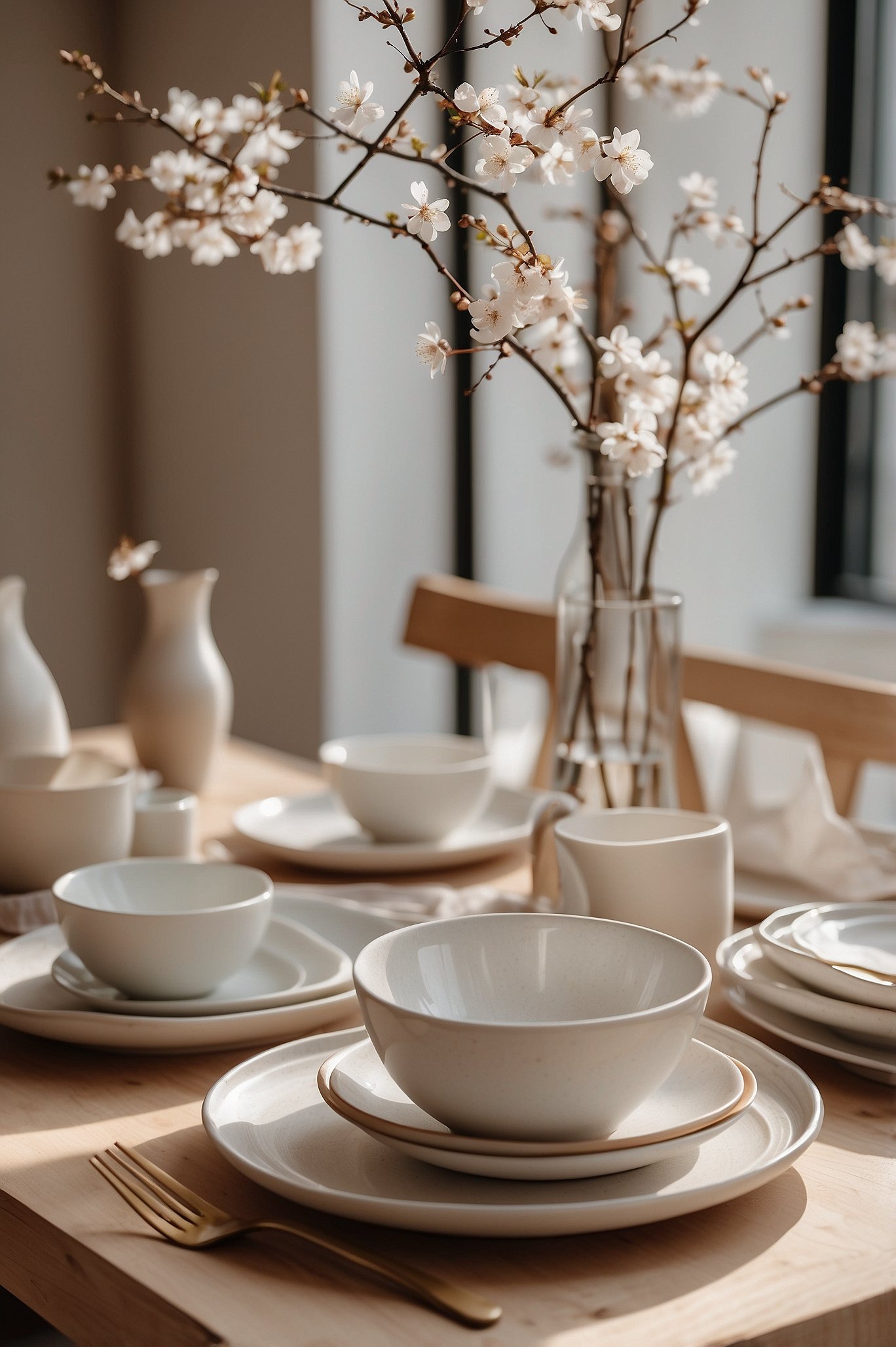
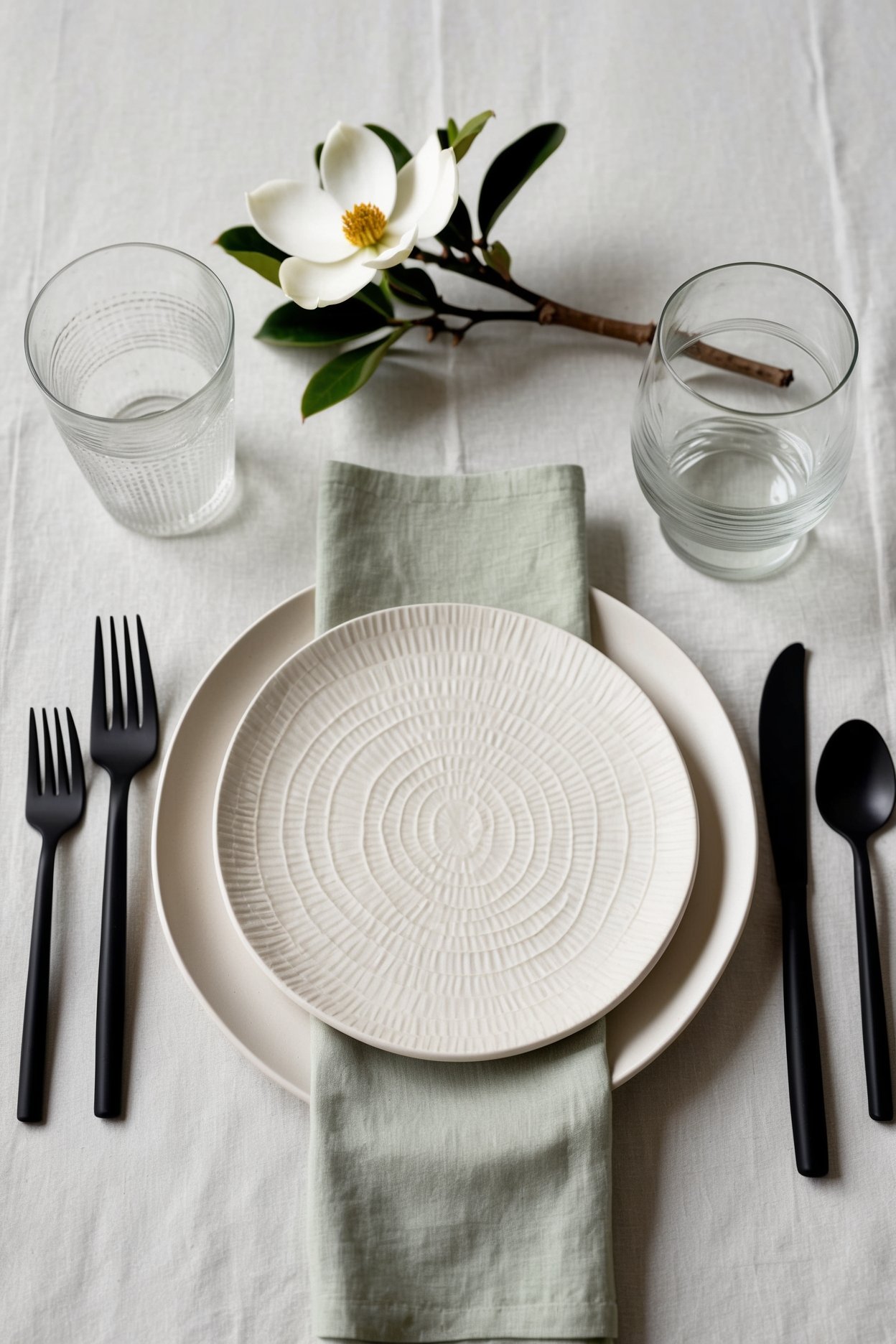
Creating a Japandi table starts with a neutral base. Choose a pale wood or linen tablecloth. Layering is key.
- Pair wooden chargers with ceramic plates for texture. Add a linen placemat beneath each setting for softness. Leave empty spaces to honor Japanese ma, the beauty of negative space.
- Layering is not just about stacking. Choose materials that complement each other. Use bamboo utensils with matte ceramic bowls, or a woven rush tray for bread.
- When arranging, avoid symmetry. Let dishes cluster loosely. Place taller vases or small potted herbs at one end to draw attention.
- Balance comes from intention. Position serving platters centrally. Let utensils and glasses drift organically. Follow dining etiquette by ensuring every object serves a purpose.
A single sprig of herbs on a plate mirrors Japanese kanso (simplicity). A woven basket for bread adds rustic Scandi charm. Every element should feel deliberate yet effortless, like the way light filters through a rice paper screen.
The Role of Lighting in Dining Rituals
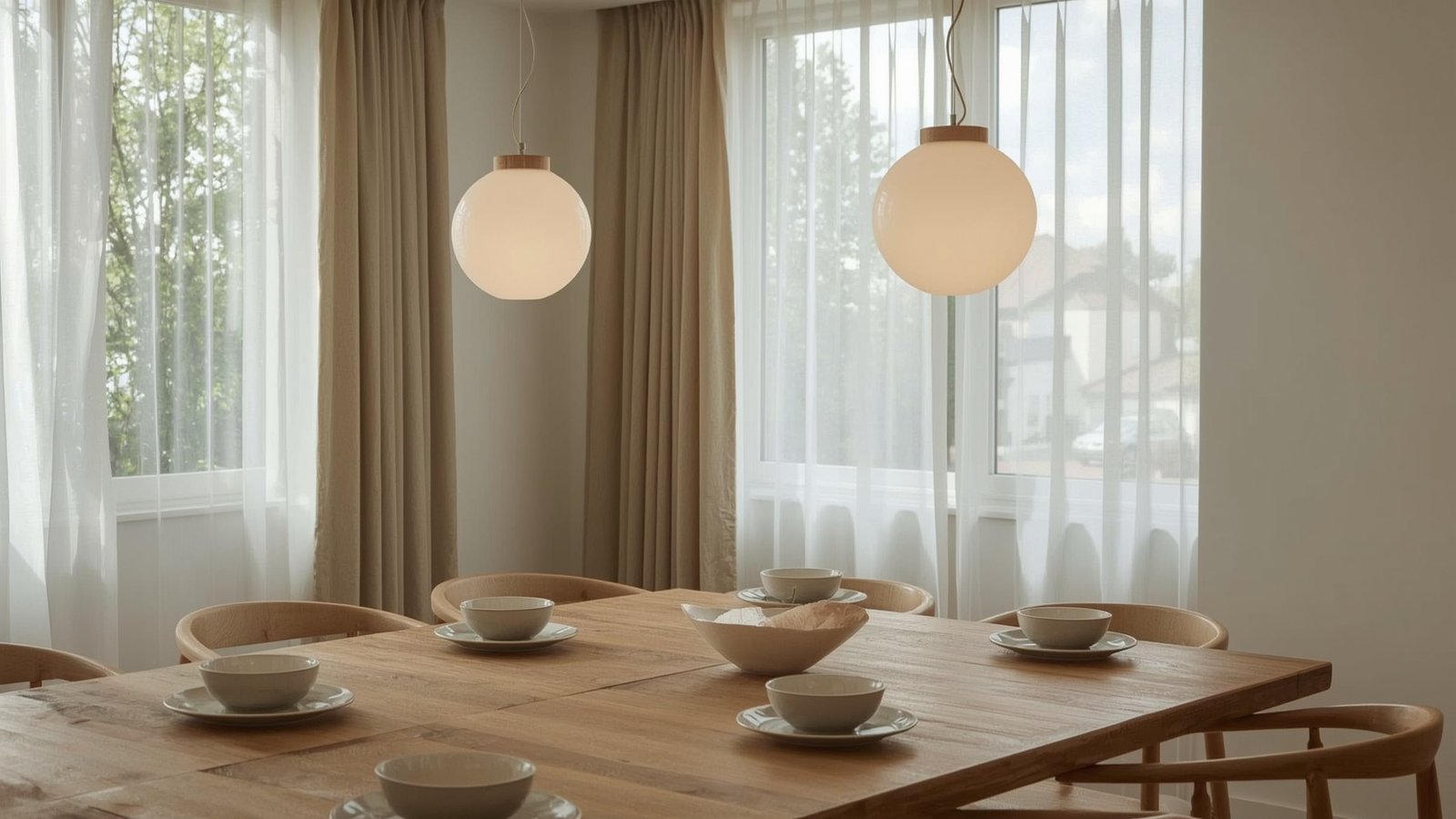
Lighting is key in a Japandi dining space. It sets the mood for your meal. I mix Scandinavian design’s simplicity with Japandi’s natural feel.
- Natural light is essential. Big windows with sheer curtains let in soft light. This creates the cozy shadows loved in Wabi-Sabi.
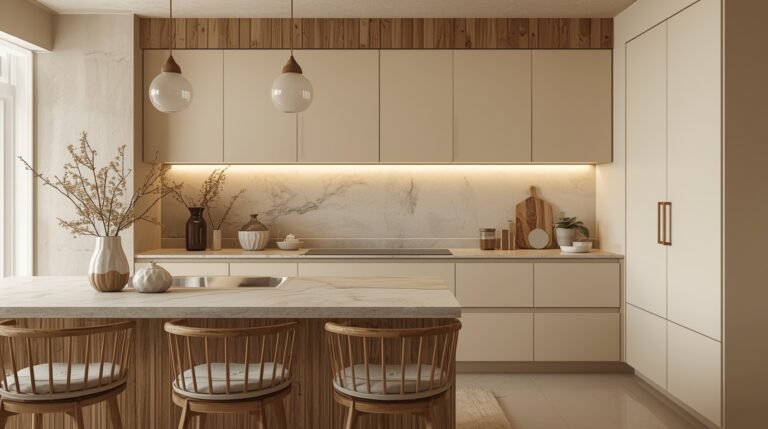
- For night, pendant lights with white glass are great. They spread light evenly and are practical yet soft.
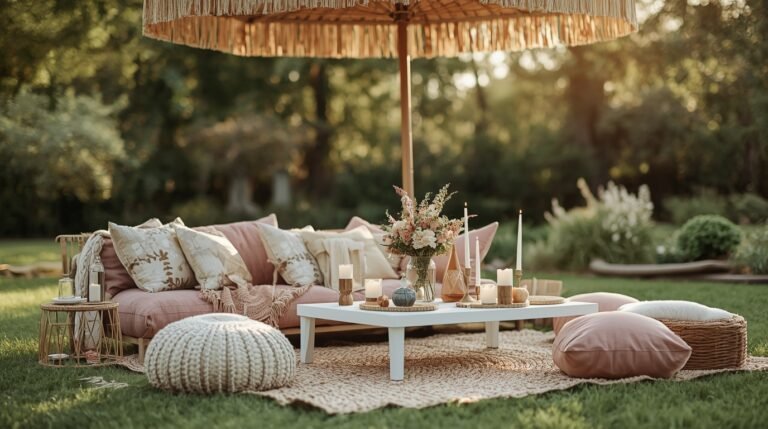
- Candles add warmth, a favorite in Hygge. Soy candles in terracotta with bamboo lanterns bring gentle shadows. This is a mix of Japanese simplicity and warmth.
- Choose lights that can be dimmed, like pendant lights with adjustable cords. Teak or iron with brushed finishes are good choices. They match Japandi style and are safe, thanks to UL and CE marks.
Using different lights makes the space cozier. LEDs under cabinets for work light and a pendant in the middle for warmth. Lights with a 2700K color temperature are best for spring nights. This mix makes any table a special place where light tells the meal’s story.
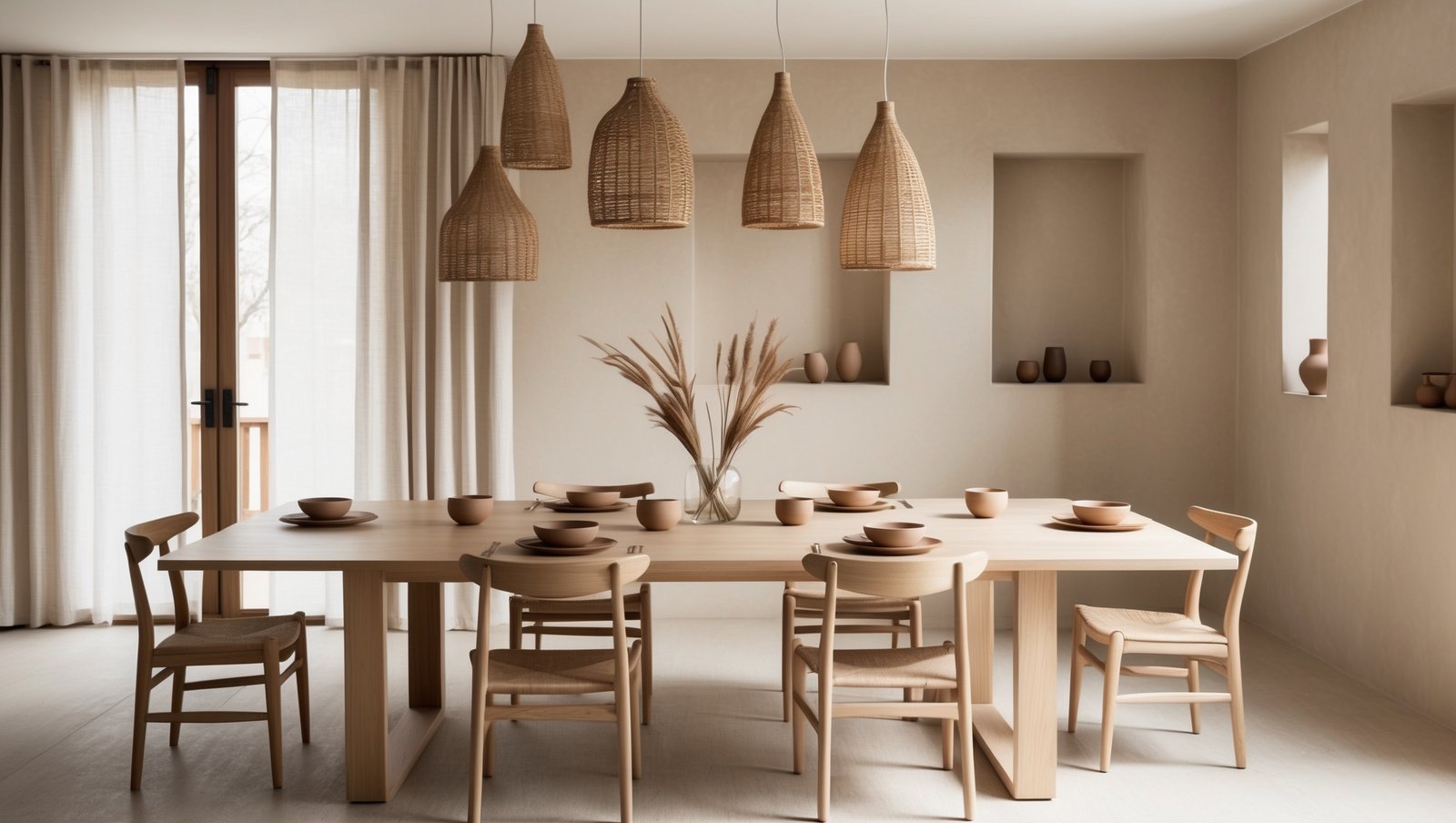
Japandi Dining Rituals mix Japanese and Scandinavian ideas. Picture a table with a unique ceramic plate under soft lights. This shows warmth and coziness.
Combining Wabi-Sabi with Hygge
Wabi-sabi loves things that are not perfect. Hygge adds coziness with textures like pottery and linen. A bowl with small cracks adds charm, and a jute runner brings warmth.
Scandinavian design is all about being simple yet elegant. Low-profile benches and wood tones add to the beauty. These elements make the space feel good and useful.
Cultural Significance in Dining Practices
In Japan, saying itadakimasu shows gratitude for the meal. This makes eating more mindful. Scandinavian fællesspisning makes meals a time to share.
A simple vase with a branch honors ikebana’s beauty. Candlelit dinners bring people together, like hygge. These traditions make meals special and meaningful.
Sustainable Dining Practices
I think sustainable dining is key to Japandi’s philosophy. It mixes Japanese and Scandinavian values. This means living long and being kind to nature.
Eco-friendly tableware is more than just pretty. It’s a daily promise to help our planet.
Eco-friendly Tableware Options
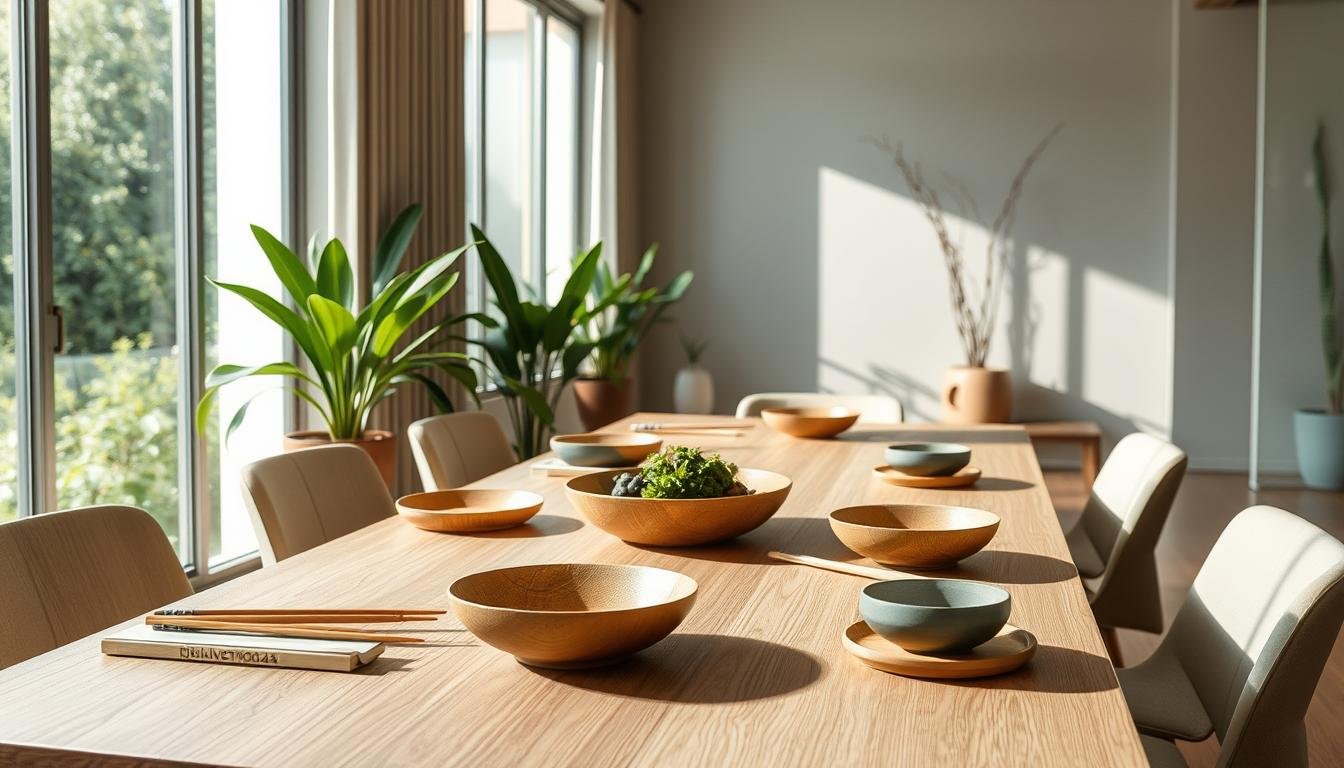
Bamboo bowls from Iwatemo or ceramics from Marimekko show Japandi’s simple beauty. These items last a long time and are made with care.
They’re made from things like bamboo and organic linen. Each piece shows the skill and thought behind it.
Reducing Waste in Your Dining Rituals
Mindful eating begins with the right amount of food. The Japanese dish ochazuke turns leftover rice into a tasty tea meal.
- Choose foods in season to reduce travel emissions. Use Furoshiki cloth instead of plastic. Bento boxes make leftovers into fun meals.
- Even small actions, like composting, help a lot. They make our dining greener and more meaningful.
By combining hygge’s coziness with wabi-sabi’s love for the imperfect, every choice is special. Making eco-friendly choices is easy when they’re also beautiful.
Hosting a Spring Gathering
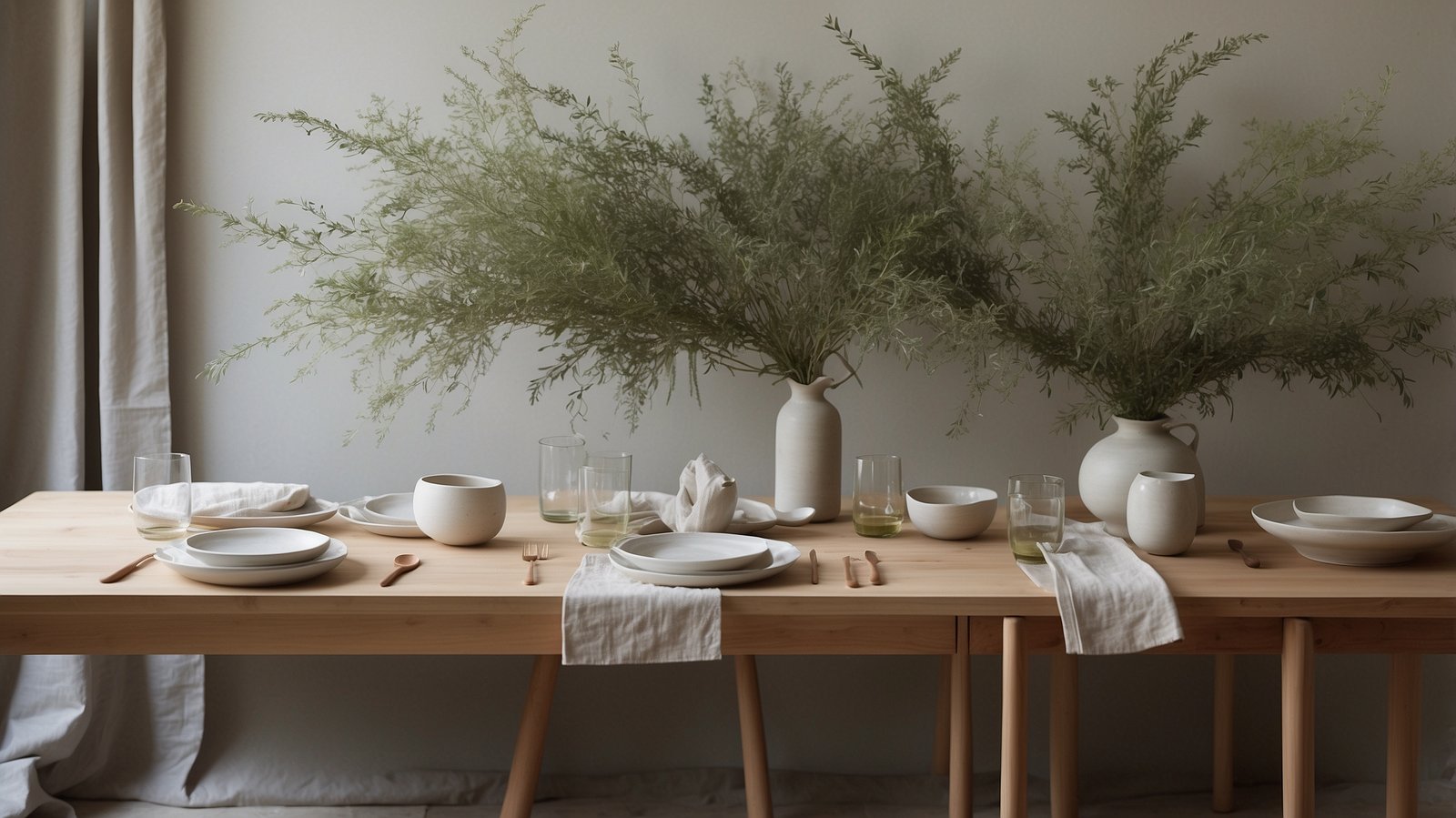
Hosting a Japandi-style gathering means blending Scandinavian simplicity with Japanese mindfulness. Start by curating a menu that mirrors this harmony. Use seasonal ingredients and cross-cultural flavors.
Menu Ideas for Seasonal Dishes
Think light, fresh dishes that highlight spring’s bounty. Try smørrebrød topped with umeboshi pickles or miso-glazed salmon paired with dill. For dessert, yuzu-kissed panna cotta or pea soup with wasabi cream adds a zesty twist.
Use tableware like Bonni Bonne’s ‘Emi’ oak trays and ‘Eno’ bowls. Karimoku Case Study’s muted ceramic plates keep focus on the food’s natural beauty.
Inviting Guests into the Japandi Experience
Begin by inviting guests with handcrafted paper notes—inkblot-stamped or tied with twine. During the meal, encourage mindful dining etiquette through small rituals. A moment of silence before eating or serving matcha in hand-thrown cups.
Arrange seating around Miau’s curved wooden tables. Pair GamFratesi’s ‘Edaha’ chairs with linen napkins. Let soft candlelight and the ‘Kawara’ chair’s organic curves create a space that balances hygge’s warmth with wabi-sabi’s imperfections. Remember, the goal isn’t perfection—it’s sharing simplicity with intention.
Personalizing Your Japandi Dining Experience
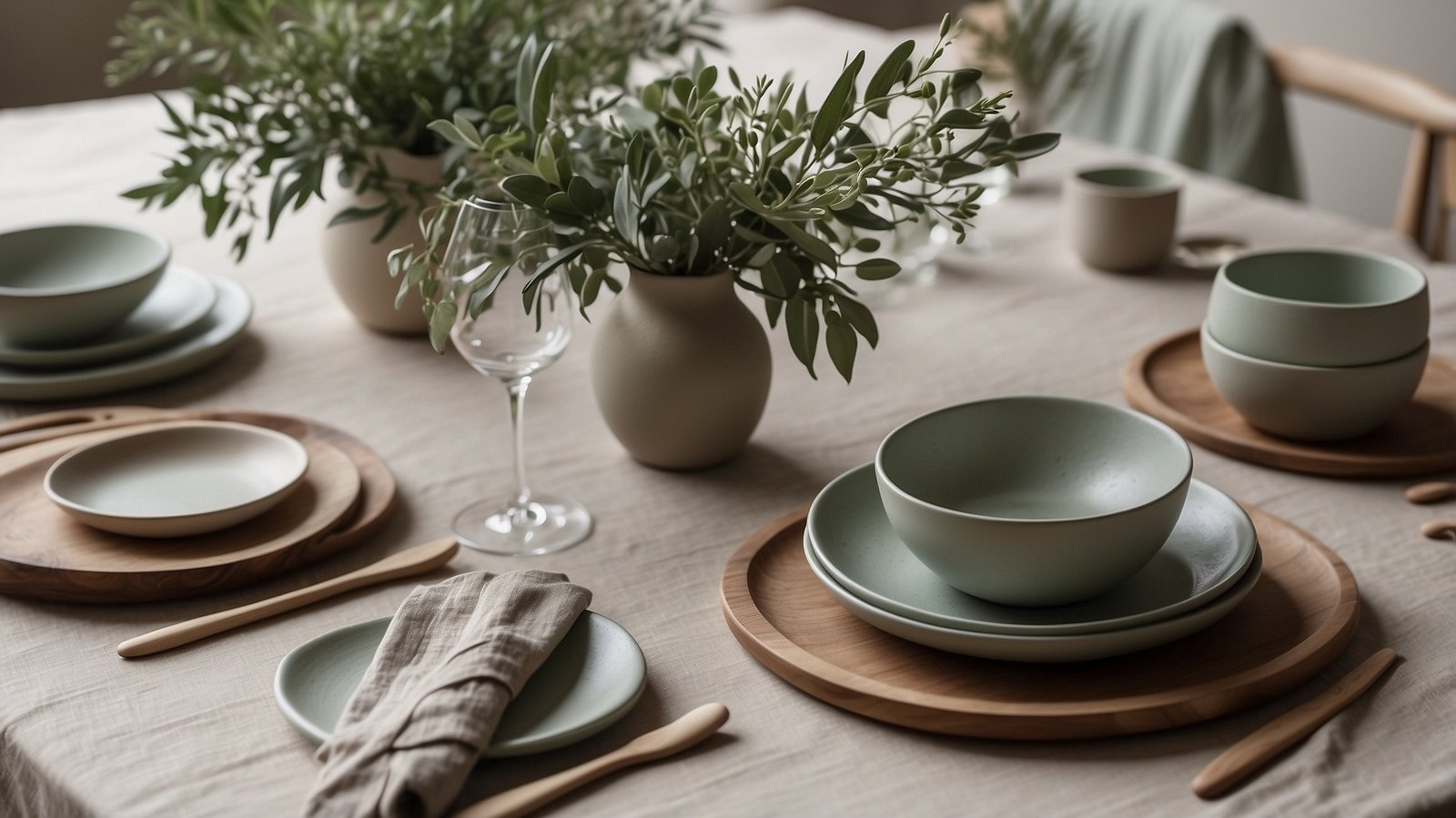
Japandi design is all about simplicity. But its real charm comes from how it fits into your life. Make your dining space special by adding items that mean a lot to you.
Use a vase passed down through your family or a bowl made by a local artist. These items add warmth and keep Japandi’s clean look.
Customizing Table Settings
Play with textures that tell your story. Try pairing a rustic ceramic plate with sleek oak placemats. Add a basket for bread or a wooden spoon set from your travels.
Even small flaws in pottery make each piece unique. Mix matte black coasters with linen napkins for a modern touch.
Family Traditions and Memories
Make Japandi Dining Rituals a place for your family’s stories. Serve family recipes in simple bowls with linen runners. Start new traditions like mindful meals where you talk instead of scroll.
Take photos of these moments to show in open shelves. This turns daily meals into a living history. It’s not about being perfect. It’s about making a space where your family’s story meets Japandi’s calm beauty.
Embracing Mindfulness at the Dining Table
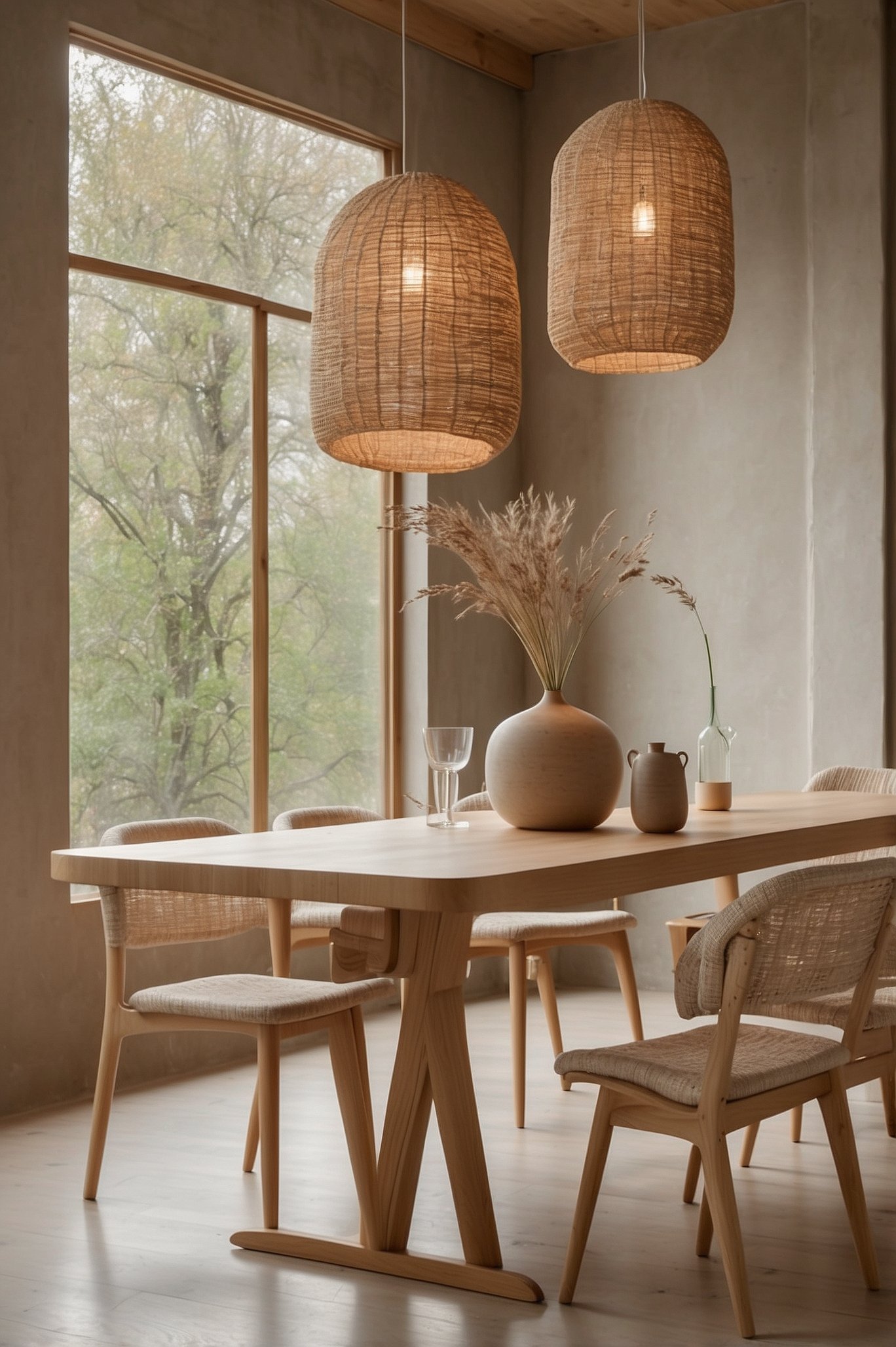
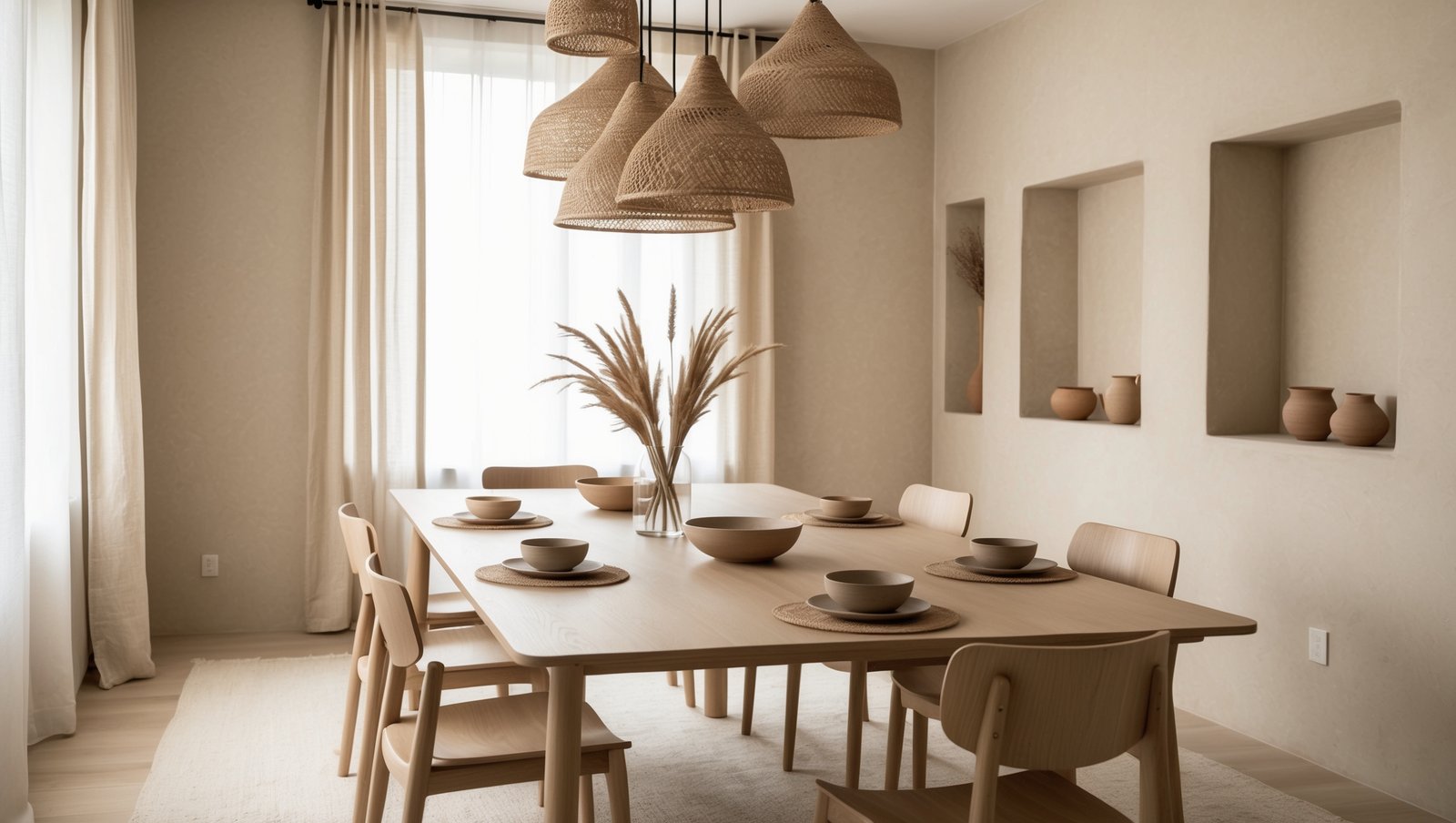
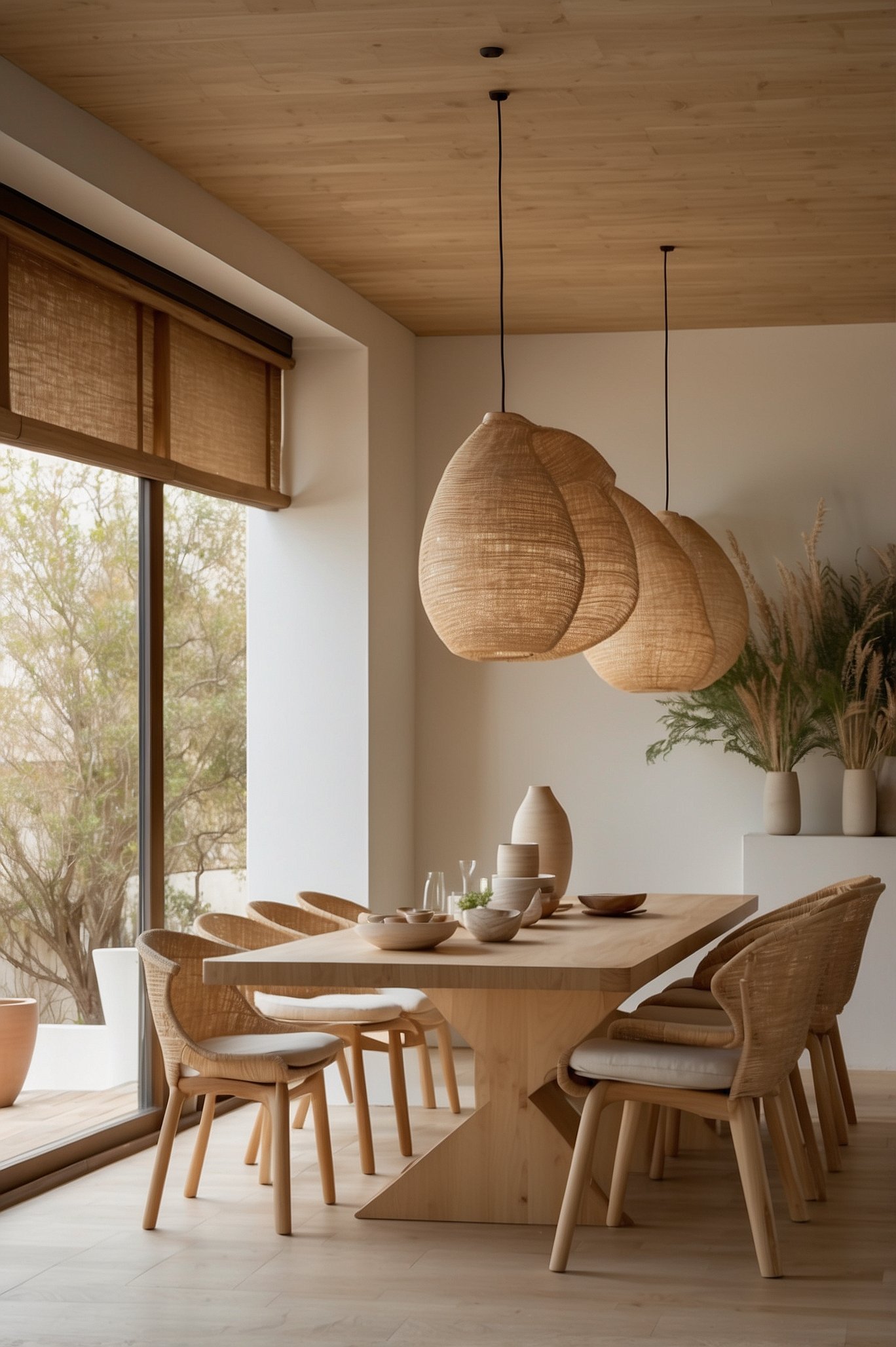
Creating a calm space is key for mindful eating. Japanese minimalism helps by keeping things simple. Start by clearing clutter and choosing simple colors like whites and beiges.
A West Elm acacia wood table adds warmth. PAN Emirates’ rattan stools bring organic textures. These elements help you focus during meals.
Focus on Food and Conversation
Turn off phones and let dishes be the main focus. Use simple tableware in earthy tones. Low dining tables with natural wood finishes encourage relaxed eating.
Ukiyo-e art prints add a touch of Japanese minimalism. A bamboo tea ritual slows down your day. Hygge’s cozy lighting and Wabi-Sabi’s love for imperfection keep things relaxed.
Techniques for Stress-free Dining
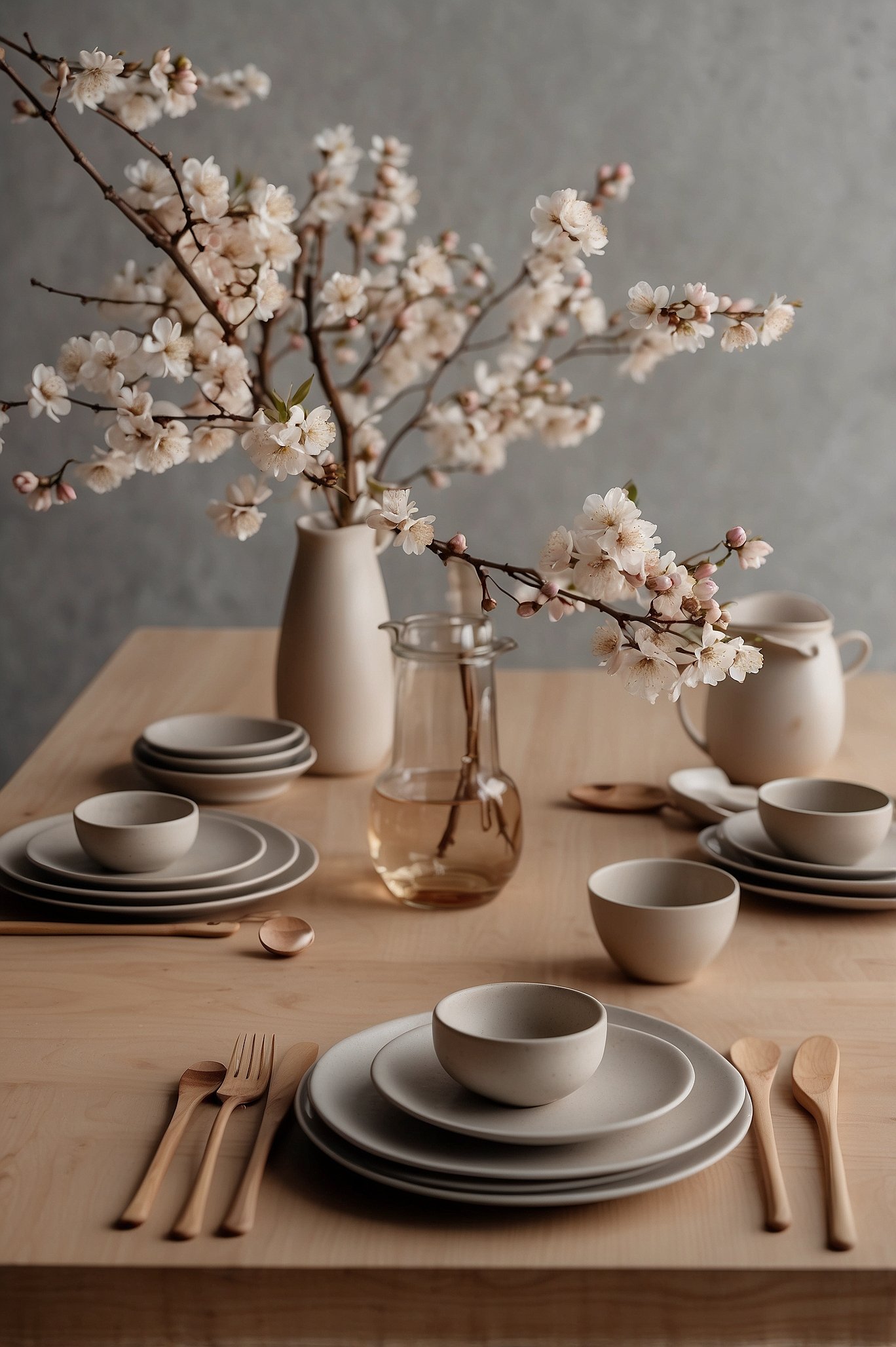
Prepare meals early to avoid stress. Choose simple dishes like miso soup or seasonal vegetables. Embrace the beauty of imperfection in your dishes.
Use Zen-inspired centerpieces like river stones or moss. Take deep breaths before eating. Mindful eating is about enjoying the moment, not strict rules.
The Art of Slow Eating
At the core of Japandi Dining Rituals is slowing down. The Japanese idea of ichigo ichie—treating each moment as precious—shapes every meal. Picture enjoying a spring vegetable dish under soft paper lanterns, mindful of each bite and conversation. It’s a way to cherish memories and find joy in the now.
FAQ
What is Japandi style?
Japandi style mixes Japanese minimalism with Scandinavian design. It values simplicity and function. It also connects us to nature, making dining more mindful.
Why is spring a great time to embrace Japandi dining?
Spring is a time of renewal. It’s perfect for using Japandi tableware that highlights nature and the seasons. Spring’s colors and textures match Japandi’s focus on harmony and mindfulness.
What are the key characteristics of Japandi style?
Japandi style uses muted colors and natural materials. It has clean lines and organic shapes. It also values balanced asymmetry and minimalism, creating a peaceful dining space.
How can I create a seasonal color palette for my Japandi table?
For spring, use soft pastels with earthy neutrals. Add sakura pink to bring in Japanese tradition while keeping the Japandi look.
What types of tableware are essential for a Japandi dining experience?
Choose minimalist plates and bowls with organic shapes. Look for matte finishes and thoughtful imperfections. Use materials like speckled stoneware or hand-pinched clay to blend both cultures.
How should I arrange centerpieces in a Japandi style?
Follow ikebana for floral arrangements, focusing on asymmetry and negative space. Use spring flowers like cherry blossoms. Add natural elements like river stones and driftwood for a balanced centerpiece.
What lighting considerations should I keep in mind for Japandi dining?
Natural and artificial light are both important. Use natural light and soft artificial light like candles or paper lanterns. This creates a cozy atmosphere for dining.
How can I personalize my Japandi dining setup?
Add family heirlooms or personal items while keeping the Japandi look in mind. Getting custom pieces from local artisans can make your setup unique.
What are some sustainable practices for Japandi dining?
Use eco-friendly tableware like bamboo or locally-sourced ceramics. Reduce waste by managing portions and using furoshiki for wrapping and gifting.
How do I create a mindful dining experience?
Remove digital distractions and present food thoughtfully. Create a peaceful space for conversation and connection. This enhances mindful eating, blending Japanese and Scandinavian traditions.
Lasting Impressions Through Design
Scandinavian design’s simplicity meets Japan’s love for imperfection in Japandi spaces. A hand-thrown ceramic bowl or a linen table runner tells a story. Muted greens, earthy textures, natural light, and indoor bamboo turn meals into special moments. These elements don’t just decorate; they create a peaceful place for family and quiet moments.
Start small to begin your Japandi journey. A single ceramic piece or a new tablecloth can be the start. Letting go of clutter and focusing on what nourishes your table is where the magic starts. The goal isn’t a perfect room. It’s the warmth of sharing a meal in a space that feels like home.
The Bottom Line
As we end our look at Japandi Dining Rituals, it’s clear that blending Scandinavian simplicity with Japanese mindfulness is key. It makes spaces where moments are valued more than trends. My own journey showed me that making a dining space special isn’t about being perfect. It’s about creating connections through thoughtful choices.

ABOUT the AUTHOR
TOKI; INTERIOR DESIGN & lifestyle CONTENT CREATOR.
Hey there! I’m Toki—the design-obsessed brain behind Dwell Studio 24. I’m a content creator passionate about interior design, photography, and creativity, living in a 77-year-old house with my husband and our awesome three kids. I write about interior design, furniture, home topics, and my lifestyle, including travel, recipes, skincare, and daily routines. I hope to inspire your next project and lifestyle!
ABOUT the AUTHOR
TOKI; INTERIOR DESIGN & lifestyle CONTENT CREATOR.
Hey there! I’m Toki—the design-obsessed brain behind Dwell Studio 24. I’m a content creator passionate about interior design, photography, and creativity, living in a 77-year-old house with my husband and our awesome three kids. I write about interior design, furniture, home topics, and my lifestyle, including travel, recipes, skincare, and daily routines. I hope to inspire your next project and lifestyle!
ABOUT the AUTHOR
TOKI; INTERIOR DESIGN & lifestyle CONTENT CREATOR.
Hey there! I’m Toki—the design-obsessed brain behind Dwell Studio 24. I write about interior design, furniture, home topics, and my lifestyle, including travel, recipes, skincare, and daily routines. I hope to inspire your next project and lifestyle!