
Organic Modern Kitchen Made Easy: 21 Essential Secrets for Lasting Comfort
If you’re stuck between the ultra-sleek look of modern minimalism and the cozy warmth of a natural home, you don’t have to choose! The Organic Modern kitchen trend is the perfect blend of sleek, contemporary lines and natural, earthy elements. This style is rapidly gaining popularity because it addresses a deeply felt need: to have a space that is clean and streamlined but doesn’t feel cold or “sterile”.
If you love modern design but feel it “just errs a little too far on the cold side,” the warmth and coziness of the Organic Modern style might be exactly what you’ve been searching for. It’s a thoughtful blend of modern efficiency and organic comfort, resulting in a space that feels calm, soothing, and rich in warmth, comfort, and soul.
Designing your dream kitchen, whether you’re starting from scratch or just planning a refresh, can feel overwhelming. But by focusing on the core principles of texture, balance, and intentionality, you can create a space that’s both functional and profoundly inviting.
Defining the Aesthetic: Blending Opposites
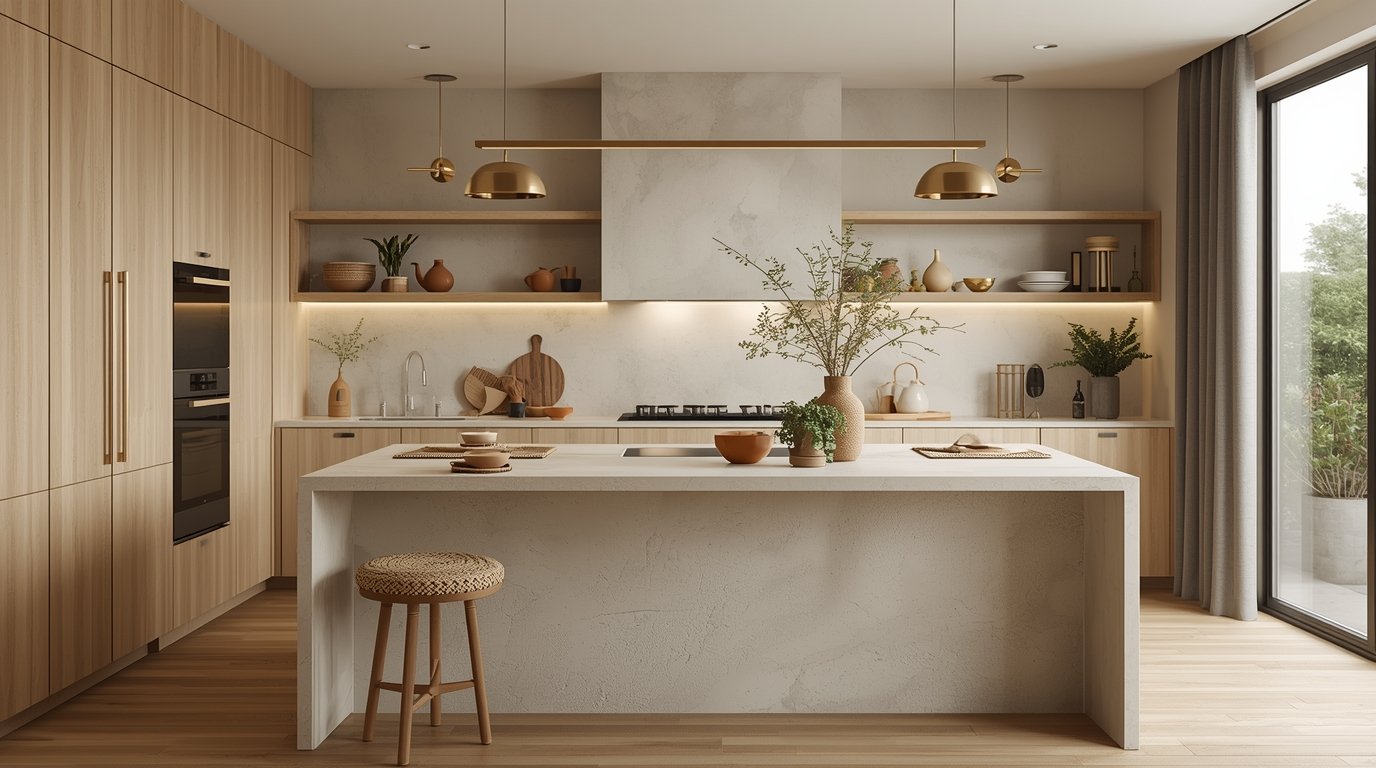
What makes an Organic Modern kitchen so special? This style is all about the balancing act of aesthetic and function. It marries the clean, functional aspects of modern design with the texture, warmth, and character of organic materials like wood and stone. The key is in blending opposites—the sleekness of modernity with the softness of nature.
Understanding the Core Philosophy
The entire look is rooted in principles that prioritize feeling. This aesthetic is inspired by the natural world, as well as the wabi-sabi sensibility of beautiful imperfections. It’s a surprisingly eclectic blend, layering minimalism, mid-century modern, and Bohemian (boho) design styles together with organic elements, forms, and colors to create a refined but textural space.
The guiding principle is finding the middle ground. The result you’re aiming for is: “Not too polished. Not too rustic. Just clean, warm, and real”.
Setting the Canvas: The Earthy Color Palette
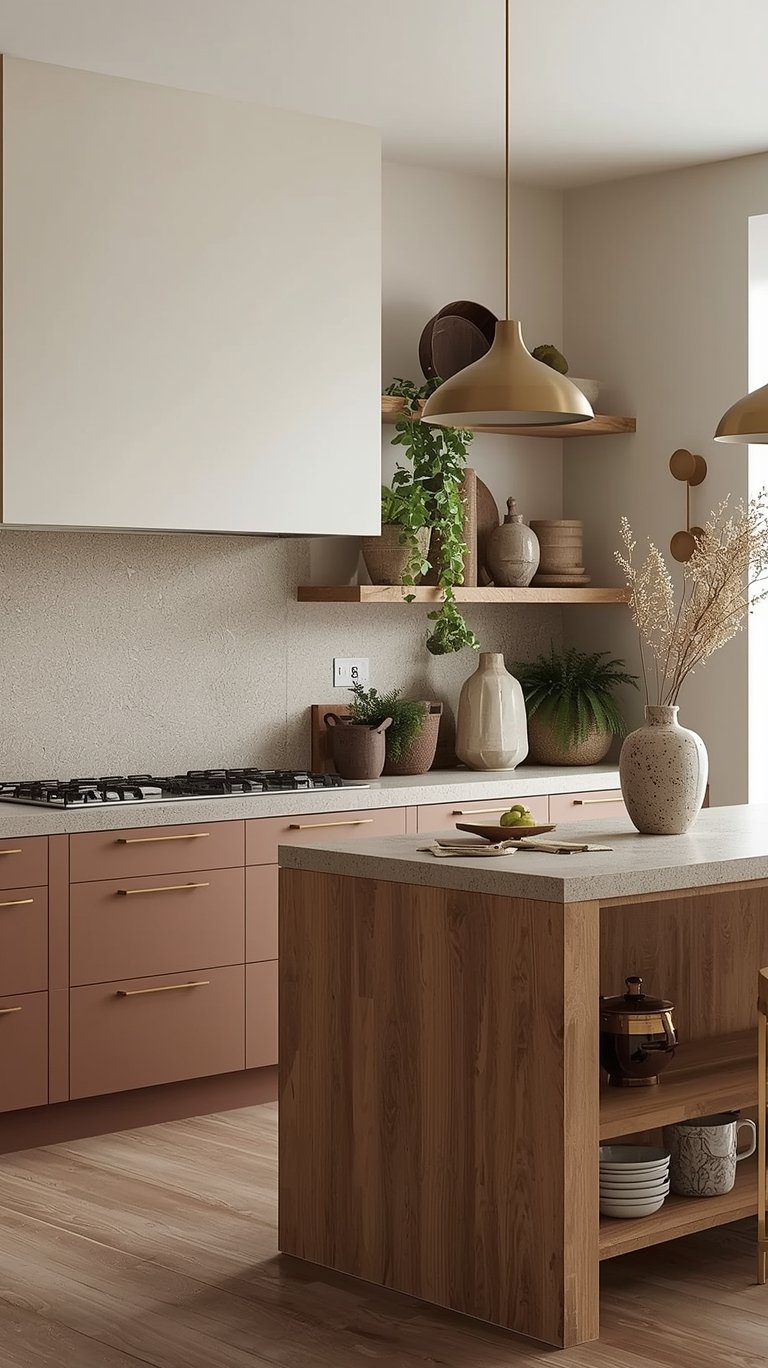
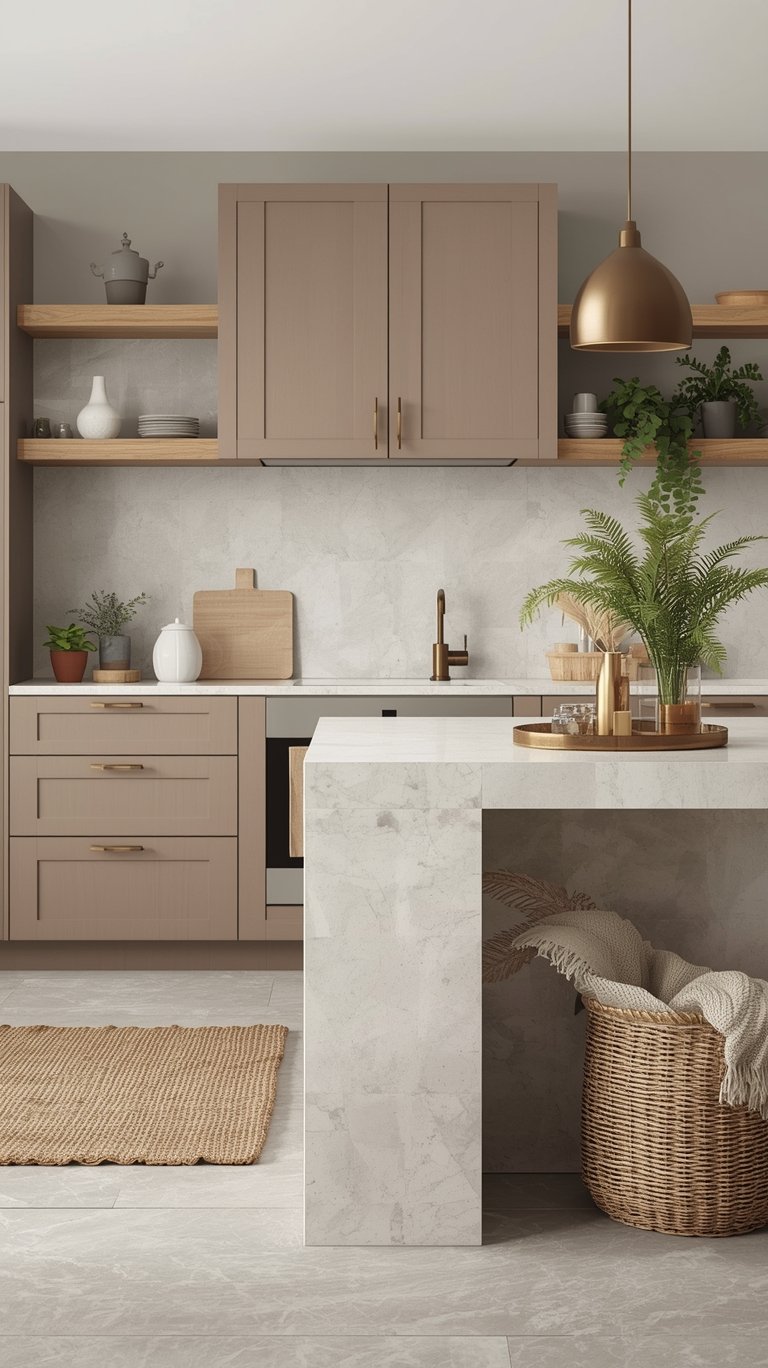
To emulate the Organic Modern kitchen trend, the first place to start is with a curated foundation of neutrals that reflect the outdoors. Color palette plays a crucial role, providing a clean and serene backdrop that keeps the space open and airy.
1. Neutral Base Colors for a Calm Backdrop
Your foundation should be a neutral and earthy color palette. Think of soft off-whites, beiges, creams, stone grays, and light taupes. These tones act as a “blank canvas,” allowing the natural materials you introduce later to truly stand out.
2. Layering Earthy Accent Tones
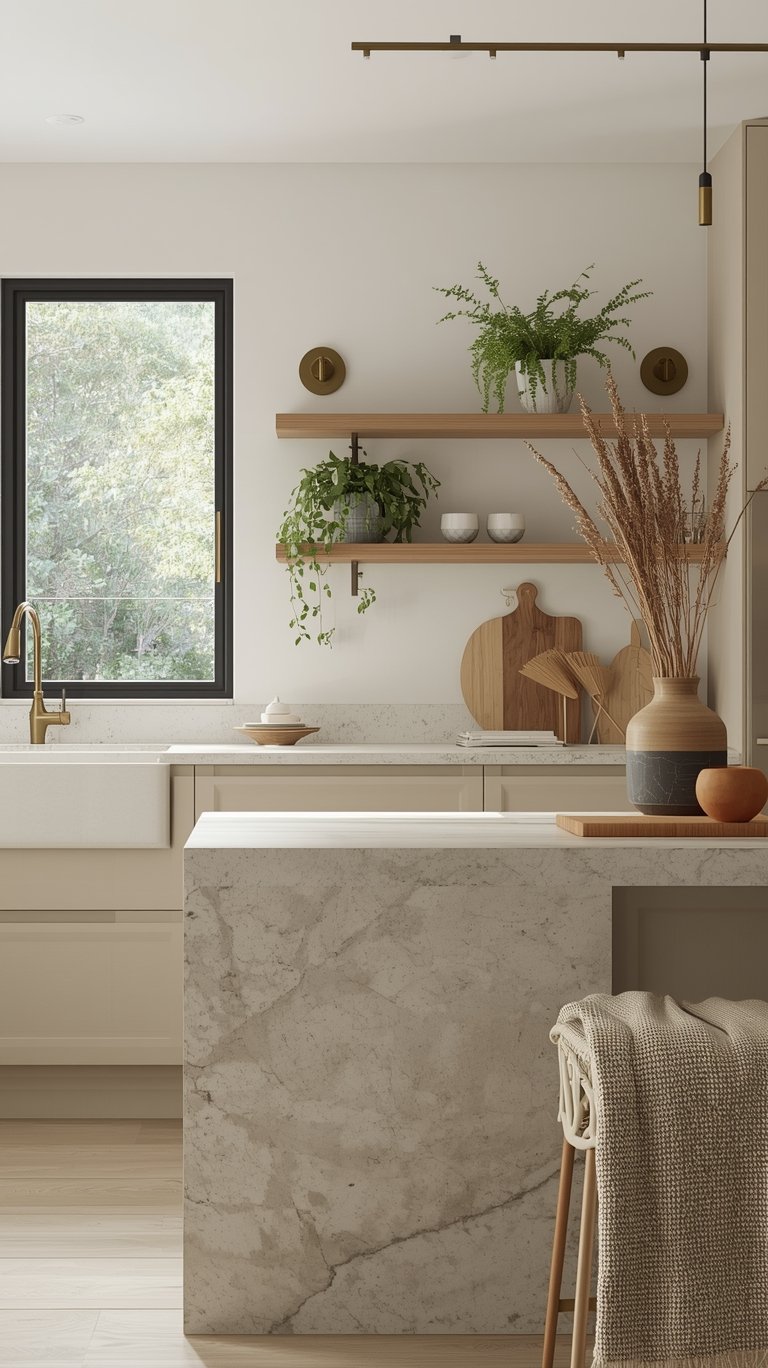
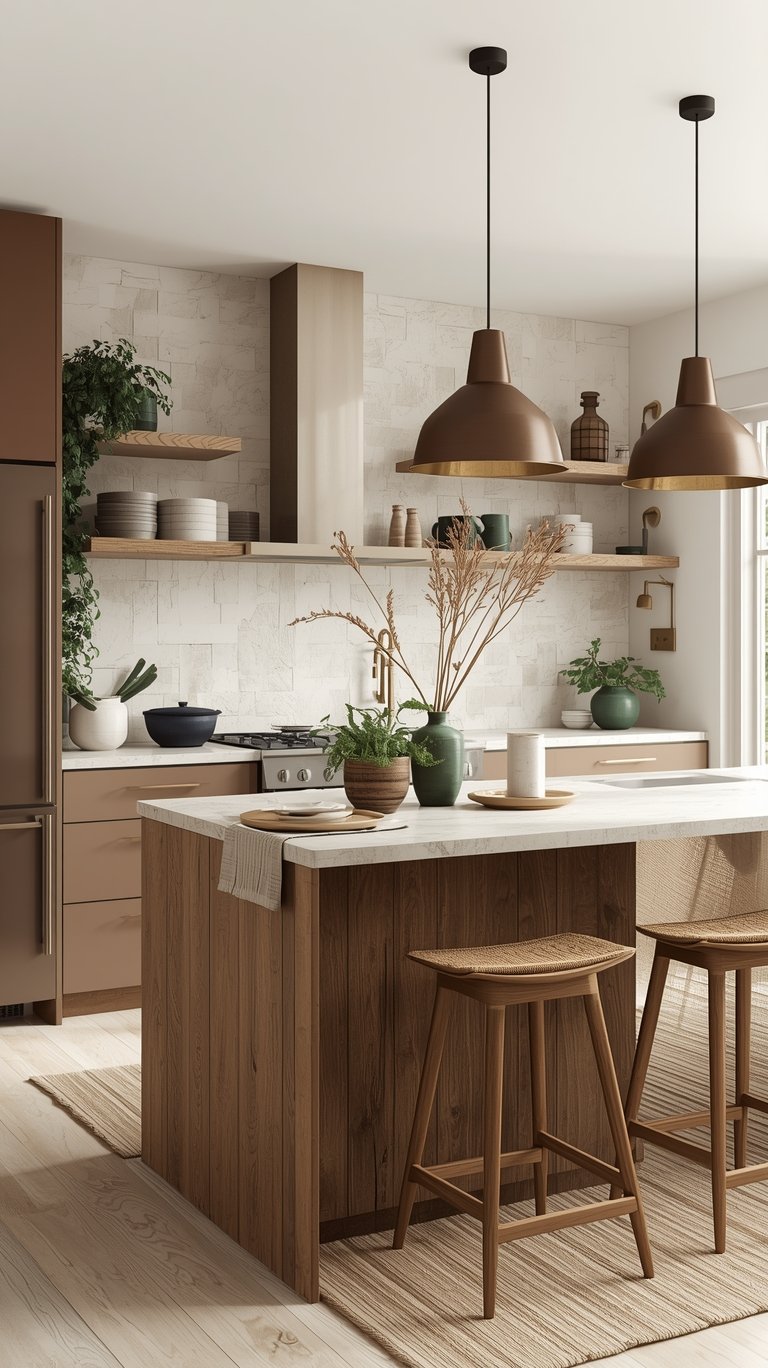
To keep the space from feeling bland, boring, or too sterile, you need to introduce accent colors that connect the kitchen to the natural world. Try mixing in earthy tones like warm browns, terracotta, or even a subtle olive green. Colors taken directly from nature can be incorporated onto kitchen cabinets or in decor items. Shades like muted rusts are also popular, reminiscent of natural elements like soil and clay.
- Practical Tip: Pale tones can easily become bland. To avoid this, add visual interest by layering up your accent tones with texture and lighting to “cocoon the space in comfort”.
The Natural Core: Essential Organic Materials
The foundation of an Organic Modern kitchen is the extensive use of raw, organic, and natural materials. This is the layer where nature meets modernity, adding much-needed texture and warmth.
3. The Soul of Wood: Oak and Walnut
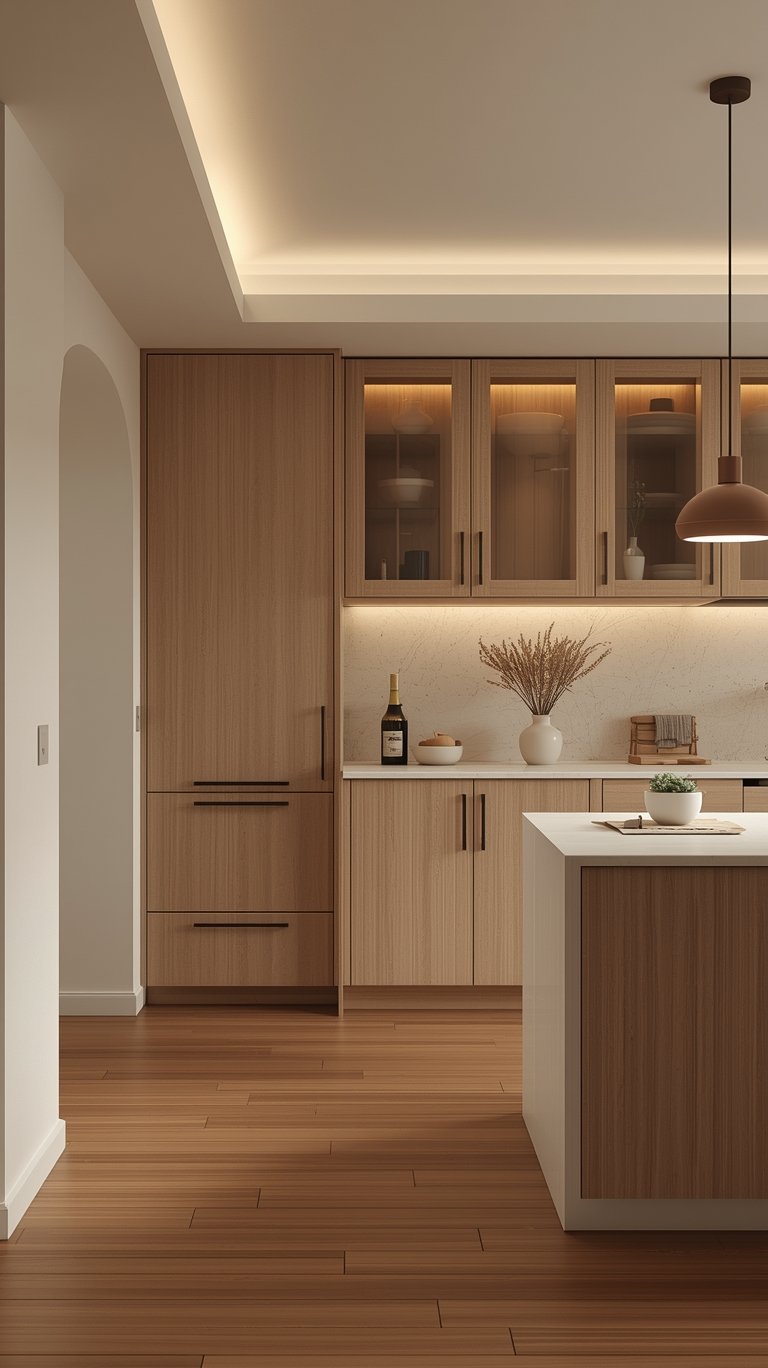
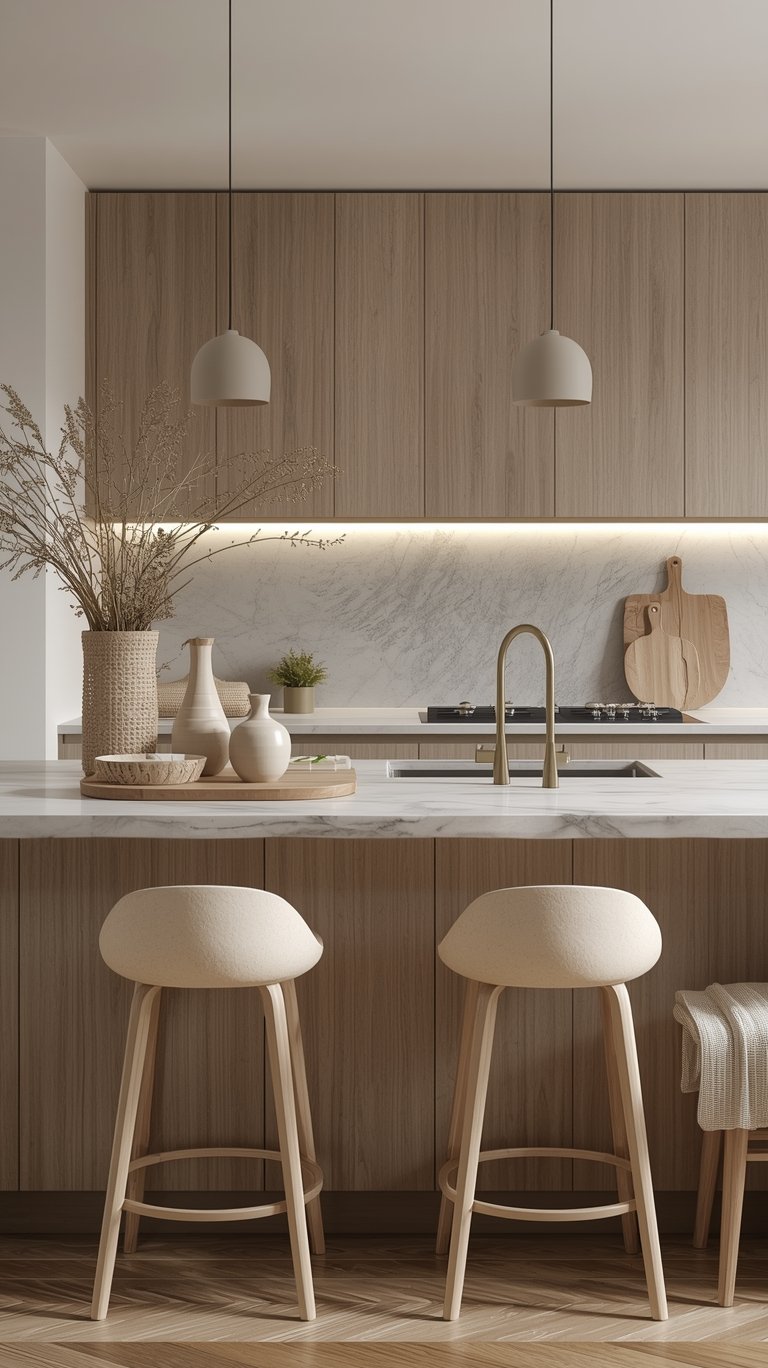
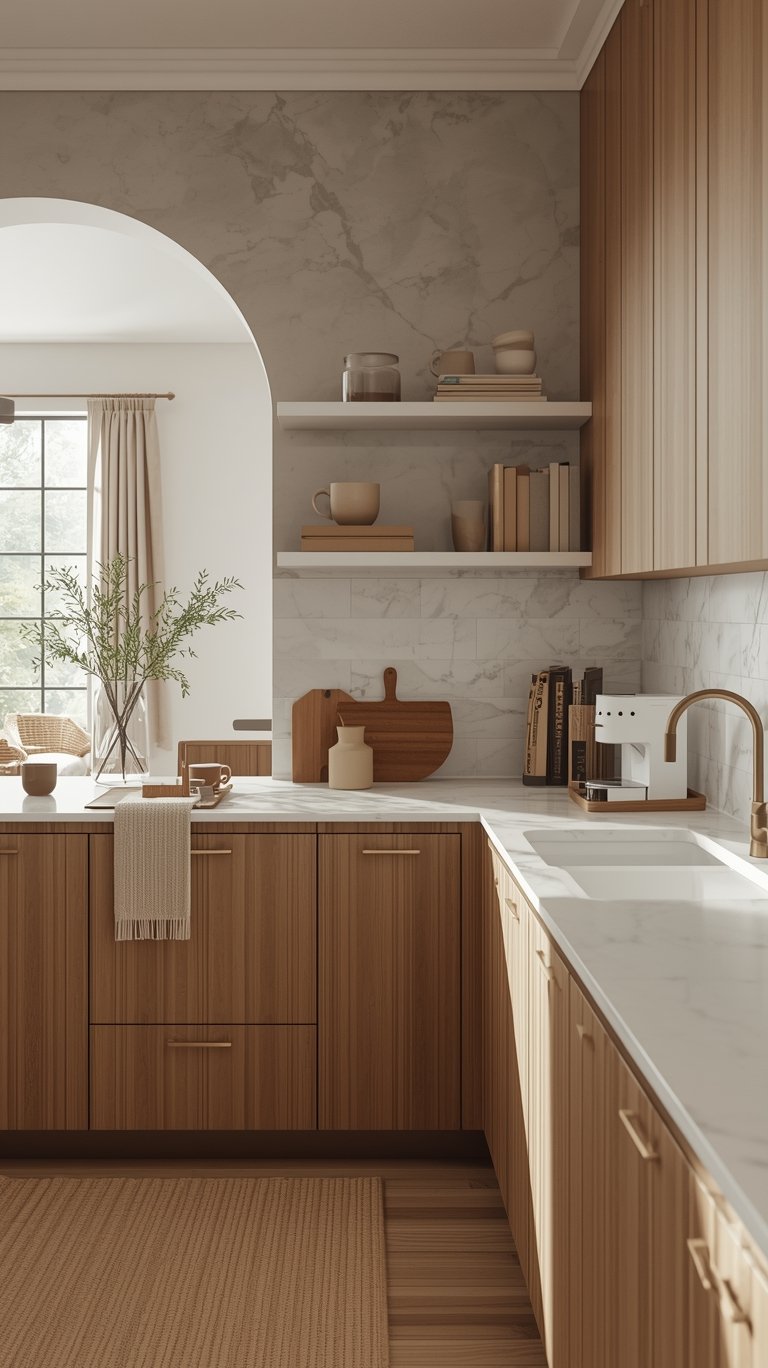
Wood is essential for adding warmth and character, especially if you have a primarily white kitchen. Allowing the natural beauty of the wood to shine with minimal staining is key.
- Cabinetry Favorites: White oak and walnut are highly favored for cabinetry because of their subtle grain and warm tones. You can choose a material with visible grain in lighter tones like oak, alder, or ash.
- Accents: Introduce the natural vibe further by using reclaimed wood for open shelving or accent walls.
- Budget Solution: If solid wood isn’t in the budget, you can still get the look using wood textured Thermally Fused Laminate (TFL), which offers a light, clean look and sustainability.
4. Grounding Stone: Marble, Soapstone, and Granite
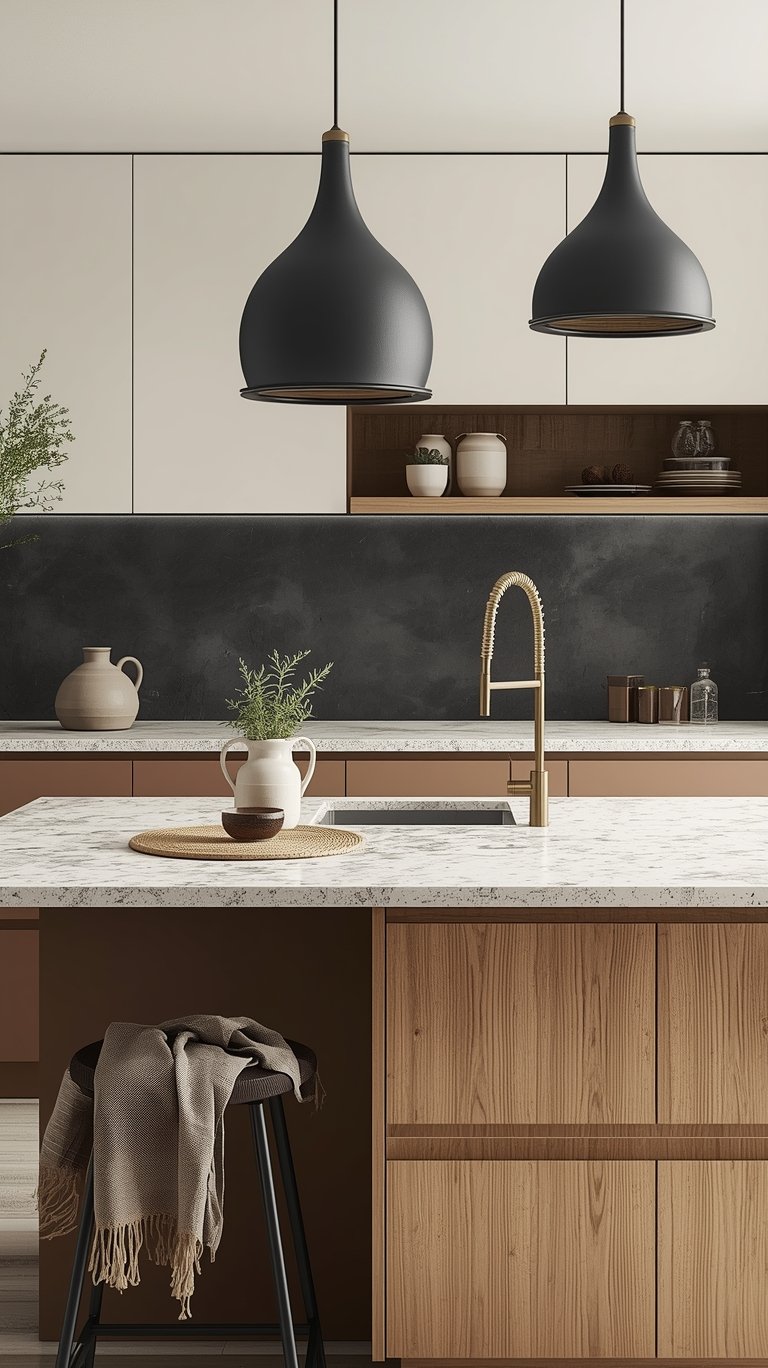
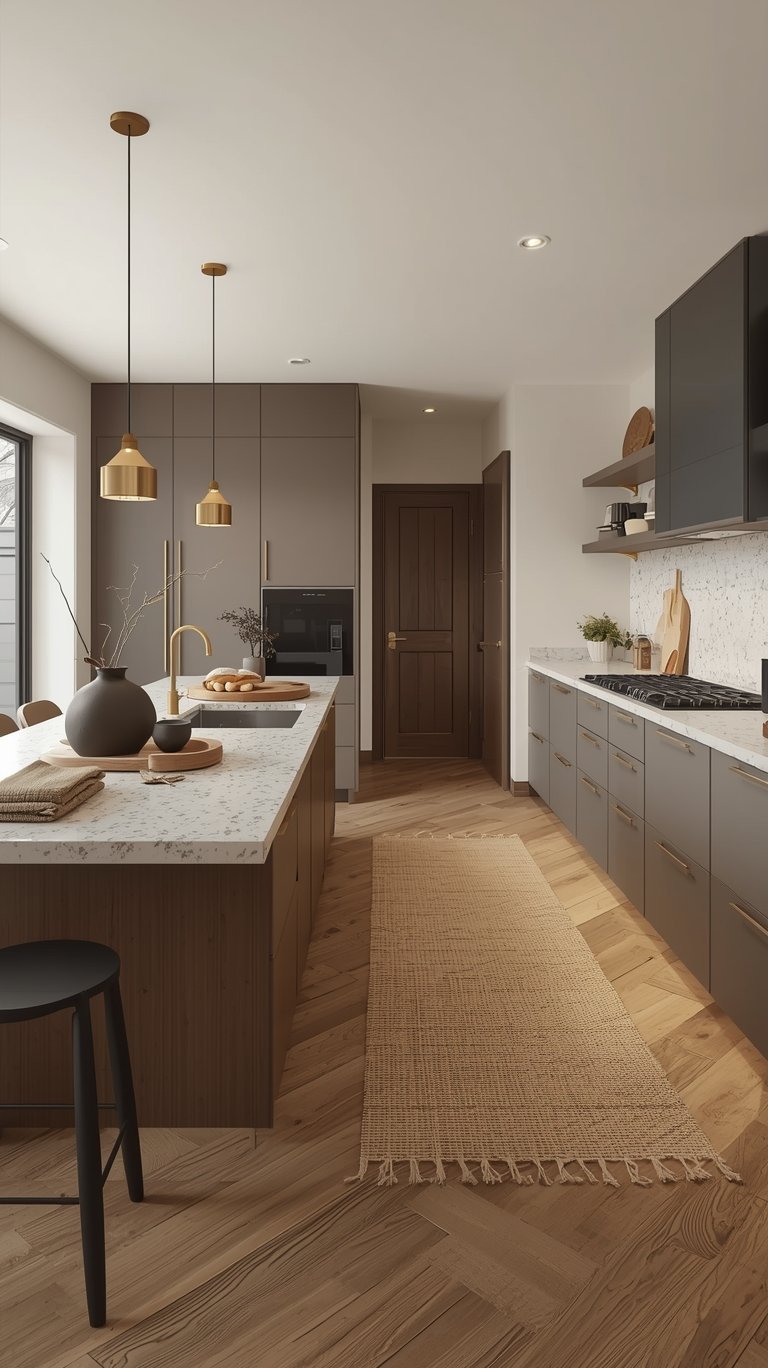
Natural stone adds a grounding energy, durability, and visual texture. These materials have unique patterns and textures that give your kitchen a one-of-a-kind look.
- Top Choices: Consider natural stone, marble, or granite for countertops. Soapstone is growing in popularity because of its deep color and matte finish.
- Finish is Everything: A key designer secret is to skip the shiny, glossy look. Instead, opt for a tumbled or honed finish on marble or granite to provide a more natural, matte look that enhances the organic feel.
- Modern Contrast: For a sleek modern twist that still provides texture, polished concrete floors or countertops can create a beautifully balanced contrast when paired with wood elements.
5. Softness and Depth: Woven Fibers and Textures
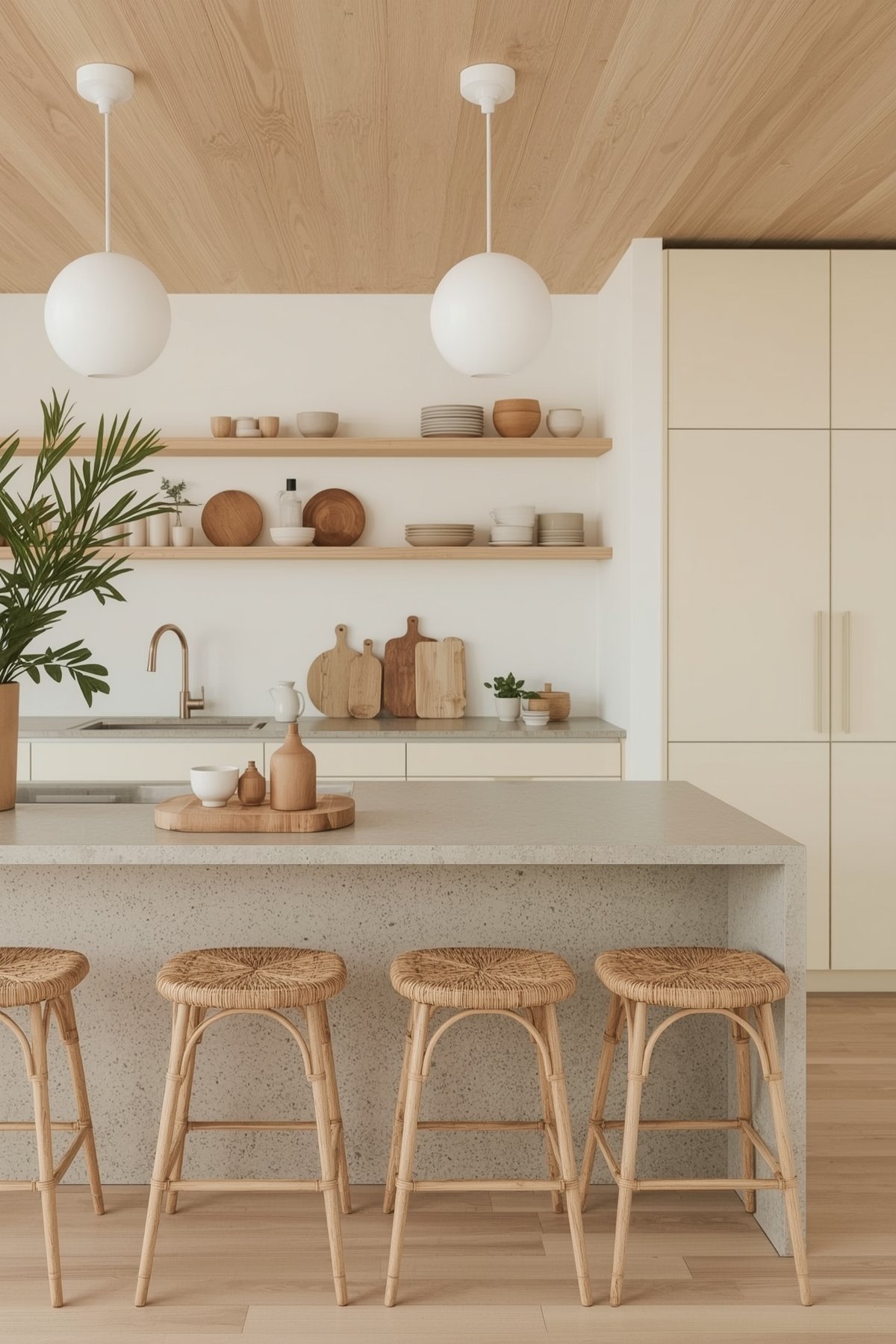
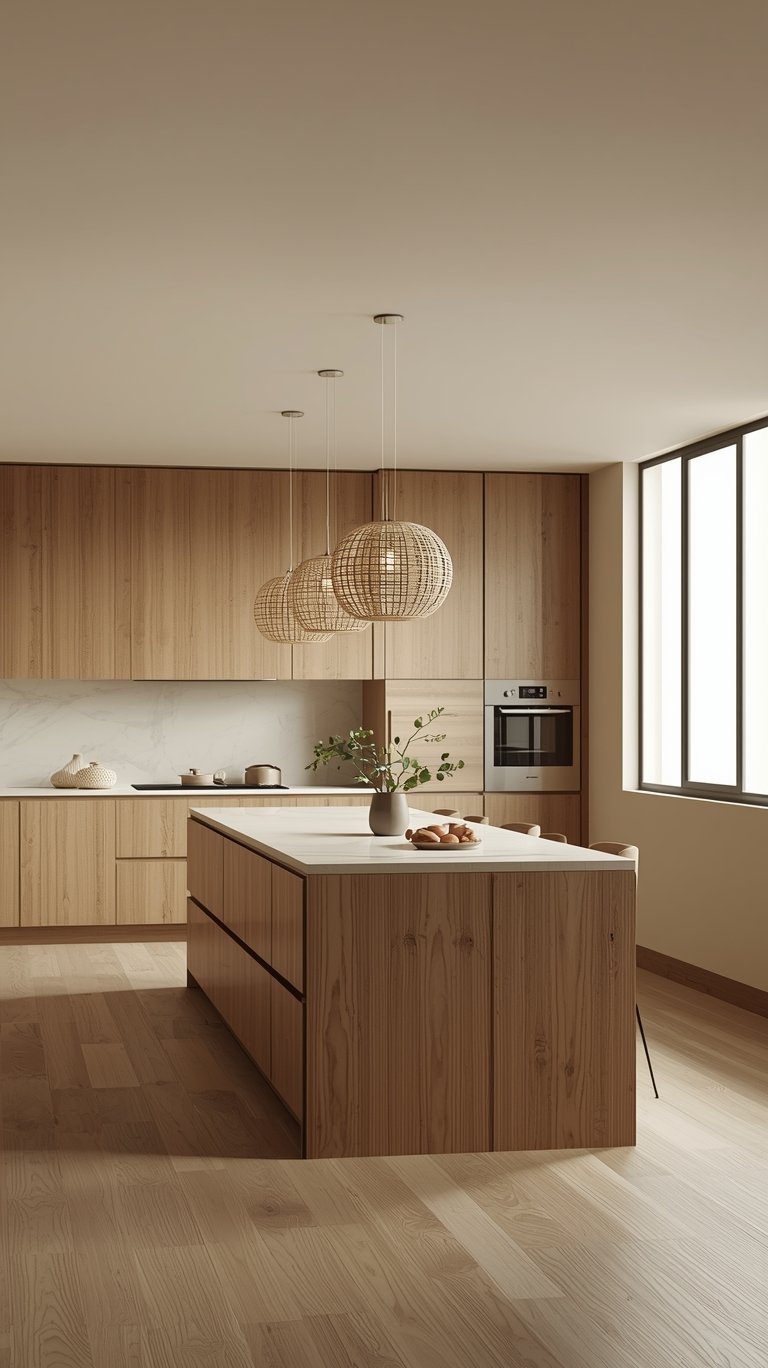
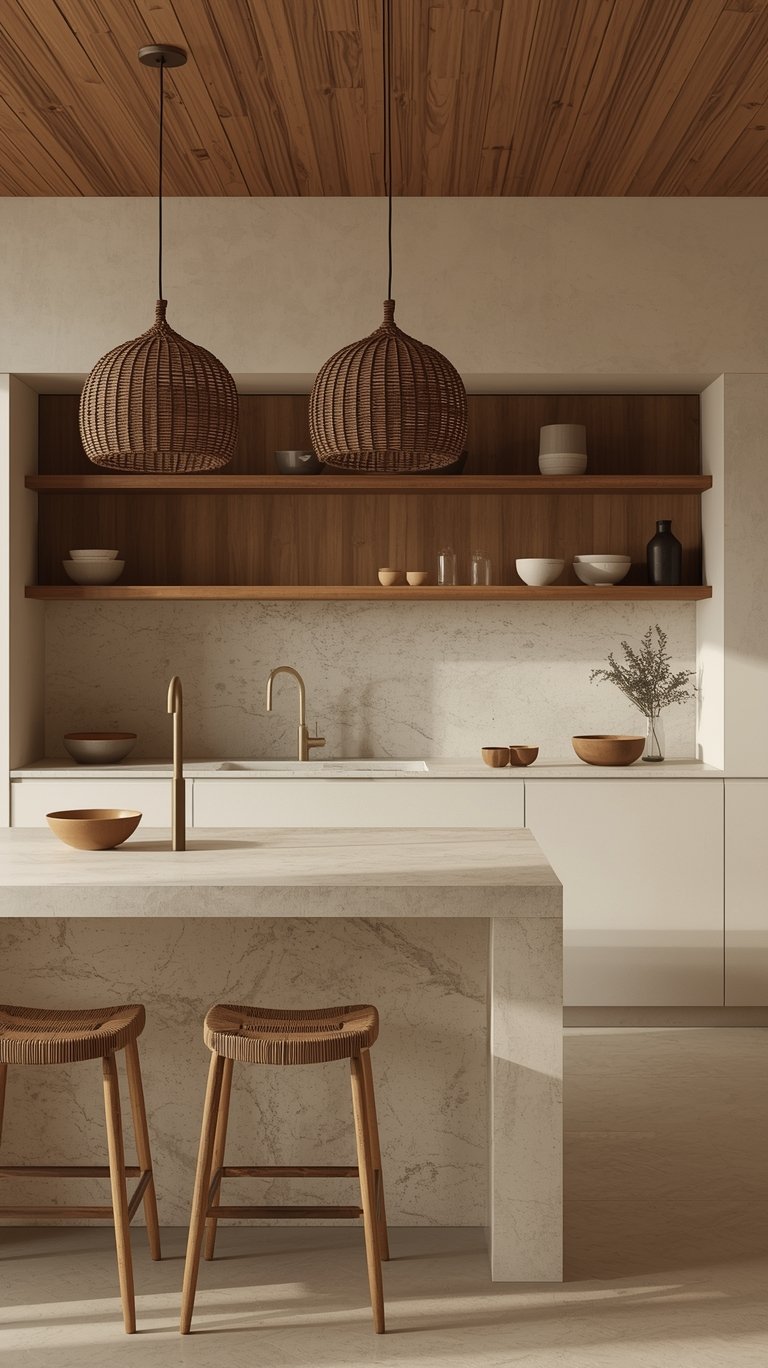
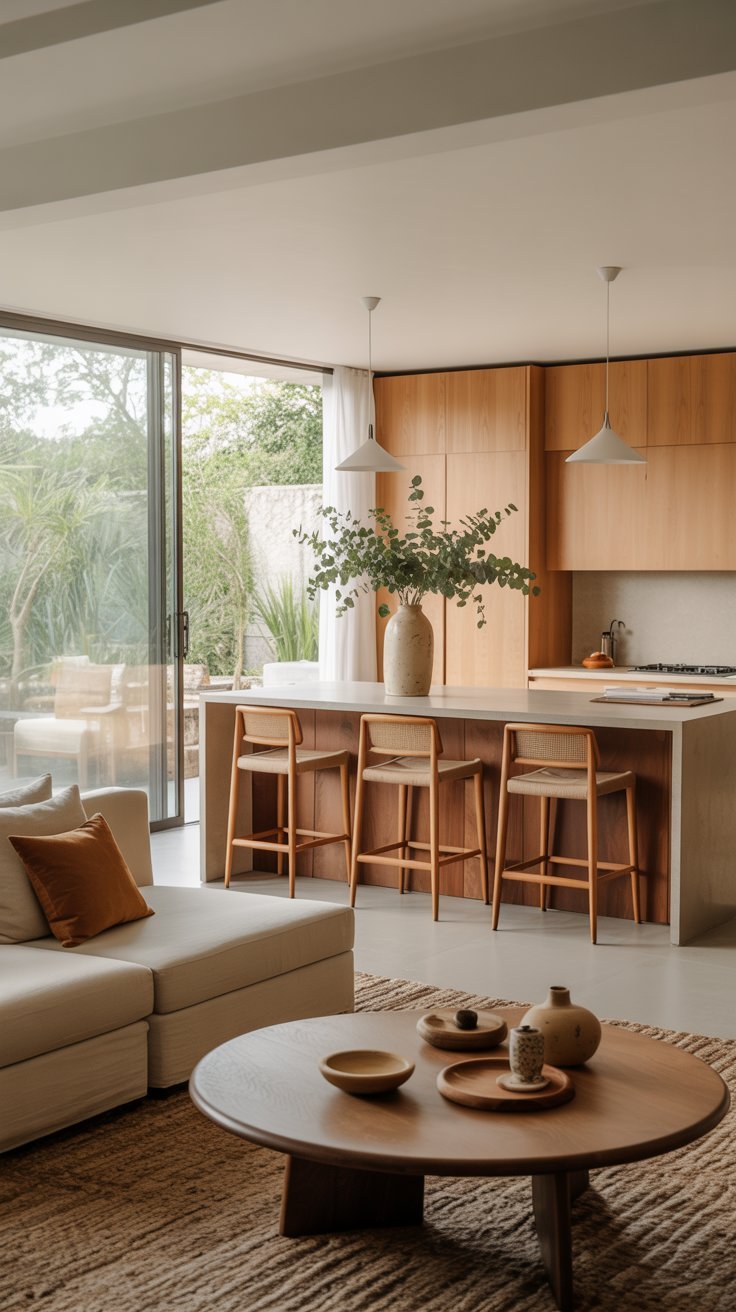
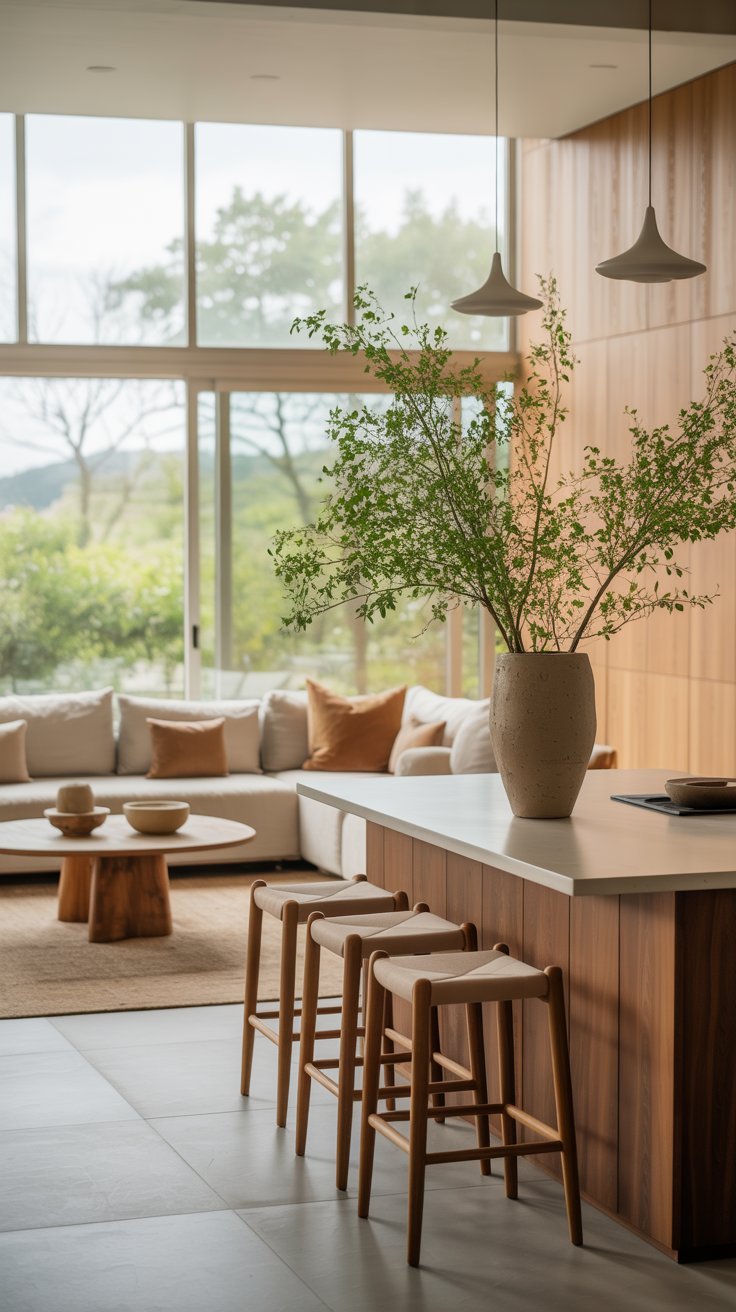
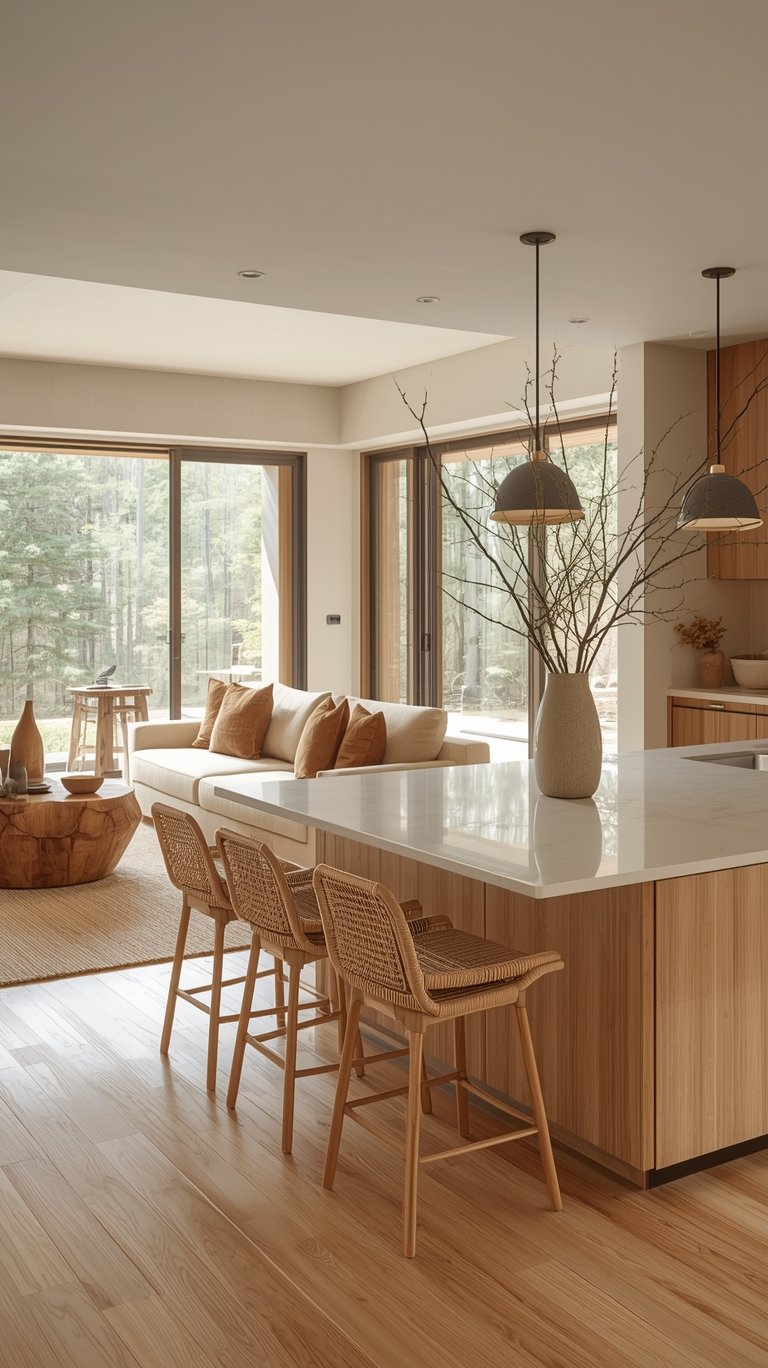
To soften the sleek lines and prevent the space from feeling too monotonous, texture must be introduced.
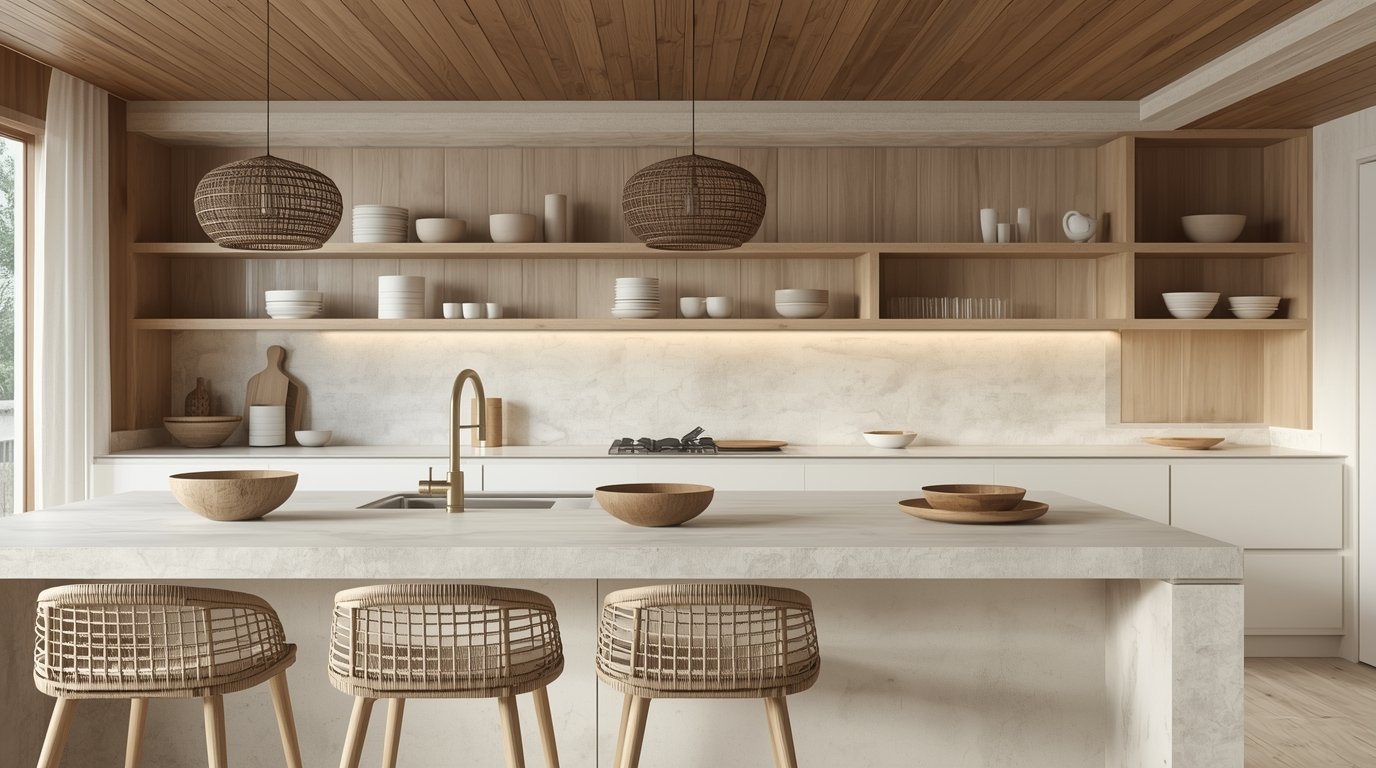
- Woven Accents: Woven fibers like rattan, jute, cane, and linen are used for seating, lighting fixtures, or window treatments. A rattan bar stool or linen curtain adds subtle texture and breathability.
- Accessories: Incorporate organic accents like handmade pottery or use woven materials like wicker baskets to bring in subtle texture and an organic feel.
The Streamlined Layer: Cabinets, Hardware, and Metal Accents
The modern aspect of the Organic Modern kitchen relies on simplicity and clean lines. Functionality is achieved through a deliberate lack of ornate decoration, which can create visual clutter.
6. Choosing Streamlined Cabinetry
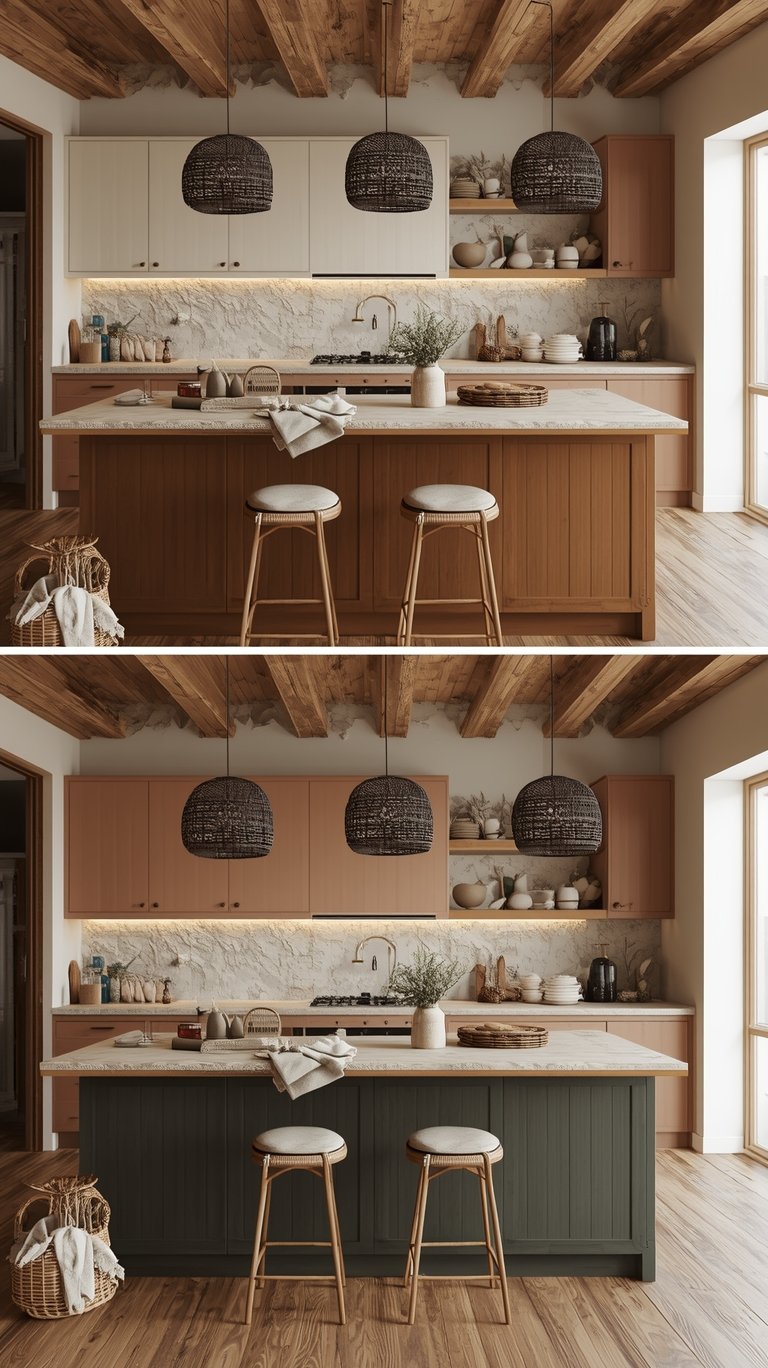
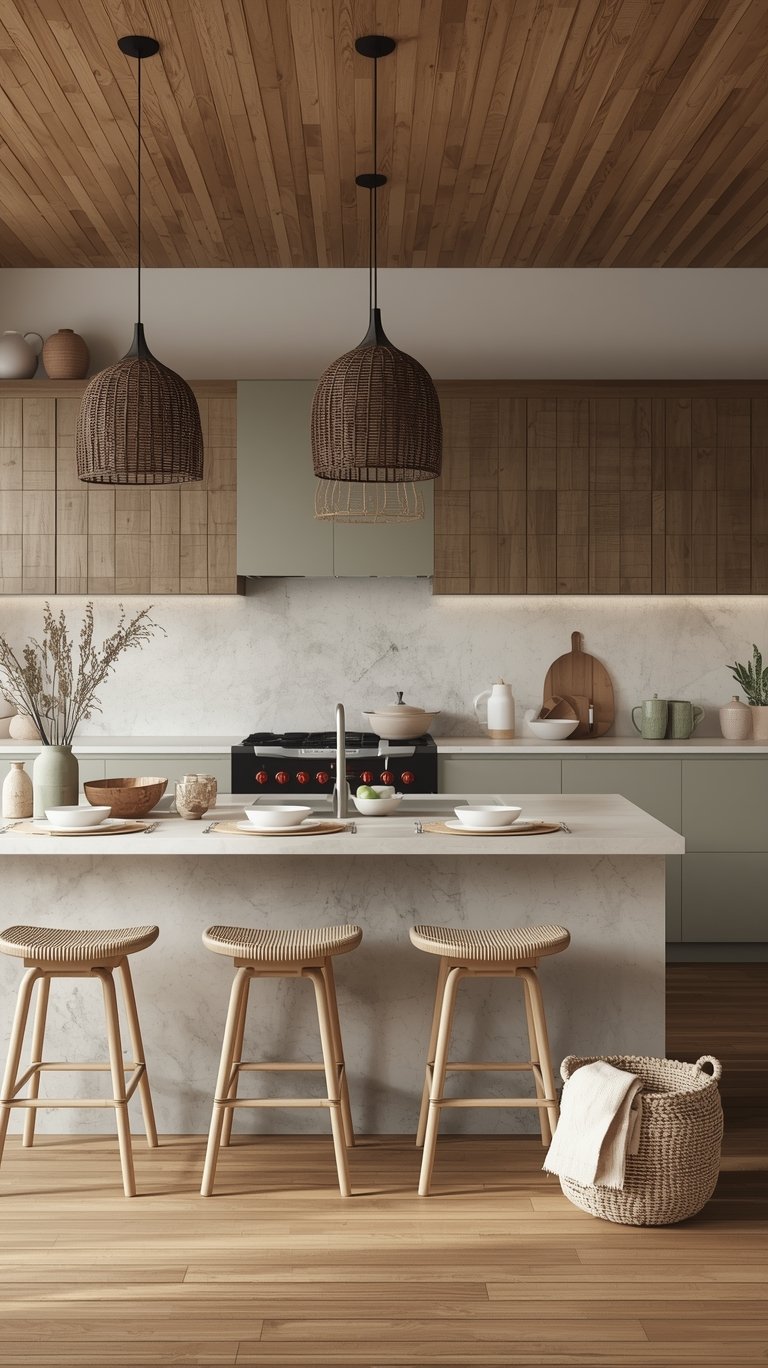
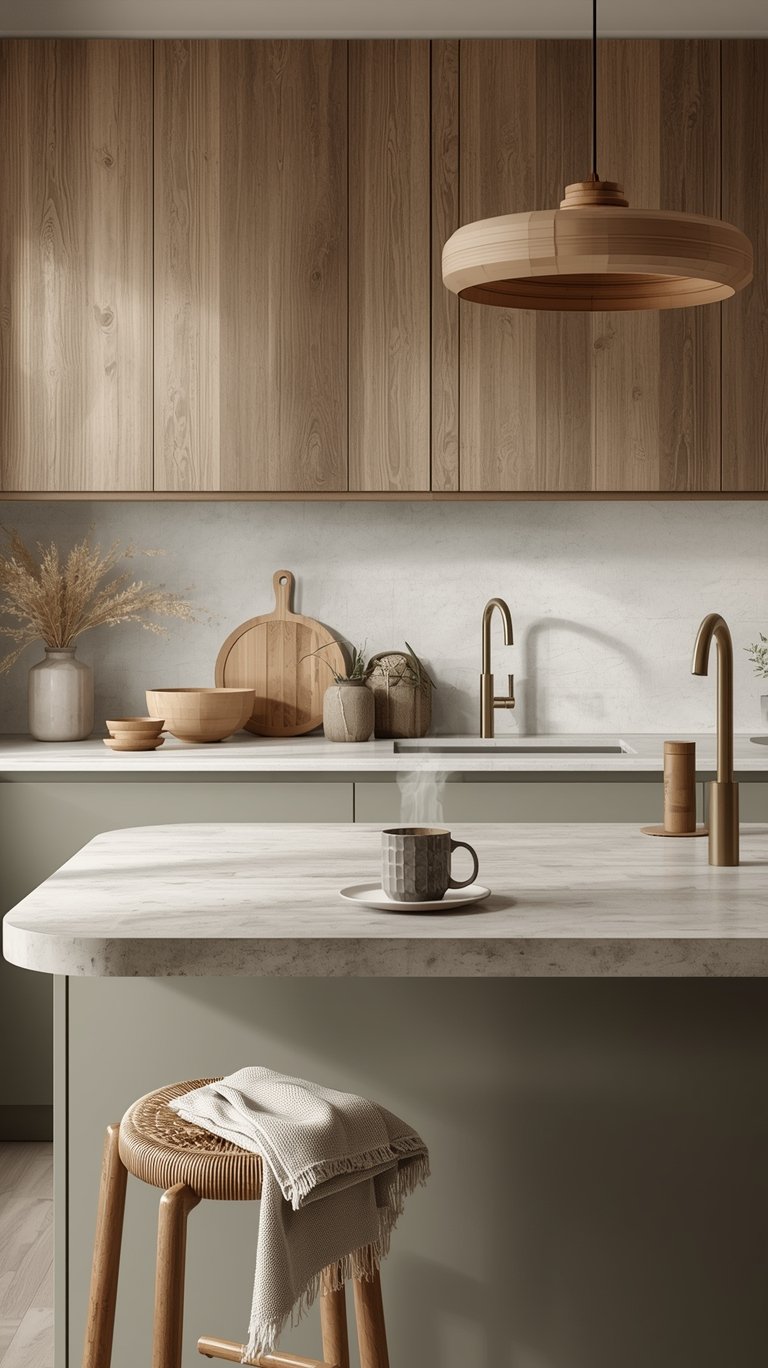
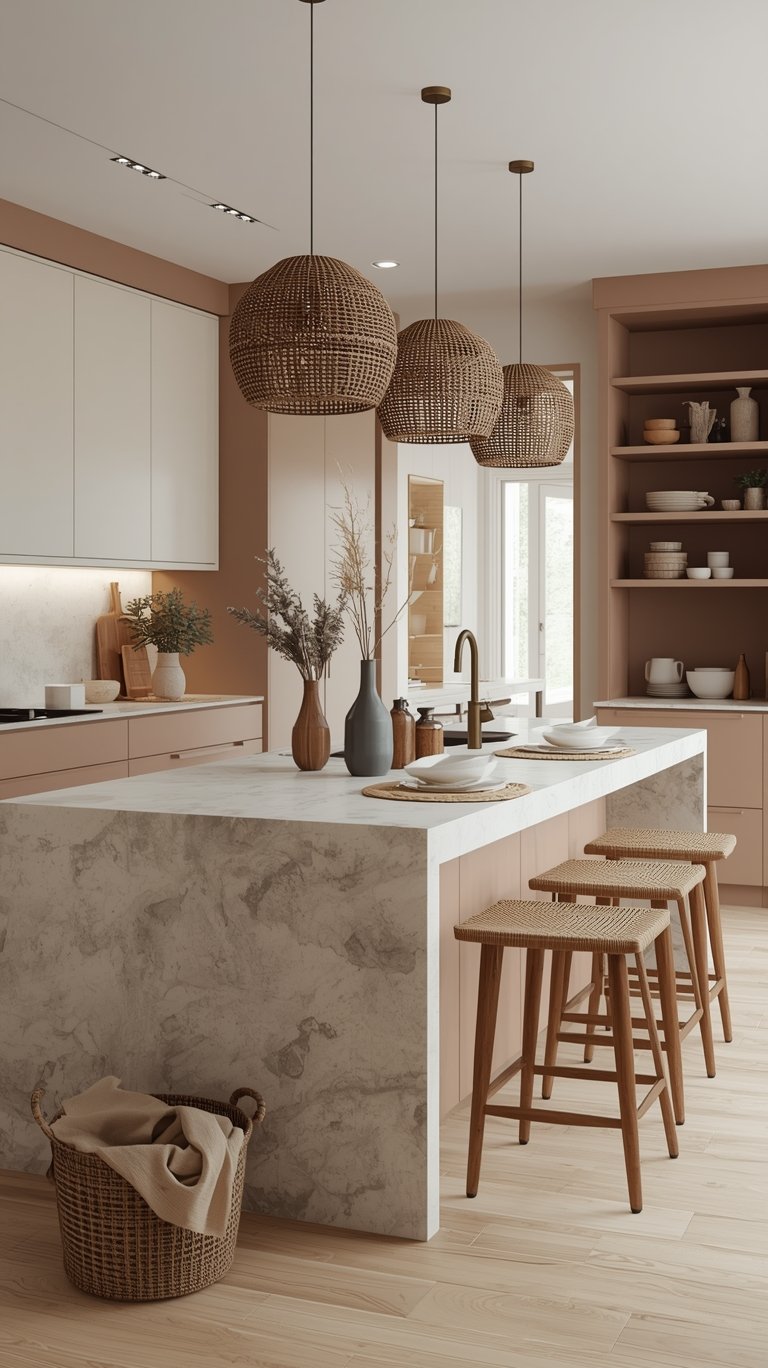
To keep the space feeling sleek and modern, choose cabinetry with clean lines and minimal detailing.
- Style: Flat-panel (slab) cabinet fronts are favored, as they are a strong modern element that contrasts nicely with natural stone and wood textures. Subtle or slim shaker doors are also a great option.
- Contrasting Cabinetry: You can add contrast and visual interest by mixing materials, perhaps by pairing wood lowers with matte painted uppers.
7. Embracing the Handleless Movement
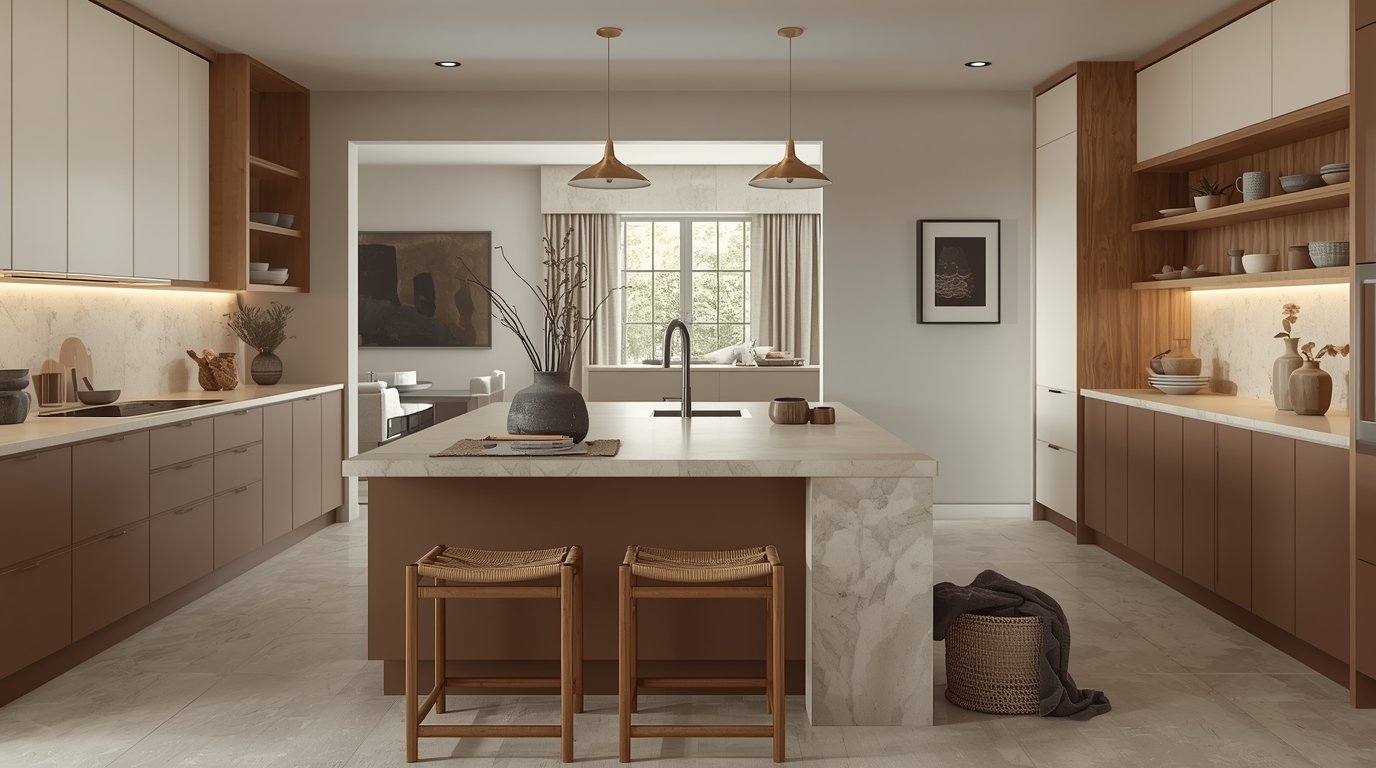
One of the easiest ways to ensure your Organic Modern kitchen looks seamless is by minimizing or eliminating hardware.
- Sleek Look: For the cleanest appearance, consider handle-less cabinetry using integrated handles or push-to-open mechanisms. This approach keeps the lines clean and allows the natural materials to take center stage.
- Subtle Hardware: If hardware is desired, choose understated options like slim pulls, edge pulls, or minimalist ball knobs in matte finishes. The hardware should complement the style without overpowering the organic feel.
8. Using Metals for Thoughtful Contrast
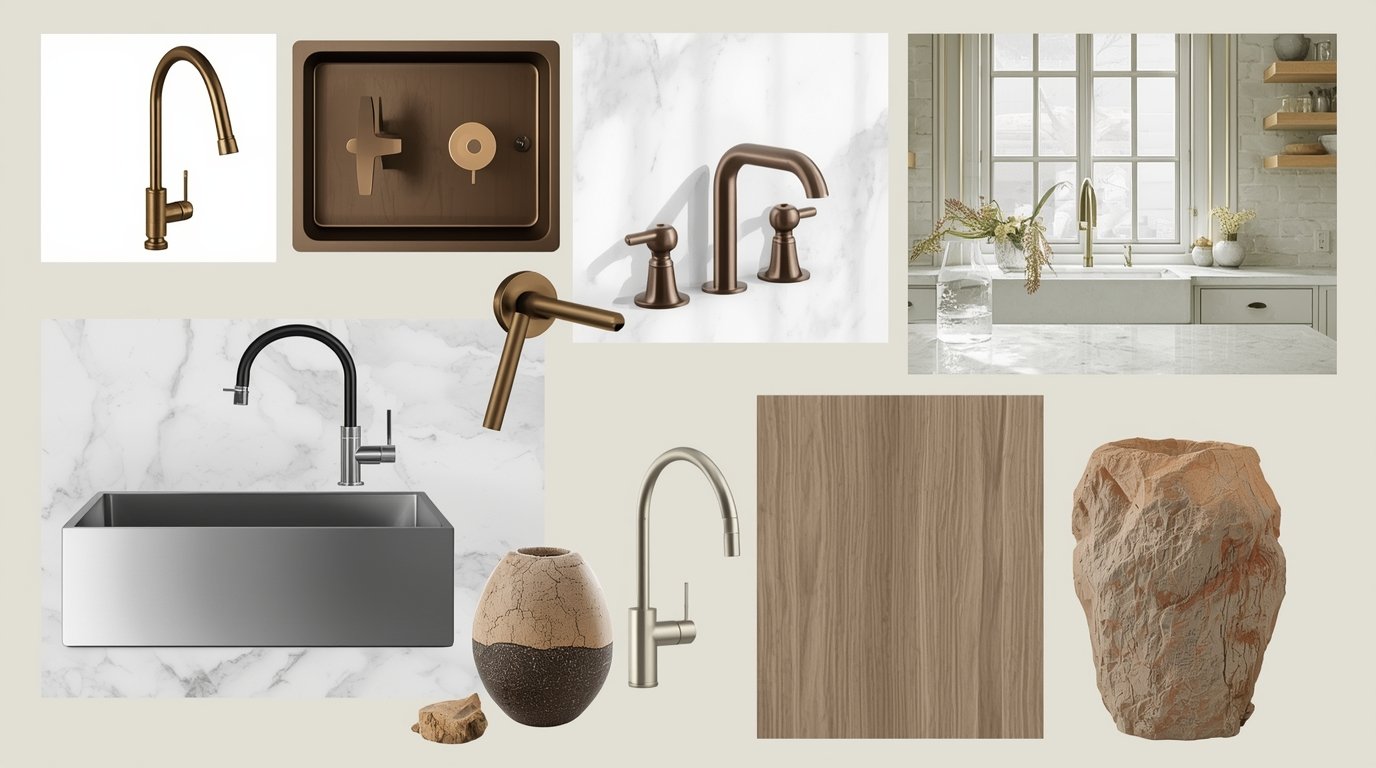
Metals provide the structure and contemporary edge needed to balance the softness of the wood and linen. You should mix your metal finishes to create depth and contrast.
- Popular Finishes: Metals should be in muted, brushed, or patined finishes, such as aged brass, bronze, or matte gold.
- Application: Matte gold hardware works well with any colors, while aged brass adds warmth. For a touch of timeless charm, simple unlacquered brass ball knobs will naturally patina nicely over time.
- Appliances: Choose streamlined appliances in stainless steel or matte cream.
High-Impact Focal Points and Texture
The goal of the Organic Modern kitchen is to avoid being flat or monotonous. This requires using key features that introduce heavy, asymmetrical, or imperfect texture, creating a sense of drama.
9. The Plaster Hood Hallmark
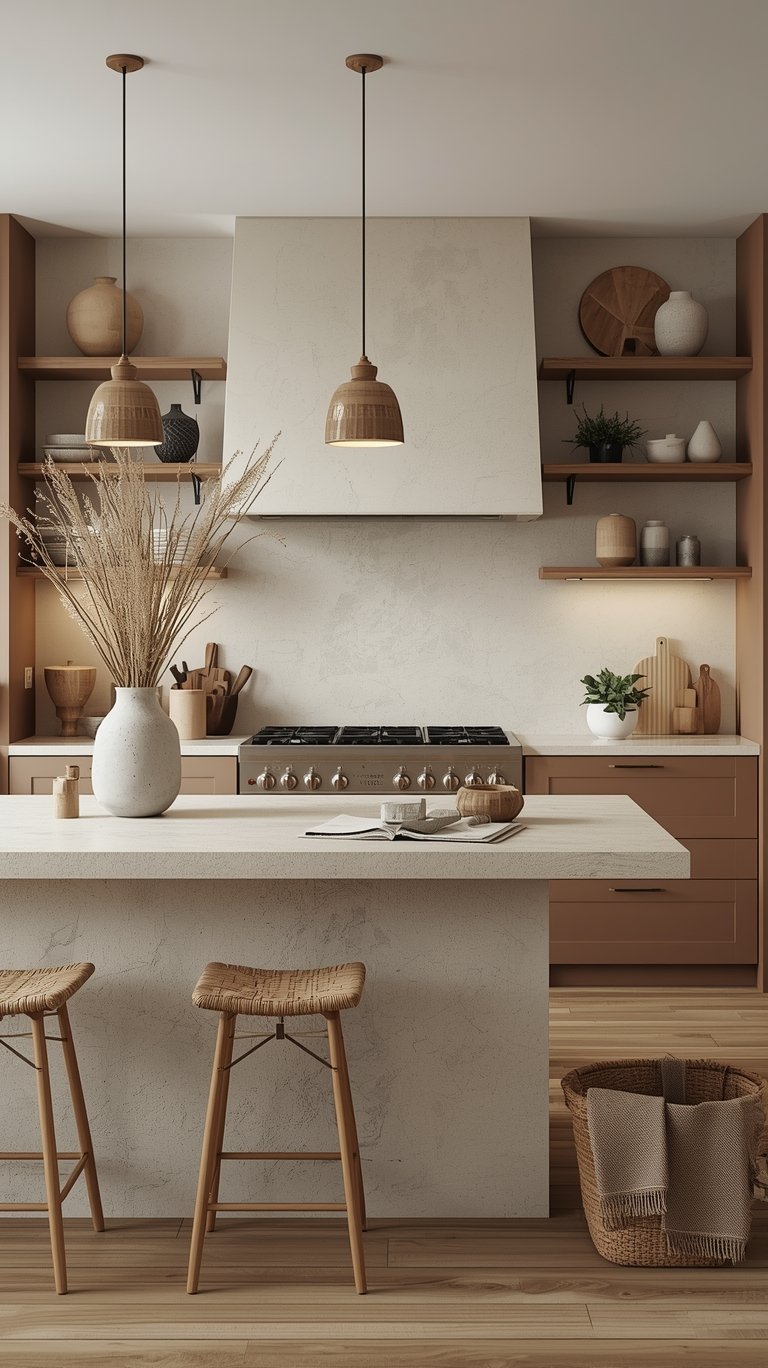
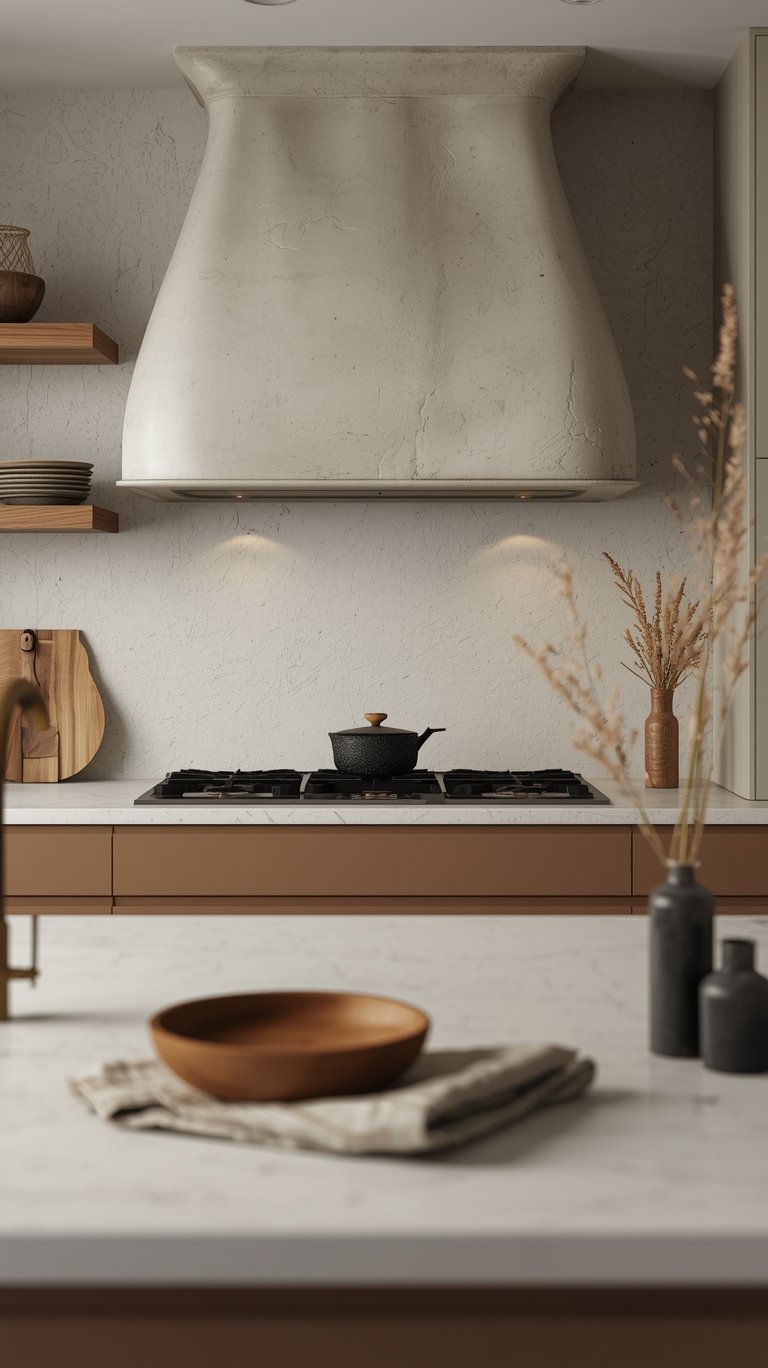
Quickly becoming a hallmark of modern organic design is the plaster range hood.
- Sculptural Statement: Using plaster for the hood creates a sculptural, textured focal point, adding warmth and asymmetry to the mix. If you’re not tiling the whole range hood, you can also opt for simple, clean lines by framing it out and painting it the same neutral color as the walls.

My Top Tip: Use directional accent lighting to intentionally graze the rough, textured surface of the plaster hood, maximizing visual depth.
10. Incorporating Handmade Backsplashes
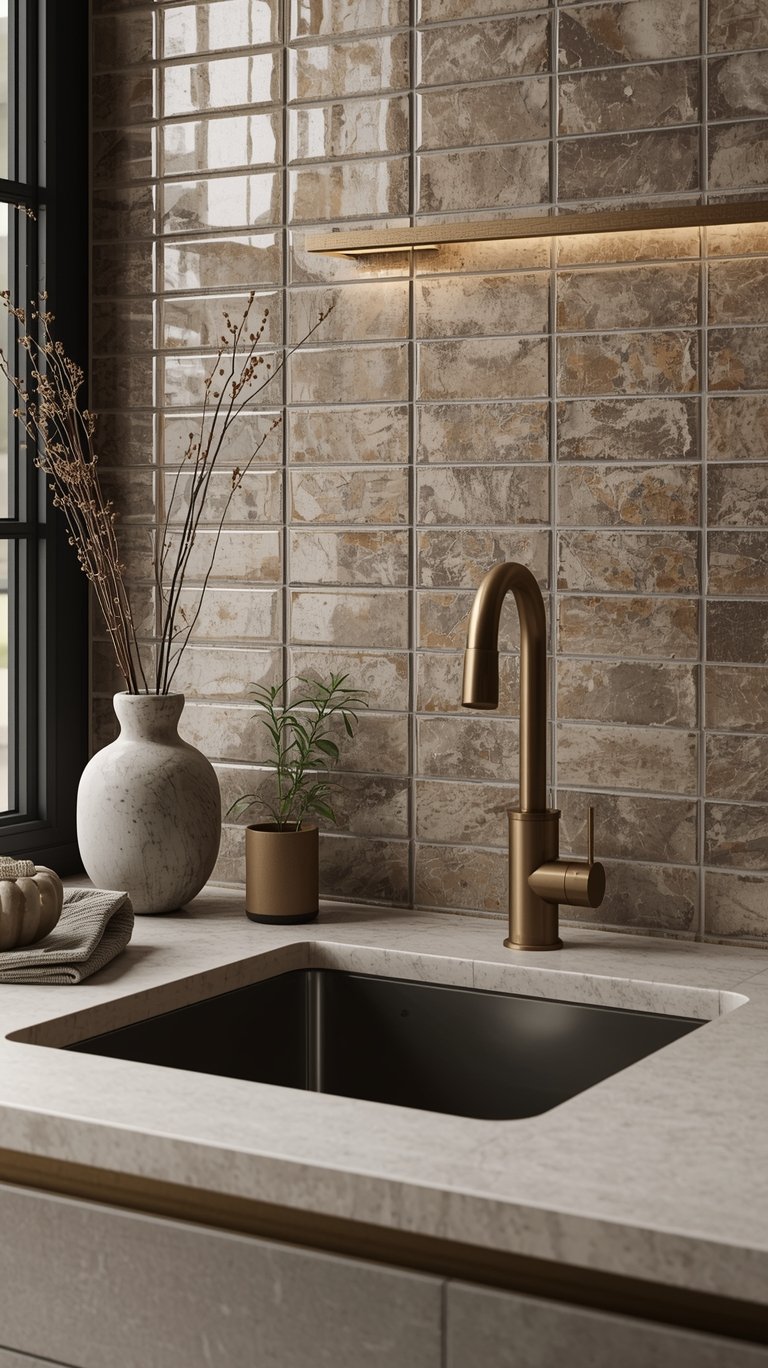
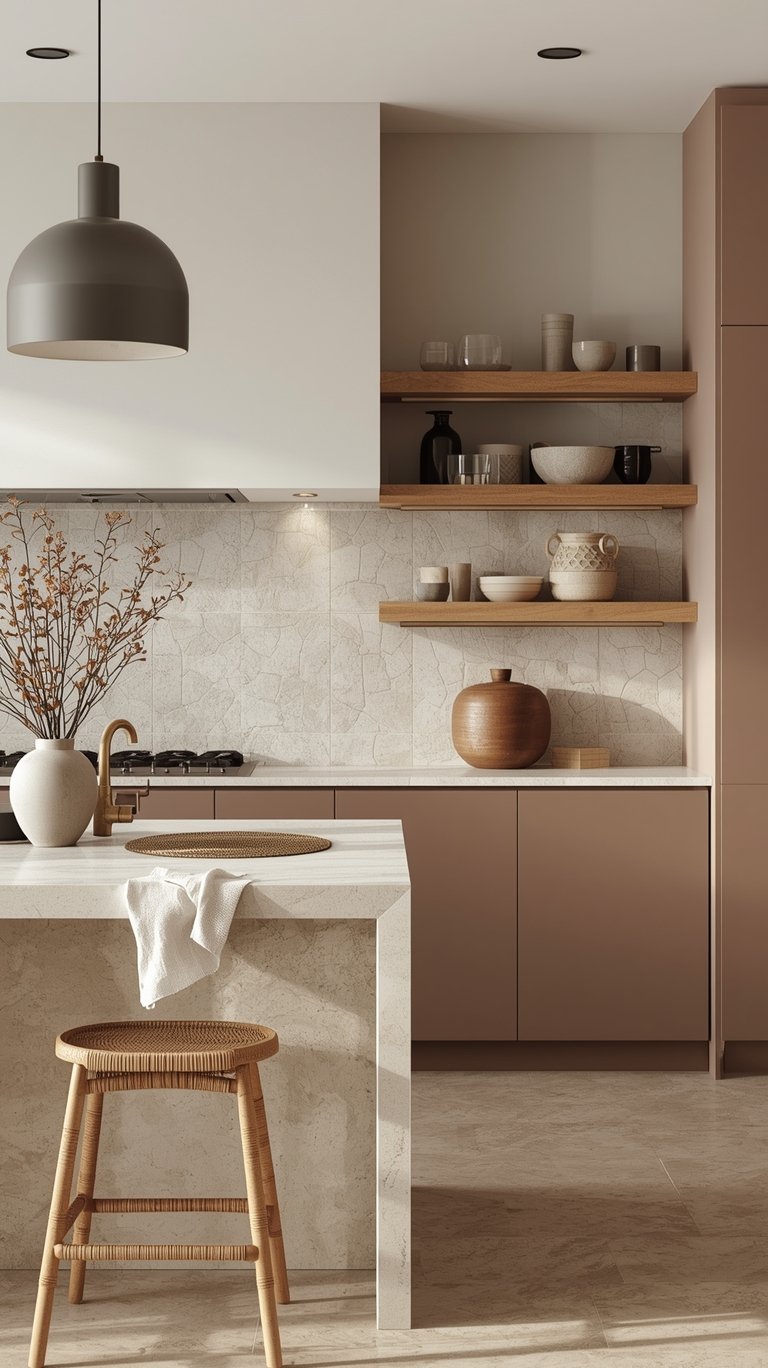
The backsplash is the perfect area to bring in rustic texture and imperfection.
- Zellige Tile: If you’re switching up your backsplash, consider handmade Zellige tile. Their unique color and size variations help to bring the natural imperfection of the outside into the space.
- Alternatives: You can also use natural stone tiles with unique veining or even a simple subway tile paired with darker grout for contrast.
- Practical Perk: Sometimes you just need a great dupe, like a zellige look for less tile, because who has time to count every tiny tile imperfection anyway? This is a great way to achieve the style in a “look for less manner”.
11. Designing the Focal Point (Kitchen Island)
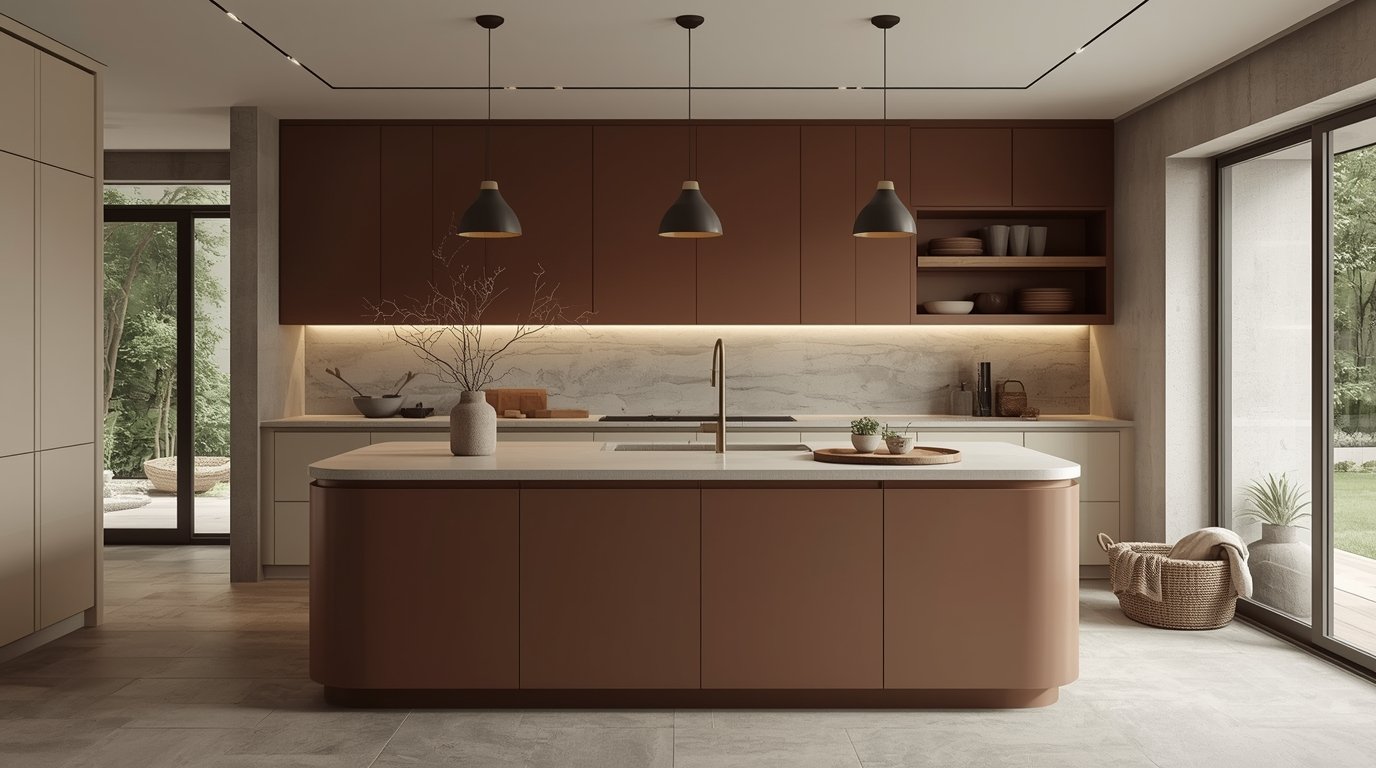
The kitchen island is often the heart of the room and an ideal spot to create a focal point.
- Visual Interest: You can make the island stand out by choosing a different color or material than the rest of the cabinetry. For further visual interest, consider incorporating organic shapes into the design, such as rounded edges or an irregularly shaped countertop.
- Custom Touches: If you want to introduce a “little European influence,” add bespoke features like spice shelves accented with walnut wood and a brass rail.
Lighting, Biophilia, and Bringing the Outdoors In
The Organic Modern kitchen relies heavily on connecting the indoor space to nature (biophilic design).
12. Natural Light is Everything
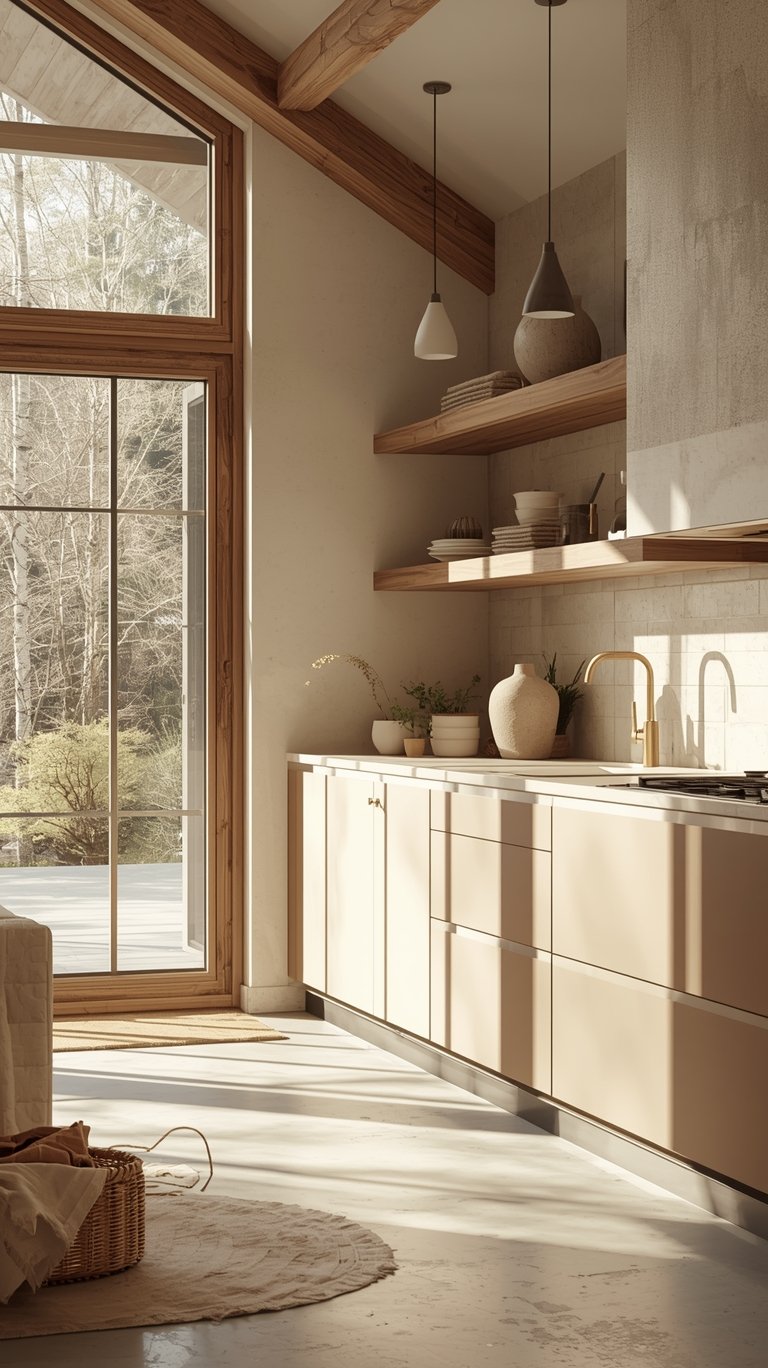
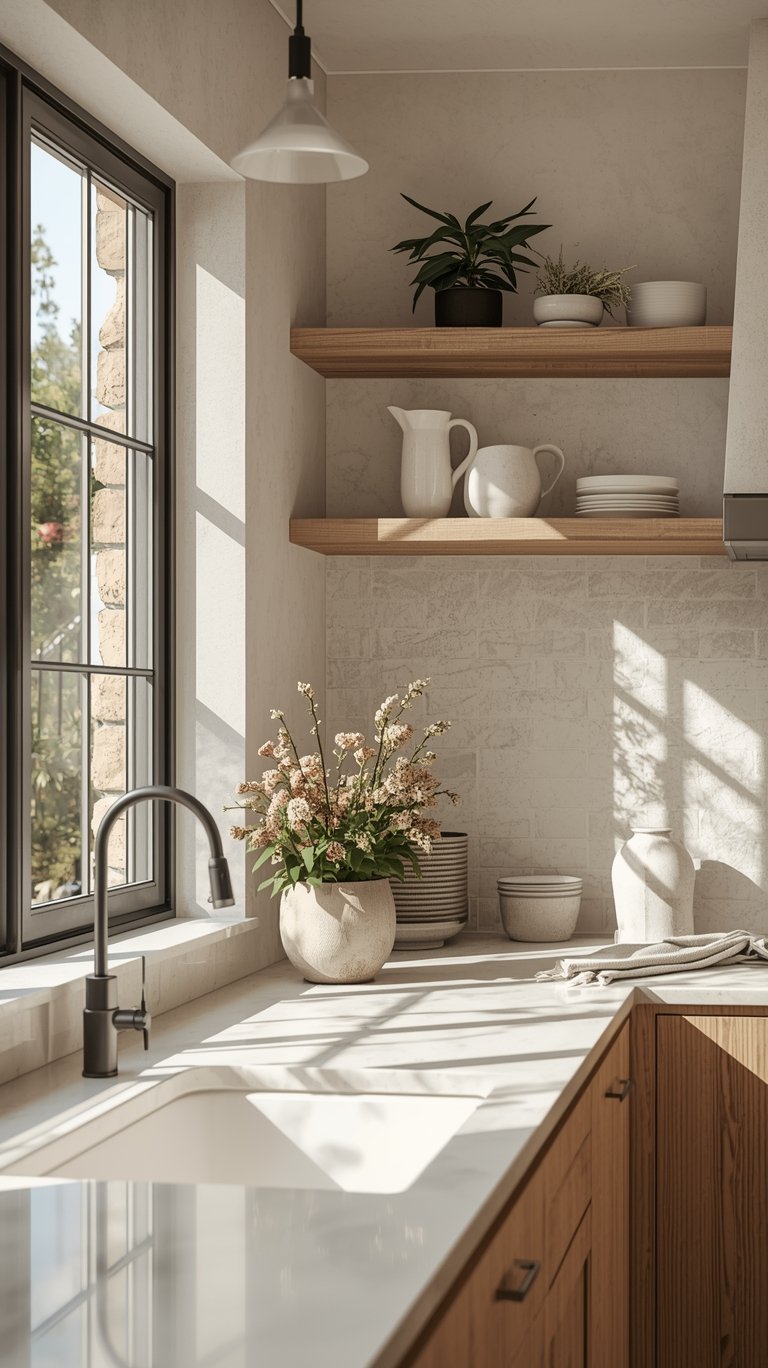
Natural light is a game-changer and an essential element.
- Maximizing Light: Large windows, skylights, or glass doors are crucial for letting in as much daylight as possible, making the space feel open, airy, and connected to the outdoors. This light enhances the warmth of the wood and stone.
- Reflective Surfaces: If your kitchen lacks natural light, use reflective surfaces like a white tile backsplash or a light-colored quartz countertop to bounce light around the room and make the space feel larger.
13. Open Shelving for Airiness
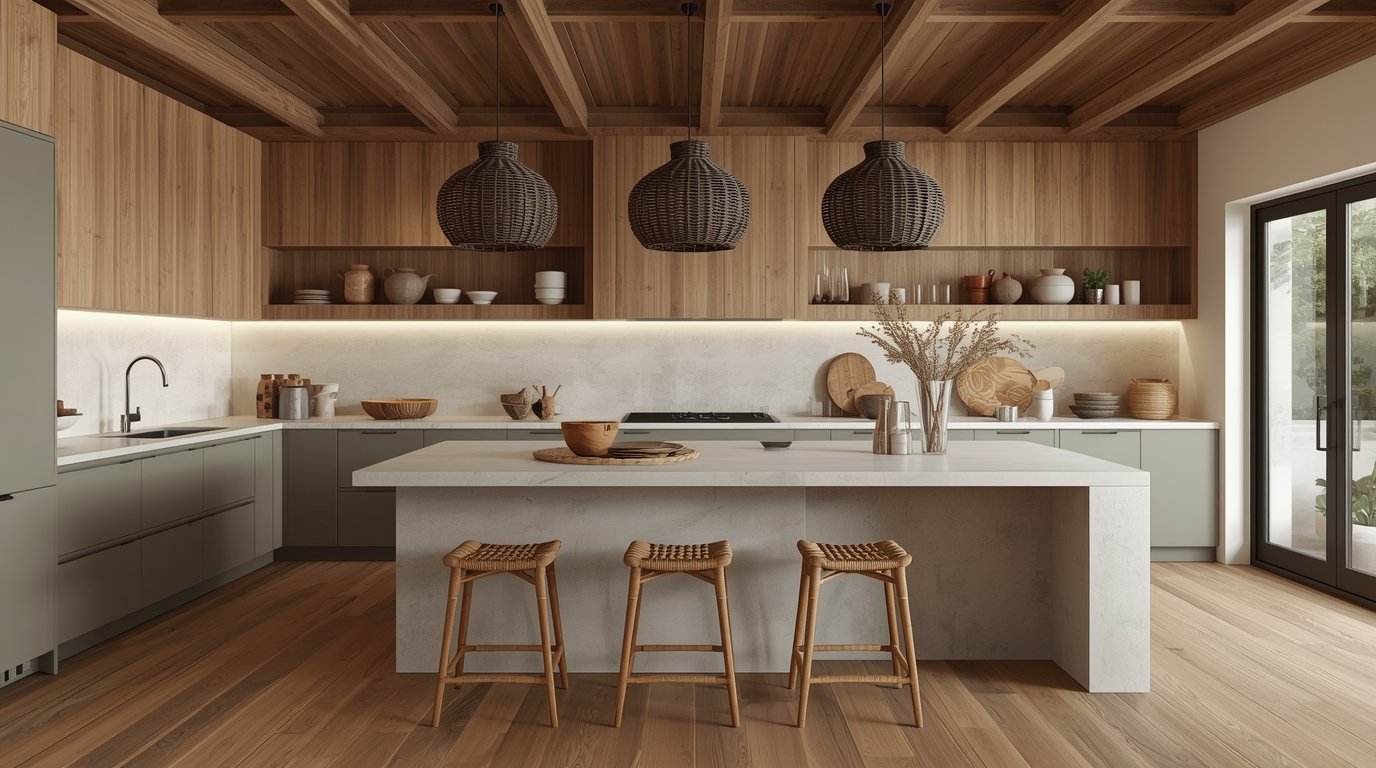
Choosing not to include upper cabinets is a popular decision in this style, initially aesthetic but often practical.
- Flow and Display: Open shelving allows light to flow more freely and gives you a chance to display organic items like wooden bowls, handmade pottery, or ceramic dishes, adding to the organic feel.
- Practicality: Designers often recommend allowing wall space for things to “breathe” and ensuring there is plenty of space for natural light.
14. Greenery and Indoor Plants
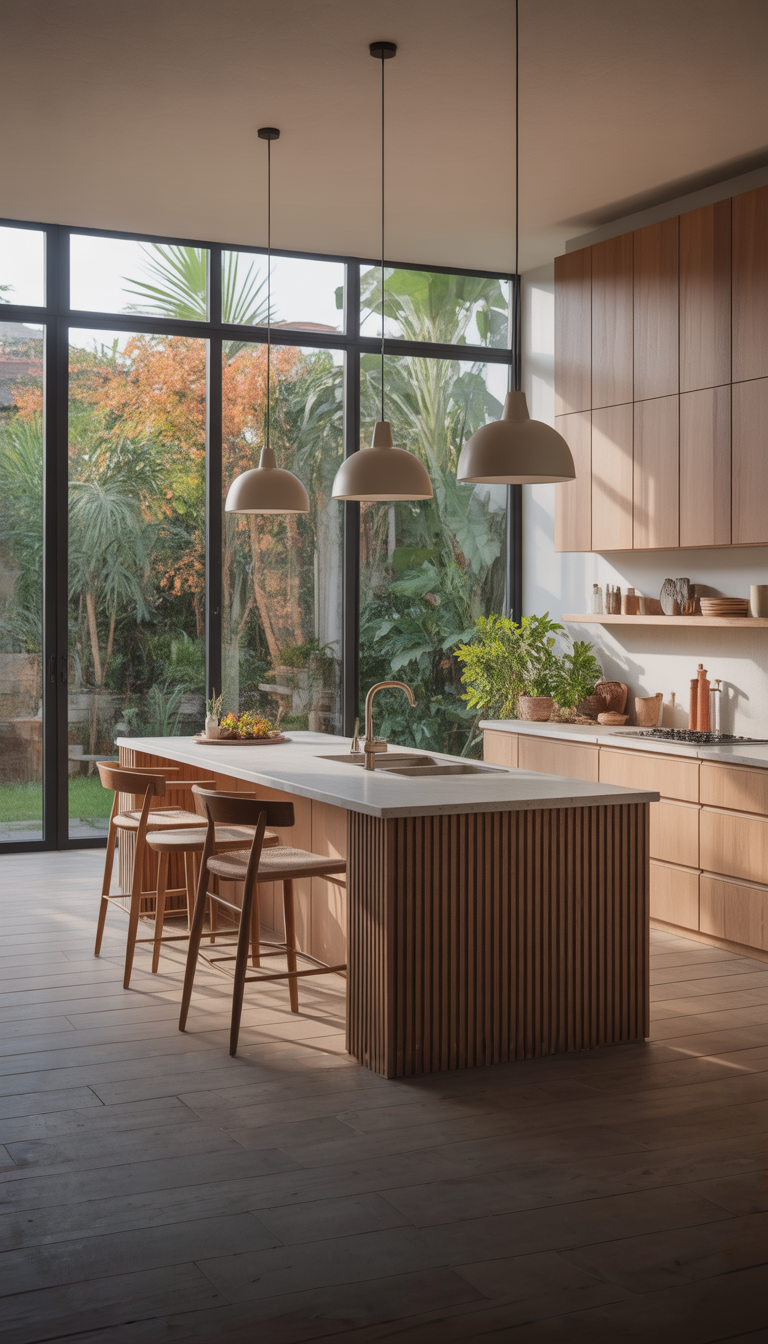
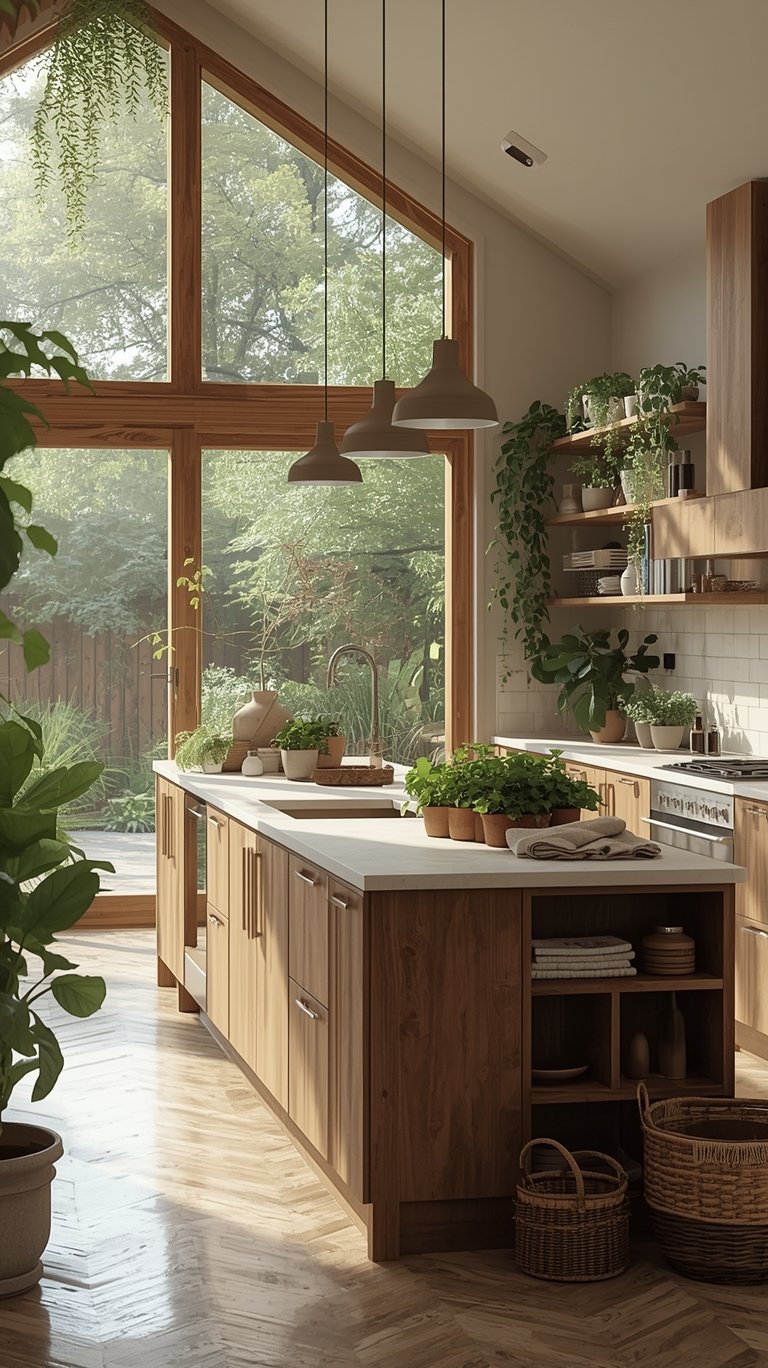
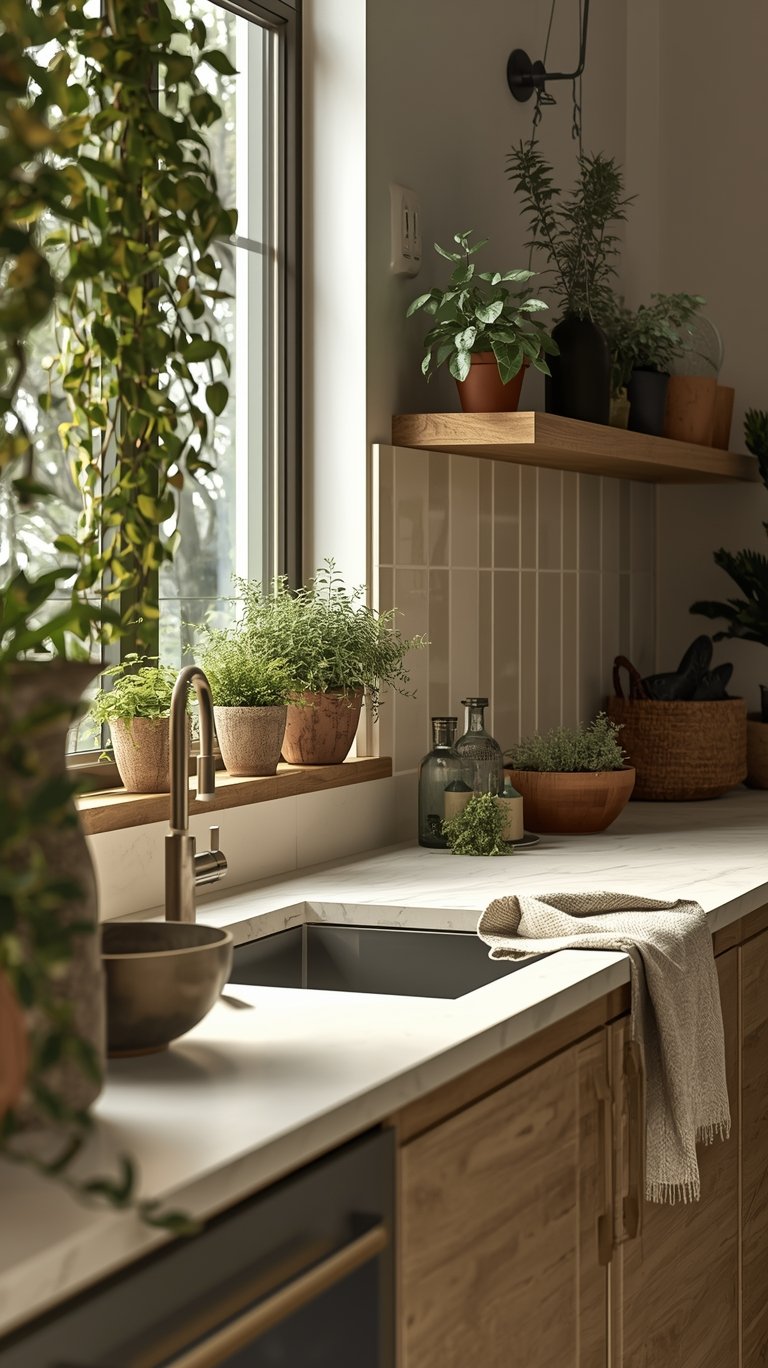
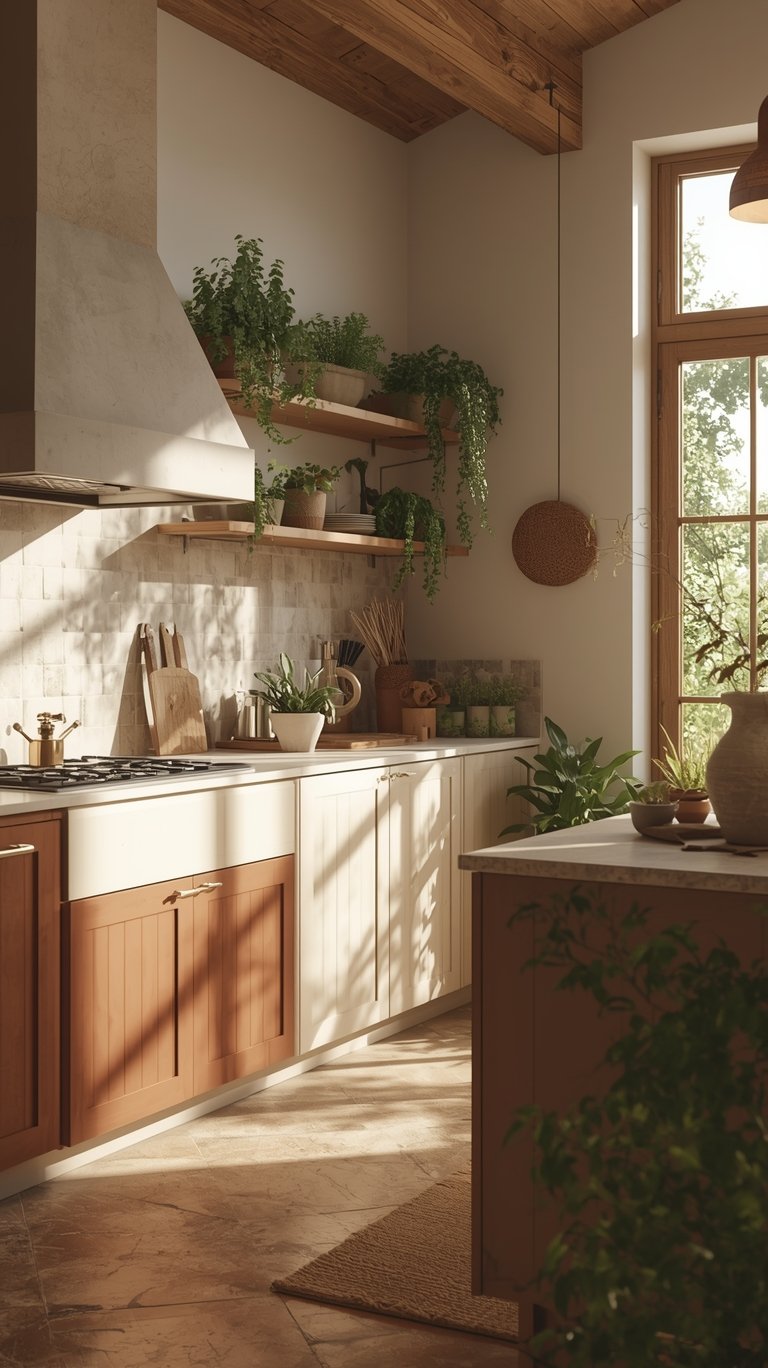
There can never be too much greenery in a modern organic space.
- Biophilic Design: Incorporate indoor plants, greenery, or herb gardens to foster a connection with the outdoors and give the kitchen “life and a feel of nature”.
- Outdoor Views: Views through to a garden or any greenery enhance the organic atmosphere.
15. Layered Artificial Light Strategy
Since the style mandates warmth, your artificial lighting choices must complement your materials.
- Fixtures: Look for pendant lights with simple, clean lines that work with both the modern and organic aspects of your design. Sculptural lighting fixtures in brass, matte black, or brushed nickel can add an industrial edge to the soft palette.
- Temperature: Opt for fixtures that mimic natural light, usually meaning soft, warm tones, to prevent the neutral color palette from feeling cold.
Functionality and Sustainable Living
While the look is paramount, the Organic Modern kitchen aesthetic relies on a deep commitment to function and organization to maintain its streamlined look.
16. Clutter Control and Pared-Back Styling
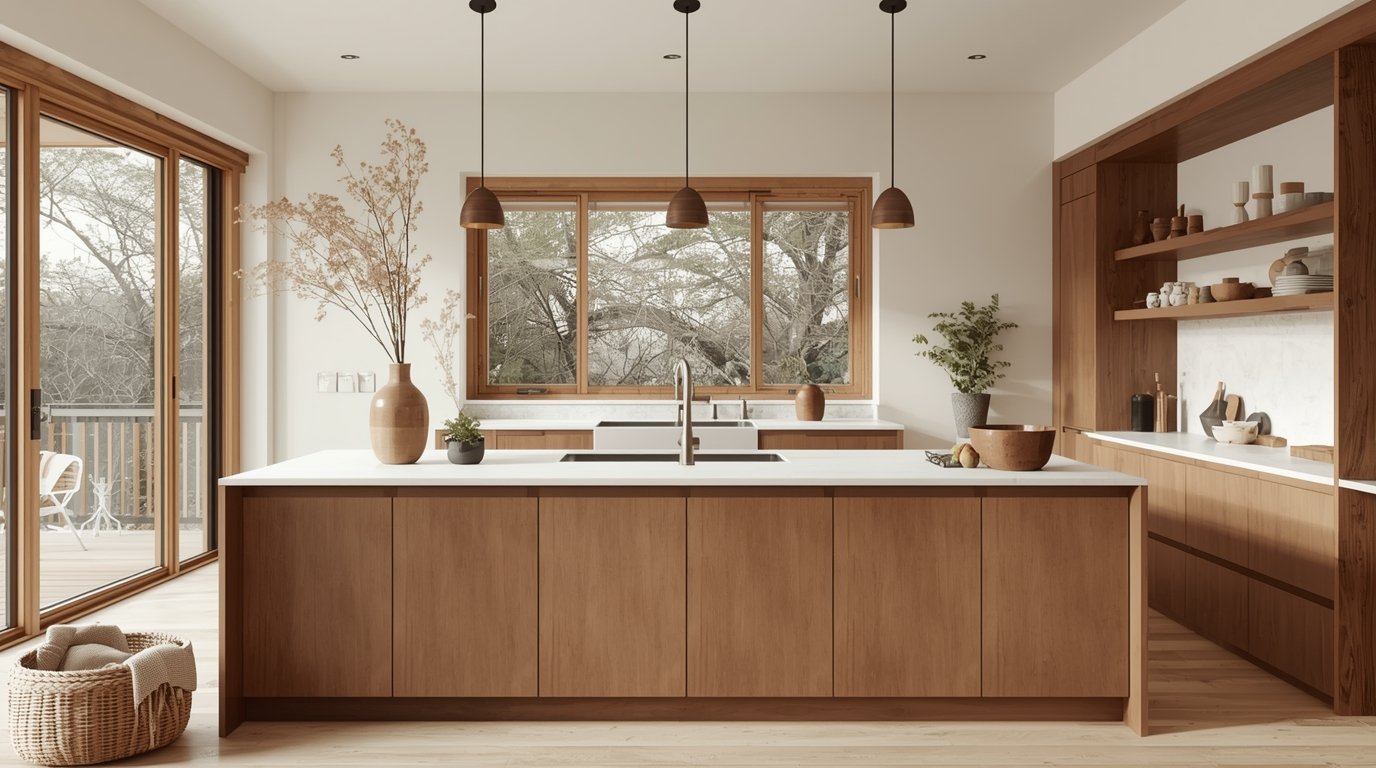
Modern Organic style thrives on minimalism and uncluttered spaces.
- Tidy Approach: You must adopt a pared-back way of styling. Keep countertops free of excessive decor or appliances, opting instead for a few carefully selected objects that enhance the organic feel.
- Easy Maintenance: Flat-panel (slab) cabinet fronts are favored partly because they are functionally easy to wipe down with “one swipe of a cloth,” blending aesthetic contrast with practical maintenance.
17. Smart Storage Solutions
Thoughtful storage is essential for maintaining the clean, uncluttered look that defines the style.
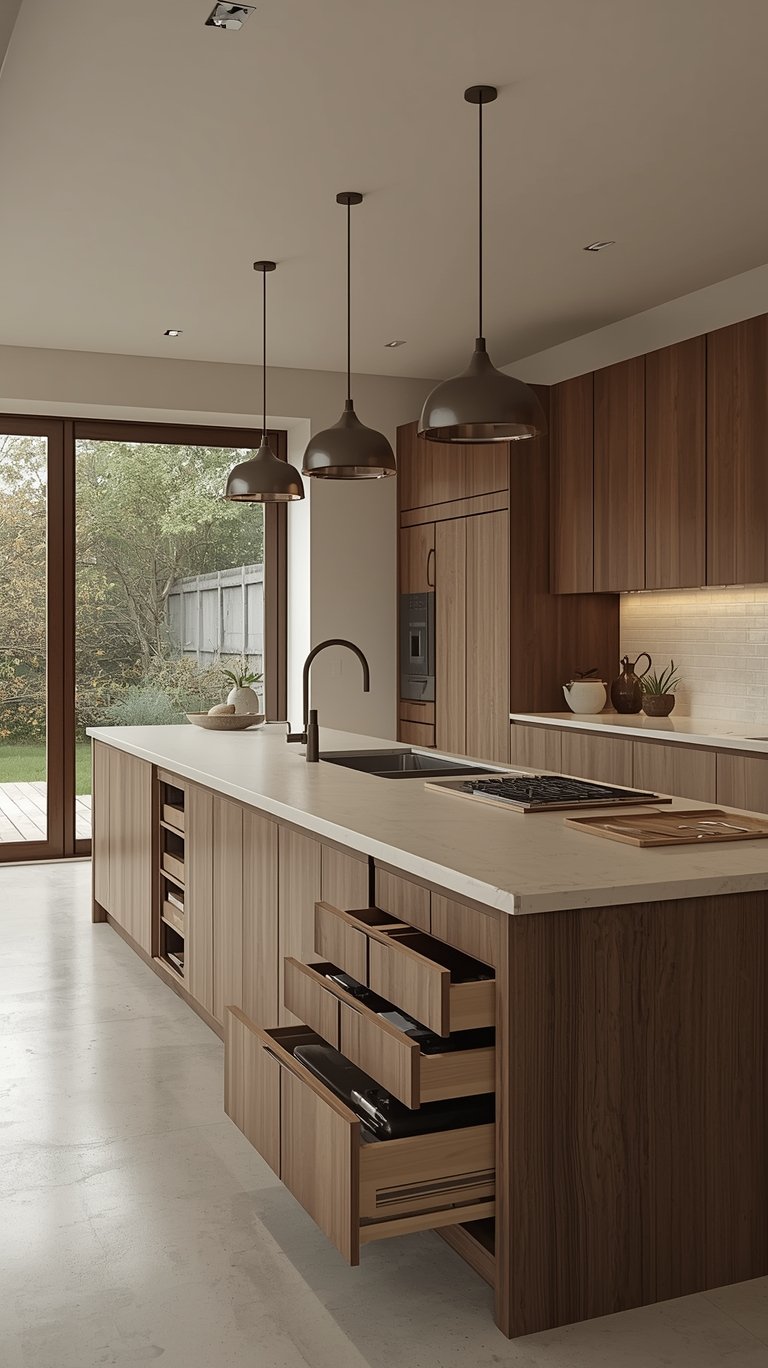
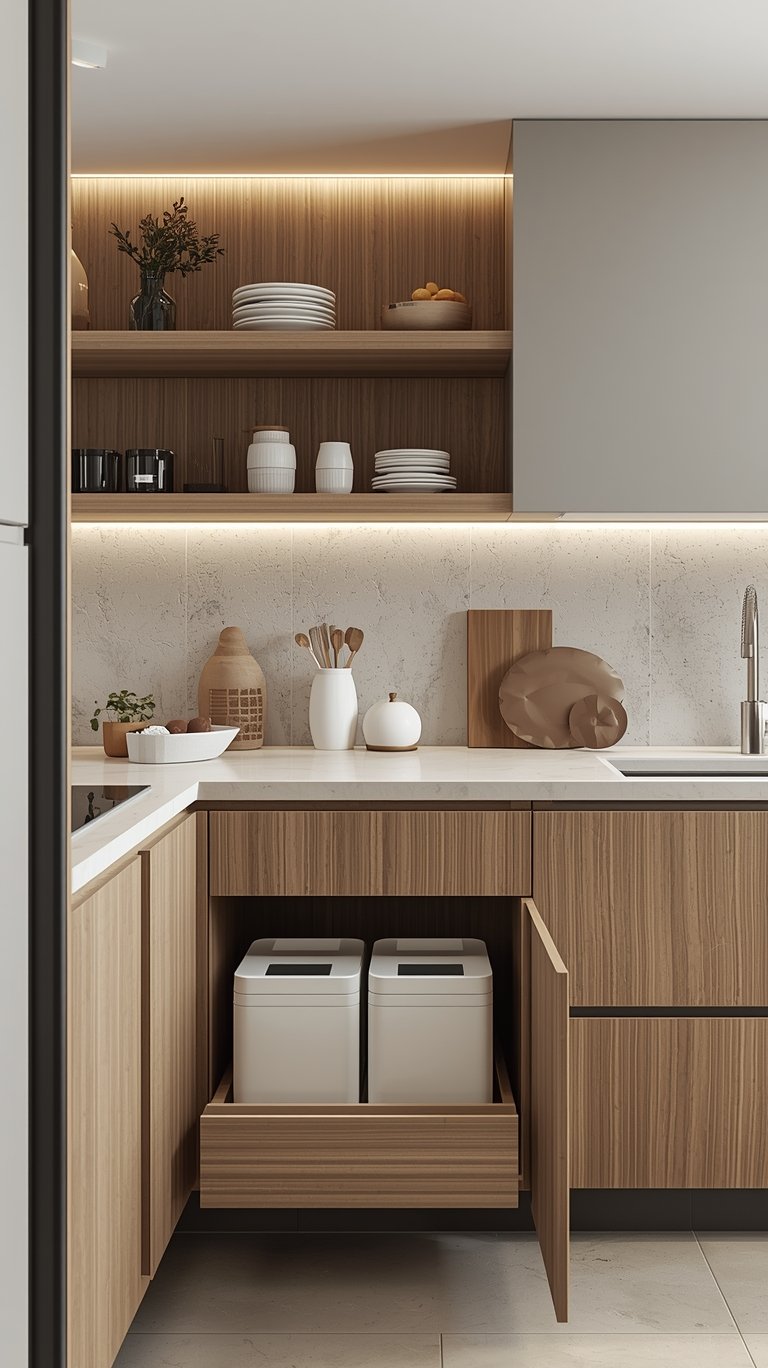
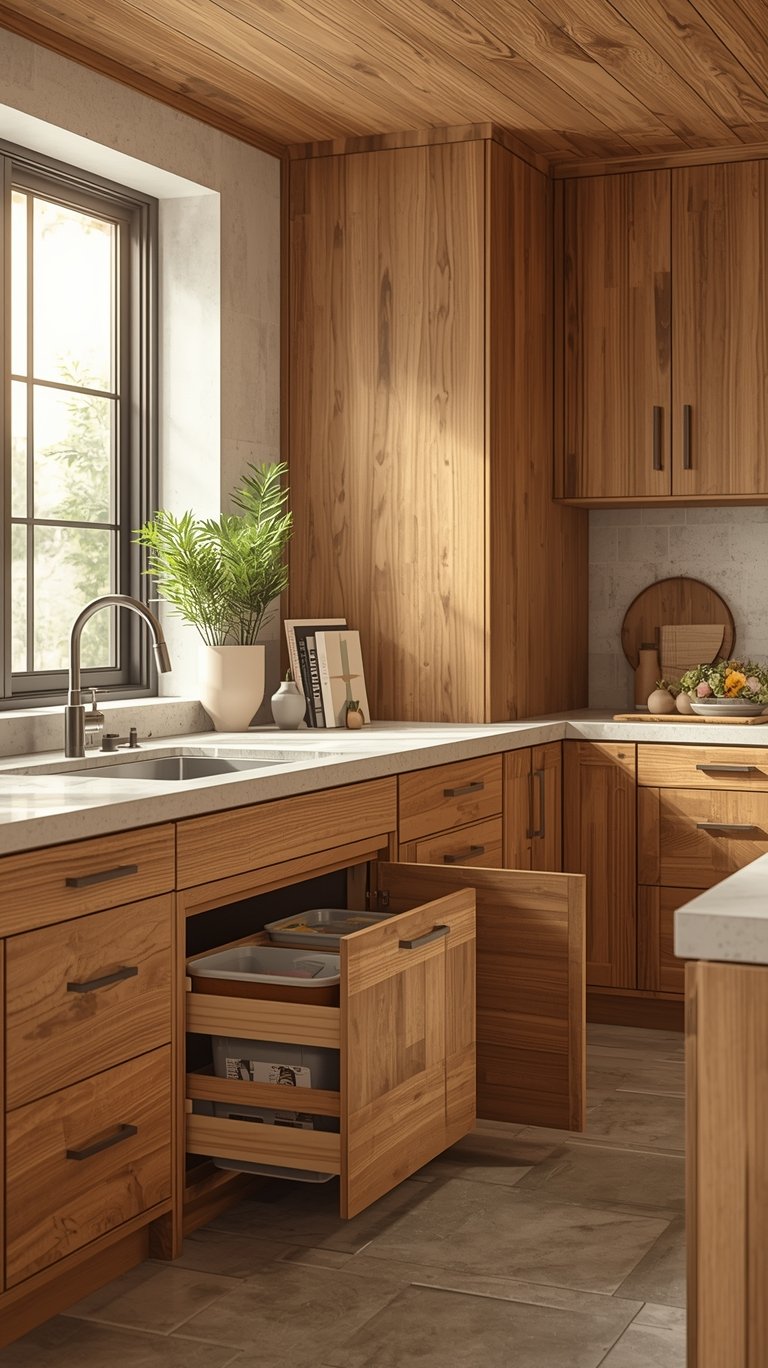
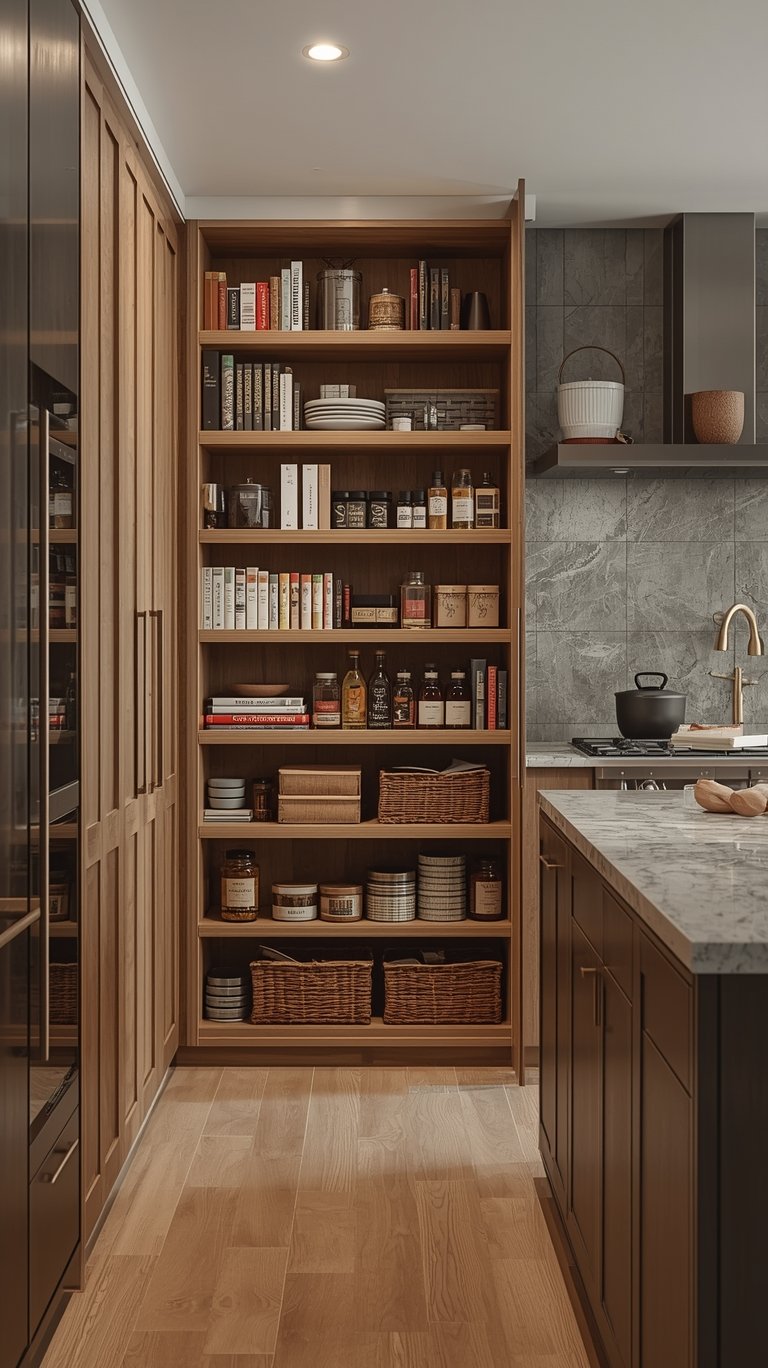
- Seamless Integration: Focus on incorporating smart storage solutions that keep your kitchen looking sleek and tidy. This includes pull-out pantry shelves, hidden trash bins, and integrated built-in cabinetry that seamlessly blends with the overall design.
- Focus on the Core: Featuring only one or two daily-use appliances on countertops and storing everything else keeps the focus on your beautiful natural accents rather than on kitchen gadgets.
18. Sustainability is a Core Value
The style reflects a high value placed on sustainability.
- Eco-Friendly Choices: Choose eco-friendly materials wherever possible. This includes sourcing reclaimed wood, sustainably sourced stone, bamboo (a durable option), and utilizing low-VOC paints and energy-efficient appliances.
- Longevity: This commitment to natural and sustainable materials is a core value of the design, often leading to choices that prioritize longevity and durability.
Making the Style Work for You: Practicalities and Longevity
The beauty of the Organic Modern kitchen is its versatility, but a few practical considerations related to budget and maintenance should be addressed upfront.
19. Budgeting for Natural Materials
High-end natural materials can be costly. However, this style can be achieved in a “look for less manner” by prioritizing where you spend.
- Where to Save: Choosing to forego upper cabinets can save a lot of money. You can also opt for engineered materials that convincingly mimic natural finishes, such as a quartz countertop that looks like soapstone (which is also zero maintenance). Using “Zellige look for less” tiles is another great saving strategy.
- Where to Invest: Focus investment on the high-impact elements that define the style, such as the natural stone slab or high-quality wood veneer, as these pieces provide the grounding energy.
20. Small Space Suitability
If you live in a smaller home, you might wonder if this spacious aesthetic is possible.
- The Answer is Yes! An Organic Modern kitchen works beautifully in small spaces. The clean lines, minimal details, and use of neutral colors reduce visual clutter, making the space feel open and calm. Focus on maximizing natural light and using light colors to help reflect light and make the space feel larger and brighter.
21. The Patina Paradox
The embrace of natural materials means embracing the fact that they are not always maintenance-free, but they age gracefully.
- Embracing Wear: Materials like soapstone and unlacquered brass will show wear and develop a patina over time. This natural aging process adds to the character and authenticity of the space.
- Owner’s Choice: As one designer noted when considering soapstone, you must decide if this inevitable wear and patina is a “positive or a negative” for your lifestyle before committing.
FAQ
We’ve gathered answers to the most common questions about designing your Organic Modern kitchen.
Q: What makes an Organic Modern Kitchen different from a traditional modern kitchen?
Unlike ultra-modern or industrial styles that can feel cold and sterile, Organic Modern kitchens introduce warmth, comfort, and soul through natural materials like wood, stone, and woven fibers. It’s a more grounded, warm take on minimalism, focusing on texture and sustainability.
Q: Is the style suitable for small spaces?
Absolutely! The style works beautifully in small kitchens. The clean lines and minimal details reduce visual clutter, while maximizing natural light and using light wood tones help the space feel more open, spacious, and airy.
Q: What are the key materials to use in an Organic Modern kitchen?
The most crucial materials include wood (like white oak or walnut), natural stone (like marble, granite, or soapstone), and natural fibers (rattan, jute, linen). You should also incorporate structured materials like matte black or aged brass metals, and heavy textures like plaster or handmade zellige tiles.
Q: How can I make my kitchen feel more connected to nature?
The style incorporates principles of biophilic design. Maximize natural light through large windows or open shelving. Introduce plants, greenery, or herb gardens. Also, choose materials that have or mimic natural patterns, such as stone countertops with distinctive veining or wood cabinetry showcasing grain patterns.
Q: Can I mix painted and wood cabinets in this style?
Yes, mixing colors and textures is common. Many Organic Modern kitchens use wood lowers (to ground the space) paired with smooth, matte painted uppers (often in soft white or light gray) for contrast without losing the cohesive, natural look.
Q: Is the Organic Modern style expensive to achieve?
It depends on your material choices. While custom natural materials like soapstone or authentic Zellige tile can be costly, you can achieve an “inspired look for less” by substituting expensive materials with high-quality dupes, such as wood-textured laminates or engineered quartz. Additionally, choosing flat-panel (slab) cabinet doors is often simpler to manufacture and can keep costs down.
Q: What kind of hardware works best?
Think subtle and minimal. The best fit is handleless cabinetry (integrated or push-to-open). If you want hardware, choose sleek, understated options like slim pulls, edge pulls, or small ball knobs in matte black or unlacquered brass.
Q: Does this style blend well with other design styles?
Yes. The natural base and neutral palette mean this look blends easily with Scandinavian, Japandi, mid-century modern, and minimalist design. The key is maintaining a consistent neutral color palette and choosing quality materials.
The Bottom Line
The Organic Modern kitchen is far more than a passing trend in 2025; it’s a reflection of how we want to live now—grounded, calm, and connected to the natural world. By intentionally blending the sleek functionality of modern design with the profound comfort and texture of organic materials, you create a space that offers longevity and timeless appeal.
This design provides a functional sanctuary that works for everyday life, not just for stunning photos. By following these practical steps—from choosing a natural color palette to integrating smart storage and showcasing natural wood like white oak—you can create a kitchen that feels warm, welcoming, and entirely yours. Happy designing!

ABOUT the AUTHOR
TOKI; INTERIOR DESIGN & lifestyle CONTENT CREATOR.
Hey there! I’m Toki—the design-obsessed brain behind Dwell Studio 24. I’m a content creator passionate about interior design, photography, and creativity, living in a 77-year-old house with my husband and our awesome three kids. I write about interior design, furniture, home topics, and my lifestyle, including travel, recipes, skincare, and daily routines. I hope to inspire your next project and lifestyle!
ABOUT the AUTHOR
TOKI; INTERIOR DESIGN & lifestyle CONTENT CREATOR.
Hey there! I’m Toki—the design-obsessed brain behind Dwell Studio 24. I’m a content creator passionate about interior design, photography, and creativity, living in a 77-year-old house with my husband and our awesome three kids. I write about interior design, furniture, home topics, and my lifestyle, including travel, recipes, skincare, and daily routines. I hope to inspire your next project and lifestyle!
ABOUT the AUTHOR
TOKI; INTERIOR DESIGN & lifestyle CONTENT CREATOR.
Hey there! I’m Toki—the design-obsessed brain behind Dwell Studio 24. I write about interior design, furniture, home topics, and my lifestyle, including travel, recipes, skincare, and daily routines. I hope to inspire your next project and lifestyle!