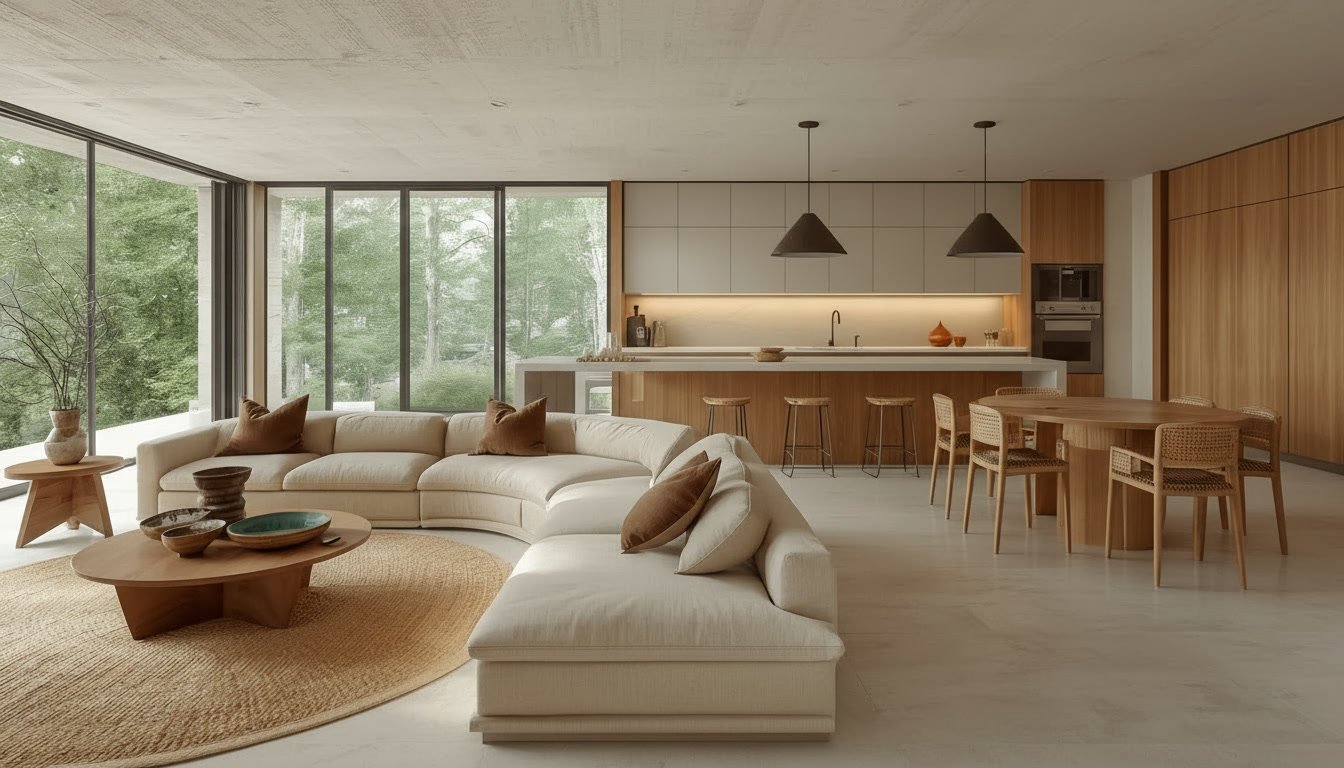
Organic Modern: The Viral Trend + 5 Simple Steps to Cozy Luxe Living
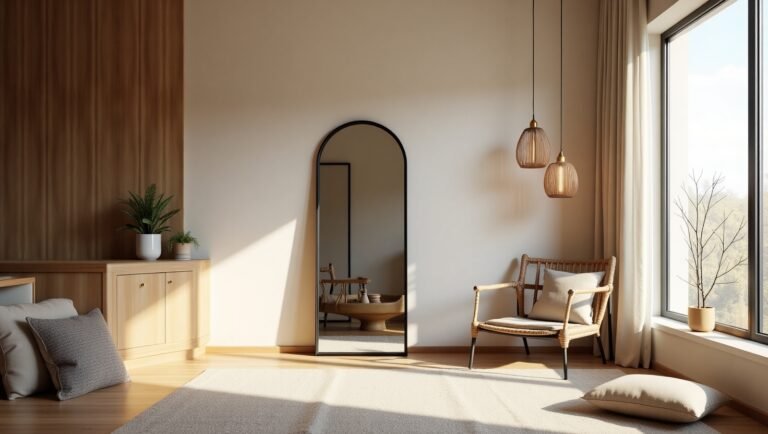
If you’ve spent any time looking at home trends lately, you’ve probably heard of Organic Modern style. It’s the hottest, most viral interior design trend right now, and for good reason. This aesthetic is captivating homeowners everywhere because it feels simultaneously calm, cozy, and sophisticated.
I get it, though. When you search for it on Pinterest, the results can look “over the top” and “out of reach,” making it seem like you need a million-dollar budget to pull it off. But guess what? That’s just not true! As your helpful home design friend, I’m here to tell you that this gorgeous, tranquil style is so doable on multiple budgets, even if you’re shopping at places like Walmart, Ross, or HomeGoods.
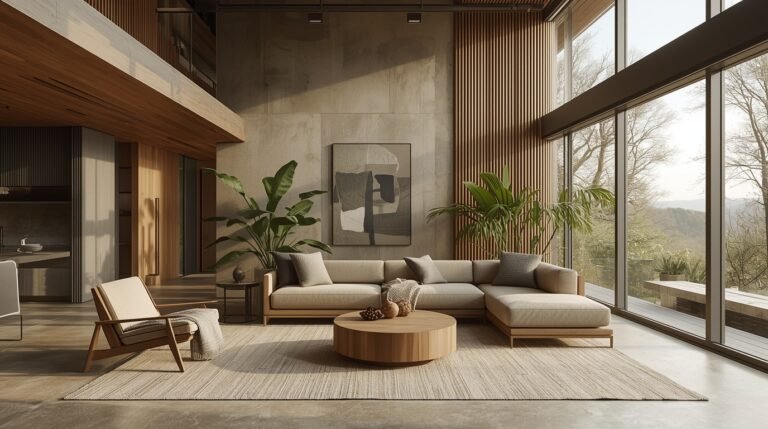
The magic of Organic Modern design is its seamless fusion. It takes the clean, sleek, and stripped-down lines of Modern design and marries them with the raw, earthy beauty of natural materials. It’s a hybrid look that feels both warm and contemporary.
Ready to transform your space into a peaceful, nurturing retreat? Let’s jump into the essential elements, the best practices, and the budget secrets of this amazing style.
Key Takeaways
- The Foundation is Neutral: Stick to a warm-neutral color palette dominated by creams, beiges, gentle grays, and browns.
- Texture is Key: Use texture—like rough wood, bouclé, and jute—to add visual interest and depth since you won’t be relying on bold color or patterns.
- Blend Straight Lines and Curves: Soften the sleek, modern geometric shapes by incorporating furniture and decor that feature fluid, organic shapes and curves, mirroring nature’s contours.
- Prioritize Nature: Use materials in their raw, unadorned state (like honed stone or unfinished wood), and fill your home with live greenery.
- Less is More: Embrace relaxed minimalism. Decluttering is the first—and most budget-friendly—step to achieving the clean, simple, and calming look.
Decoding the Organic Modern Philosophy
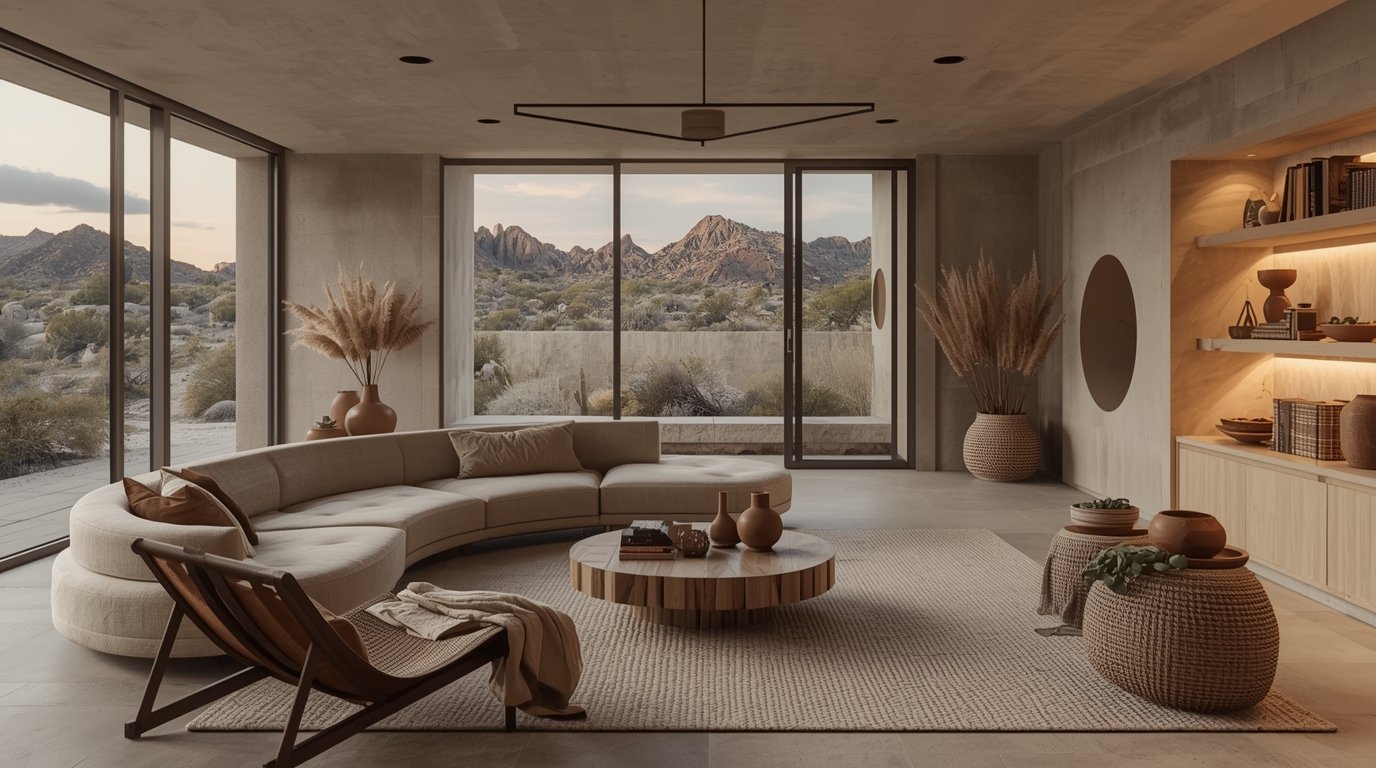
To truly master this style, we need to understand its roots and the mindset that guides it.
The Historical Context
The concept of bringing nature and structure together isn’t new. It’s really an extension of modern design.
The organic element traces back to architect Frank Lloyd Wright, who first introduced “organic architecture”. He believed in a harmonious coexistence between sleek, modern elements and organic, earthy textures. Modern design itself refers to the post-World War II era up to the 1970s, which focused on minimalism and simple shapes, often using new manufactured materials like plywood. Organic Modern takes that simplicity but swaps out the plastic for natural materials.
The Wabi-Sabi Principle and Antiquities
This style is deeply rooted in antiquities and ancient design. Designers are looking for materials that look like they could have existed thousands of years ago, such as stone, clay, wood, and plaster.
This ancient connection plays into the Japanese design philosophy of Wabi Sabi. This is the appreciation of finding beauty in things that are imperfect, damaged, misshapen, or aged. You’re not striving for pristine perfection; you’re looking for the charm of something beautifully imperfect—like a cracked vase or a raw, ancient bench. The goal is a look that is worn, approachable, and helps you relax.
1. The Core Aesthetic: Mastering Color and Texture
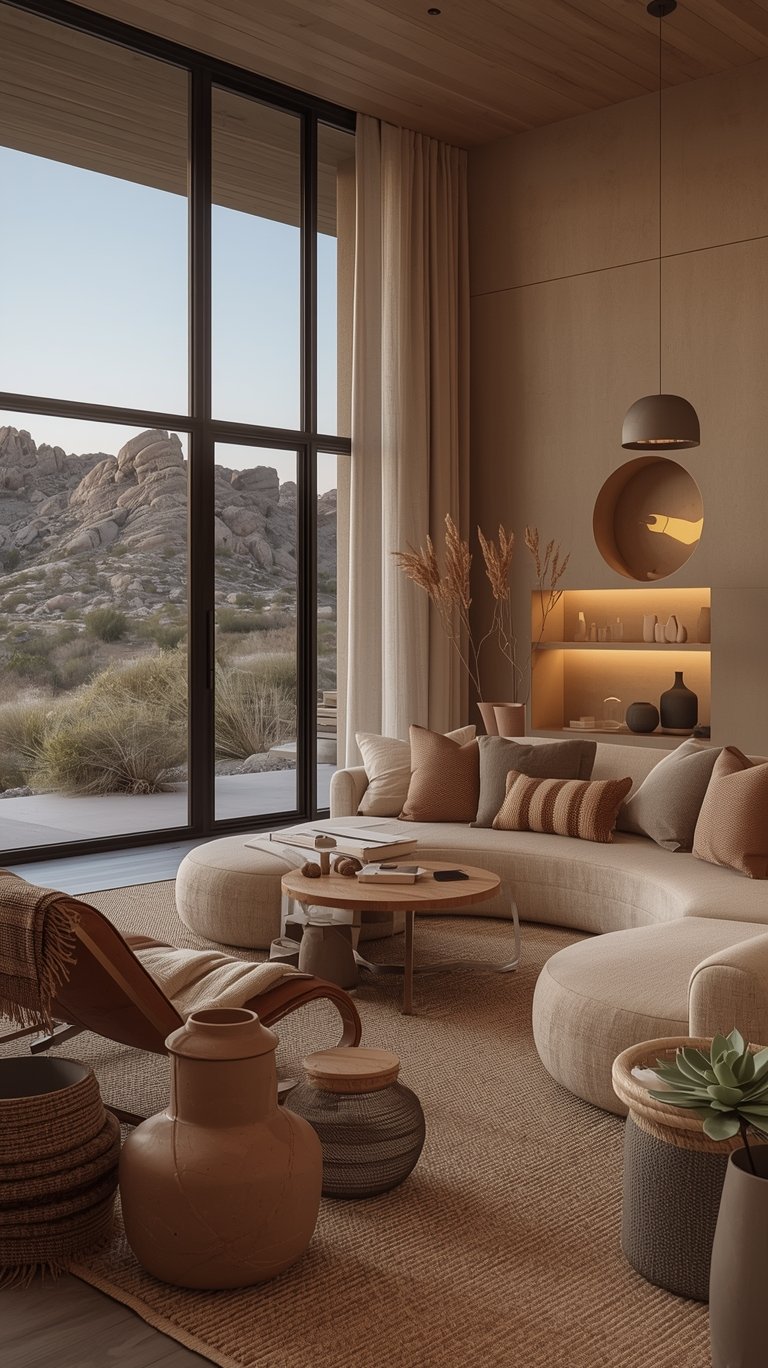
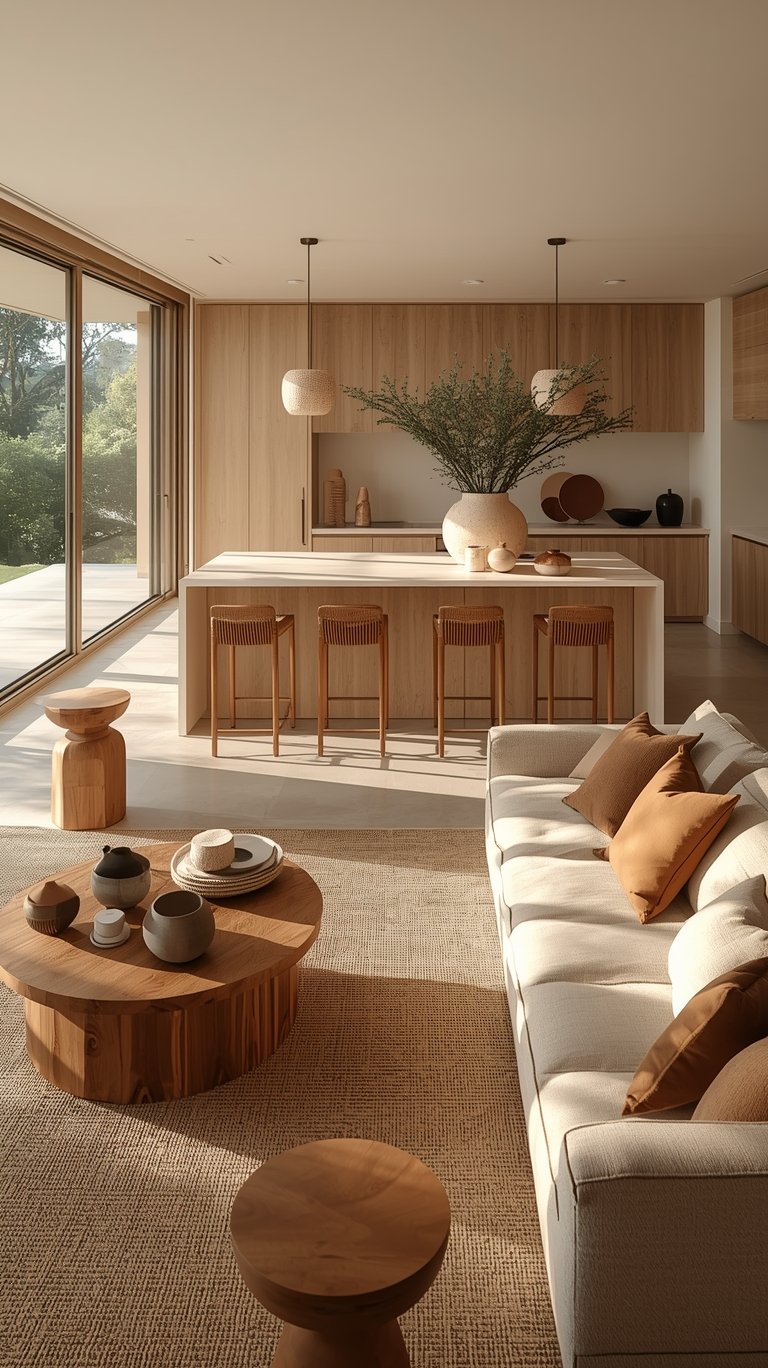
In Organic Modernism, the color and texture choices are what truly create that serene, tranquil environment.
Embracing the Warm Neutral Palette
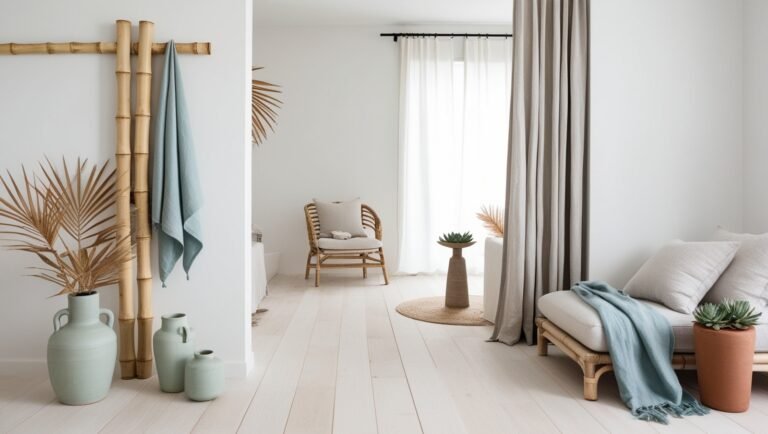
The color scheme is defined by a subdued, neutral palette. These colors create a calming foundation for the space.
- Warmth is Key: While whites are common (often seen on clean walls), the palette generally leans warm. Opt for creamy off-whites, beiges, soft caramels, and light taupes.
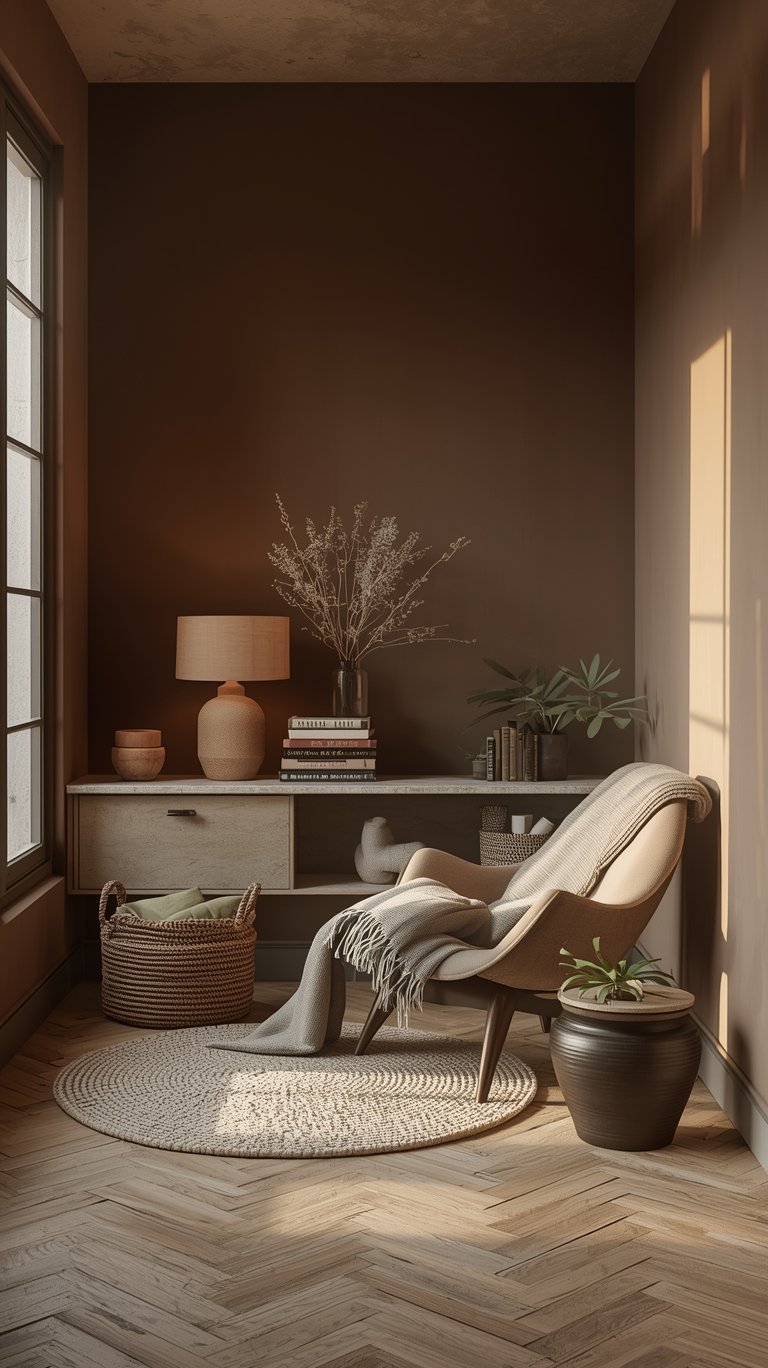
- Earthy Tones: Draw colors directly from nature: gentle grays, moss greens, rust, and different shades of brown (from mushroom to rich chocolate).
- Desaturation for Calm: To make the colors feel more pleasing and calming, you should desaturate them. This means toning down the primary color hues so they aren’t harsh or bright.
- Pops of Color: Bolder colors are generally avoided. If you want to include color, it usually comes from greenery or muted, natural earth tones like blues and reddish-browns. Pink is also acceptable if it appears naturally, like in blooms or sunsets.
Texture Must Be the Star
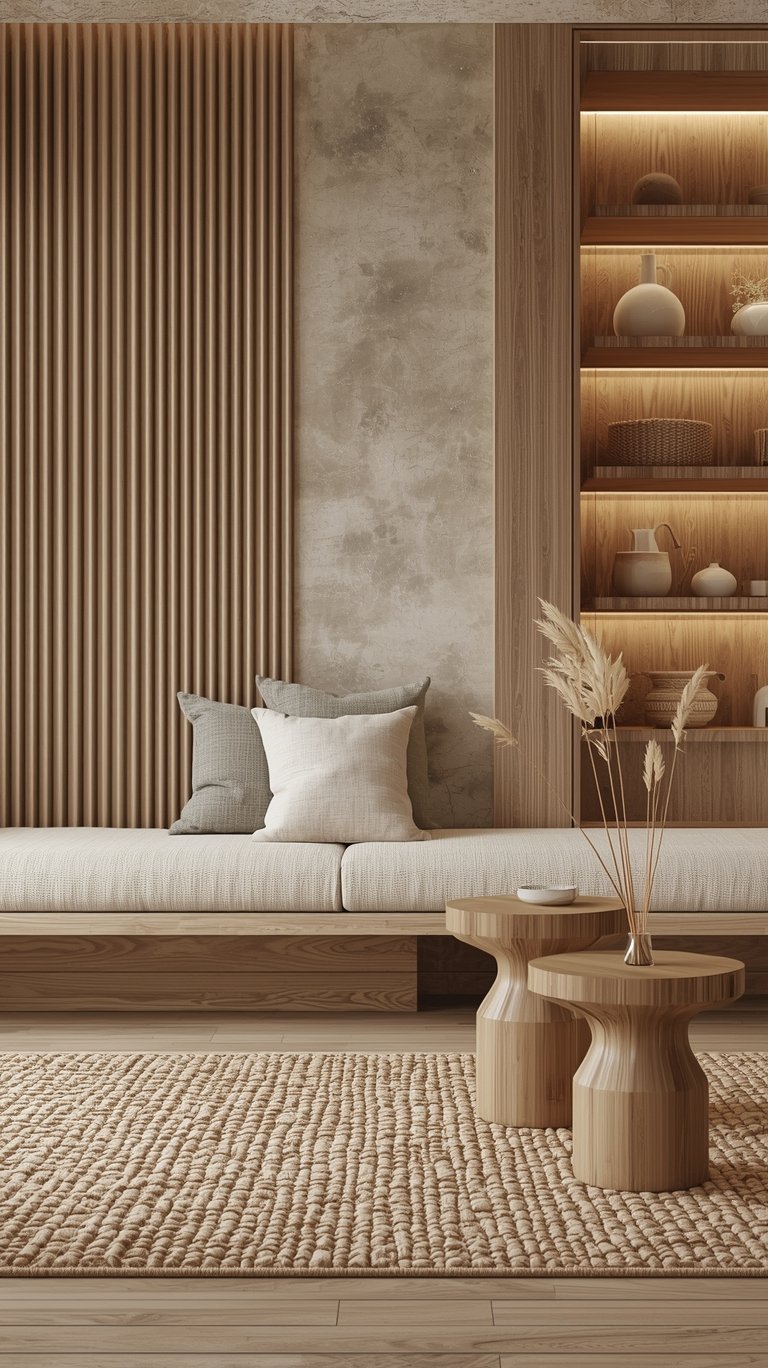
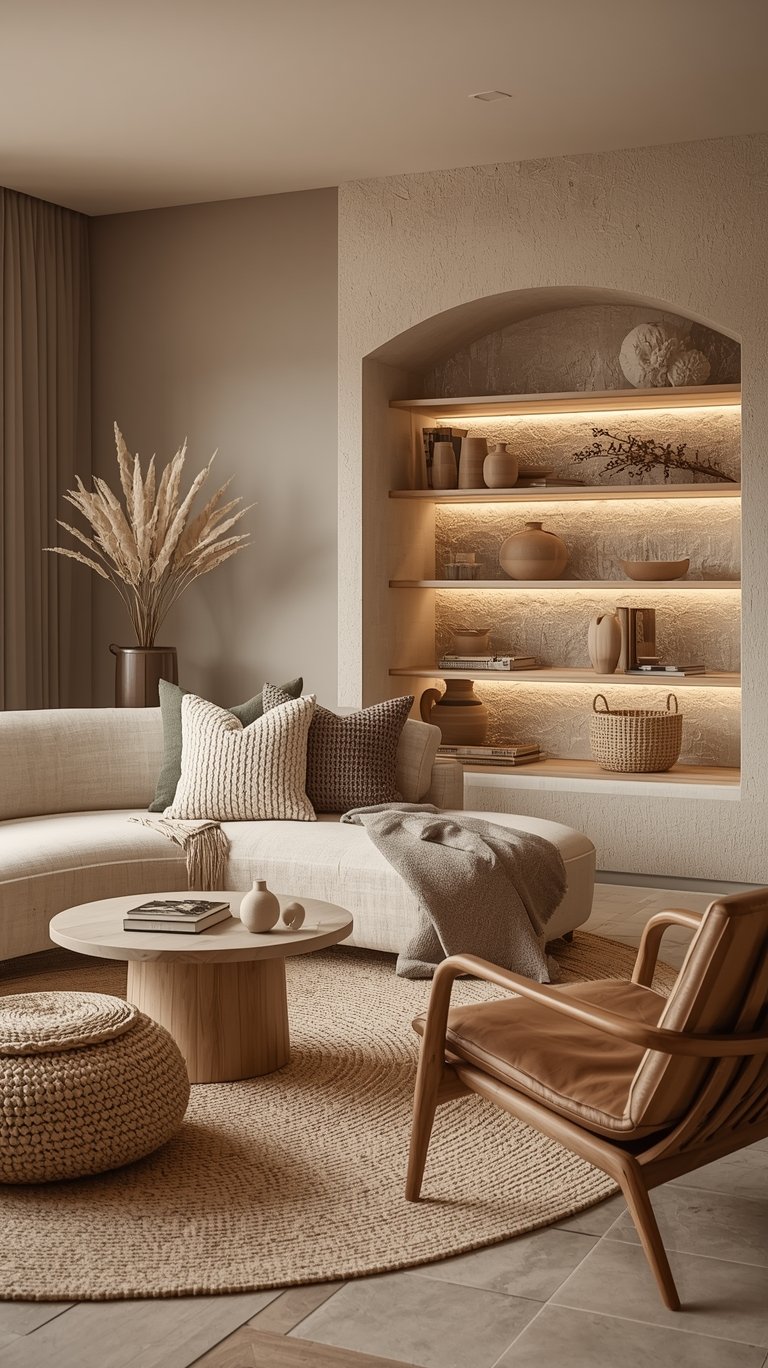
Since the style requires you to pull out all the color and avoid bold prints, texture has to take over the job of creating visual interest.
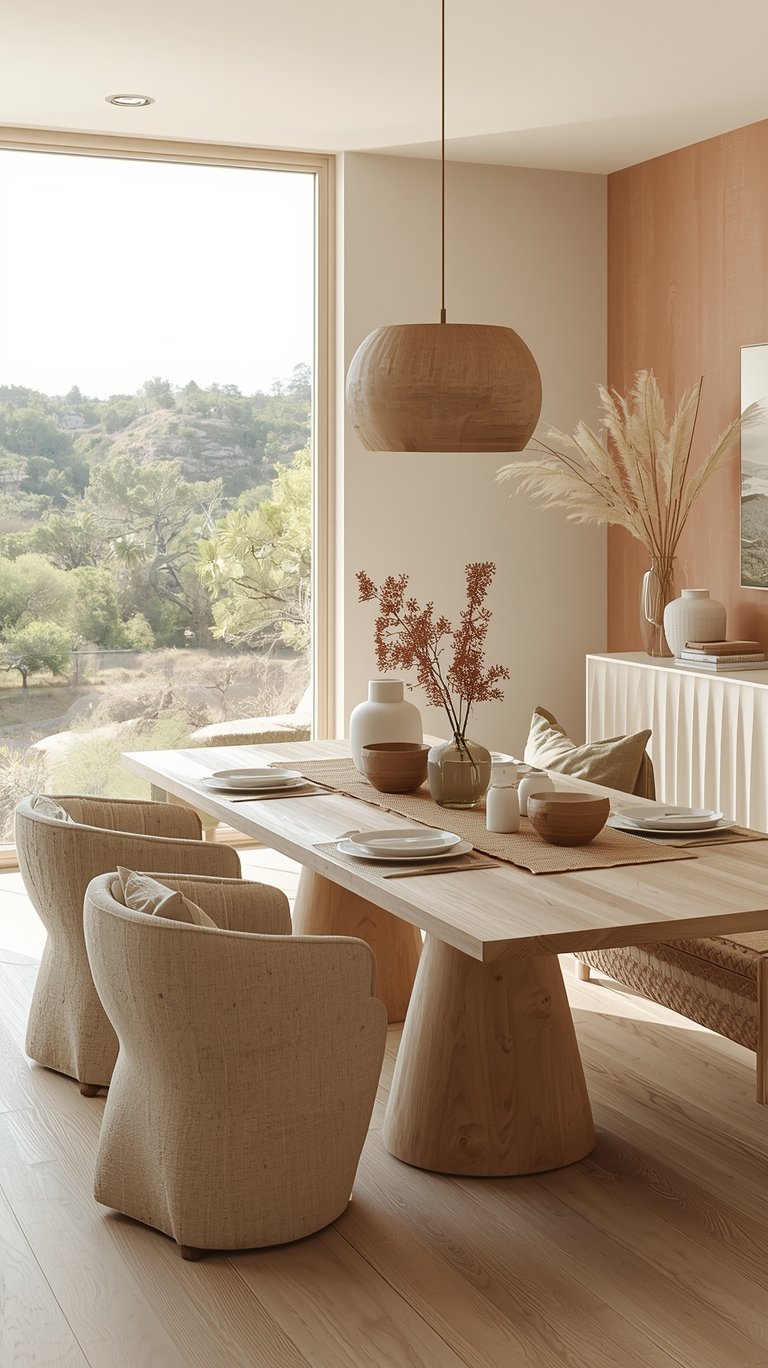
- Layering Textures: You need layers of different natural textures—such as fluting, rough wood, bouclé, wool, jute, linen, and woven baskets—to prevent the space from feeling “boring and flat”.
- Avoiding Patterns: You generally won’t see any bold prints or patterns. If a pattern exists, it should be subtle and read more like a texture.
The Rule of Raw and Unfinished Finishes
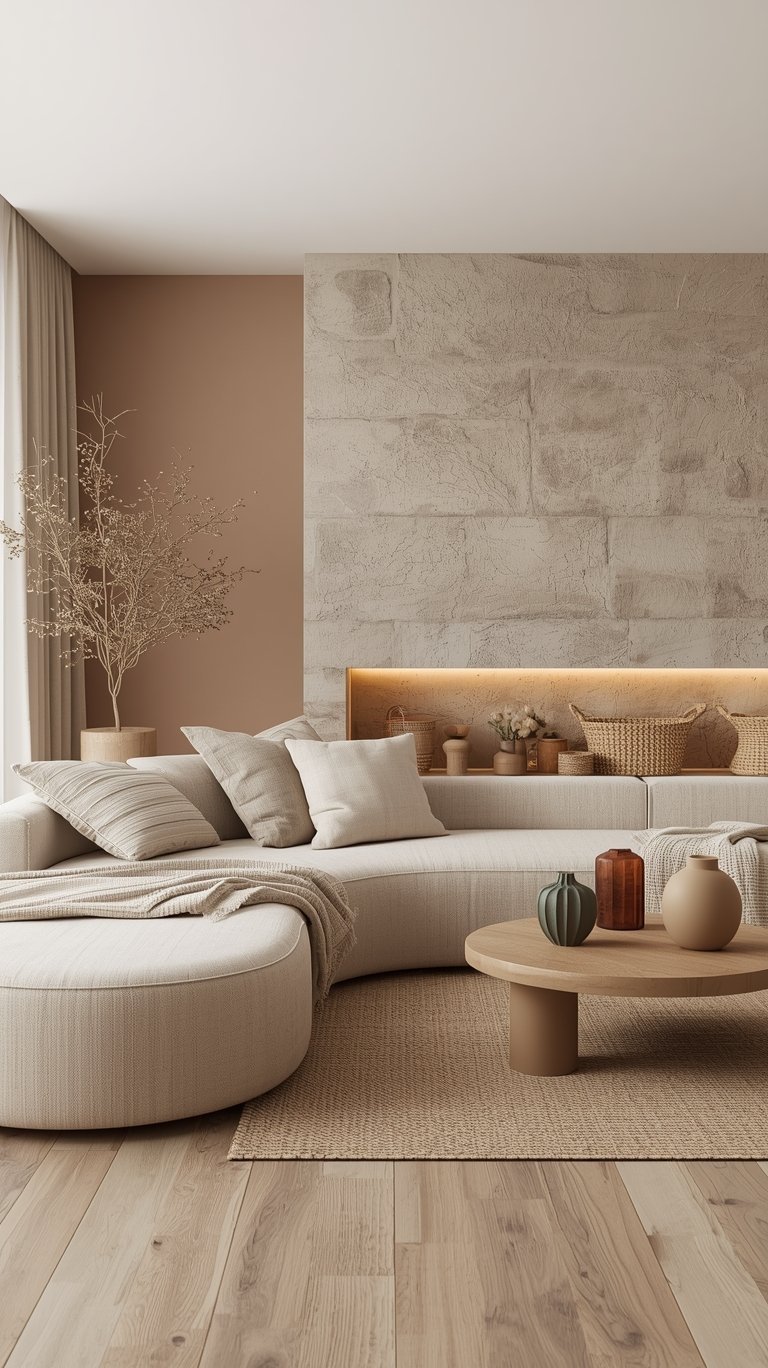
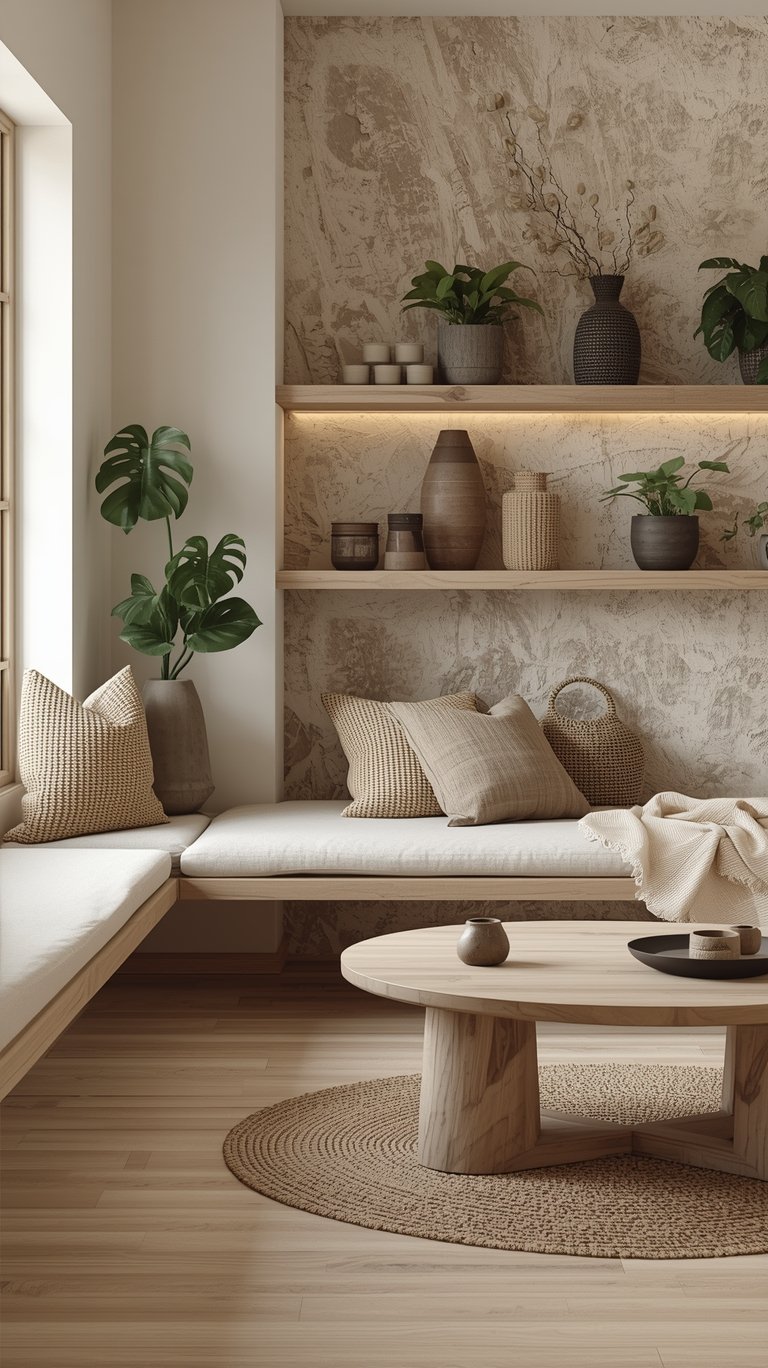
To keep the organic feeling strong, you need to minimize shine and polish.
- Matte over Glossy: Definitely don’t have anything too glossy. Opt for matte, worn, or faded finishes.
- Stone Finishes: If you are using natural stone like marble, travertine, or limestone, it should be honed, tumbled, or unpolished to retain its organic feel.
- Wood Finishes: Floors should be rough-hewn or distressed. Use light wood (like white oak), and if you use dark wood, ensure it has a worn finish. A solid black piece can read as “too modern” or contemporary, so if you use black, make sure it is a muted, faded black that looks like charcoal.
2. Forms and Materials: The Art of the Blend
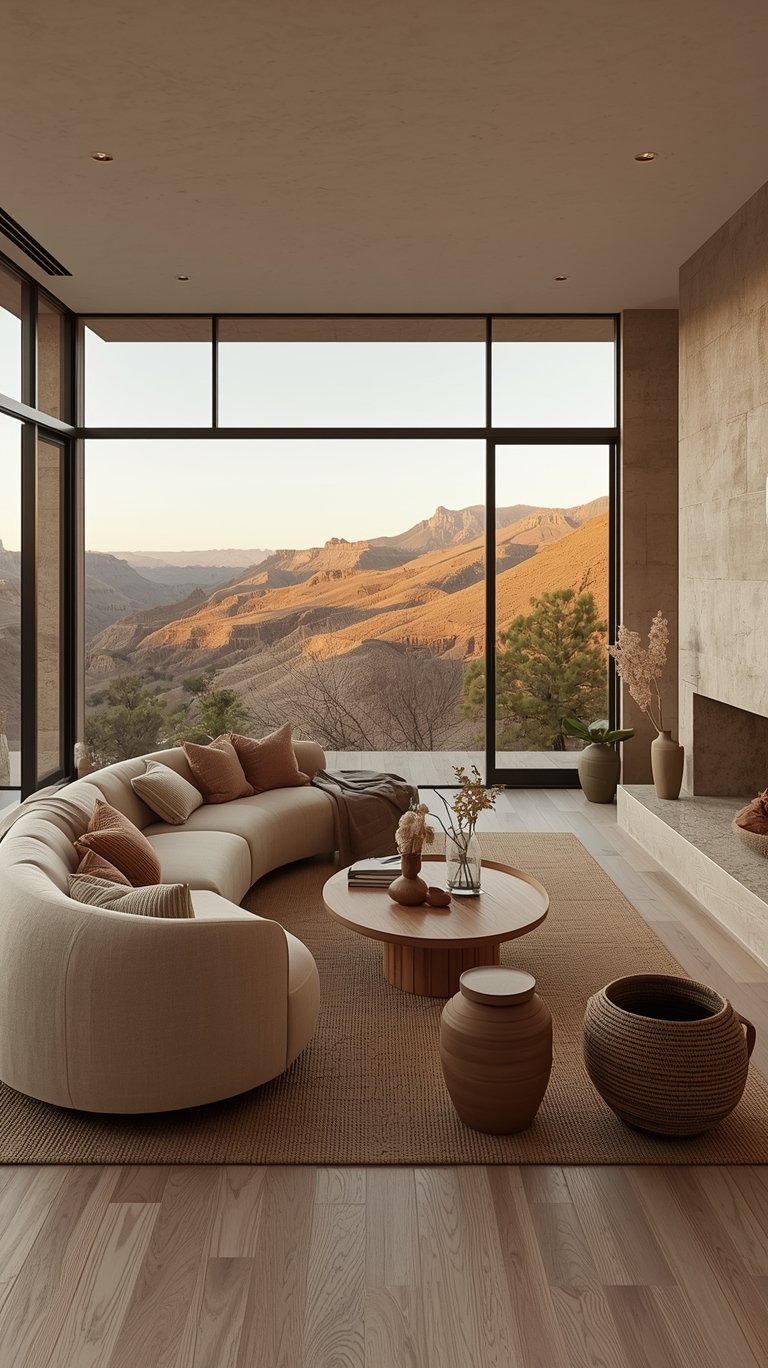
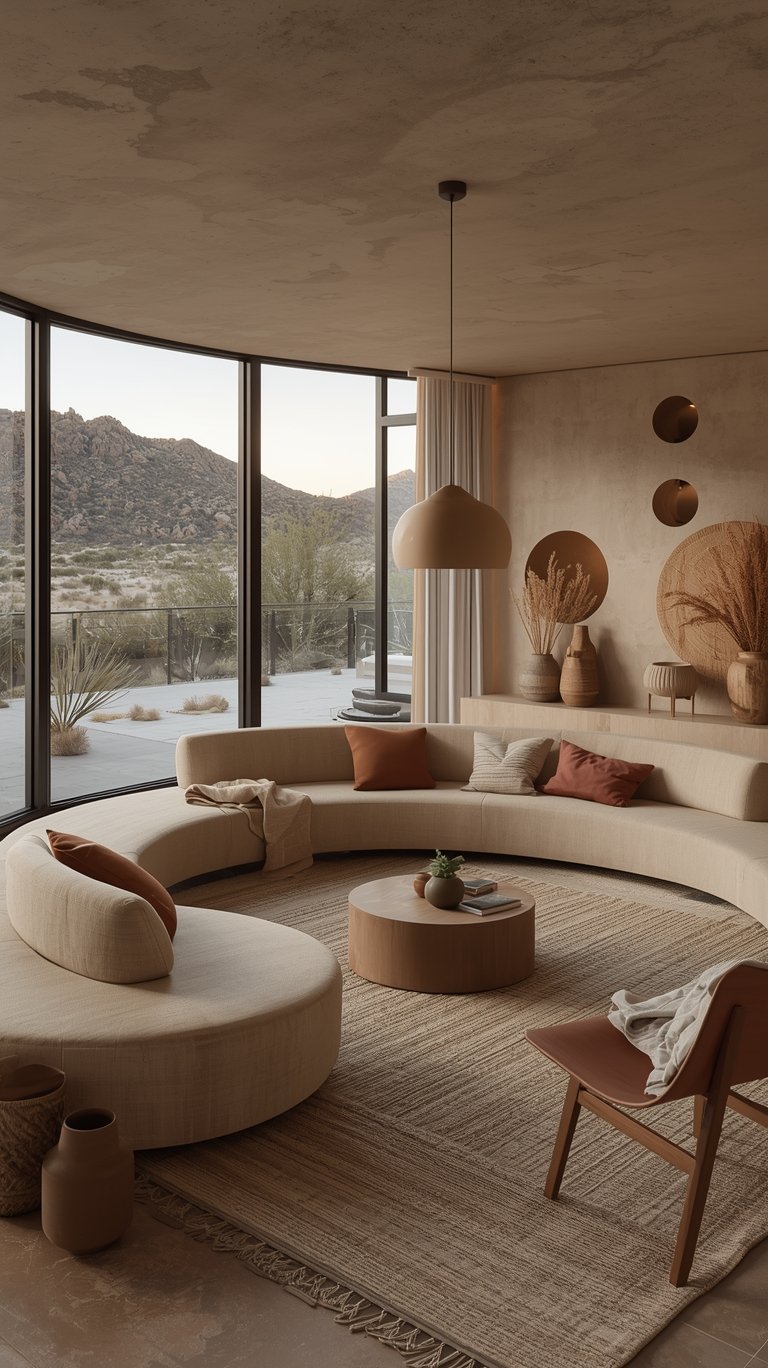
Organic Modern is a hybrid style, and successfully achieving it requires a careful balancing act. Too much organic, and you’re bohemian; too much modern, and you’re industrial.
Incorporating Organic Shapes and Curves
Modern design uses sleek, straight lines. The organic half of the equation requires you to soften those lines with curves.
- Curvaceous Furniture: Incorporate furniture pieces that boast fluid, organic shapes and curves, mirroring the natural world’s contours. This includes curved sofas and side chairs, often upholstered in soft, textured fabrics like bouclé.
- Irregular Decor: Look for irregularly shaped lighting fixtures, coffee tables with elliptical shapes, or decor that is a little misshapen. These organic shapes make the space feel more dynamic and interesting.
The Ultimate Material Checklist
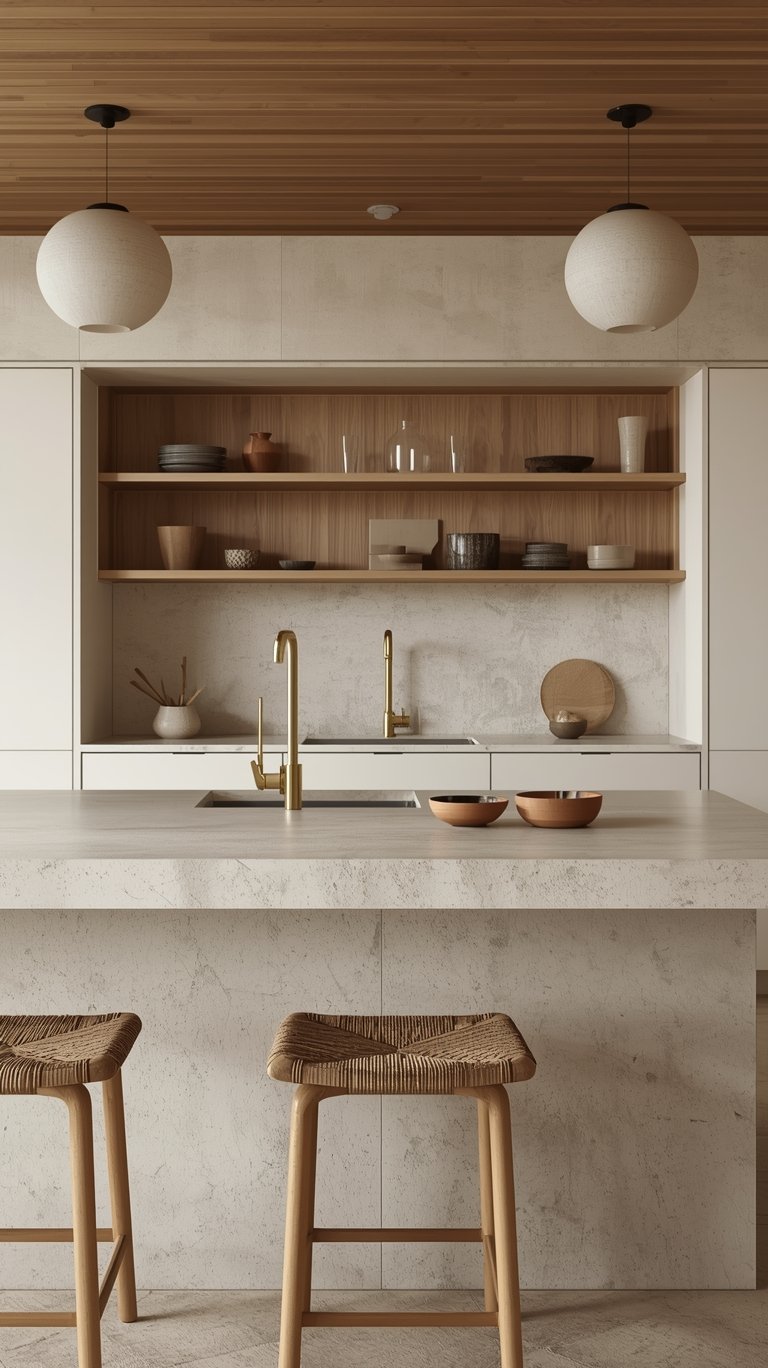
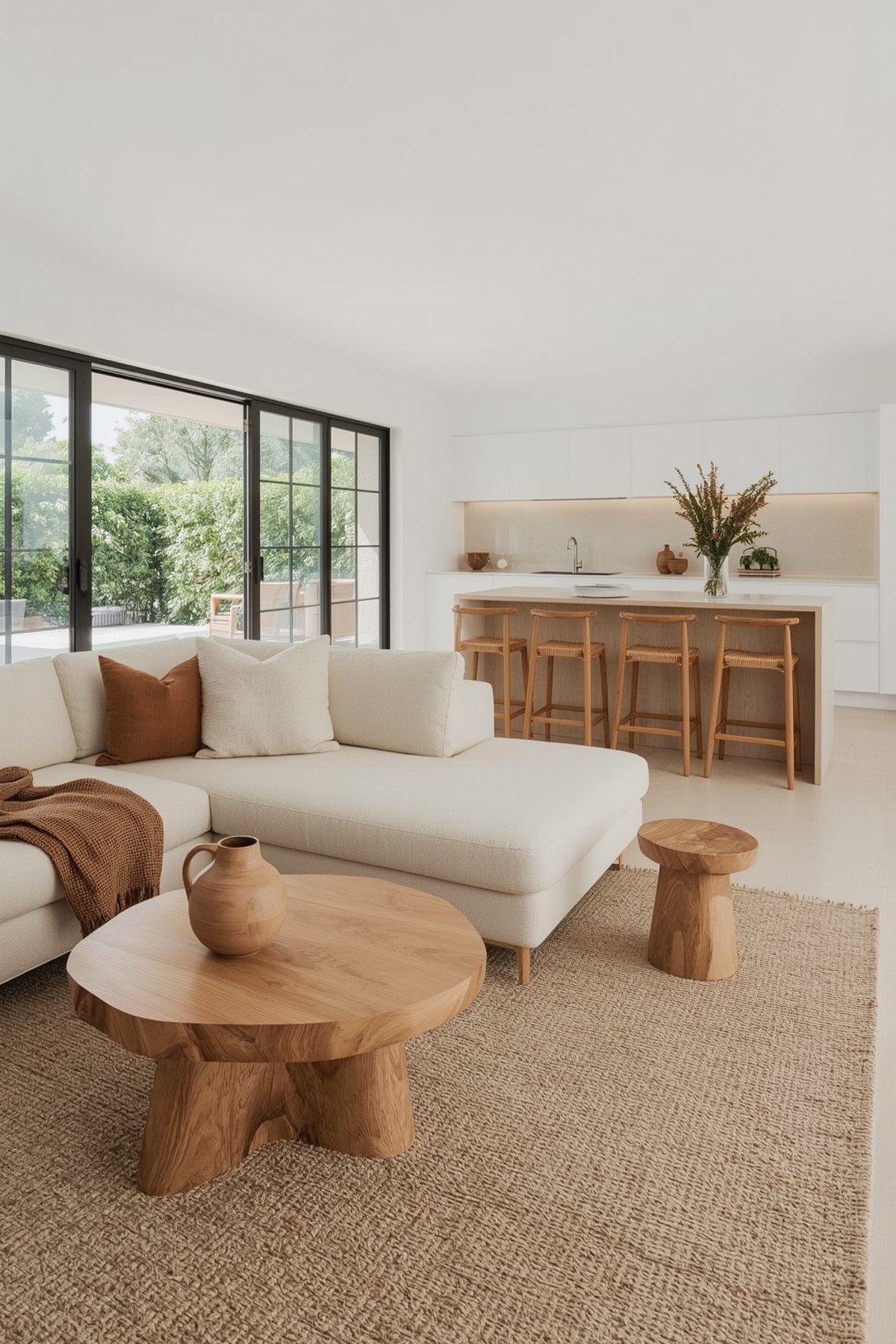
Every material you choose should come from nature.
Wood
- Recommended types: Light woods (e.g., white oak), reclaimed wood, and pieces with visible grain and natural imperfections.
- Best practices: Choose unfinished or worn-looking finishes; prefer pieces that show character (knots, variation) over perfectly uniform surfaces.
Stone & Mineral
- Recommended types: Marble, travertine, granite, slate, limestone, sandstone, and concrete.
- Best practices: Use honed, tumbled, or unpolished finishes rather than glossy polished stone to keep an organic, aged feel. Seal porous stones where needed for durability.
Fibers & Textiles
- Recommended types: Linen, cotton, wool, jute, sisal, and rattan; bouclé for upholstery.
- Best practices: Layer multiple textures (woven rugs, linen curtains, wool throws) to add depth; use performance fabrics in high-traffic areas while keeping natural textures visually.
Metals
- Recommended types: Iron, bronze, and muted brass.
- Best practices: Use metal accents sparingly. Opt for understated, natural or hand-forged finishes rather than shiny chrome; favor pieces that look slightly aged or handmade.
Handmade Touches
- Recommended items: Pottery, ceramic vases, clay vessels, woven baskets, and artisanal trays.
- Best practices: Source one-of-a-kind or handcrafted items when possible to introduce imperfection and authenticity; prioritize pieces with tactile surfaces and subtle irregularities.
Finishes & Surfaces
- Recommended approaches: Matte, worn, or faded finishes across paint, wood, and metal.
- Best practices: Prefer lime wash, plaster, or matte paint for walls; choose rough‑hewn or distressed wood floors; avoid high-gloss surfaces that read too modern.
Decor & Accent Elements
- Recommended items: Large sculptural bowls, organic-shaped coffee tables, fluted or textured ceramics, and natural-fiber rugs.
- Best practices: Select fewer, meaningful accents rather than many small knickknacks; pick statement pieces that read as intentional and timeless.
Sustainability & Sourcing
- Recommended approach: Prioritize reclaimed, recycled, or sustainably sourced materials and vintage finds.
- Best practices: Check product origins, look for FSC-certified wood, and choose local artisans or secondhand markets to reduce environmental impact and add story to your pieces.
Maintenance & Practicality
- Recommended practices: Use proper sealing for porous stone; choose washable textiles or removable cushion covers; apply protective finishes where needed for durability with kids/pets.
- Best practices: Balance raw aesthetics with functional choices—e.g., performance fabrics in neutral textures, sealed countertops, and rugs with non-slip pads.
How to Mix These Materials (Quick Rules)
- Start with a neutral base (walls, large upholstery) and layer natural textures.
- Balance warm woods with cool stone or soft textiles to avoid visual heaviness.
- Use a single metal tone sparingly to tie elements together.
- Introduce handcrafted objects as focal points to add personality and imperfection.
3. Strategic Architectural Implementation
These elements integrate the style into the very structure and atmosphere of your home, reinforcing the tranquil mood.
The Biophilic Connection (Bringing the Outside In)
Biophilic design is fundamental. You are actively strengthening the connection between your indoor environment and nature.
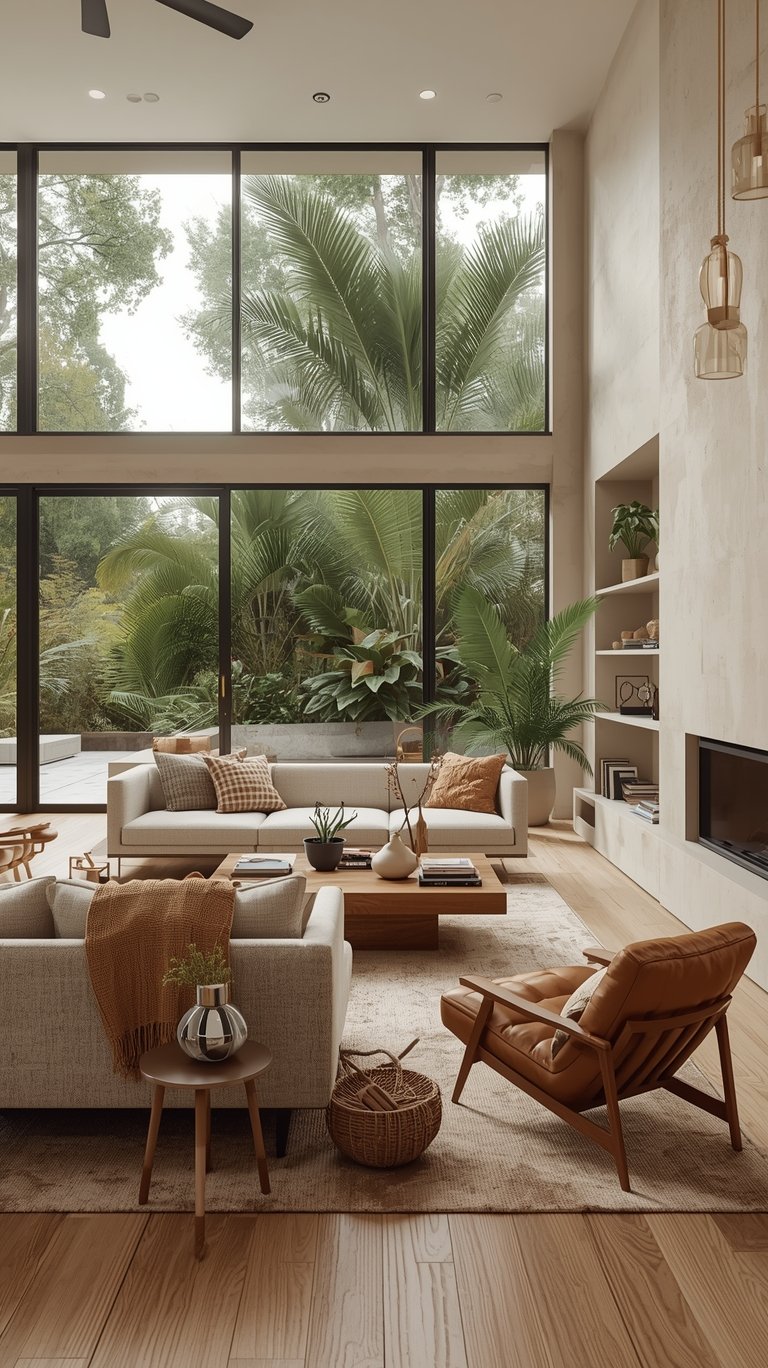
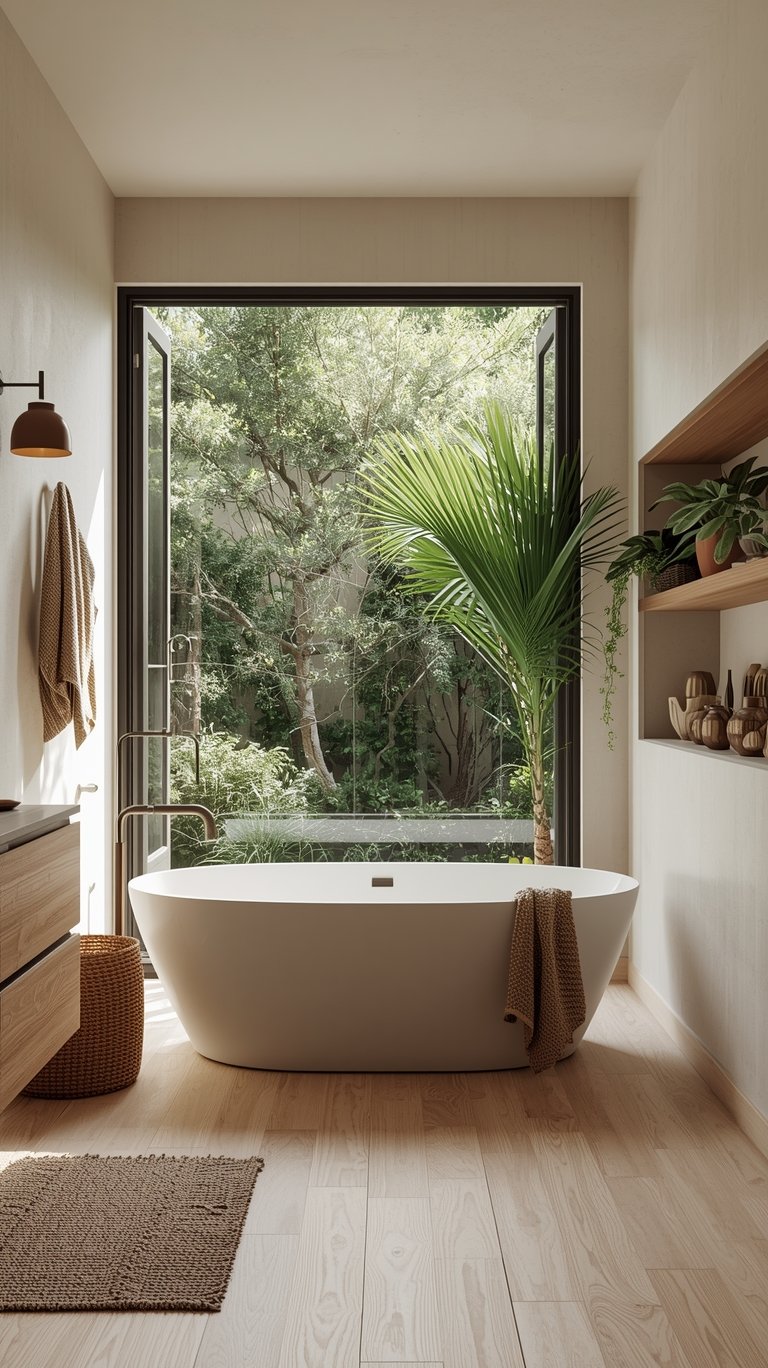
- Greenery is Welcome: Live houseplants are the ultimate natural material. They provide literal life and vitality, injecting necessary color into the neutral space.
- Indoor/Outdoor Synergy: Blur the lines between the interior and exterior. Use large picture windows (or even full windowed walls) to flood the space with natural light. Consider your windows as art that frames your backyard.
- Open, Clean Layouts: An open floor plan enhances the aesthetic. Minimizing walls allows natural light and design elements to flow seamlessly through the space, promoting an uncluttered and tranquil environment.
Textural Walls and Lighting Strategy
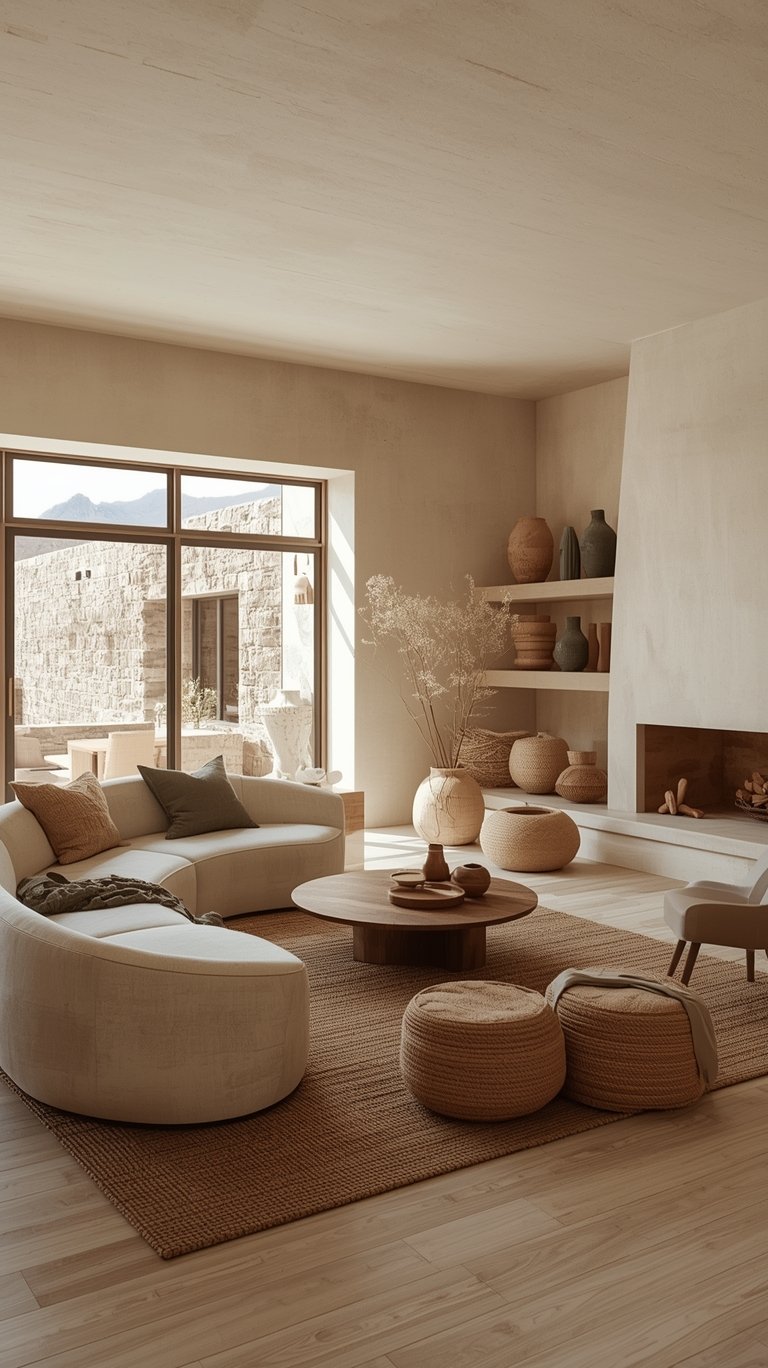
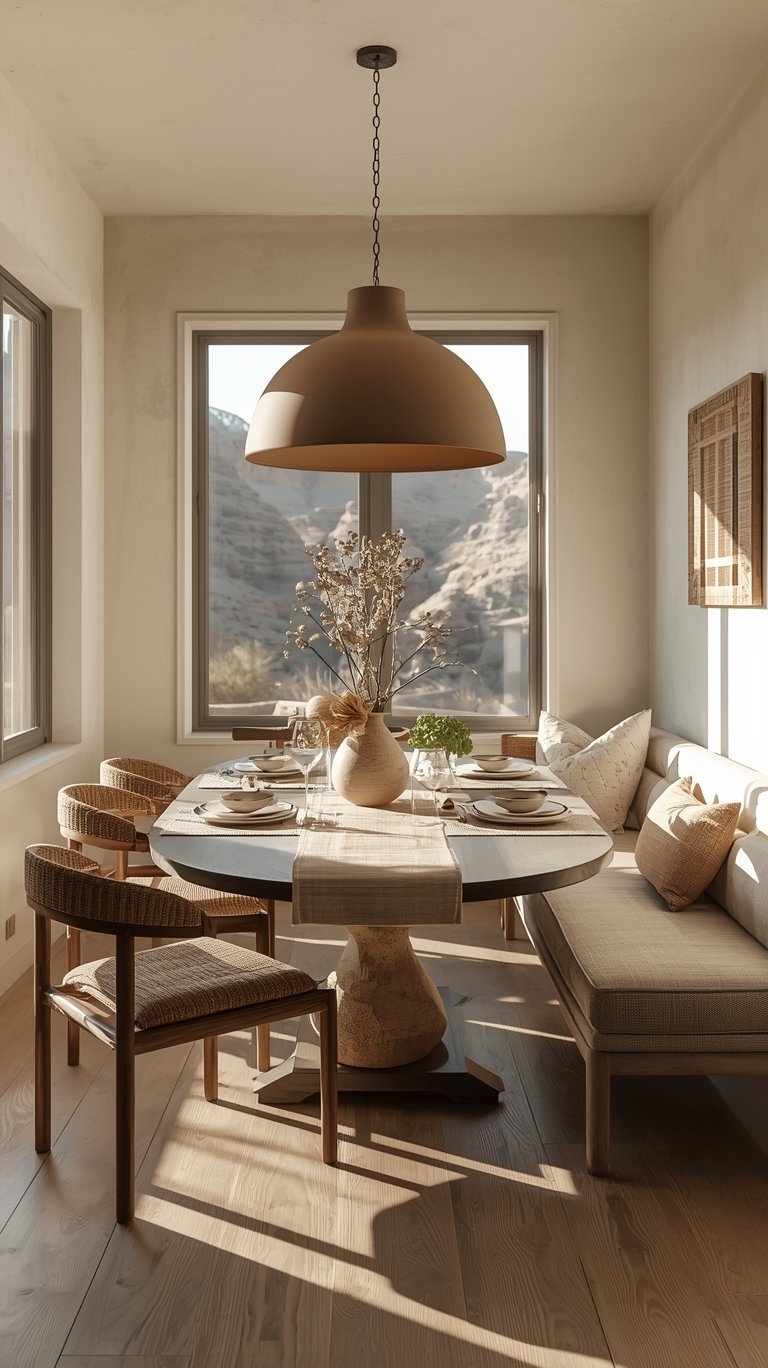
The way you treat walls and light sources heavily contributes to the calming, cocooning feeling of Organic Modern design.
- The Ancient Wall Finish: Finishes like lime wash and plaster are incredibly popular. These finishes give the walls a worn, textural appearance that creates a cozy, enveloping feel, echoing the patina of ancient European buildings.
- Practical Tip: Lime wash is easier to commit to than plaster, as it can be applied over painted walls and is easier to change later.
- Maximizing Natural Light: Harnessing natural light is key. If you don’t have many windows, use white paint, white curtains, and strategically placed mirrors to boost light flow.
- Sculptural Lighting: Introduce sculptural lighting fixtures. Oversized or innovative fixtures serve as striking art pieces that highlight the meeting point of functionality and creativity. The fixtures can be very modern or very organic (like a clay chandelier), but their unique shapes create a captivating dance of light and shadow, adding depth to the space.
4. The Modern Gaps: Integrating Durability and Tech
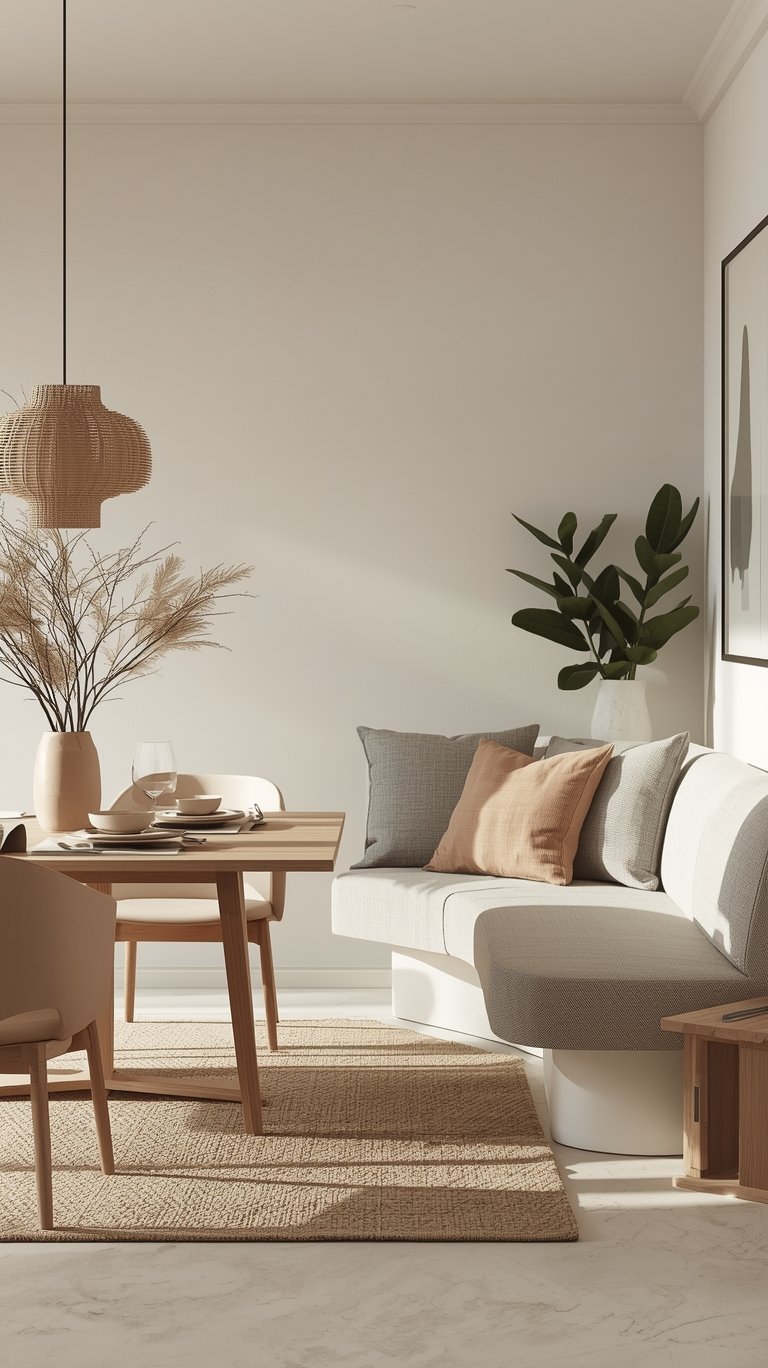
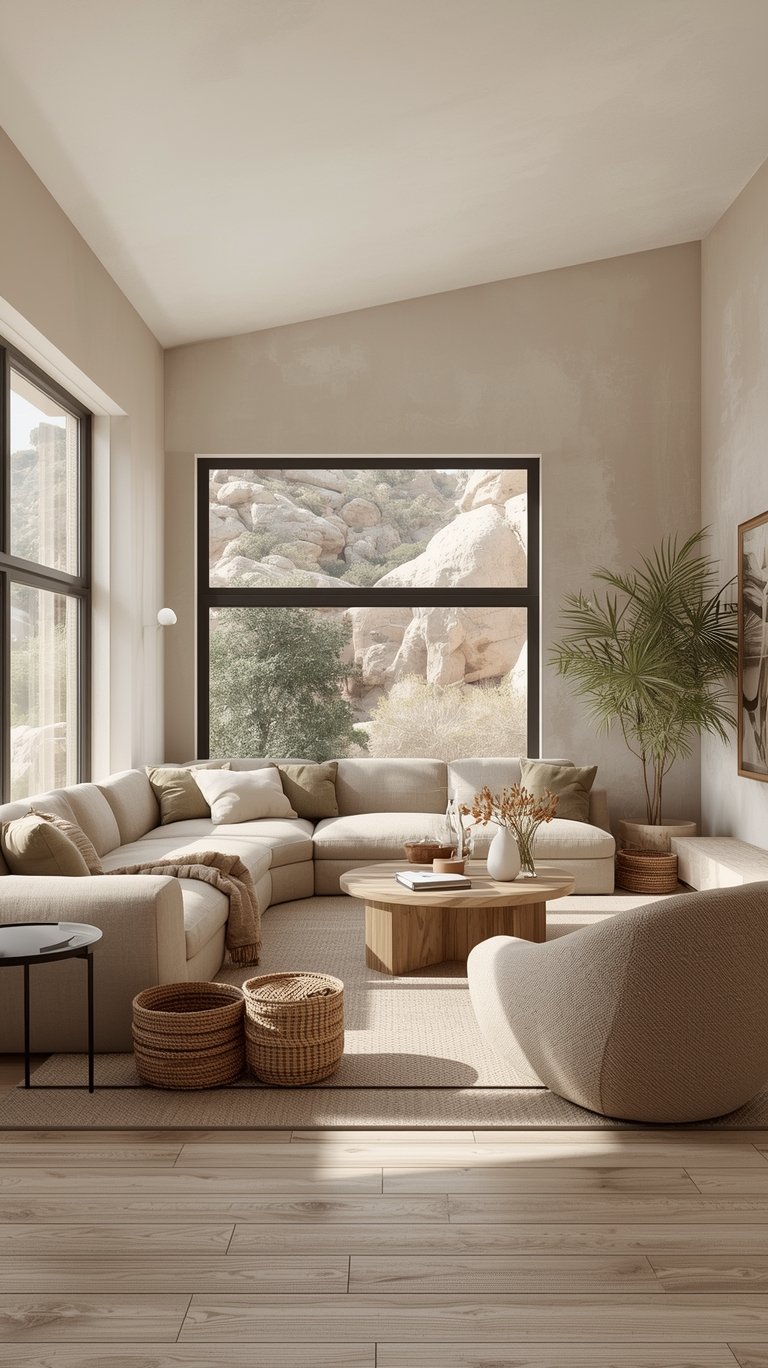
While the sources focus on the beauty of the style, a practical home design friend needs to acknowledge the potential pain points that come with raw materials and sleek, minimalist layouts.
Durability and Family-Friendly Choices
The style emphasizes raw, light-colored natural materials (like unsealed marble and linen), which can be tricky when you have kids, pets, or just enjoy eating spaghetti on your white sofa.
- Prioritize Comfort: The focus is on a relaxing, tranquil atmosphere, so your furniture must be comfortable. Choose pieces you want to “sink into”.
- The Reality of Raw Stone: When incorporating natural stones (like travertine or limestone) as countertops or decor, understand that these materials are often porous. To keep them looking good and manage maintenance, be prepared to research proper sealing and cleaning methods for these surfaces.
- Performance Fabrics: Although natural fibers like linen and cotton are ideal, using performance fabrics (which are more durable and easier to clean) in the same neutral, textural weaves is a practical solution for high-traffic areas.
Integrating Technology Seamlessly
The Organic Modern commitment to minimalism and clean lines means modern technology—wires, screens, charging stations—can’t be allowed to create visual clutter.
- The Silent Design Approach: Since the style is rooted in ancient design (wood, stone, clay), you need a strategy to make electronics disappear. Look for furniture that offers integrated storage or wire management to keep cables out of sight.
- Screens as Hidden Features: Consider ways to conceal televisions, such as mounting them within a feature wall or using mirrored TV panels, ensuring the “clean layout” is maintained.
5. Achieving the Organic Modern Look on a Budget
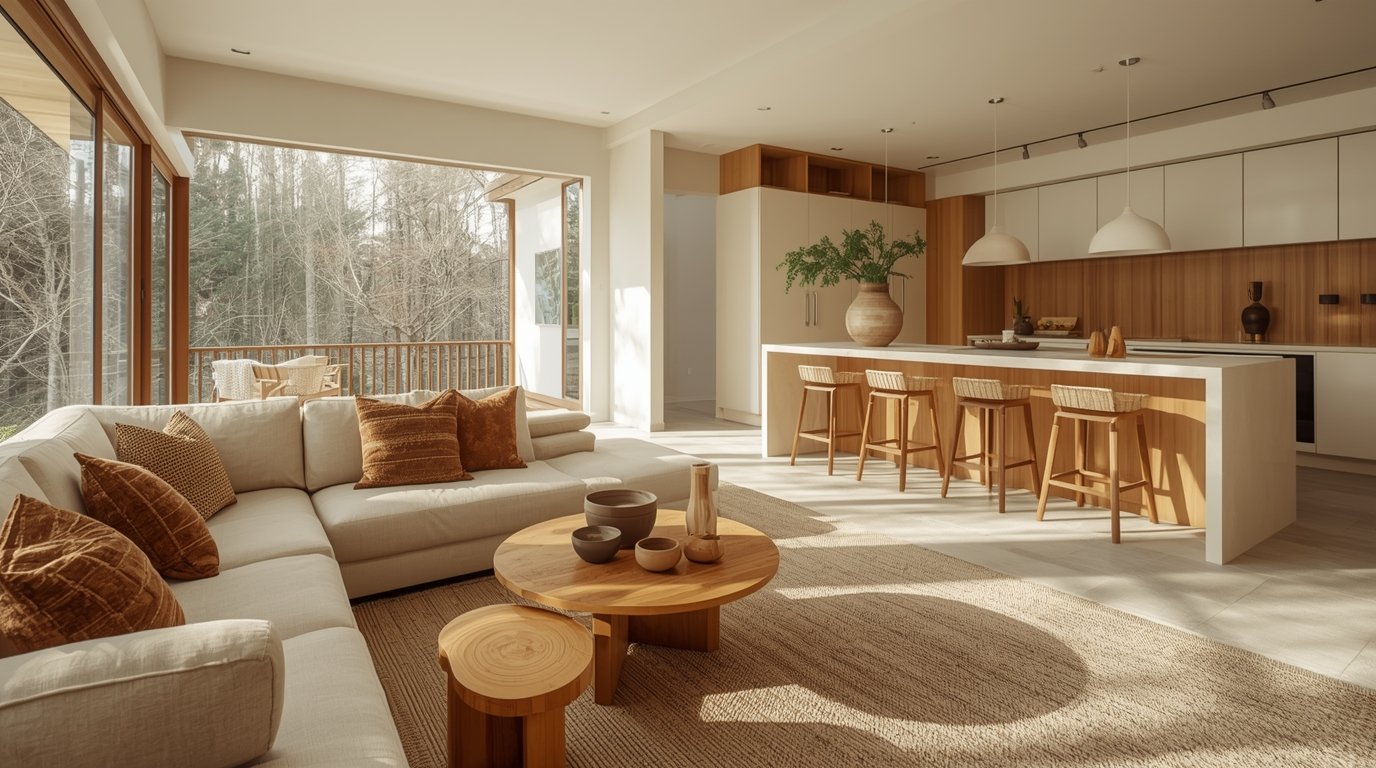
The best news about Organic Modern is that it’s one of the most accessible styles to achieve affordably, largely because the trend is so viral.
The Budgeting and Decluttering Strategy
The very first step is free.
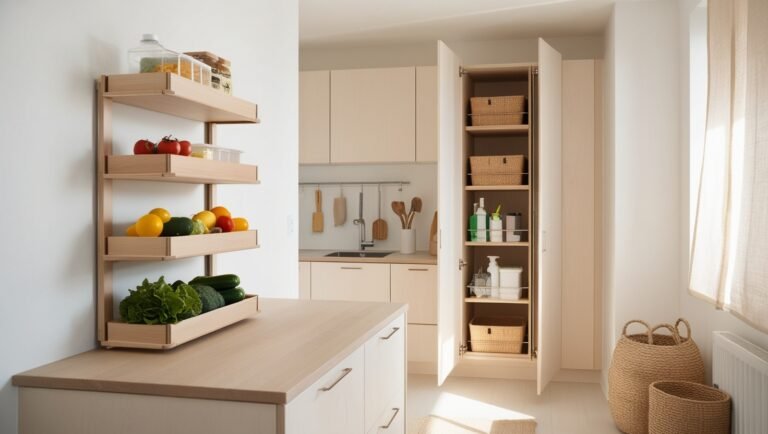
- Start Minimalist: Decluttering your home is the easiest first tip and is fundamental to the “less is more” ethos of the style.
- Fund Your Style: Not only does decluttering create the clean, simple layout required, but you can sell those items to create a budget for new pieces. This allows you to “fluff up” your budget for that extra piece you weren’t expecting to afford.
Shop Smart: Quality Statement Pieces
Organic Modern prioritizes quality over quantity.
- Fewer, Better Pieces: You don’t need to buy a ton of decor. It’s better to buy one big, beautiful bowl that makes a statement than several cheap knickknacks. You may spend a little bit more on that one piece (say, a $30 bowl), but it prevents clutter.
- Check Clearance: Don’t limit yourself to just “cheap stores.” Always check clearance sections at higher-end retailers (like Pottery Barn) because you can sometimes find a huge, high-end piece at a deep discount, saving you a ton of money.
- Affordable Retailers: Since the style is popular, elements have trickled down into discount stores. You can pull this look off successfully by shopping at Walmart, Ross, HomeGoods, and Target. Also check mainstream stores like Zara Home and H&M Home for pieces made with natural materials like cotton and marble.
Finding Unique and Worn Pieces
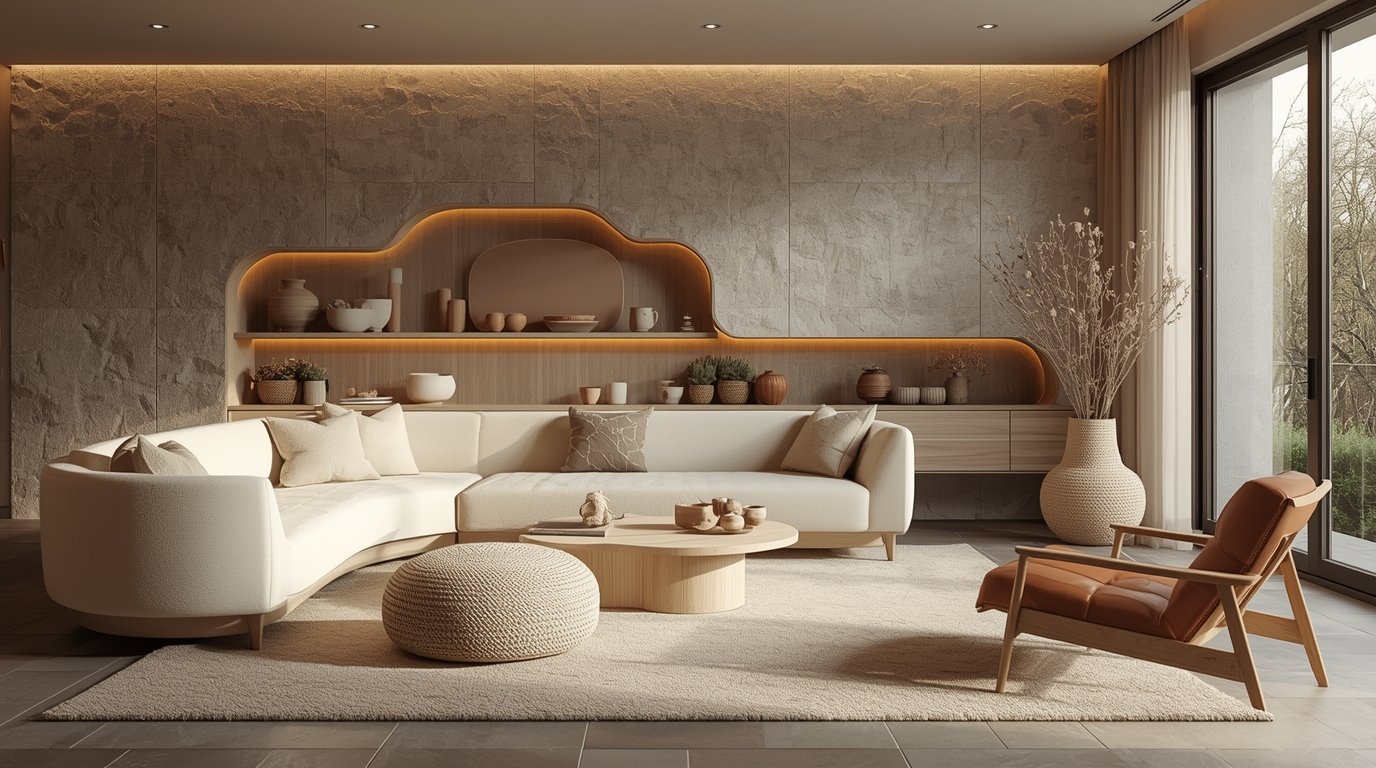
To embrace the Wabi-Sabi philosophy, you need items that look unique and aged.
- Thrifting is Key:Thrifting for this style is a blast. Look on online marketplaces like Etsy or in local antique shops for vessels and decor that look a little broken, misshapen, or that have a handmade feel. This is how you find authentic, one-of-a-kind pieces.
- Speaking of ancient finds, sometimes I feel like I need to hire Indiana Jones just to find the perfect thousand-year-old bench for my living room!
- DIY Lighting Upgrade: If buying white paint is out of reach, the most affordable and impactful way to brighten a dark space is by switching to daylight light bulbs. This simple change makes it feel like you’ve brought the daylight indoors.
Creating Your Own Recipe
This style is very blendable. You don’t have to follow all the steps rigidly; they are just a baseline.
- Flexibility in Fusion: You can add your own “little flare”. It works seamlessly with other aesthetics, like French Country, Modern Luxury, Modern Mediterranean, or even adding a touch of rustic wood.
- Pace Yourself: Decide whether you want to be a “transformer” (doing a full room reveal in one day) or a “slow decorator” (slowly pulling color out and adding new pieces over time). Both approaches are valid for achieving the final look.
FAQ
Is Organic Modern just another trend that will fade quickly?
The style is currently viral, but it’s built on fundamental, enduring principles: natural materials, comfort, and simplicity. Because it is an extension of modern design and emphasizes quality and natural elements, it is viewed as a gorgeous style that will last the test of time.
What is the difference between Organic Modern and Mid-Century Modern?
Both styles share clean lines. However, Mid-Century Modern (which ran roughly post-WWII to the 1970s) often uses manufactured materials like plywood and plastic. Organic Modern is a contemporary, nature-centric evolution that replaces those manufactured elements with raw, natural materials (stone, wood, jute, bouclé).
What colors are central to the Organic Modern style?
The style is dominated by a neutral color palette. Key colors are white, beige, cream, light tones, and gentle grays. These neutrals are often mixed with earth tones drawn from nature, such as rust, deep chocolate browns, muted greens, and soft blues.
Should I avoid all geometric shapes in favor of curves?
No, the style is a hybrid. Modern design gives the style its foundation of sleek lines and simple shapes. You must maintain a balance. To soften those straight lines, you strategically incorporate organic, curvy shapes in your furniture and decor.
What are the best materials to include?
The best materials evoke nature and are often used in their raw, unadorned state. Look for wood, stone, natural fibers like wool, linen, and jute, and artisanal pieces made of clay or terracotta.
Can I use metal accents?
Yes, but use metals sparingly and strategically. They should have an understated, natural finish. Iron accents or bronze can work, especially if they are used in handmade objects or lighting fixtures that reference antiquities.
How do I use texture without looking messy or too rustic?
Texture must be layered. Use high-quality, comfortable, natural fabrics like bouclé, wool, and linen. Contrast rough textures (rough-hewn wood, jute rugs) with smooth ones (like honed marble or silky fabrics). This contrast adds depth and richness, ensuring the space remains chic and sophisticated rather than tattered.
How does the style work in different regions or climates?
The style is versatile and works no matter where you live on the planet. It can be customized with local “twists,” such as a Mediterranean twist (using stucco and olive trees) or a desert twist (using concrete and specific earth tones). The core principles (materials, color, shape) remain constant, but the specific natural elements change based on the environment.
The Bottom Line
Organic Modern style is much more than a design trend; it’s a commitment to creating a sophisticated, serene, and healthy environment. By sticking to the neutral color palette, prioritizing natural textures galore, and balancing modern structure with organic shapes, you achieve a space that is genuinely calming.
Remember the simple steps: Start by decluttering, invest in a few high-quality statement pieces (or affordable pieces that look high quality), and use the budget tips to bring in beautiful, raw materials. You don’t have to overhaul your entire house at once; whether you are a “transformer” or a “slow decorator”, you can curate a space that perfectly reflects your personal “recipe”.
Your tranquil, nature-infused home awaits. It’s time to reconnect, get back to your roots, and enjoy all the comforts the outside world has to offer, right from your sofa.

ABOUT the AUTHOR
TOKI; INTERIOR DESIGN & lifestyle CONTENT CREATOR.
Hey there! I’m Toki—the design-obsessed brain behind Dwell Studio 24. I’m a content creator passionate about interior design, photography, and creativity, living in a 77-year-old house with my husband and our awesome three kids. I write about interior design, furniture, home topics, and my lifestyle, including travel, recipes, skincare, and daily routines. I hope to inspire your next project and lifestyle!
ABOUT the AUTHOR
TOKI; INTERIOR DESIGN & lifestyle CONTENT CREATOR.
Hey there! I’m Toki—the design-obsessed brain behind Dwell Studio 24. I’m a content creator passionate about interior design, photography, and creativity, living in a 77-year-old house with my husband and our awesome three kids. I write about interior design, furniture, home topics, and my lifestyle, including travel, recipes, skincare, and daily routines. I hope to inspire your next project and lifestyle!
ABOUT the AUTHOR
TOKI; INTERIOR DESIGN & lifestyle CONTENT CREATOR.
Hey there! I’m Toki—the design-obsessed brain behind Dwell Studio 24. I write about interior design, furniture, home topics, and my lifestyle, including travel, recipes, skincare, and daily routines. I hope to inspire your next project and lifestyle!