Japandi Backyard Camping Ideas for Summer: Perfect Outdoor-Indoor Harmony
Want a fresh idea for backyard camping this summer? Whether you’re dreaming of a rugged night under the stars or a sophisticated camping glamping experience, these Japandi design tips mix calm Japanese minimalism with cozy Scandinavian “hygge” to make your yard feel peaceful and ultra-comfy.
You’ll find simple setups, soft blankets, warm lanterns, and easy food ideas that are quick to do. Perfect for small groups or quiet nights alone, these ideas help you relax outside and feel like your home grew a little.
Key Takeaways
- Blends Japanese and Scandinavian design for seamless indoor-outdoor spaces
- Uses sustainable materials like bamboo and recycled wood to reduce environmental impact
- Features fire pits, ponds, and vertical gardens to enhance nature connection
- Focuses on muted colors and raw textures for a calming atmosphere
- Employs smart tech discreetly to maintain minimalist aesthetics
Embracing the Japandi Aesthetic in Summer Camps
Japandi style mixes traditional Japanese design with Scandinavian practicality. This mix comes from centuries of cultural exchange. Danish designers were inspired by Japan’s simple philosophy over 150 years ago.
This style now shapes summer camps. It offers a calm yet useful space for campers.
What is Japandi Style?
Japandi blends Japan’s wabi-sabi with Denmark’s hyggee. It’s about embracing imperfection and cozy comfort. Think clean lines and natural textures like bamboo and linen.
This mix makes spaces where nature and architecture meet smoothly.
Key Elements of Japandi Design
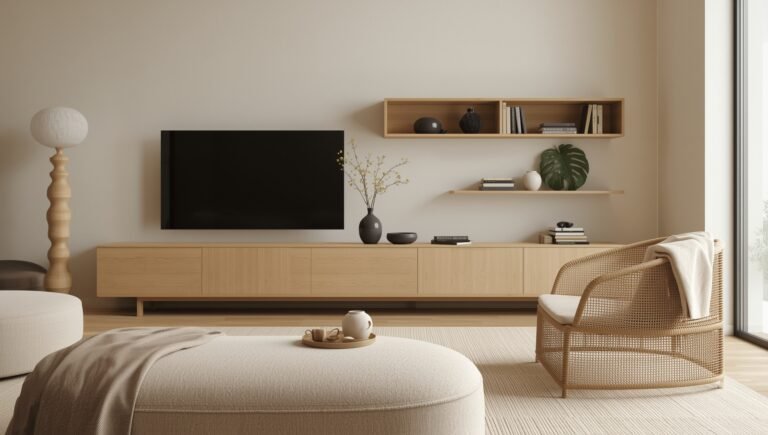
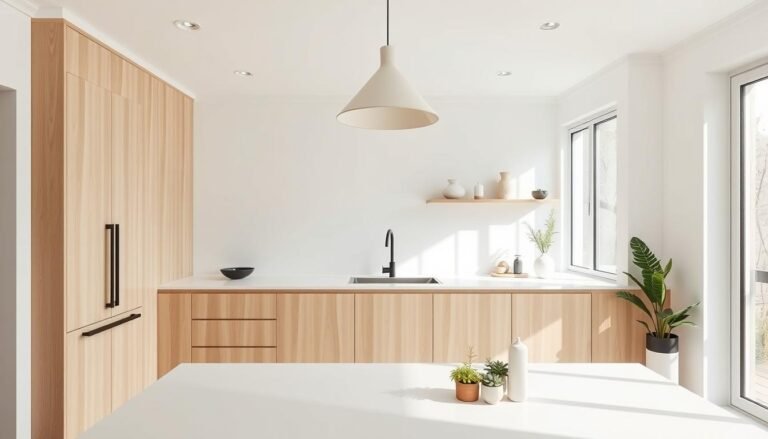
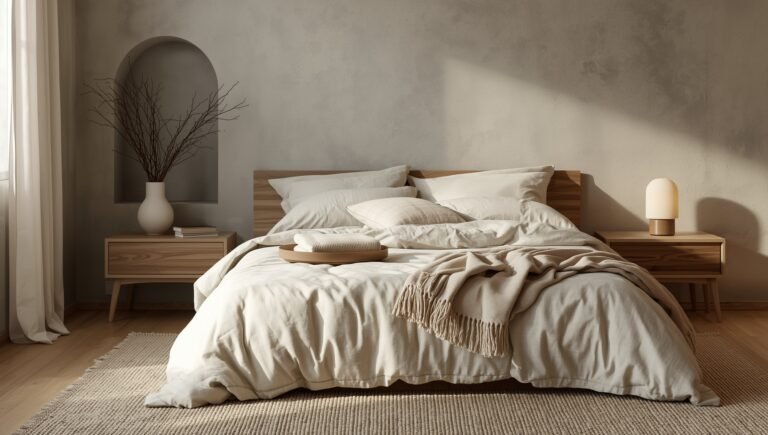
Imagine beige and off-white walls with wooden furniture. Tatami mats and rice paper lamps add softness. Open layouts let sunlight in.
These details show traditional Japanese design without being too much.
Why Japandi Works for Summer Camps
Campers love Japandi’s balanced spaces. It uses natural materials and light for mindfulness. Unlike busy traditional camps, Japandi connects us to nature and comfort.
I’ve seen groups relax faster here than in usual camps. It shows how well it improves well-being.
The Benefits of a Japandi Summer Camp Experience
Our Japandi summer camps offer many benefits. They mix Japanese minimalism with Scandinavian practicality. This creates a perfect space for campers to grow.
Connection to Nature
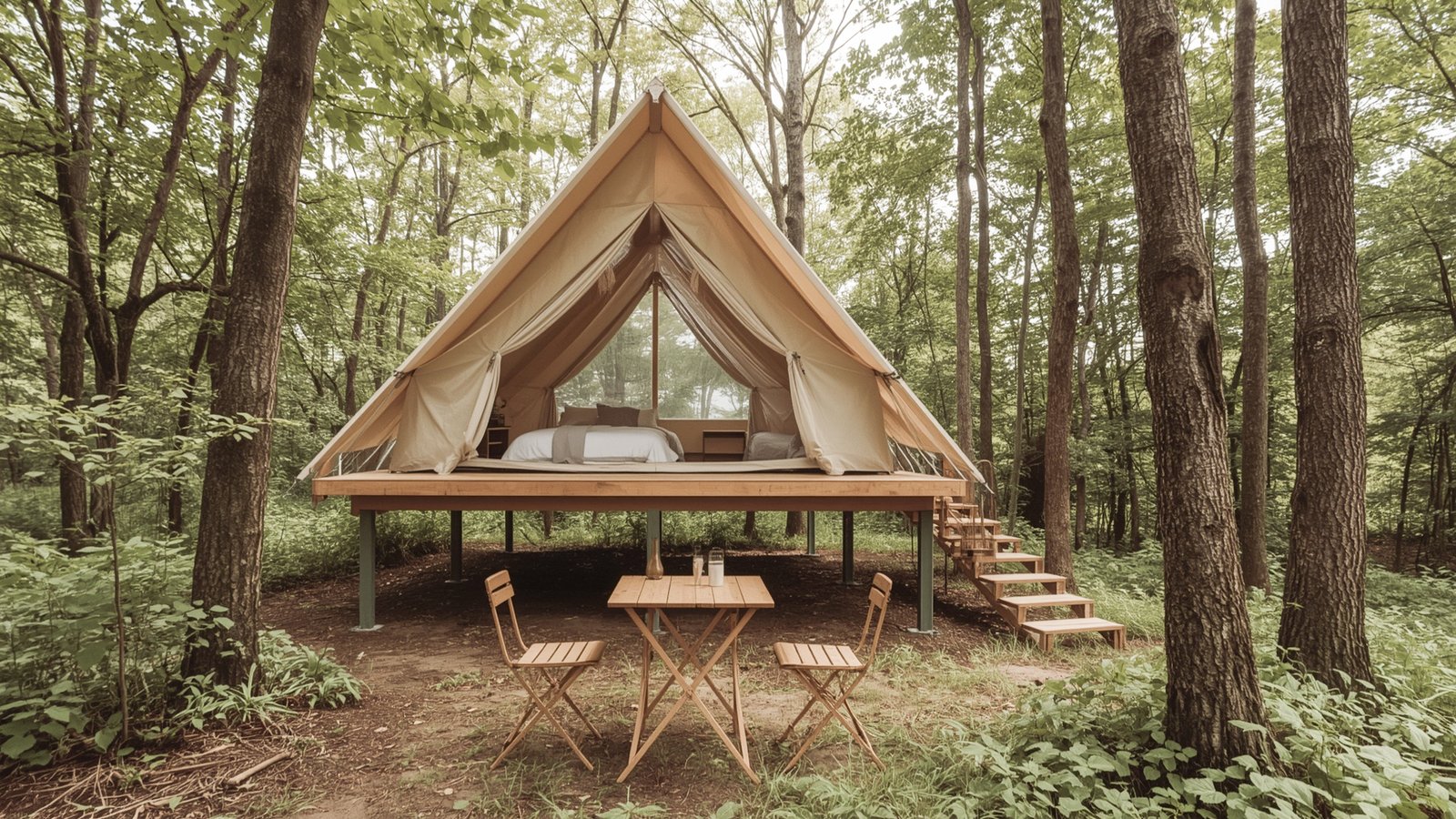
Big windows and open spaces make it hard to tell where the outdoors starts. Campers spend lots of time in gardens with native plants. These gardens follow wabi-sabi, teaching respect for nature’s beauty.
Trails with stones and bamboo lead to quiet spots. Here, campers can sketch leaves or write in their journals under the trees.
Mindfulness and Relaxation
Clean cabins with wooden floors and soft textures promote calm. Daily mindfulness workshops in sunny courtyards teach deep breathing. This helps campers stay present, a change many find life-changing.
Community and Collaboration
Open areas with low benches are great for meals and brainstorming. Campers build tiny huts from local wood, learning teamwork and caring for nature. These spaces are where laughter and teamwork come together, building strong friendships.
Designing My Perfect Japandi Camp Space
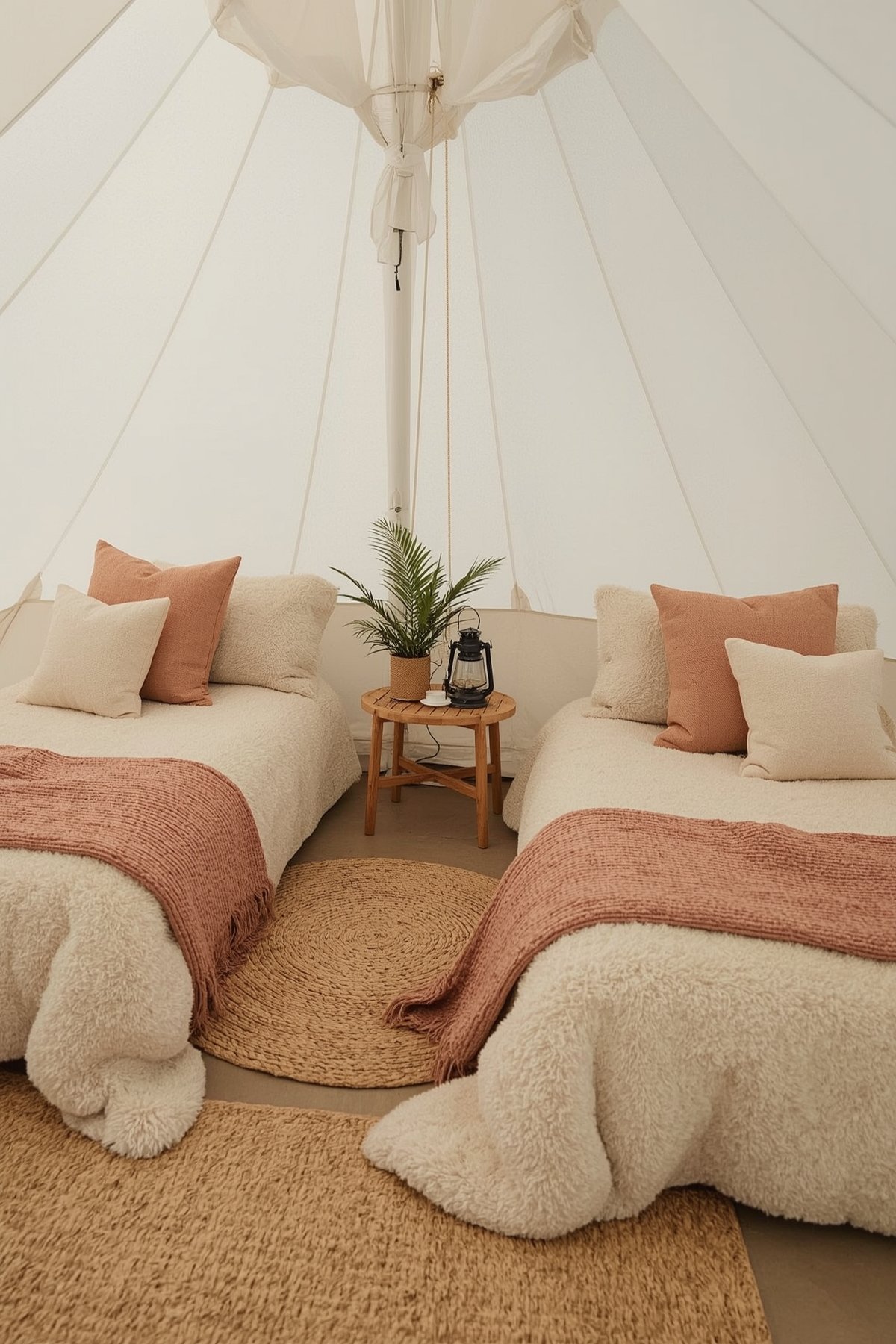
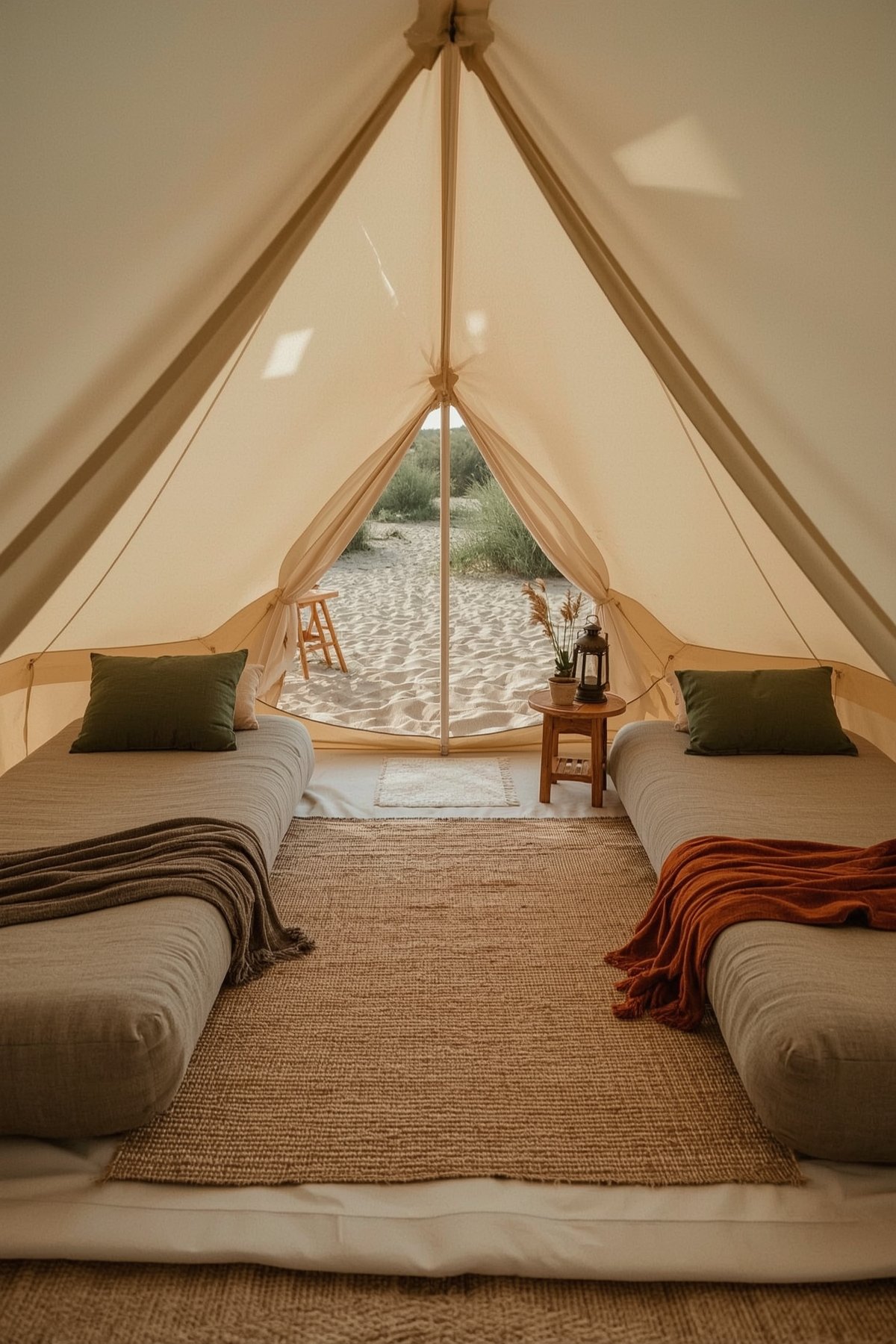
Creating a Japandi space is all about calm and function. I focus on nature-inspired design to make outdoor fun better. Soft colors like muted greens and warm earth tones are key. They make the space feel calm and connected to nature.
Choosing the Right Colors
I picked colors that match the camp’s natural look. Light grays and whites from Scandinavian design meet Japanese warm terracottas and moss greens. These colors blend well and let the outdoors shine.
A pale wood accent wall in the common area looks great. It reminds us of the forest without taking over.
Selecting Natural Materials
Materials are important. Bamboo flooring in activity areas is durable and feels light. Handcrafted stone accents around fire pits add texture.
Rattan storage baskets and linen curtains bring softness. They come from local artisans who care about the planet.
Integrating Functional Furniture
Every piece has a job. Low-slung wooden benches with hidden storage are great for sitting and storing gear. Modular tables change for meals, crafts, or games.
Pendant lights made from woven reeds light up the evening. They’re perfect for campfire stories, adding beauty and function for outdoor activities.
Bringing the Indoors Outdoors
At my Summer Camp Japandi Style, I mixed nature with comfort. I used minimalist furniture and organic textures. This way, campers can enjoy outdoor activities while staying cozy.
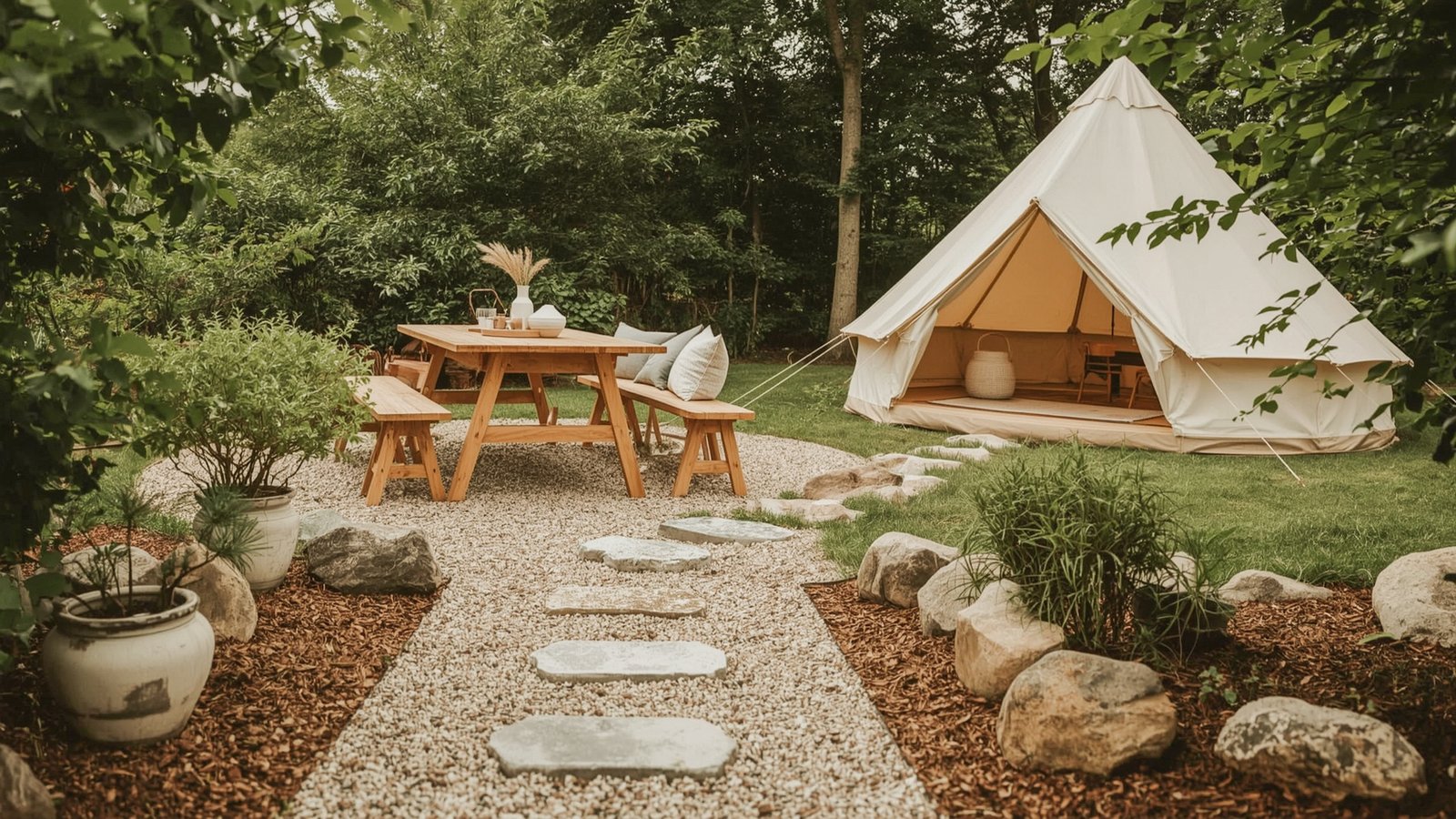
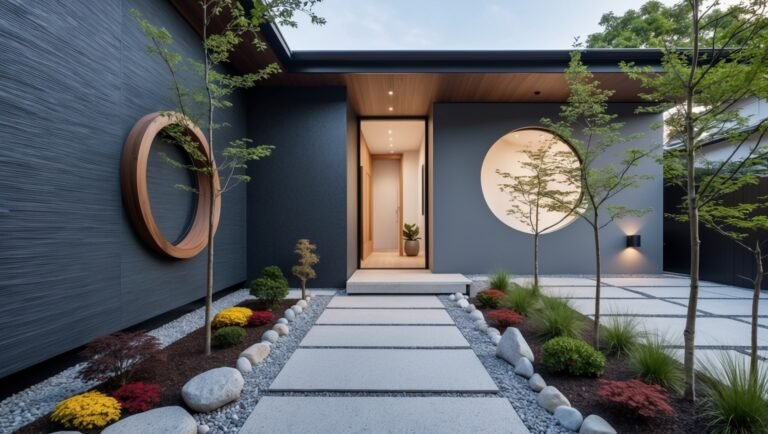
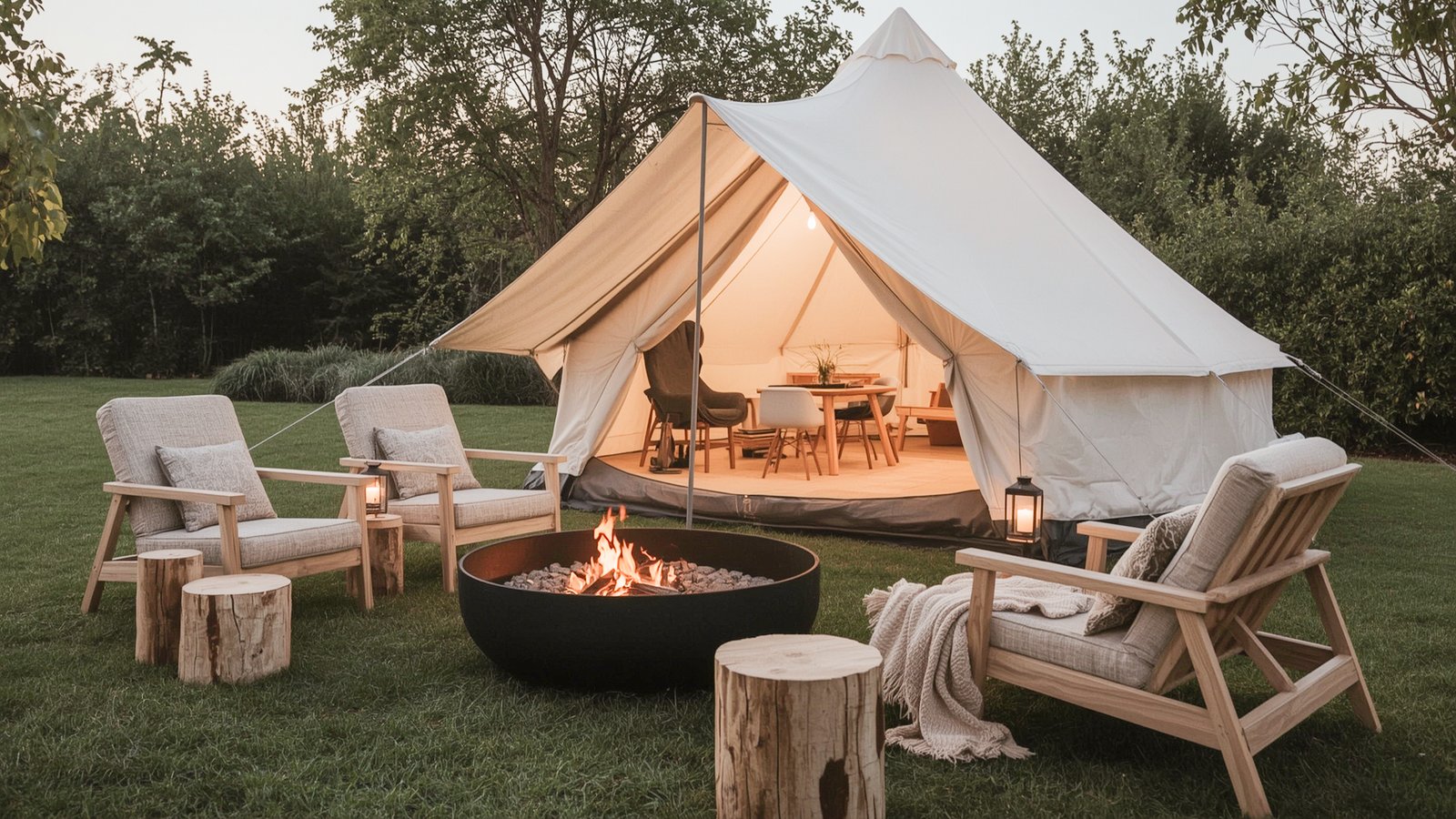
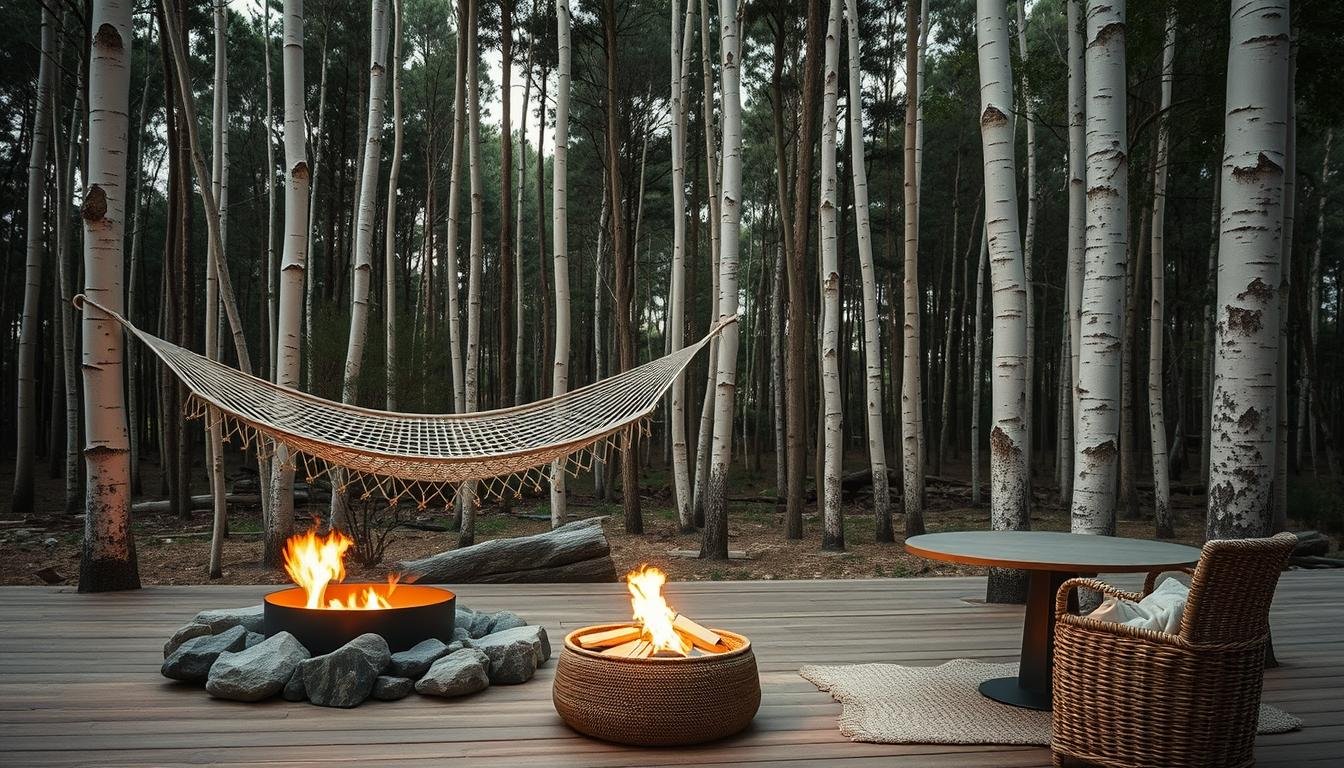
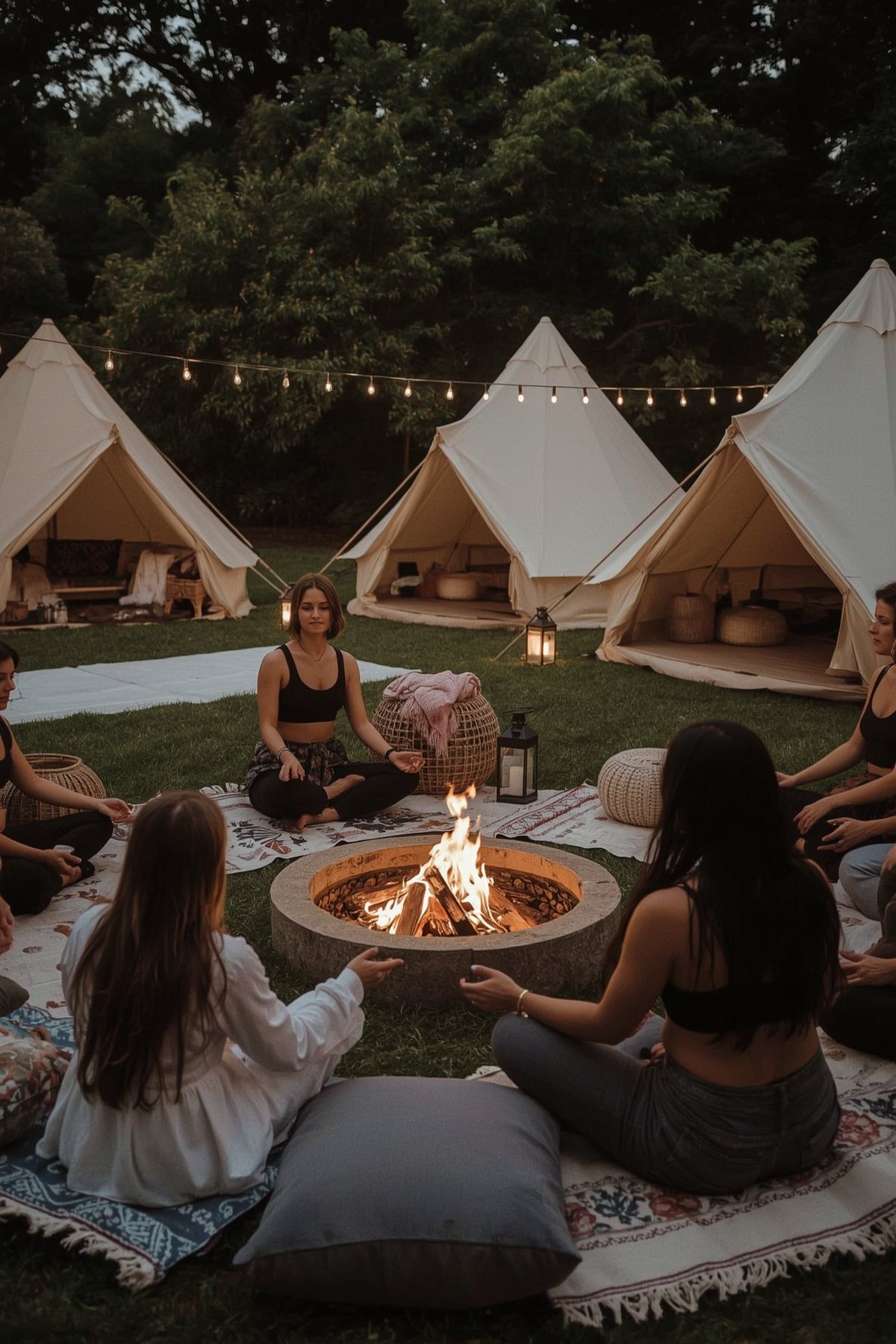
Pebble paths lead to fire pits where stories are told under the stars. Minimalist seating makes these spots perfect for relaxation.
Textiles are important here. Weather-resistant cushions in olive and smoky rust add comfort to stone benches. Woven rattan chairs blend with the trees.
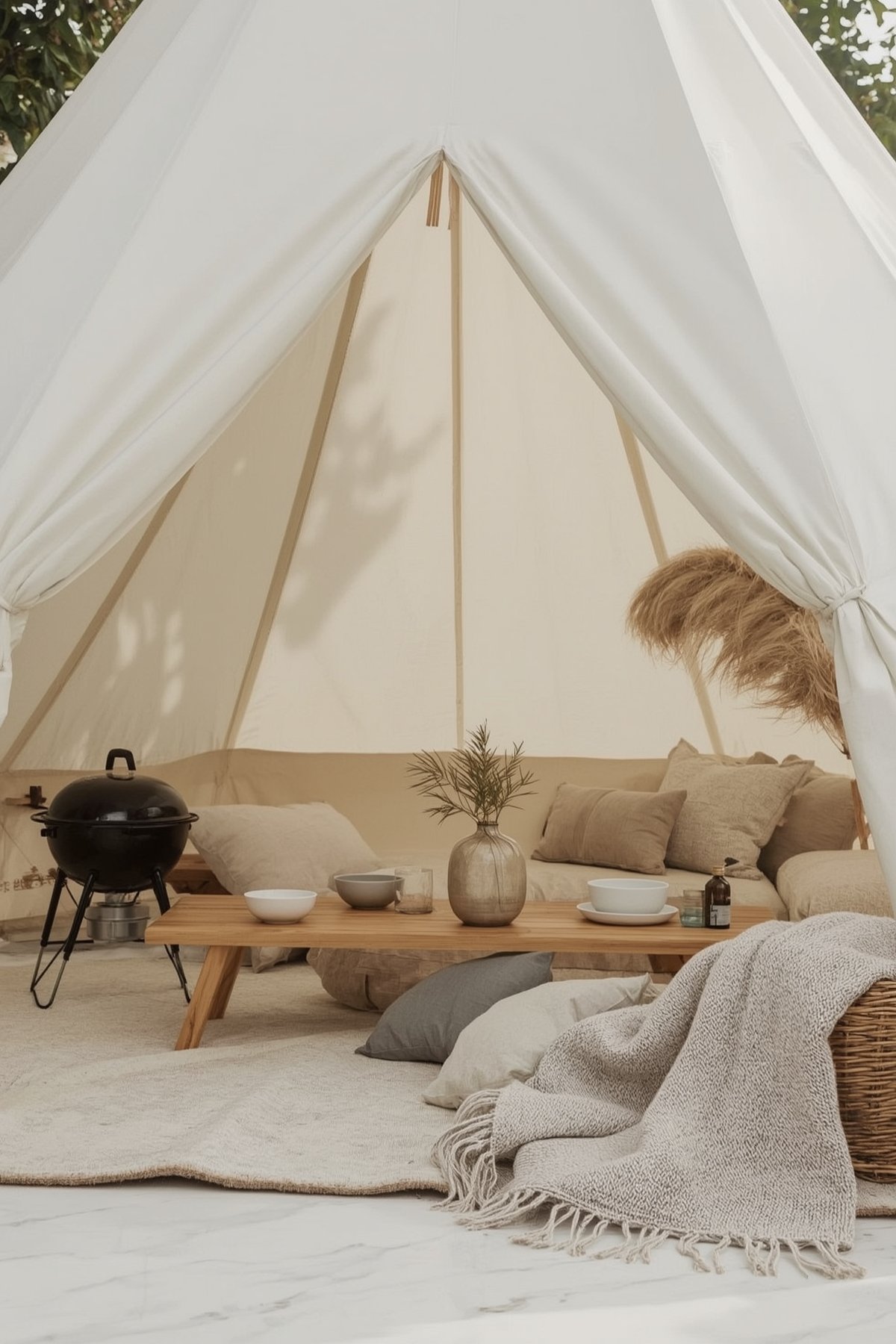
Wool throws and jute rugs make dining areas cozy. They’re durable and keep the Japandi style soft.
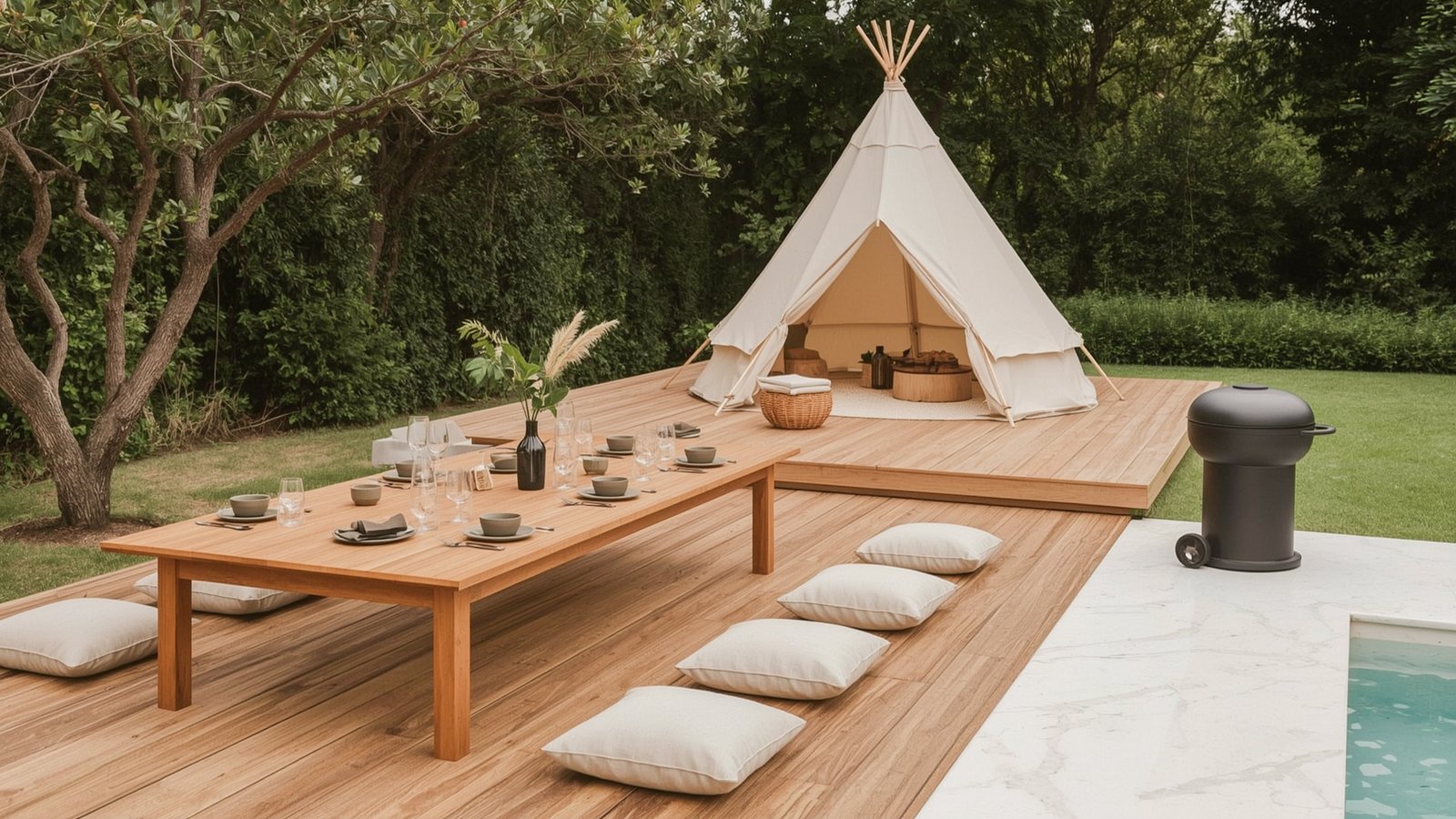
Our dining area has long cedar tables and bench seating. It’s surrounded by Japanese maples. Meals are made in an open-air kitchen with garden herbs.
Solar lights add warmth at dusk. Every detail, from bamboo planters to ceramic bowls, follows the 60-30-10 rule. This balance of neutrals and colors is key.
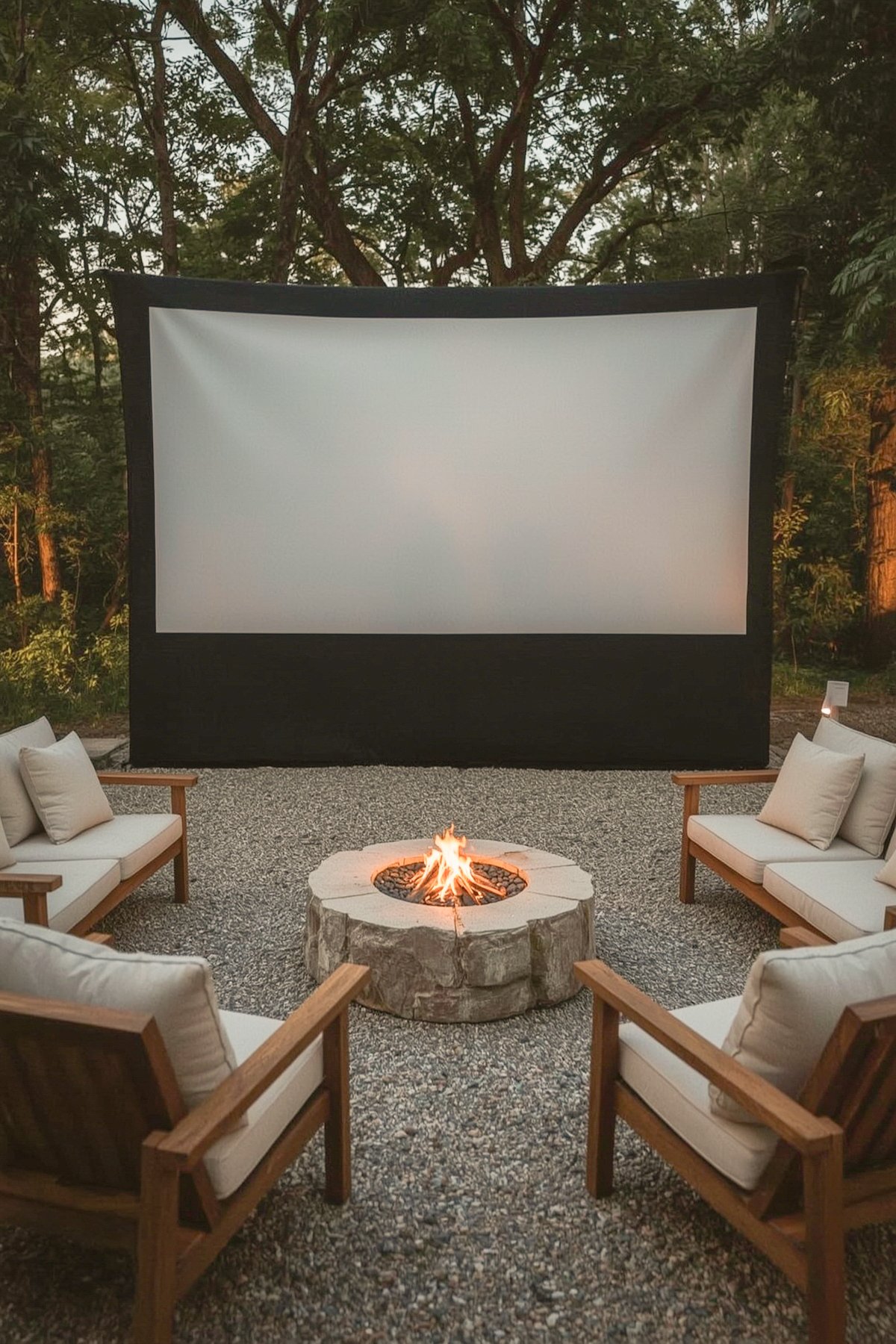
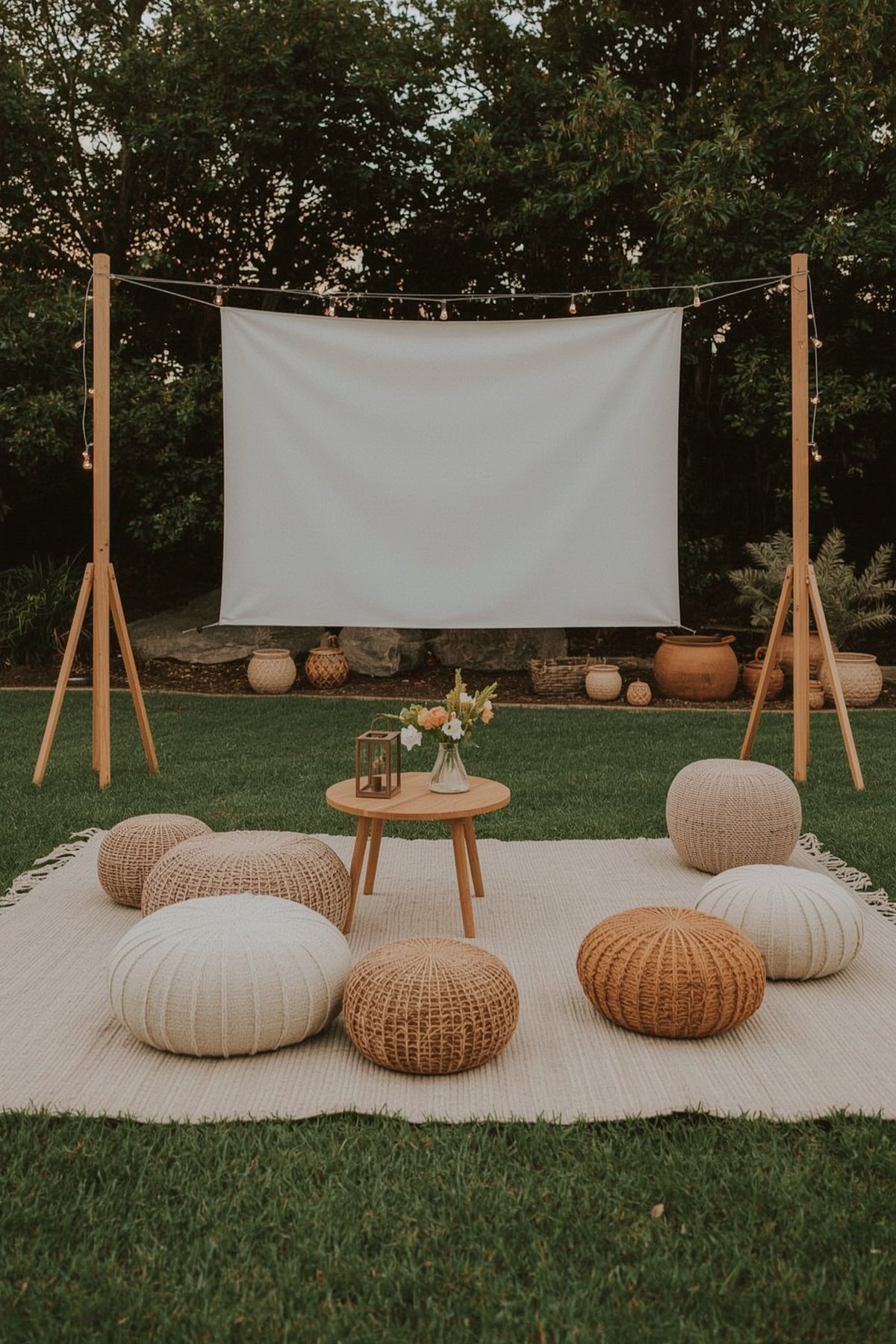
Outdoor Theater: Cinematic Japandi Harmony in Your Backyard
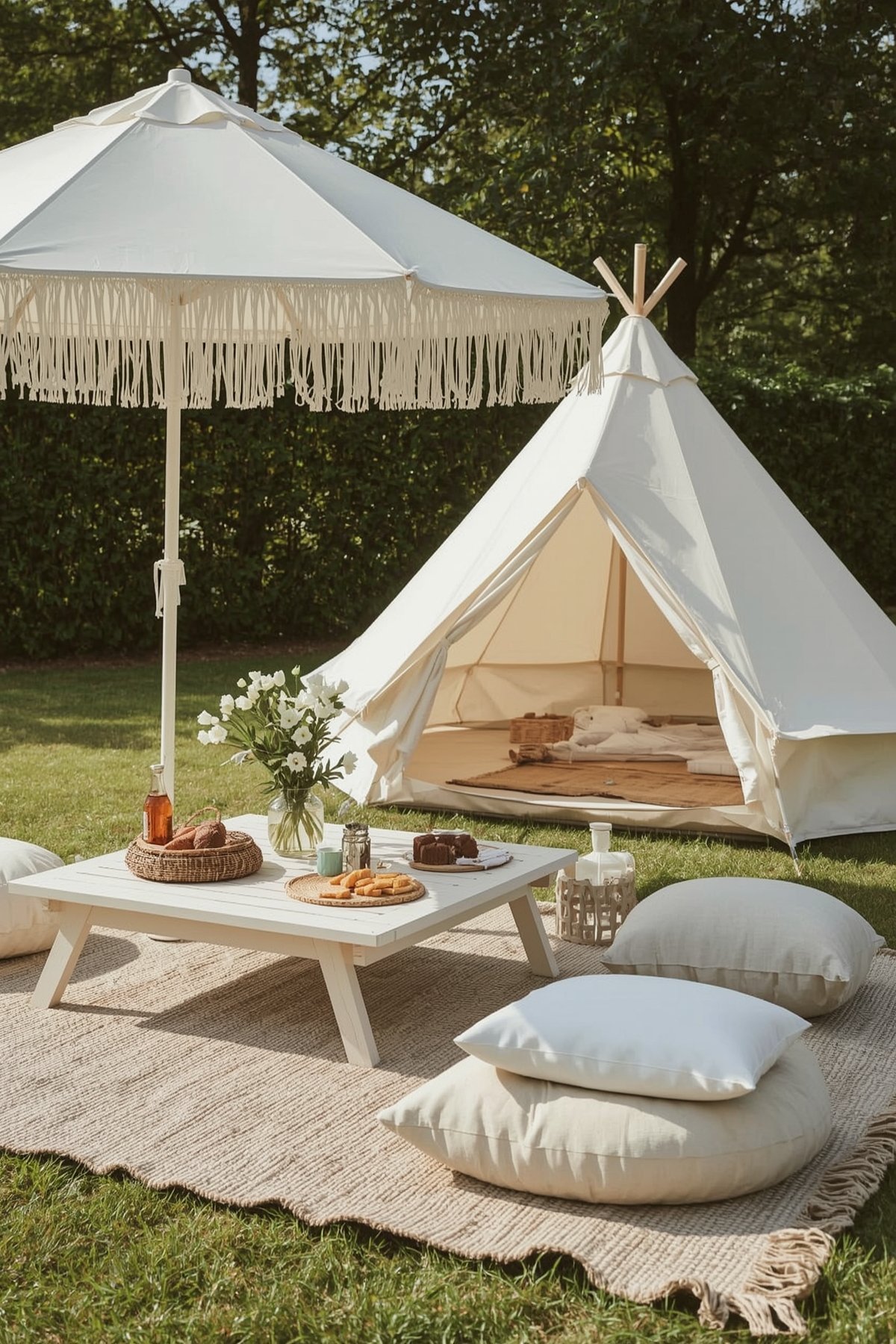
Create a serene Japandi-inspired outdoor theater for your backyard summer camp. Utilize minimalist wooden seating, plush cushions, and natural textiles to seamlessly blend comfort with nature.
Add soft ambient lighting and a portable screen to enjoy movies under the stars, enhancing your outdoor-indoor harmony while offering a unique, peaceful entertainment experience.
Activities that Complement Japandi Principles
Designing activities that match Japandi’s simplicity and nature was key. I focused on quiet reflection and creativity. This mix of indoor calm and outdoor exploration was crucial.
Nature Walks and Mindful Hiking
My nature walks teach slow observation. Campers stop to look at leaf patterns or listen to forest sounds. This turns simple walks into lessons for the senses.
Trails go through shaded groves. They invite stillness in the midst of movement.
Creative Workshops Inspired by Nature
In workshops, campers work with raw materials like unpolished wood and dried flowers. We also have mindfulness workshops. Here, people make baskets from river reeds or carve simple sculptures.
These sessions celebrate imperfection. They honor wabi-sabi’s love for natural flaws.
Group Meditation and Yoga Sessions
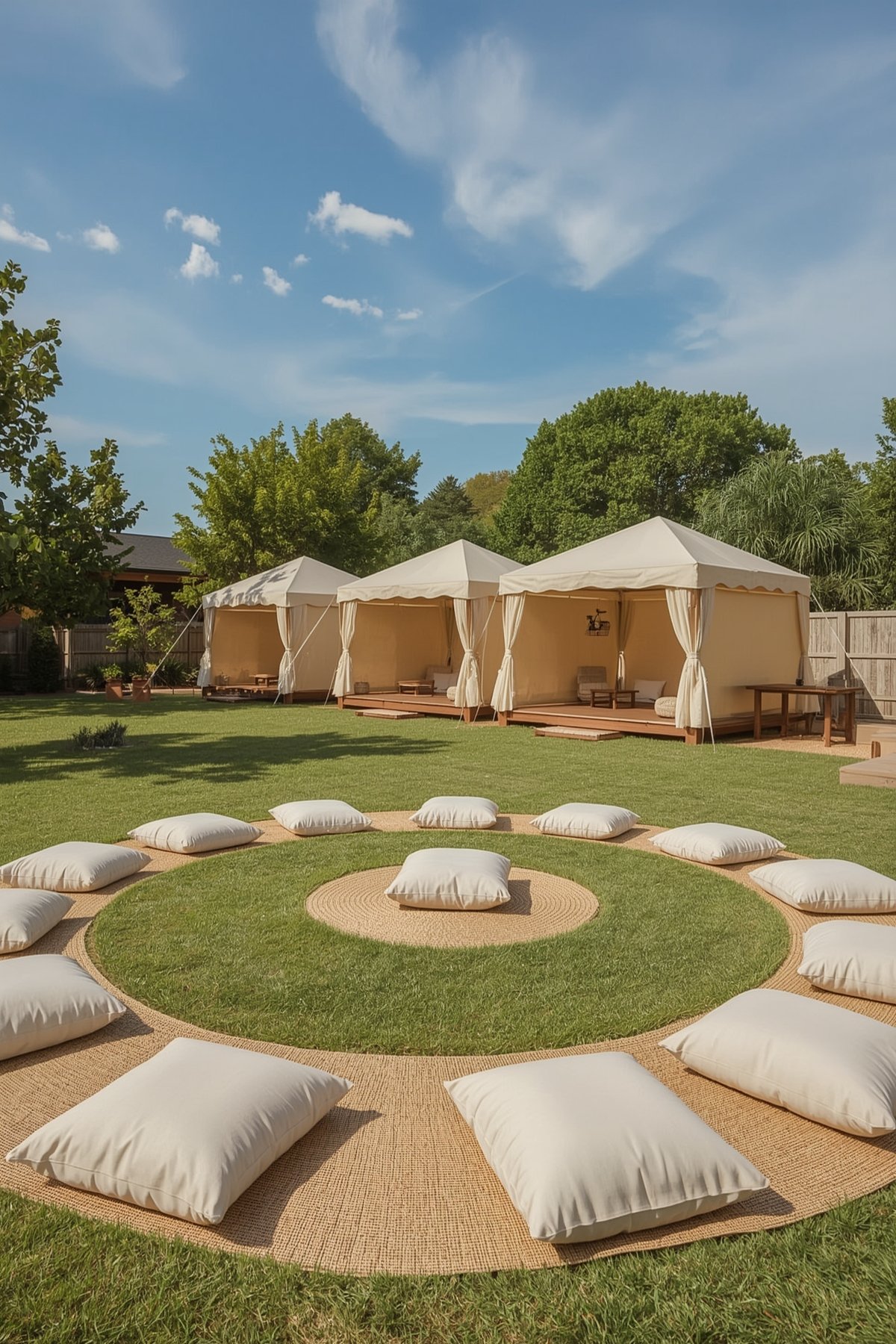
Yoga sessions happen under open skies or in sunlit pavilions. This blends indoor and outdoor spaces. Morning meditation circles use guided breathwork.
Evening sessions pair with bonfire stories. These rituals calm the day. They reflect Japandi’s balance of serenity and functionality.
How to Incorporate Japandi Elements at Home
Bringing Japandi style into your home is easy. Start with neutral colors like beige or taupe for walls and furniture. Add natural materials like wood, woven baskets, or bamboo to bring warmth.
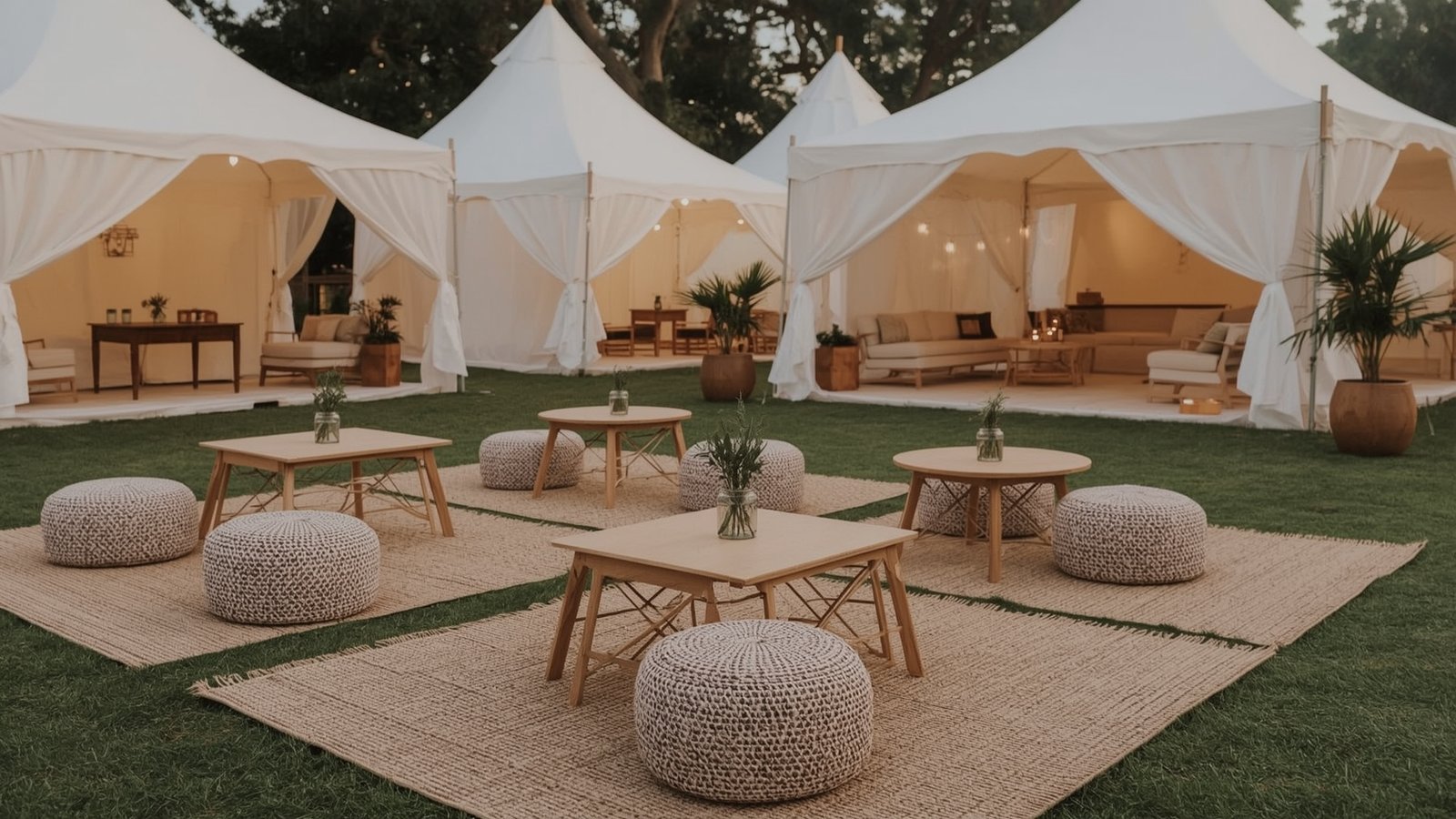
Let natural light in by using sheer linen curtains. This balances light with soft textures.
Choose pieces that are both useful and beautiful. The Ethnicraft Mikado Coffee Table is perfect for any room. Wabi Sabi ceramic trays add a touch of nature.
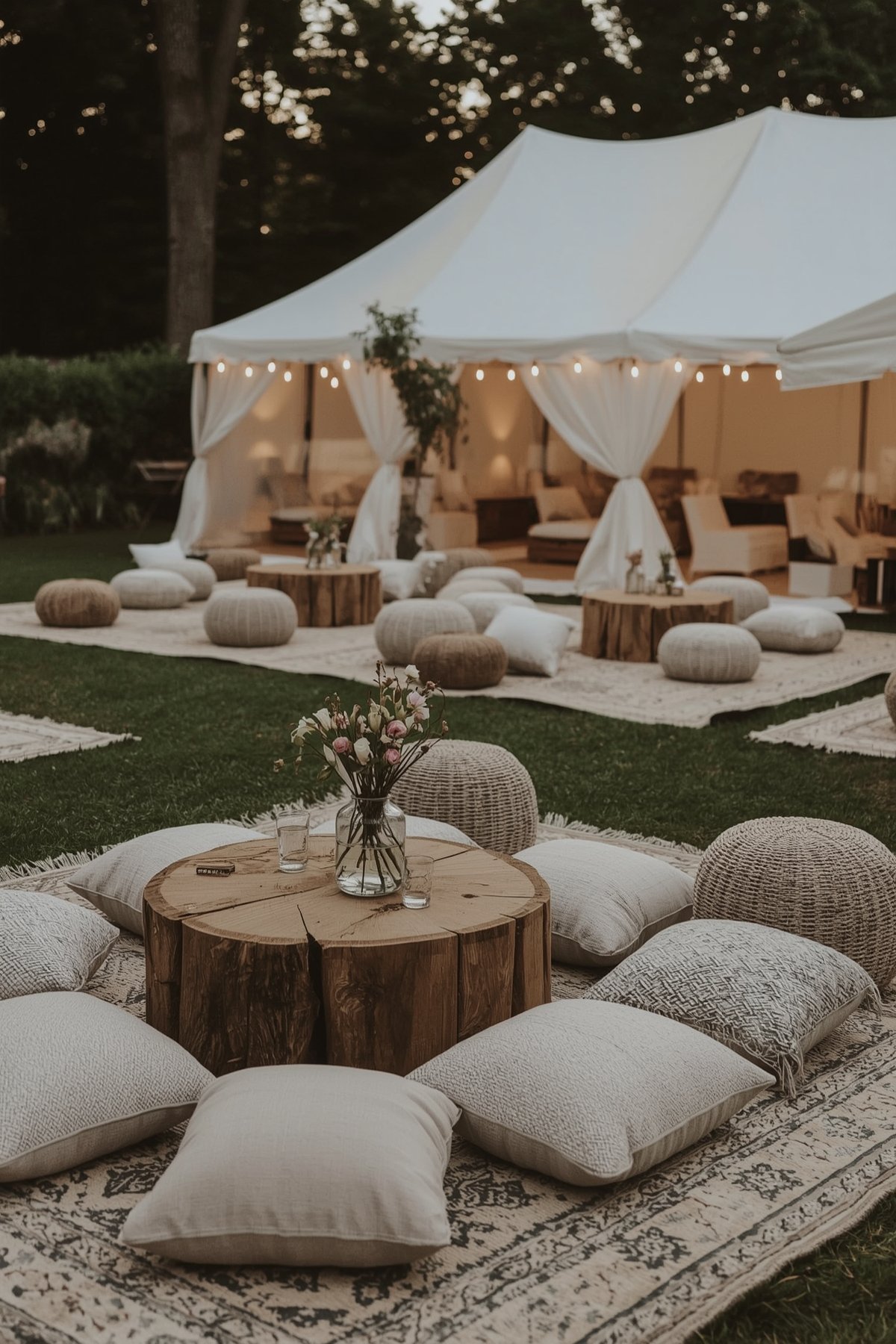
For seating, use floor cushions and low tables. This creates cozy areas without making things messy. Keep surfaces clean and add potted herbs or river stones for a simple, natural look.
Tips for Creating a Japandi-Inspired Space
Start with greenery. Snake plants are great for low light and clean the air. Use terracotta pots for plants like pothos or succulents.
Add warmth with sheepskin rugs and linen throws. Choose items that serve more than one purpose. For example, a storage bench with a woven lid.

Indoor Plant Selection for a Calming Environment
Choose plants that do well indoors and match Japandi’s calm feel. Lavender is great for sunlit spots and smells nice. Aloe vera is easy to care for and adds a natural touch.
Place plants at eye level in ceramic planters or on shelves. This highlights their natural beauty. Group small succulents in moss bowls for a natural look.
Food and Nutrition with a Japandi Twist
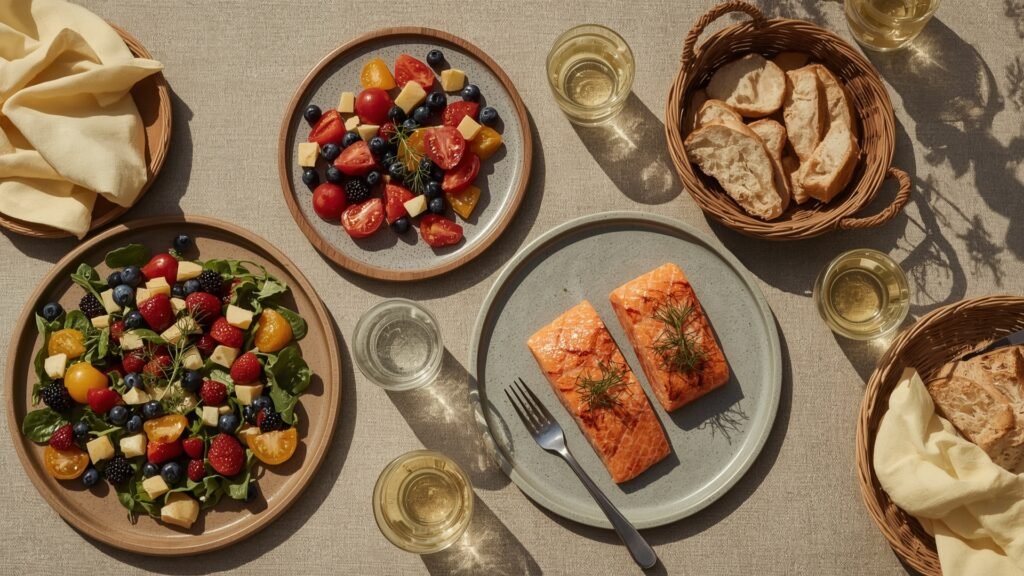
At our camp, meals are a mix of Japanese and Scandinavian tastes. Imagine eating fresh, seasonal foods on wooden platters in the sun. It’s like Japandi’s blend of simple beauty and nature.
I made menus that show off local foods like summer berries and root veggies. This helps campers connect with the earth.
Seasonal Ingredients for Healthy Meals
Our summer camp focuses on fresh, local foods. Picture salads with heirloom tomatoes and dill from nearby farms. Or salmon grilled with thyme in a simple setting.
These meals are served in spaces with Rock Gray and Sunshine Yellow. These colors match Pantone’s trends and make food feel both vibrant and calm.
Simple Japanese and Scandinavian Recipes
Campers learn to make rice bowls with pickled cucumbers and sashimi. Or Nordic-style fish soups with herbs. We use natural materials like stone plates and woven baskets.
Cleaning up is part of our philosophy too. We use biodegradable utensils to reduce waste. Mindful eating sessions in quiet spots teach good habits.
Every dish has a story. It’s about the seasons, cultures, and the land. Food becomes a part of our Japandi journey all summer.
Personalized Experiences at a Japandi Camp
At my Japandi summer camp, every camper finds their own pace. It’s not just about being together—it’s about personal moments. From the welcome by our reflection pond to the farewell under stars, every moment is special.
Crafting Meaningful Touchpoints
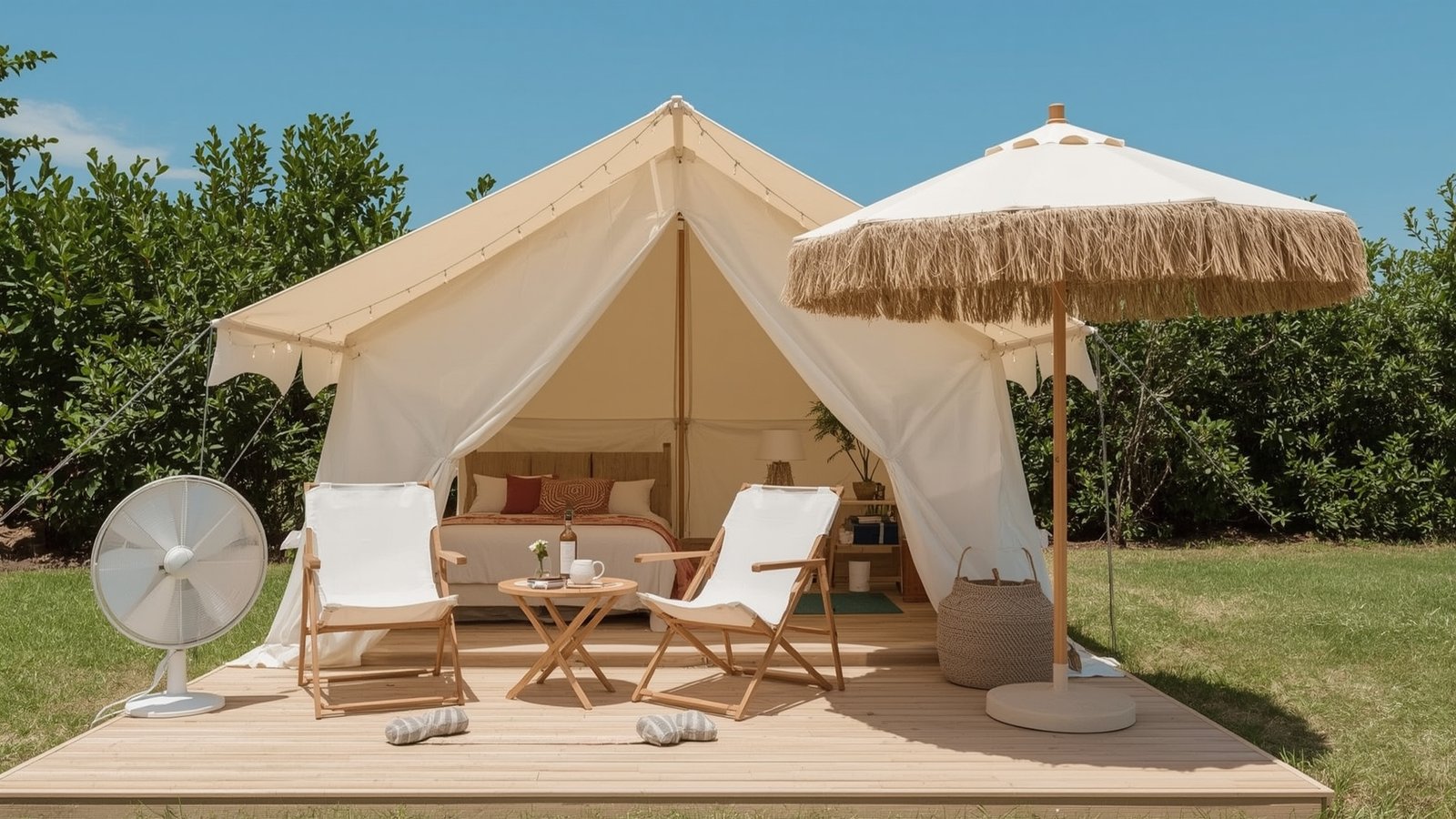
We create spaces for personal expression. Picture a community art wall where campers add tiles with their symbols. Or a compass rose dining table that sparks stories. Even our outdoor kitchen’s pizza oven, made from a steel buoy, is a place for creativity.
These details add to the Japandi feel, making the experience personal and meaningful.
Choices That Fit Your Pace
Activities here fit who you are. A child might explore the forest with a magnifying glass. Teens might make shadow puppets under our slide’s glow.
The bunk room’s slide to the ball pit is for fun and transitions. You can sleep under the stars or sketch by the pond. Every choice respects your individuality while keeping the camp peaceful.
Every detail, from places to store personal items to lantern-lit paths, makes your journey special. It’s where personal growth and cultural experience meet in quiet elegance.
Enhancing Camp Ambiance
Creating the right atmosphere at a Summer Camp Japandi Style is more than just looks. I pay attention to sound and light. They help make moments calm and connect us. A picture of a lantern-lit path shows how small details change spaces.
Musical Threads of Nature and Culture
I mix traditional Japanese instruments like the koto with Nordic folk tunes for playlists. Soft chimes and sounds of leaves mimic nature’s beat. Campers gather by fire pits where soft music plays, letting nature sounds shine.


Lighting That Welcomes the Night
LED path lights guide without harsh light, and uplights softly show off pine trees. Solar string lights hang over picnic areas, paired with IKEA KLACKENAS sideboards for candles. Shibori-patterned lanterns add texture, and grey-scale mountain prints warm the space without being too much. Evenings are cozy and lit with care, blending function with traditional Japanese design elements of simplicity.
Reflections on My Japandi Summer Camp Journey
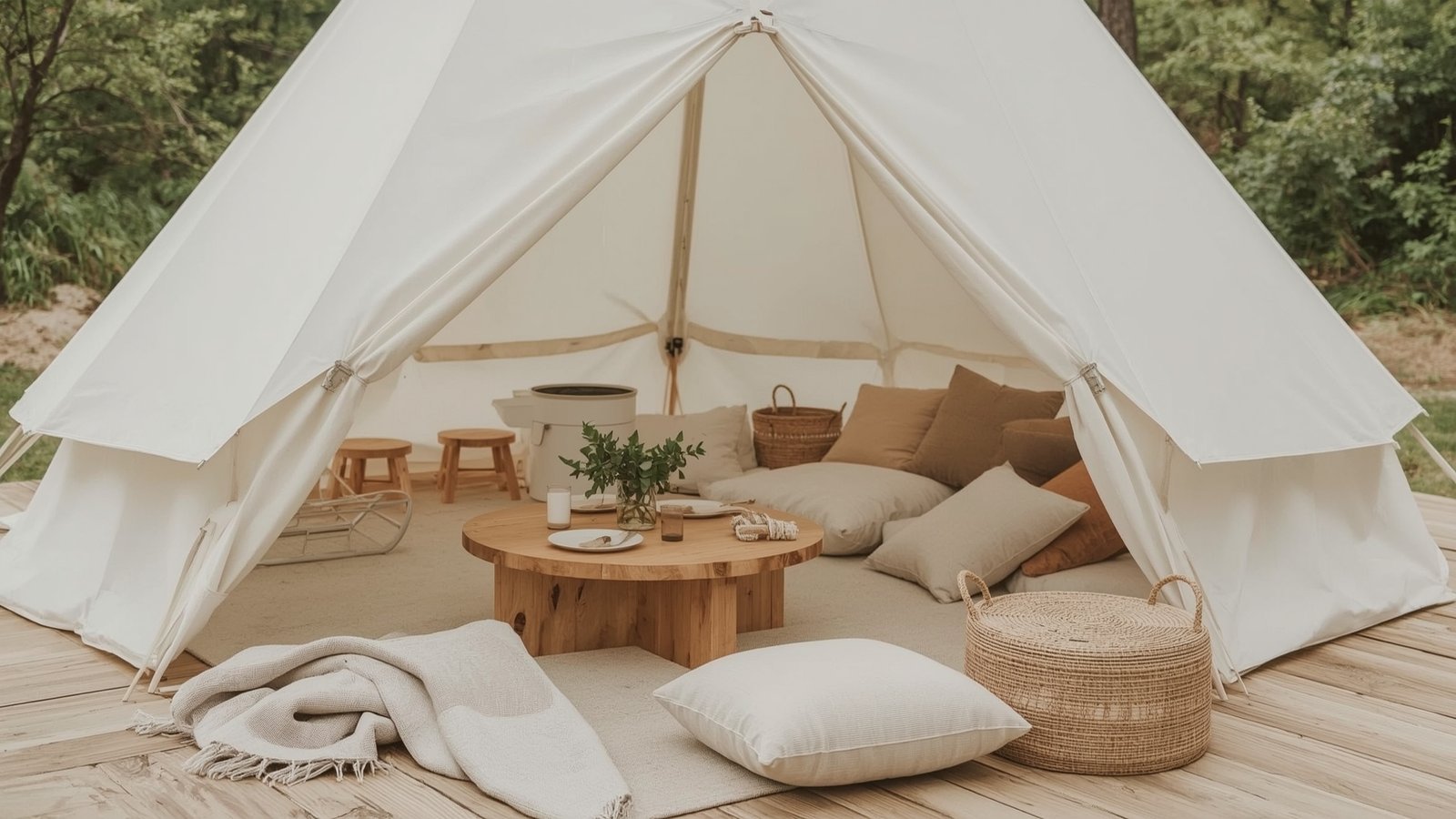
Creating a Japandi summer camp showed me the power of nature. We used Carrara marble and wood decking to blend indoors and outdoors. The calm colors and open decks made every spot feel special.
Lessons Learned and Skills Gained
Every choice was important. We picked simple furniture but added comfort. Kids loved the outdoor shower but wanted more shade.
We changed with bamboo mats and views. This taught us sustainable living is flexible. Using eco-friendly materials and wood reduced waste, showing small changes can make a big difference.
Inviting Others into the Japandi Lifestyle
Seeing others follow our ideas is motivating. A parent turned their yard into a Japandi garden. Others chose wooden toys over plastic, embracing simplicity.
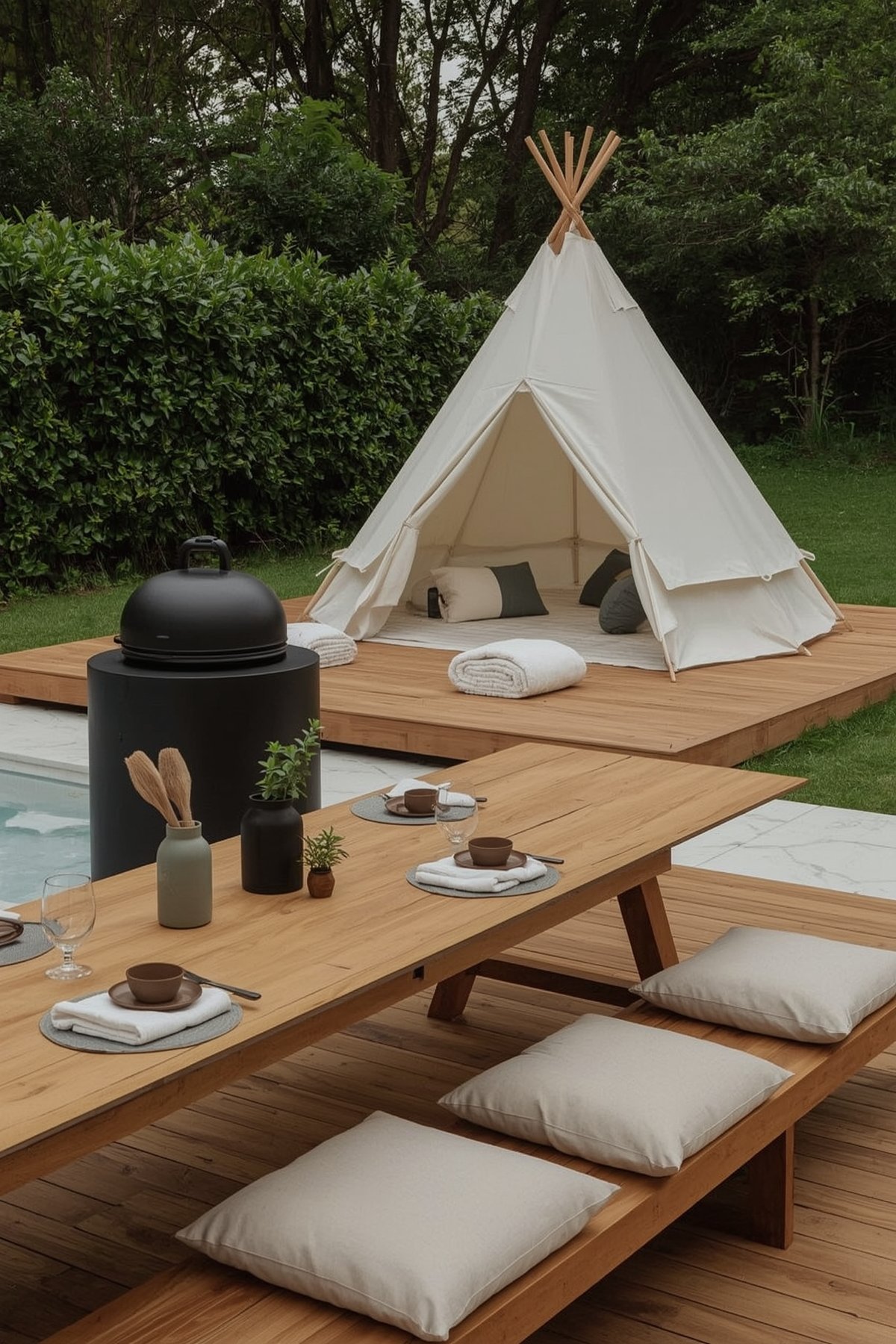
Even small actions like using linen or planting native flowers are part of Japandi. The camp’s success shows eco-friendly practices can grow beyond camps.
My experience made me believe in spaces that connect with nature. Japandi is more than a style; it’s a way to live. I’ll keep designing with these lessons, knowing every change has an impact.
My Favorite Shops
Discover curated modern outdoor furniture and decor at these premier online shops!
FAQ
How do the key elements of Japandi design influence the summer camp experience?
Japandi design uses natural stuff, keeps things simple, and blends indoor and outdoor. This makes summer camps cozy and connects us to nature.
Why does Japandi work so well for summer camps?
Japandi brings nature inside summer camps. It helps us feel close to nature, relax, and enjoy simple beauty. This makes camping better.
What benefits can campers gain from a Japandi-inspired summer camp?
Campers get closer to nature, relax, and make friends. Japandi design helps us appreciate nature, think clearly, and work together.
How did you select the colors for your Japandi camp spaces?
I picked soft colors like neutrals, greens, and earth tones. These colors make a calm space for outdoor fun.
What materials did you incorporate into your camp design?
I used wood, bamboo, and stone for warmth and texture. Working with local artists made sure materials were good for the planet.
How do you create inviting outdoor spaces at the camp?
I made outdoor areas feel like part of the house. There are comfy spots for talking and enjoying nature.
What activities align with Japandi design principles in your summer camp?
We have walks, workshops, and meditation. These activities help us enjoy nature and be creative.
How does your camp promote sustainability?
We use green materials and reduce waste. We teach campers about living lightly, making them feel important.
How can campers bring Japandi principles into their homes?
They can use simple colors, clean up, and choose natural materials. These changes make homes peaceful and mindful.
What unique culinary experiences do you offer at your camp?
Our kitchen serves meals that mix Japanese and Scandinavian flavors. We focus on fresh, tasty food that connects us to local food.
How do you create personalized experiences for campers?
We offer special moments and activities for everyone. This makes each camper feel special and part of the group.
What elements enhance the ambiance of your camp?
Music and lighting make the camp cozy and safe. They help us enjoy the day and night.
What insights have you gained from running a Japandi-inspired summer camp?
Running the camp taught me about being flexible and creating spaces for connection. It’s made me more committed to sustainability and thoughtful design.
The Bottom Line
Japandi backyard camping perfectly blends nature, simplicity, and comfort to create a serene outdoor-indoor harmony. By using natural materials, muted colors, and minimalist design, campers enjoy a peaceful environment that connects them deeply with the outdoors.
Thoughtful touches like cozy seating, soft lighting, and mindful activities foster relaxation and community. Embracing Japandi principles in backyard camping not only enhances well-being but also promotes sustainable living—making every moment in nature a meaningful and calming experience.

ABOUT the AUTHOR
TOKI; INTERIOR DESIGN & lifestyle CONTENT CREATOR.
Hey there! I’m Toki—the design-obsessed brain behind Dwell Studio 24. I’m a content creator passionate about interior design, photography, and creativity, living in a 77-year-old house with my husband and our awesome three kids. I write about interior design, furniture, home topics, and my lifestyle, including travel, recipes, skincare, and daily routines. I hope to inspire your next project and lifestyle!
ABOUT the AUTHOR
TOKI; INTERIOR DESIGN & lifestyle CONTENT CREATOR.
Hey there! I’m Toki—the design-obsessed brain behind Dwell Studio 24. I’m a content creator passionate about interior design, photography, and creativity, living in a 77-year-old house with my husband and our awesome three kids. I write about interior design, furniture, home topics, and my lifestyle, including travel, recipes, skincare, and daily routines. I hope to inspire your next project and lifestyle!
ABOUT the AUTHOR
TOKI; INTERIOR DESIGN & lifestyle CONTENT CREATOR.
Hey there! I’m Toki—the design-obsessed brain behind Dwell Studio 24. I write about interior design, furniture, home topics, and my lifestyle, including travel, recipes, skincare, and daily routines. I hope to inspire your next project and lifestyle!