Minimalist Home Office Ideas: Effortless Ways to Build a Calm, Productive Japandi Workspace
Minimalist home office ideas are having a serious moment right now — and once you experience working in a truly clutter-free, intentional space, you’ll honestly never want to go back.
If you’ve been dreaming of a minimalist home office that feels calm, focused, and genuinely beautiful, this is the guide for you. Done right — with warm wood tones, soft earth tones, and a touch of Japandi style — it becomes a true productivity sanctuary.
The shift toward intentional, pared-back workspaces has accelerated in 2026. More of us are working from home than ever, and we’re finally investing in making those spaces feel truly good. Think natural light, hidden storage, and clean surfaces that let your brain breathe.
Some of the links are affiliate links, so I may receive a small commission if you purchase through them (at no cost to you)!
Key Takeaways
- A minimalist home office removes visual distractions and naturally boosts focus and productivity
- Japandi design — a beautiful blend of Japanese and Scandinavian aesthetics — is the ideal framework for a warm, calm workspace
- Natural wood, muted earth tones, and clean lines are the foundation of this look
- Smart, hidden storage is non-negotiable — clear surfaces are everything
- You don’t need an entire room; a thoughtfully designed corner is more than enough
- Warm lighting, one great desk, and a single statement plant can completely transform your workspace
The Core Philosophy Behind a Minimalist Home Office Design
Less isn’t just an aesthetic choice here — it’s a genuine productivity strategy. Good home office minimalist design starts with a single question: what does this space actually need in order to work?
Why Visual Clutter Is Your Biggest Productivity Thief
Research consistently shows that visual clutter competes for your brain’s attention, leading to cognitive fatigue and low-level stress. A cleared desk surface signals to your mind: this is where focus happens.
And the effect is almost immediate. I cleared my desk down to just my laptop, a small plant, and a single notebook — and I swear I felt my shoulders drop within minutes.
The Japandi Approach to “Just Enough”
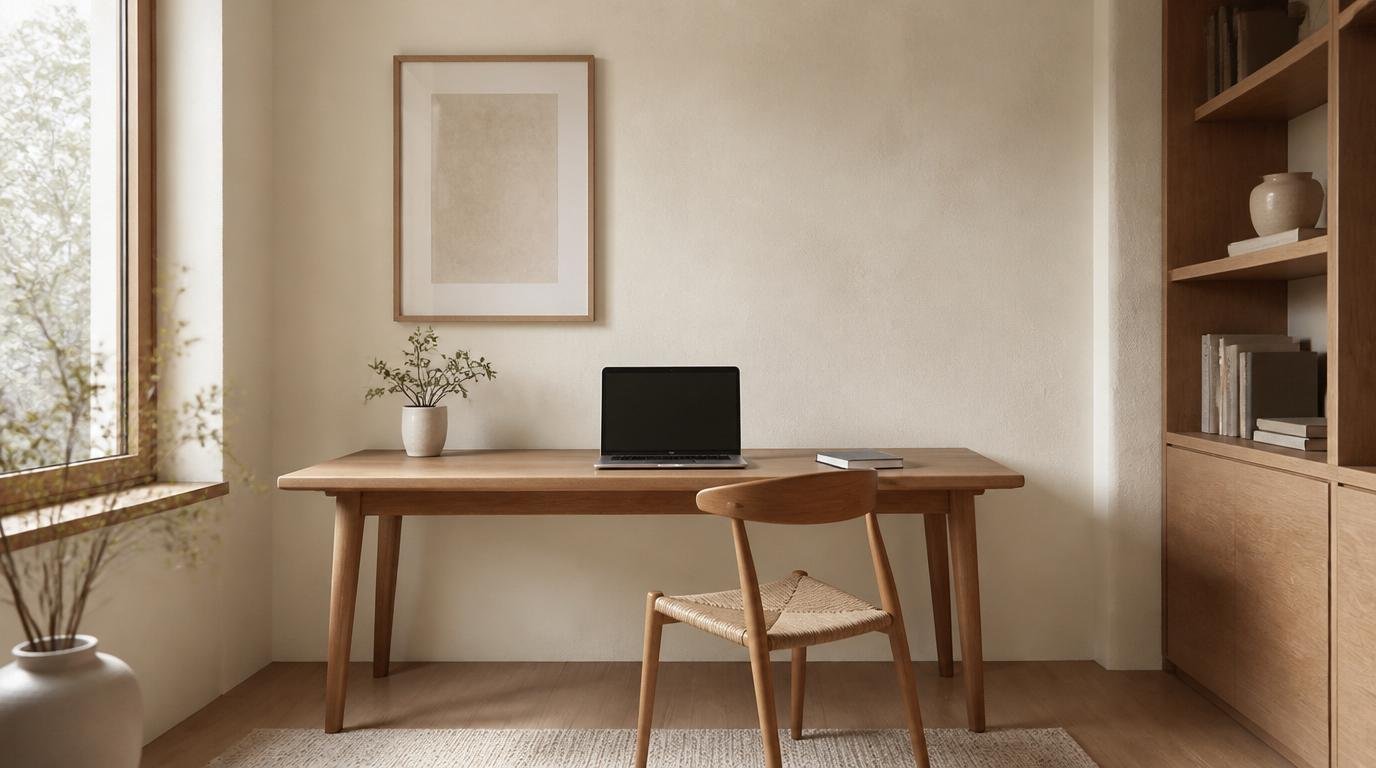
Japandi design teaches us that every object should earn its place. It’s not sterile emptiness — it’s purposeful simplicity. Each piece you keep should be either deeply functional or genuinely beautiful (ideally both).
This philosophy completely changed how I approach minimalist office decor. Instead of buying “organizers” for clutter, I started asking: does this actually need to exist on my desk at all?

My Top Tip: Before adding anything new to your desk, ask yourself: “Does this earn its place?” If it doesn’t actively help you work or bring you genuine joy, it doesn’t belong on the surface. Try boxing up the extras for one week — if you didn’t reach for them, donate them.nto a donate box by end of day.
How to Choose the Best Minimalist Home Office Desk
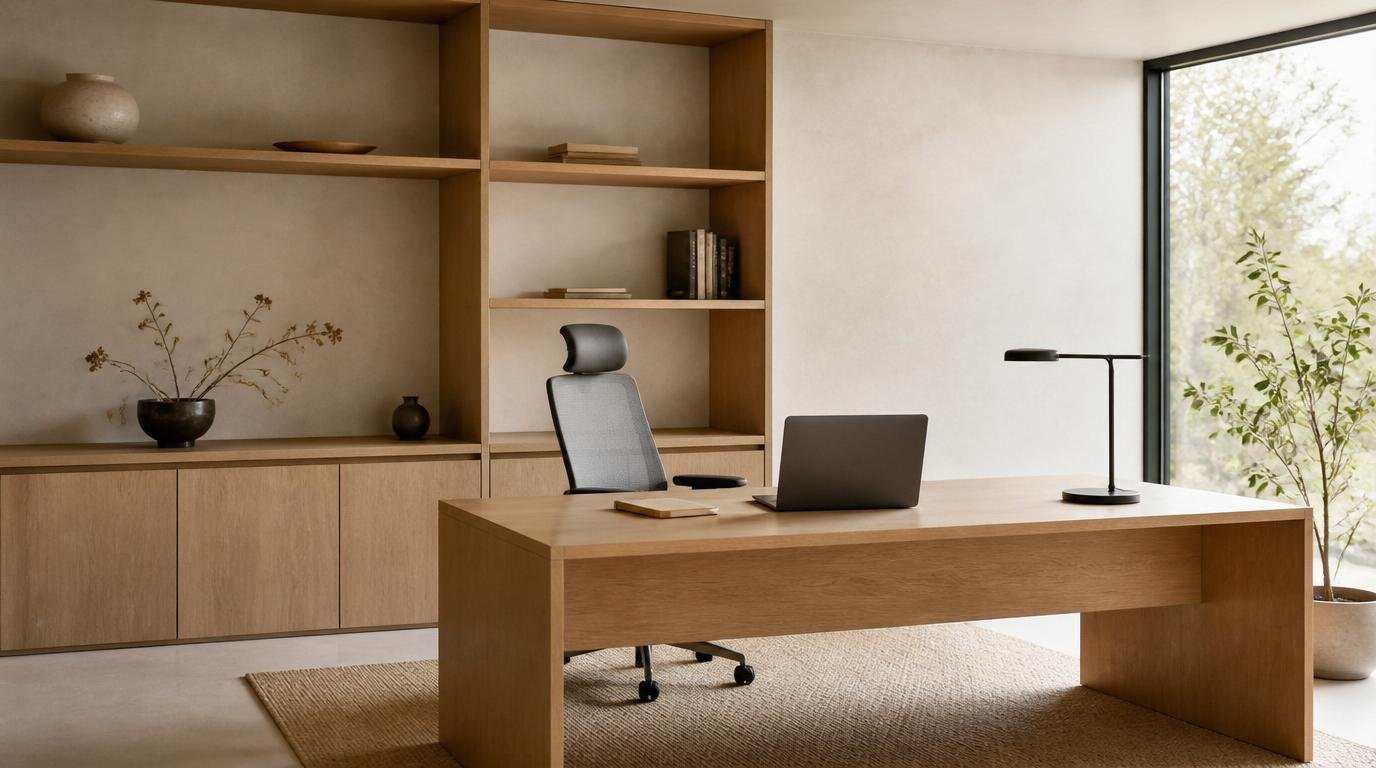
Your minimalist home office desk is the anchor of the entire space — and it’s worth getting right the first time. The wrong desk makes everything harder; the right one makes work feel almost effortless.
Solid Wood for Warmth and Longevity
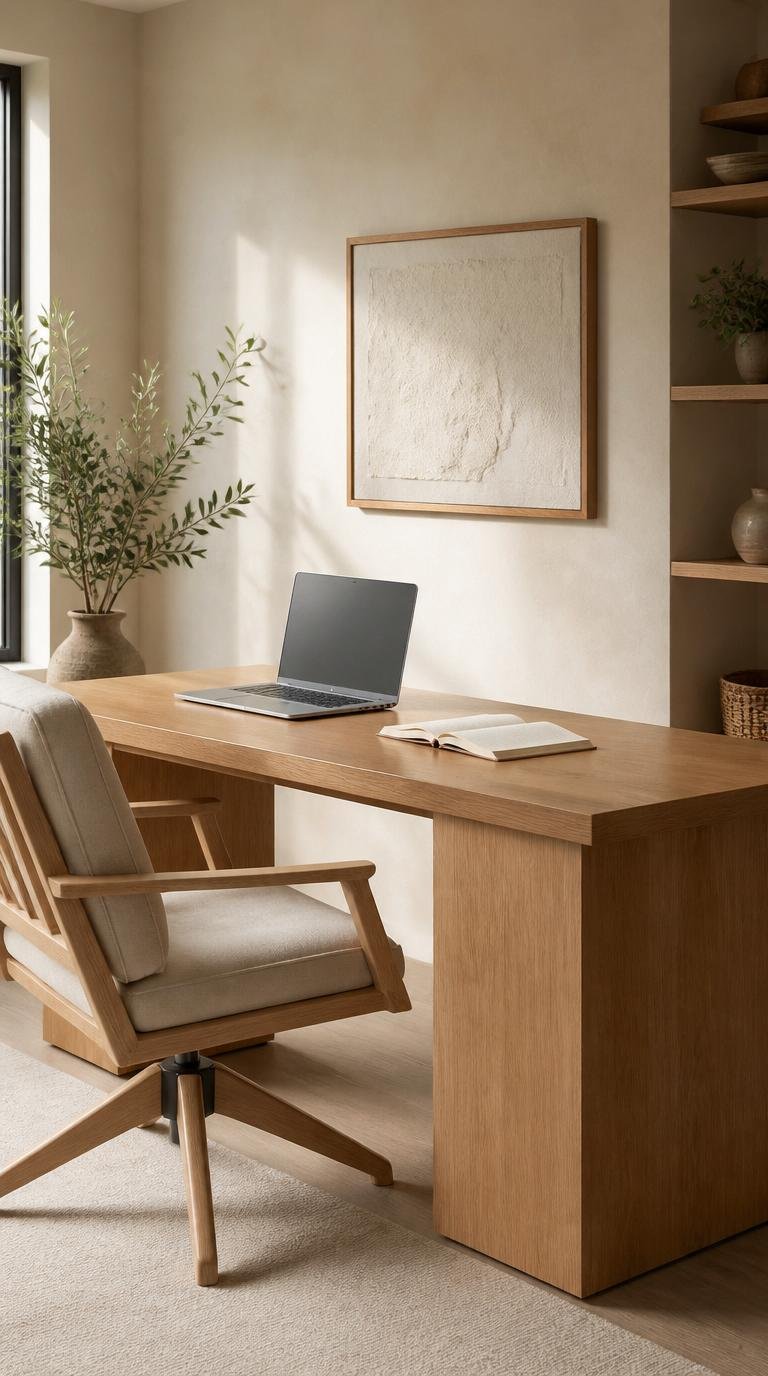
Natural wood brings the organic warmth that keeps a minimalist workspace from feeling cold. For a modern minimalist desk, look for oak, walnut, mango wood, or rubberwood in clean, unadorned shapes — no ornate carvings, no busy hardware.
The natural variation in wood grain adds all the visual interest you need without adding noise. A solid wood desk also ages beautifully — it genuinely only looks better over time.
Size and Shape: What Actually Works
A writing desk with a generous top but no fussy hutch is usually the sweet spot for a minimalist home office desk. You want room for a laptop and a notebook — without so much extra surface that you’re tempted to pile things up.
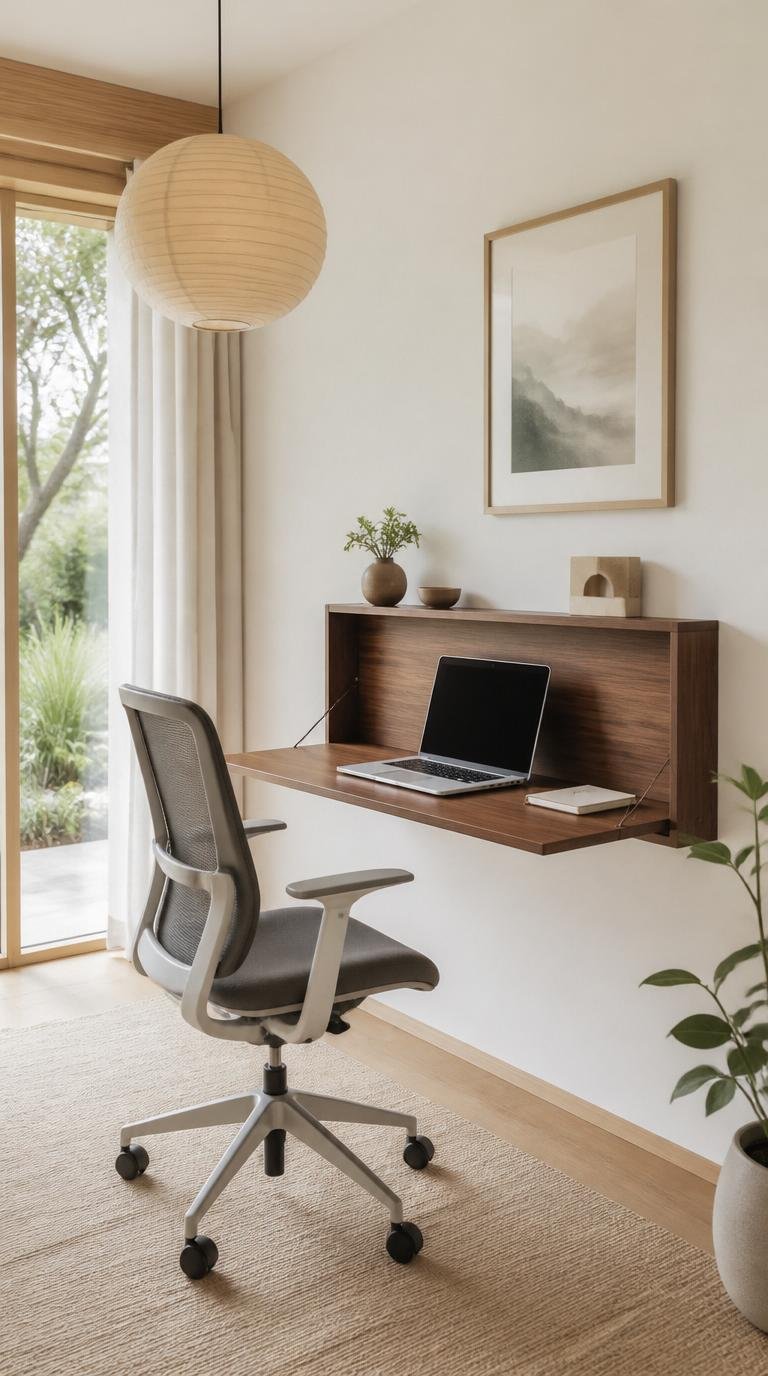
For smaller spaces, a slim console-style or wall-mounted fold-down desk is a brilliant solution. It disappears when you close your laptop, keeping the rest of the room airy and open.
Pair It With the Right Chair
The most beautiful desk is worthless if it hurts your neck and back. Pair your modern minimalist desk with a chair that genuinely supports your posture — clean-lined, ergonomic, in natural wood frames and neutral upholstery.
In a japandi home office, you can absolutely have form and function. No compromise needed.
The Japandi Color Palette for a Productive Workspace
Color sets the emotional temperature of your japandi home office. Get this right and everything else falls into place effortlessly.
Muted Neutrals as Your Base
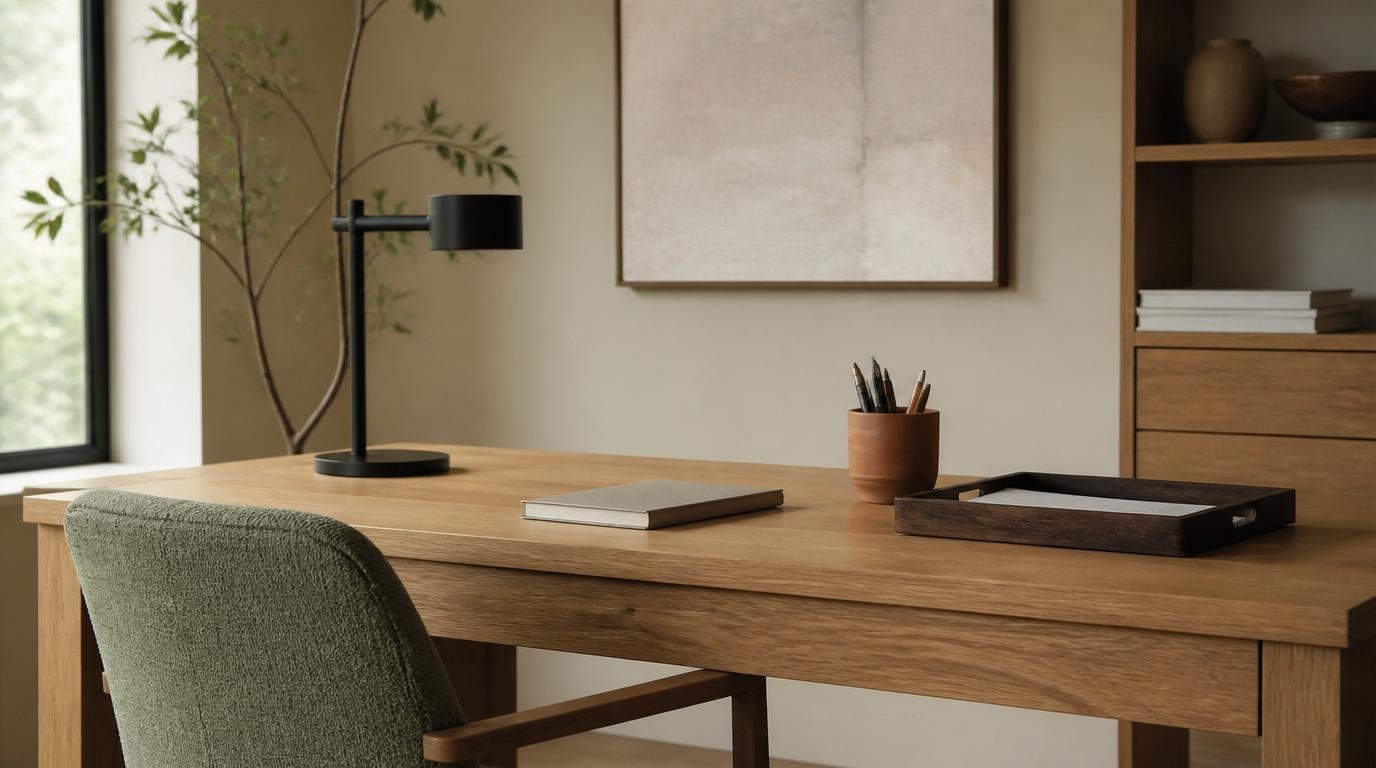
Japandi workspaces lean on warm whites, soft warm gray, taupe, greige, and muted sage green. These tones reflect natural light gently and don’t compete with your concentration.
I painted my own office nook in a warm greige — something close to Benjamin Moore’s Pale Oak — and the shift in how I felt sitting down to work was honestly remarkable. Calm, focused, grounded.
Earthy Accents Without Clutter
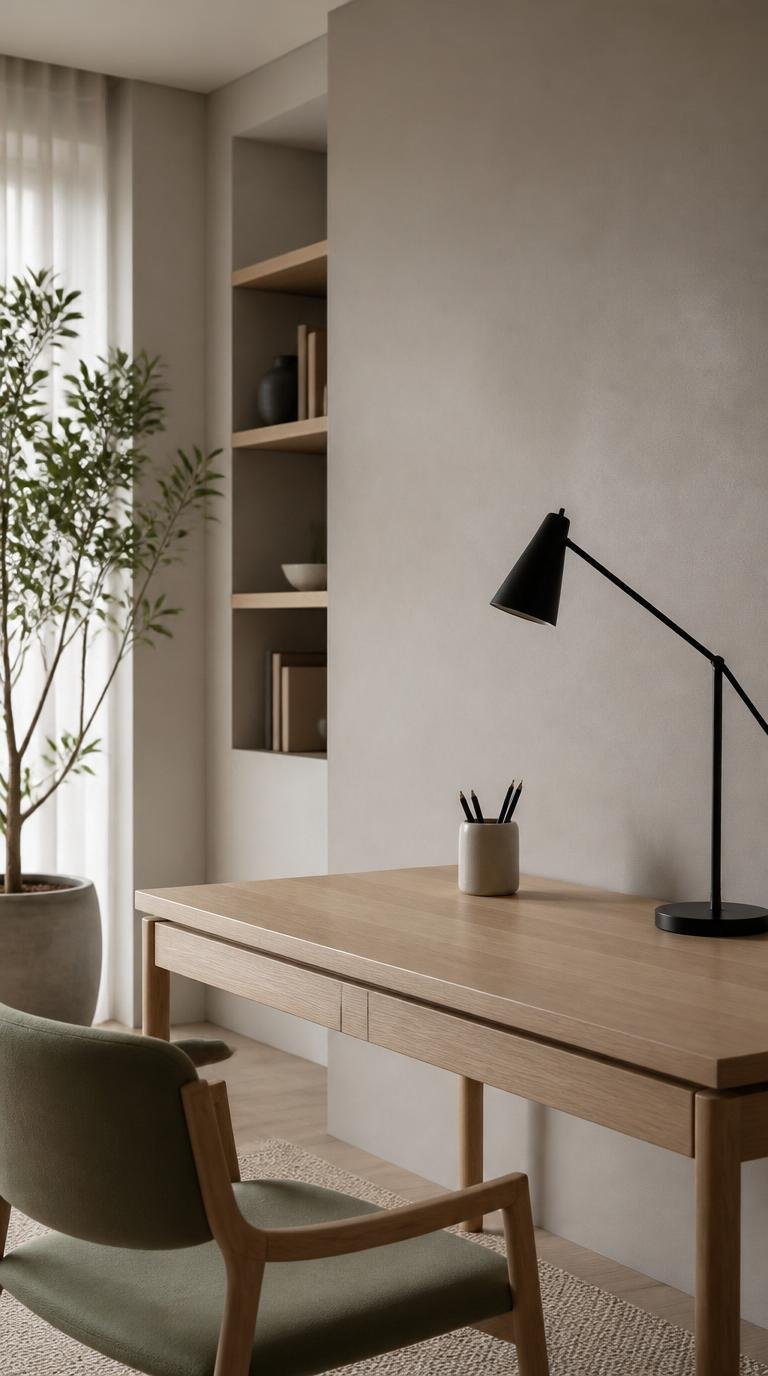
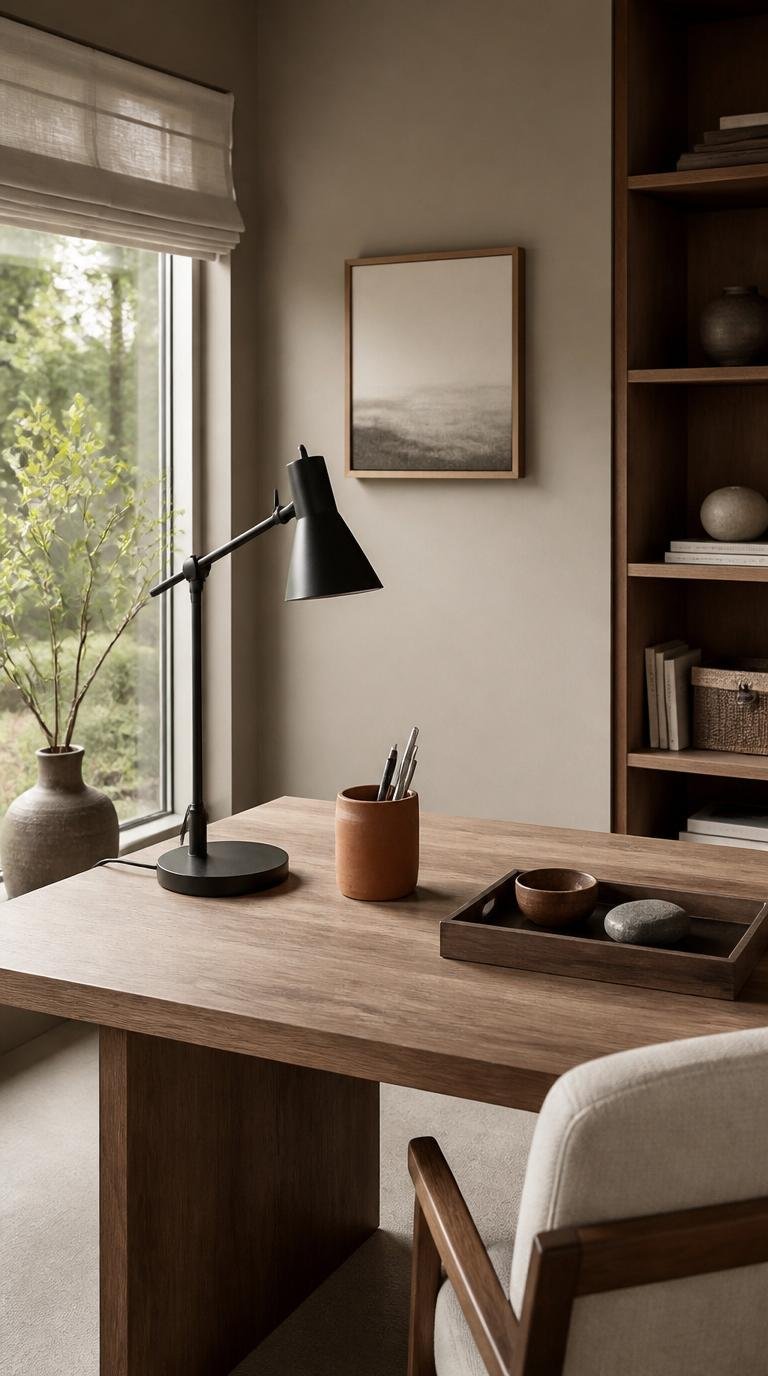
Add depth through small, earthy accents: a terracotta ceramic pen holder, a dark walnut tray, a single matte black desk lamp. The key is constraint — one accent color, repeated in two or three objects maximum.
Pick your accent, stick to it, and let the neutrals do the heavy lifting. This is what makes minimalist home office decor feel curated rather than accidental.
Colors to Avoid in a Minimalist Office
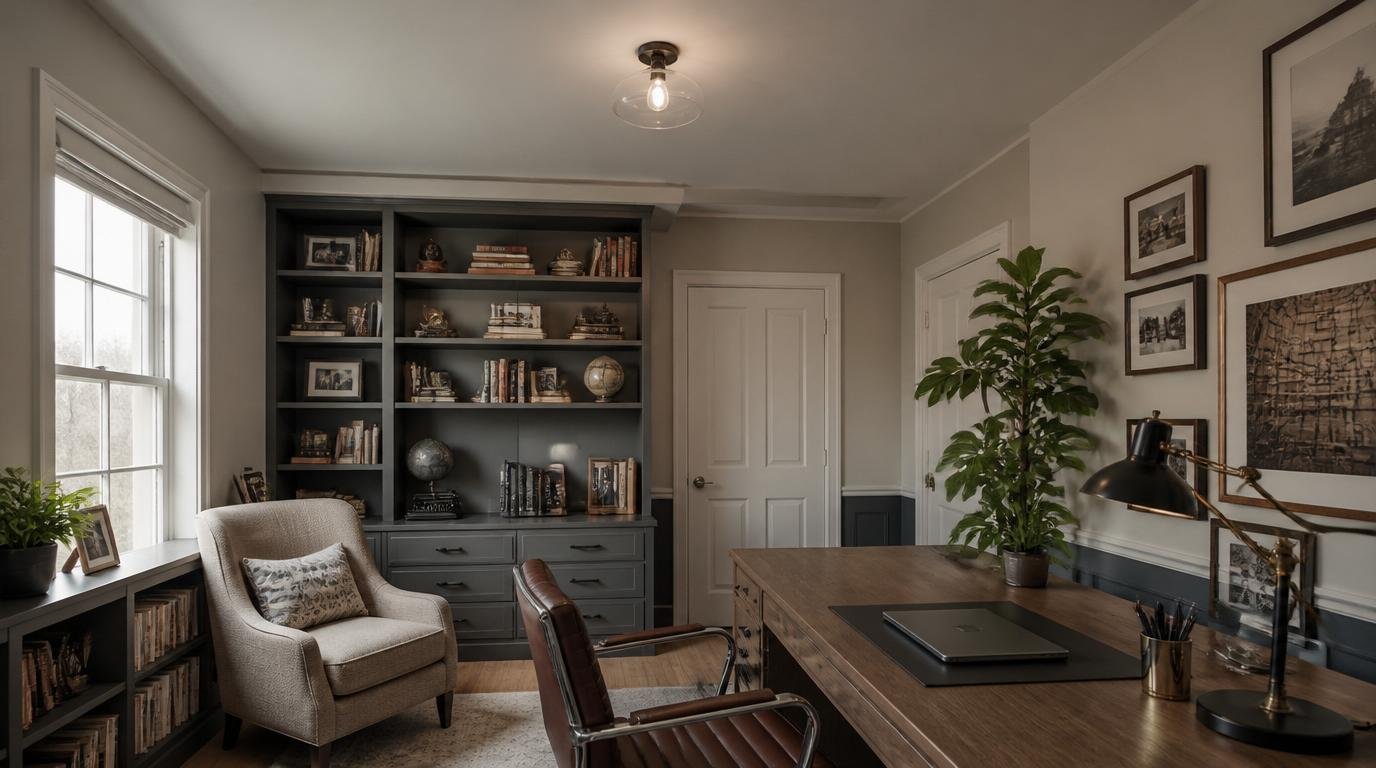
Steer clear of high-contrast color blocking, bright accent walls, or too many competing shades. In a minimalist home office, color should recede and support — not shout for attention.
According to Better Homes & Gardens, muted and warm-toned home offices consistently score higher for reported concentration and lower stress — which makes complete sense once you’ve experienced it yourself.
Smart Storage and Home Office Organization That Disappears
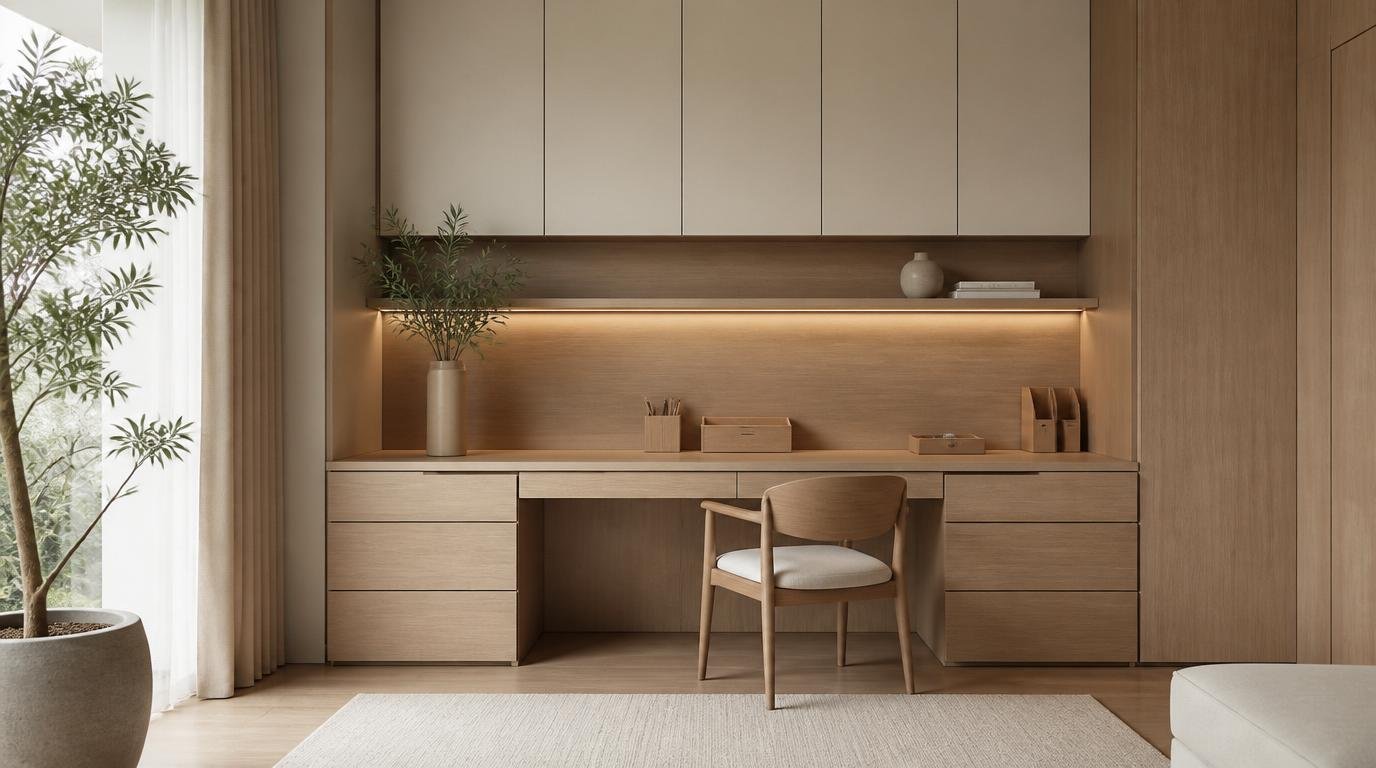
A minimalist home office only stays minimal if your home office organization is truly working for you — not just hiding chaos temporarily.
Hidden Storage Wins Every Time
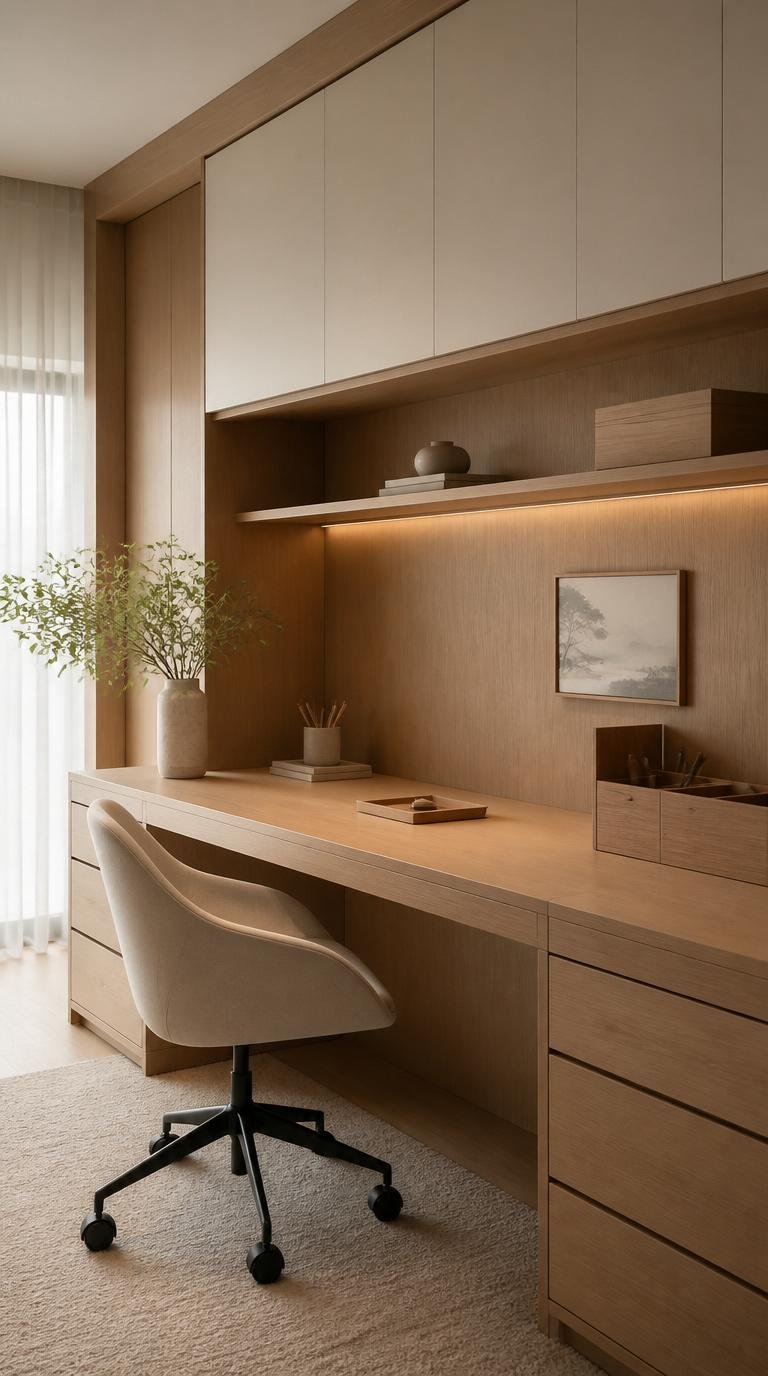
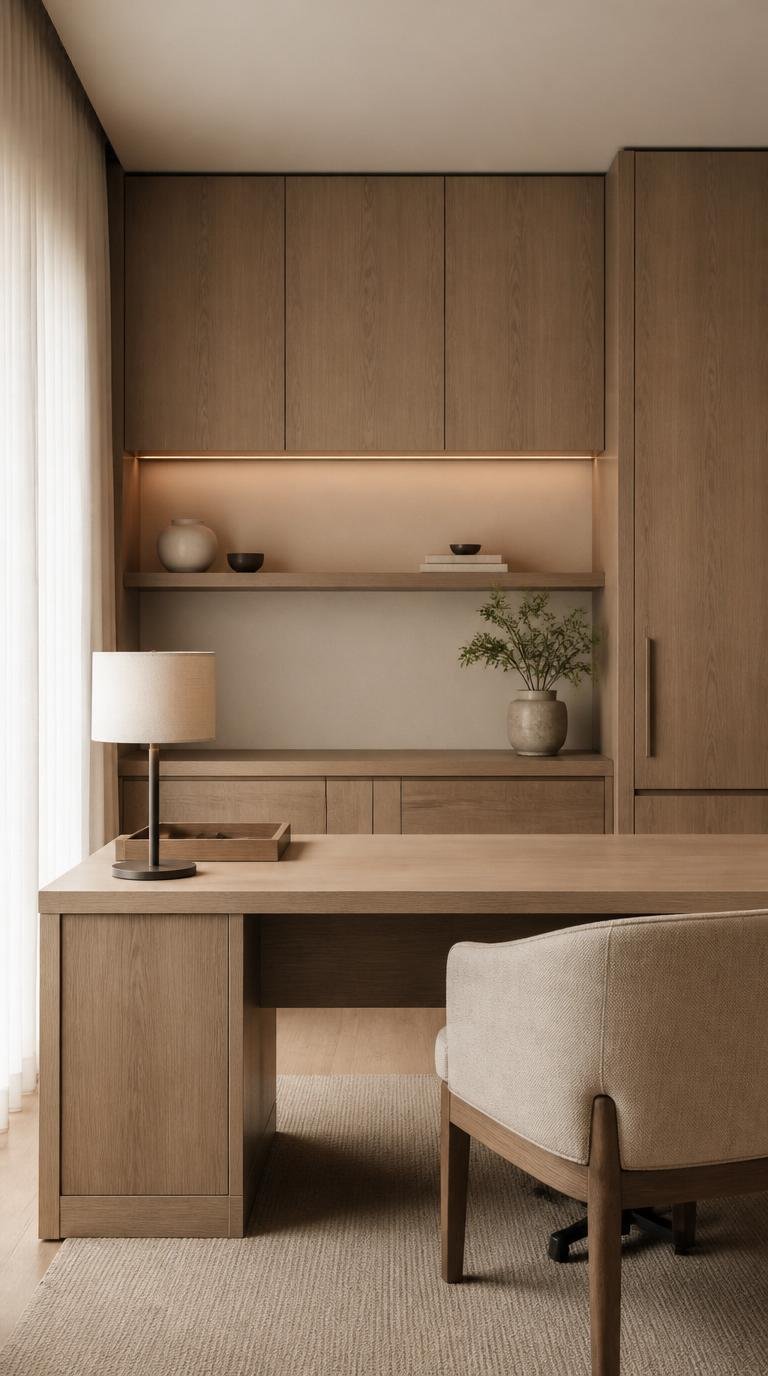
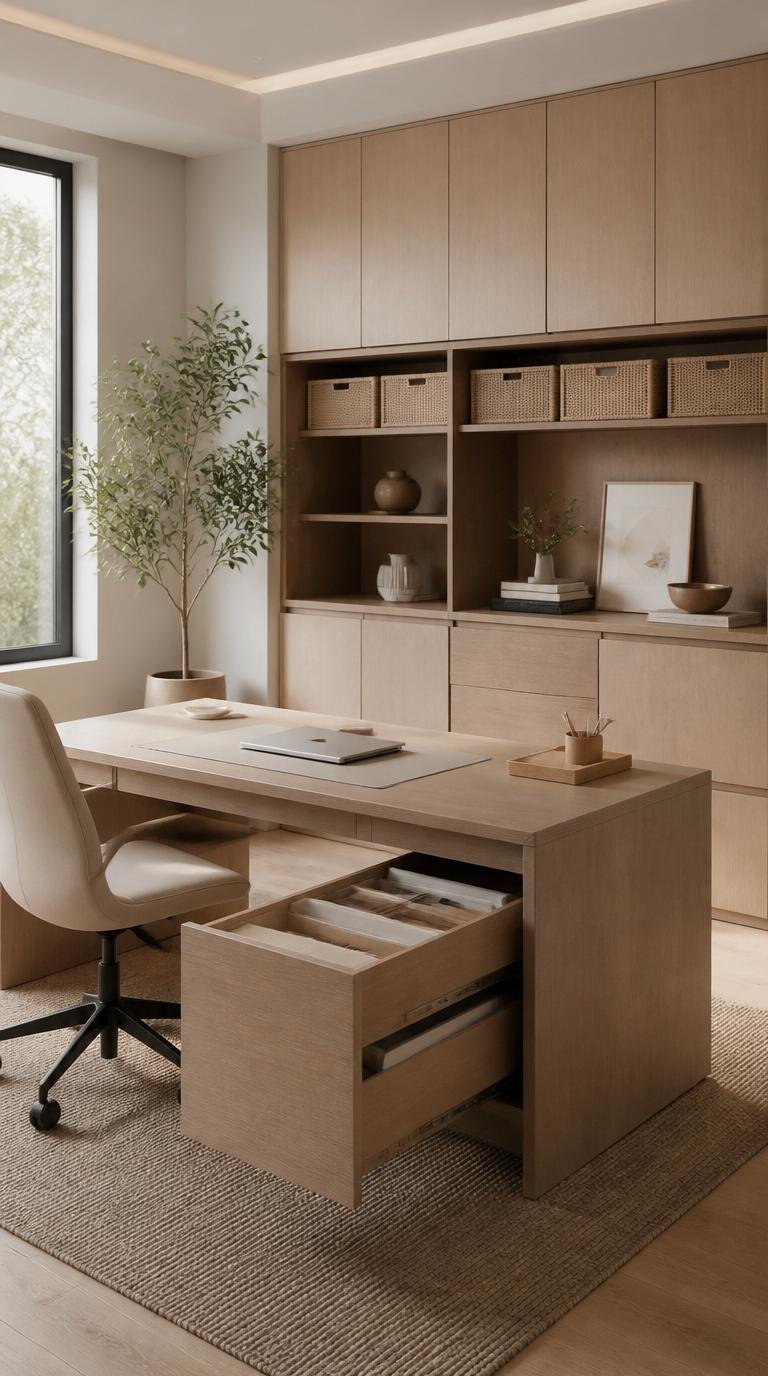
Built-in drawers, closed cabinetry, and desk organizers in matching wood tones keep clutter invisible. The goal is a “hotel lobby” vibe — everything in its place, nothing out in the open that doesn’t absolutely need to be.
- Drawer inserts keep cables, stationery, and tech accessories out of sight
- Closed shelving with matching baskets hides papers and files beautifully
- A cable management box eliminates desk-top cord chaos instantly
- A single tray or small dish on the desk surface corrals what actually needs to be accessible
The One-In-One-Out Rule
For every new item that enters your office — a notebook, a cable, a tool — something old must leave. It sounds strict, but it’s genuinely liberating once it becomes a habit.
Vertical Storage Over Horizontal Spread
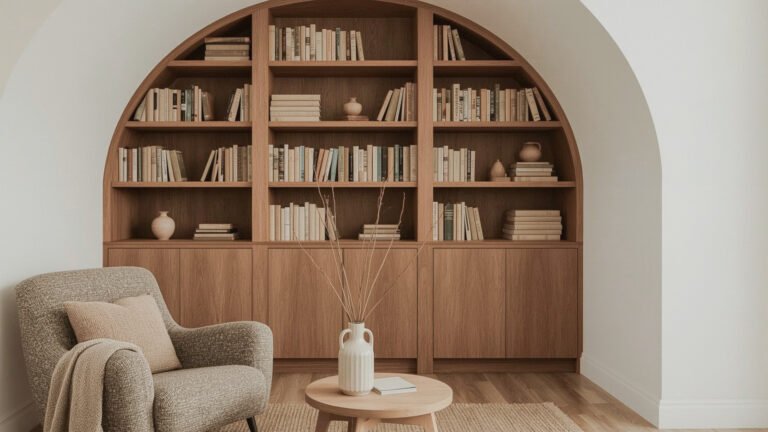
Think up, not out. Tall, slim bookshelves and wall-mounted floating shelves keep your storage vertical and your floor plan clear — especially important in small spaces.
As The Spruce points out, vertical storage maximizes wall space in compact home offices and keeps the room feeling open and uncluttered — exactly the goal in a minimalist home office decor setup.
My Top Tip: Start your minimalist home office organization by emptying everything off your desk and out of your drawers completely. Then only put back what you used in the last two weeks. I did this last spring and it was genuinely shocking how little I actually needed — the rest went into a donate box by end of day.
Lighting Your Minimalist Home Office for Focus and Calm
Lighting in a minimalist home office does two things at once: it supports your work and sets the emotional mood of the entire room.
Natural Light First — Always
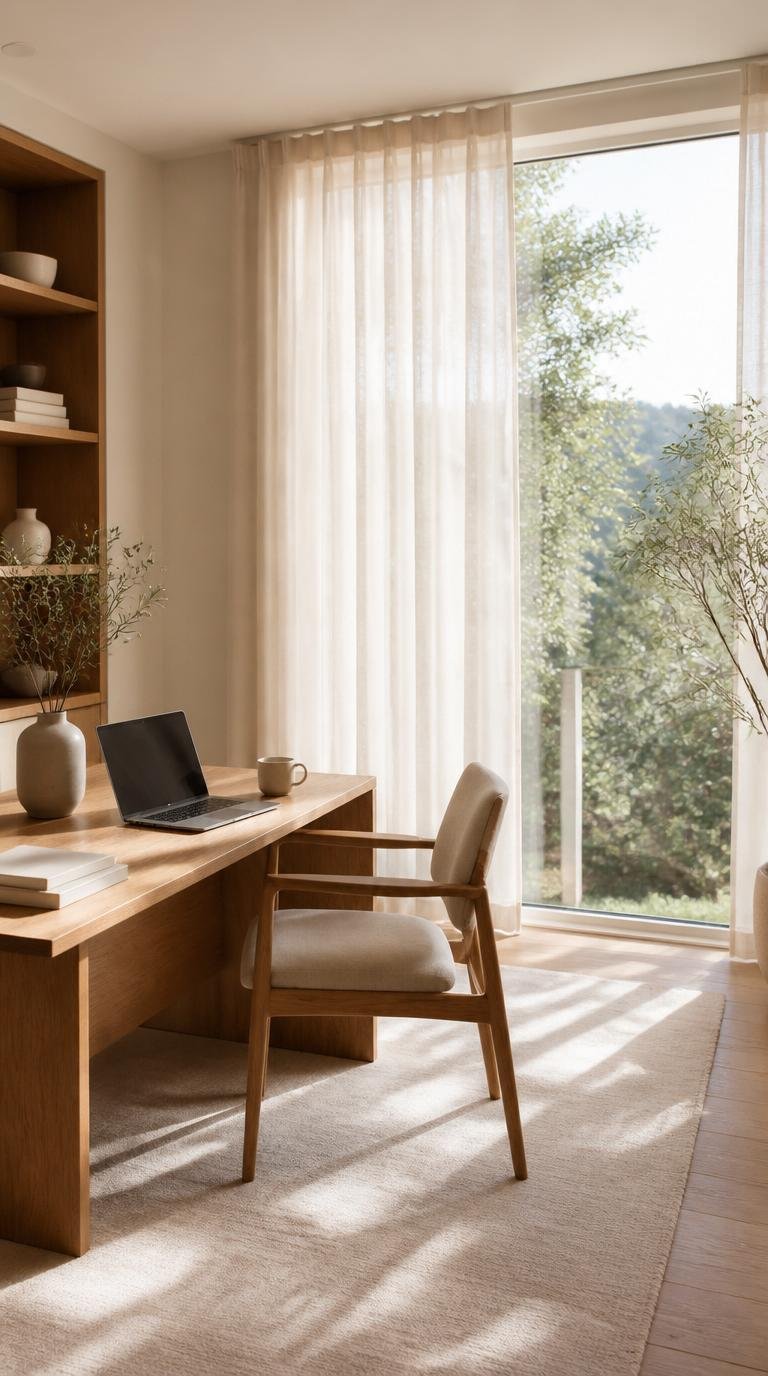
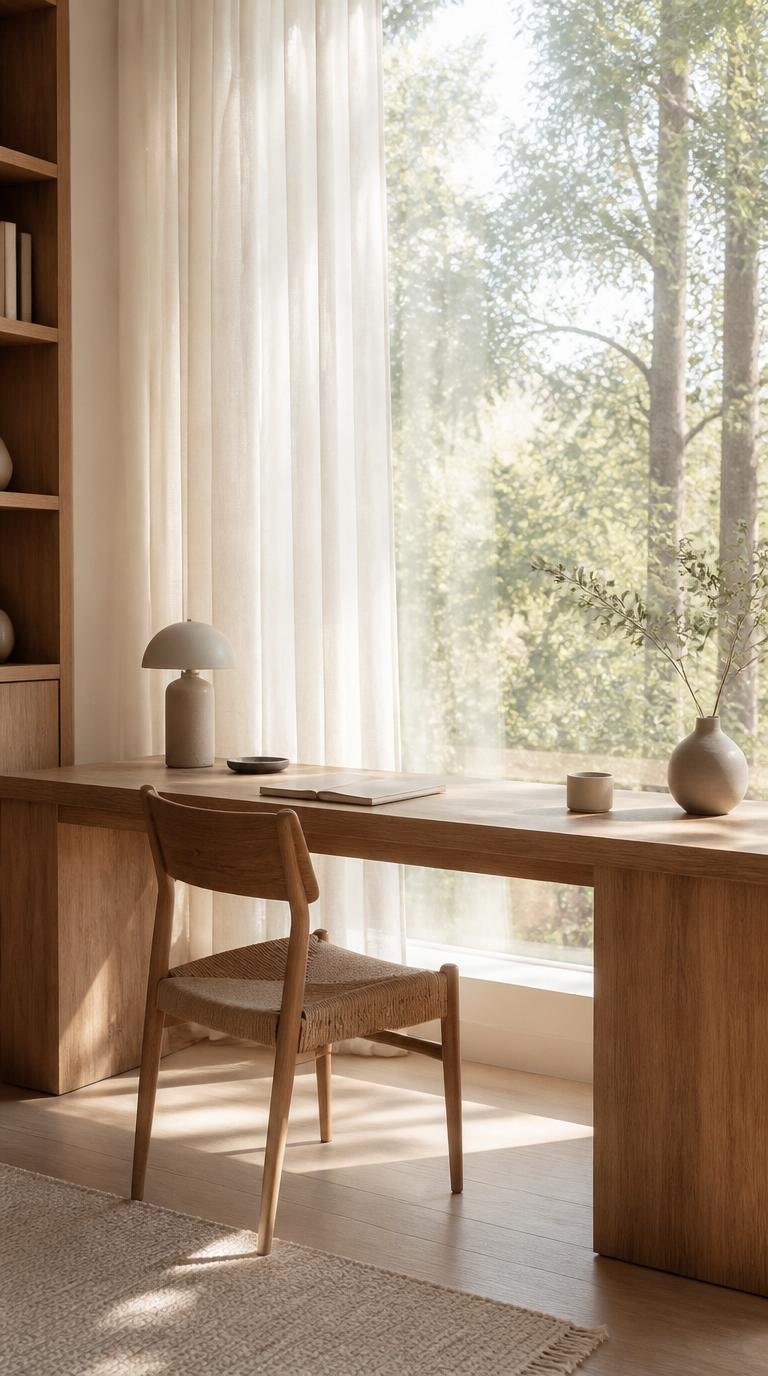
Position your desk near a window whenever possible. Natural light reduces eye strain, regulates your circadian rhythm, and genuinely makes you feel better throughout the day.
In Japandi design, natural light is considered a living element of the room — something to be welcomed and guided, not just tolerated. Sheer linen curtains in warm white let light flood in while softening its quality beautifully.
Layered Artificial Lighting
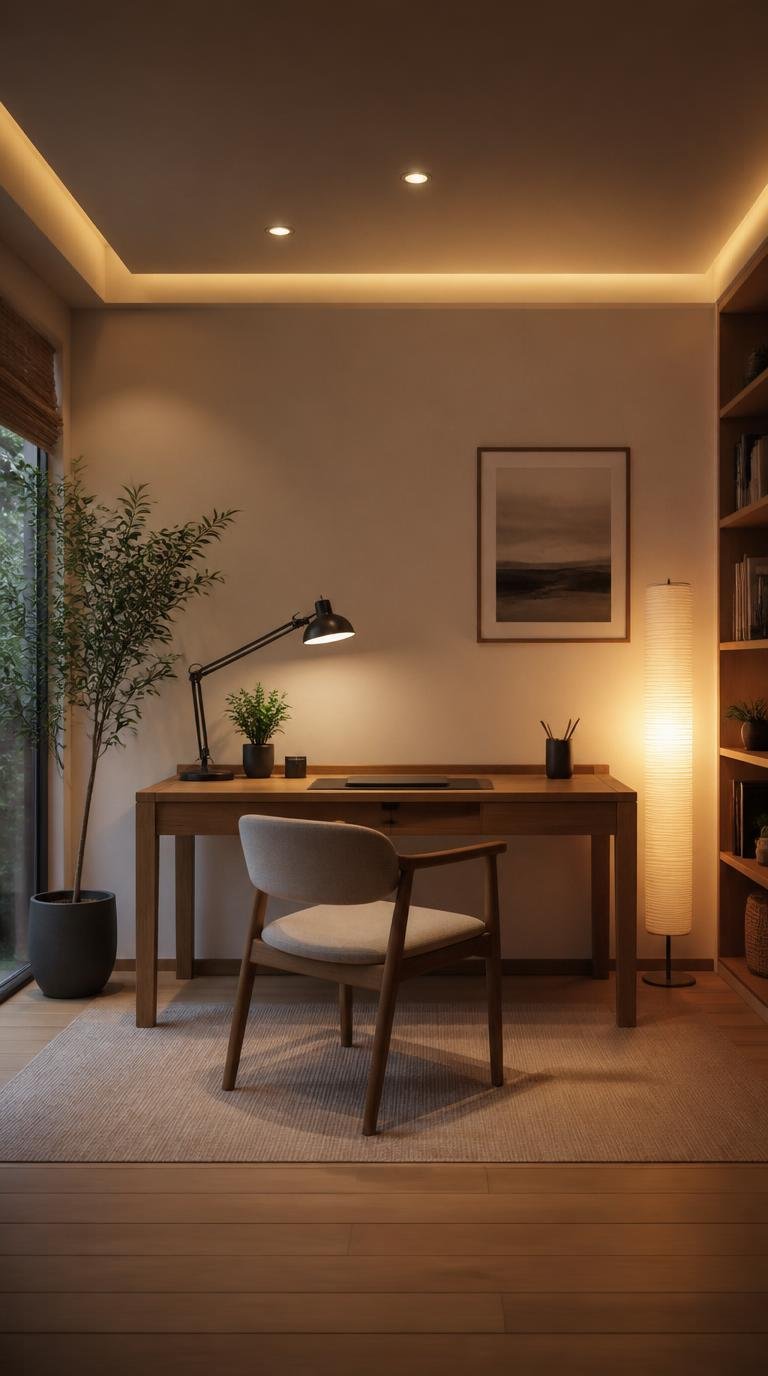
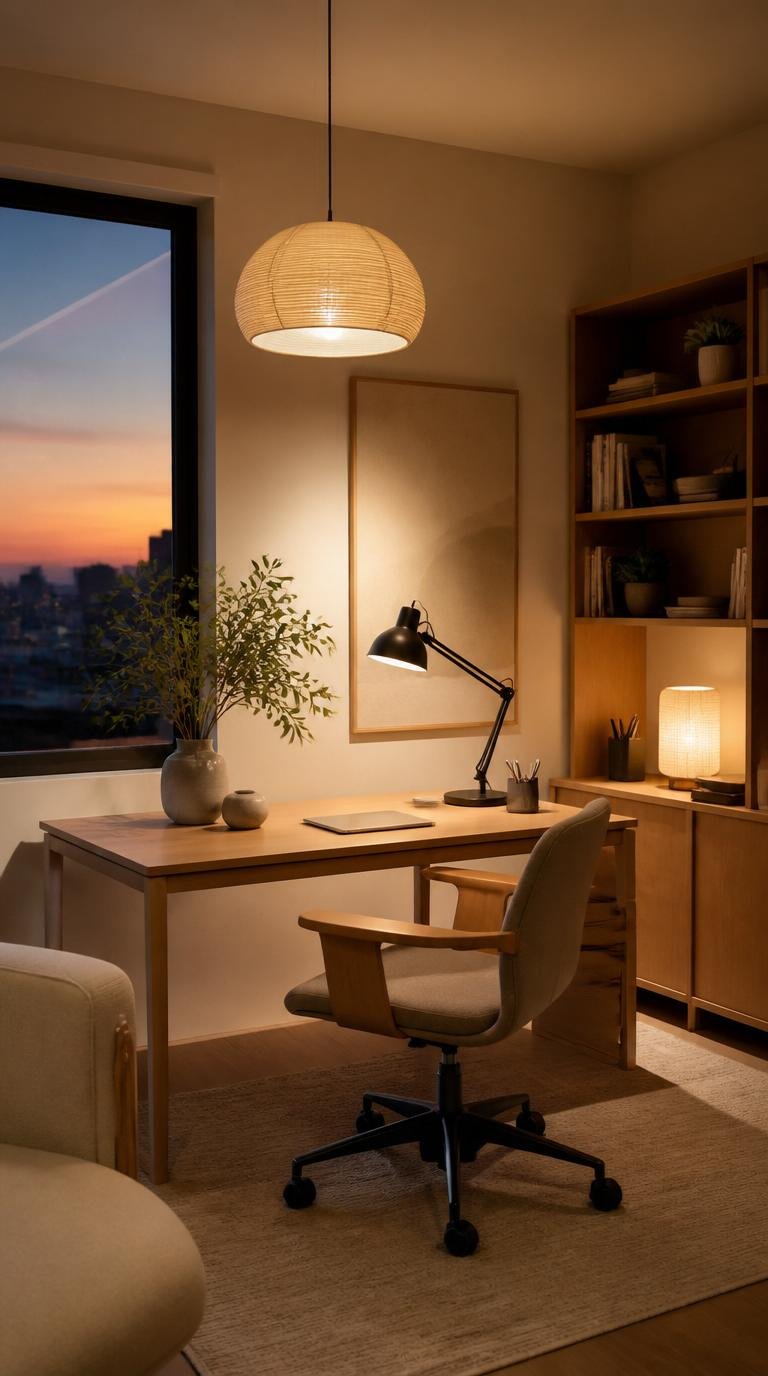
When natural light isn’t enough, layer your lighting: ambient overhead, a task lamp on your desk, and a warm accent lamp for late-afternoon work sessions.
Skip harsh cool-white bulbs. Warm white LEDs at 2700K–3000K mimic the quality of natural light and are so much gentler on your eyes during long productive workspace sessions.
Choose a Lamp That Earns Its Spot
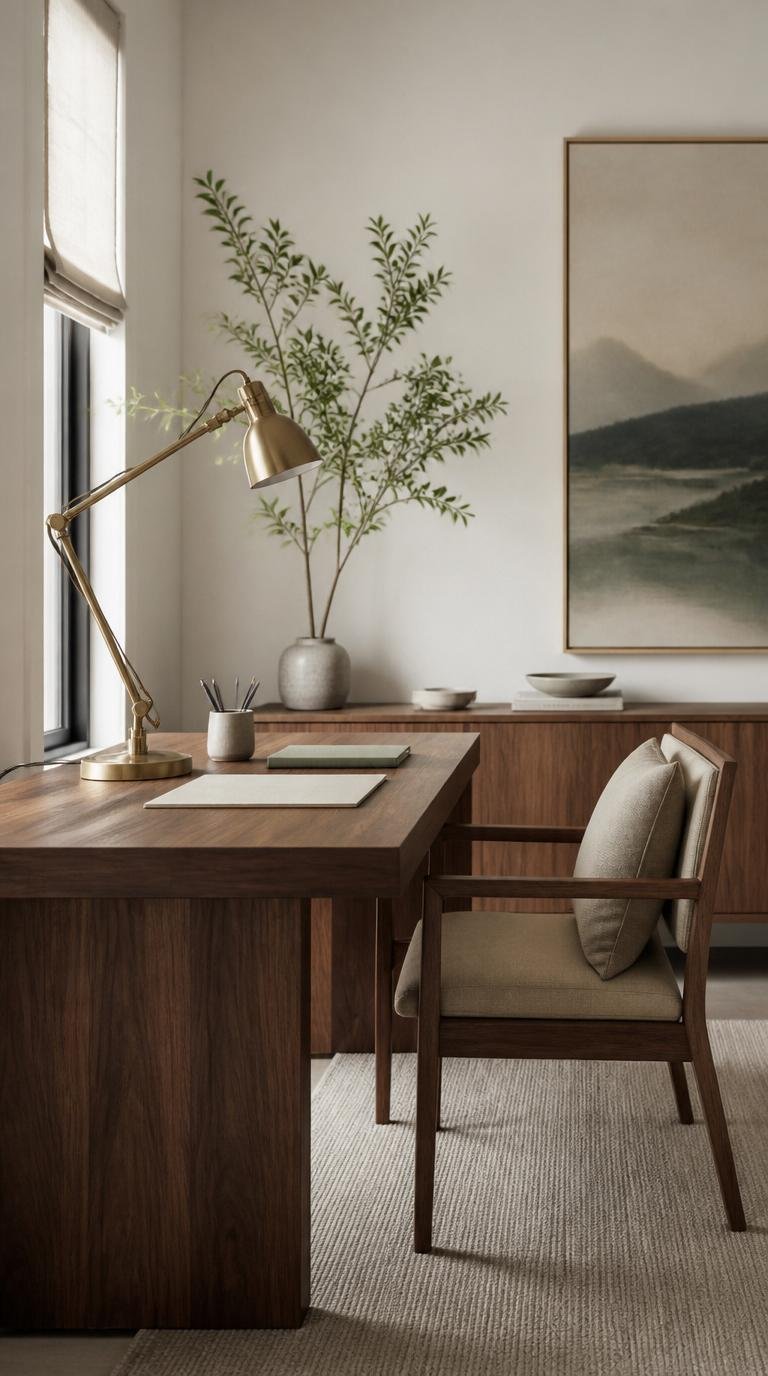
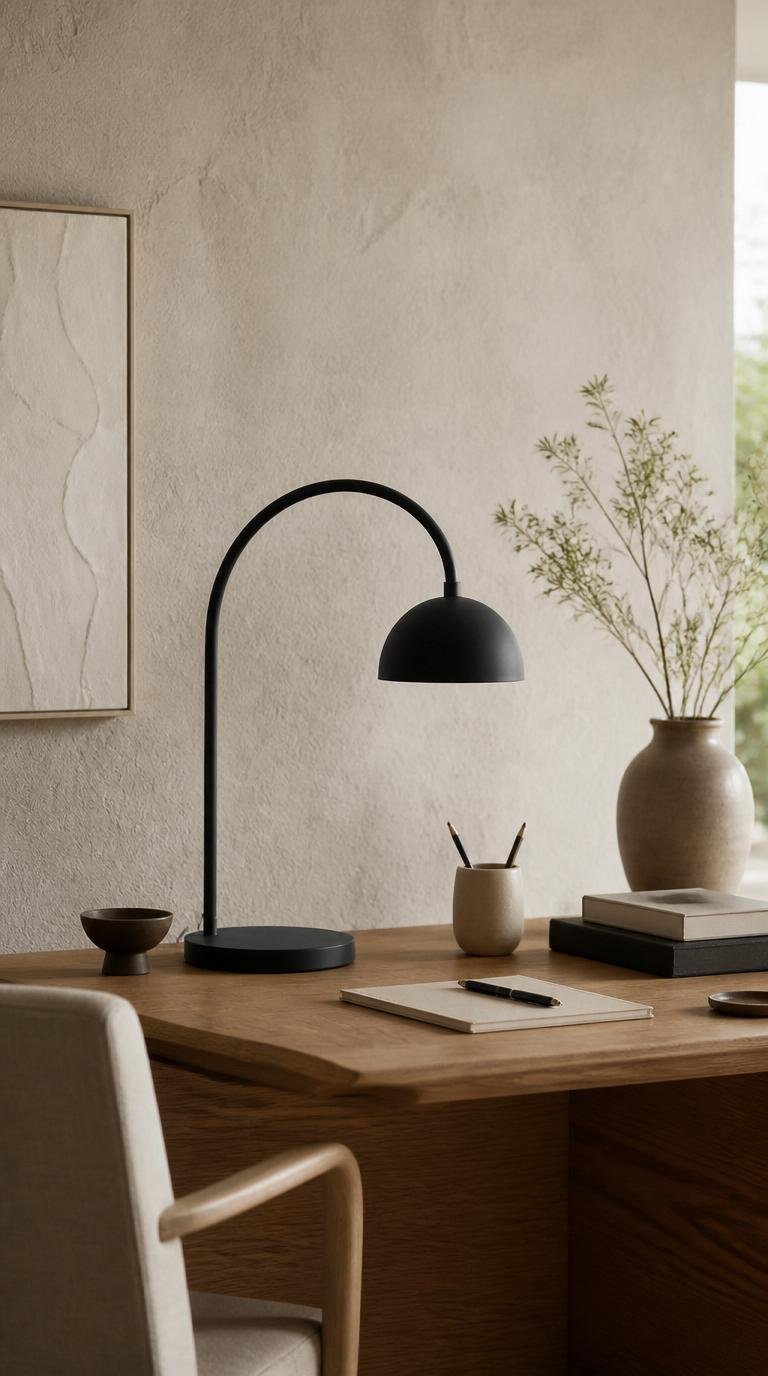
In a minimalist workspace, your desk lamp is a design statement as much as a functional tool. A matte black arc lamp, a warm brass articulated lamp, or a stone-base lamp with a linen shade all feel perfectly at home in a japandi home office.
My Top Tip: Swap your desk lamp bulb to warm white (2700K) today — it’s a tiny change that completely transforms how your workspace feels. Evening work sessions go from harsh and draining to genuinely cozy. I’ve honestly never looked back.
Natural Materials, Texture, and Greenery
Texture is what separates a beautiful minimalist office from a blank, uninspiring one. This is where your space gets its soul.
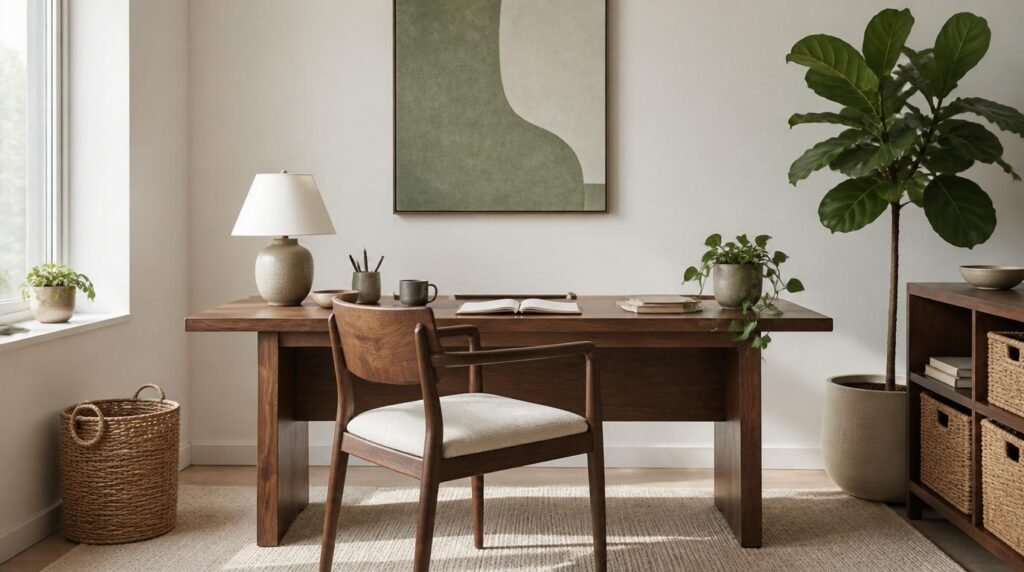
The Japandi Material Trio: Wood, Linen, and Stone
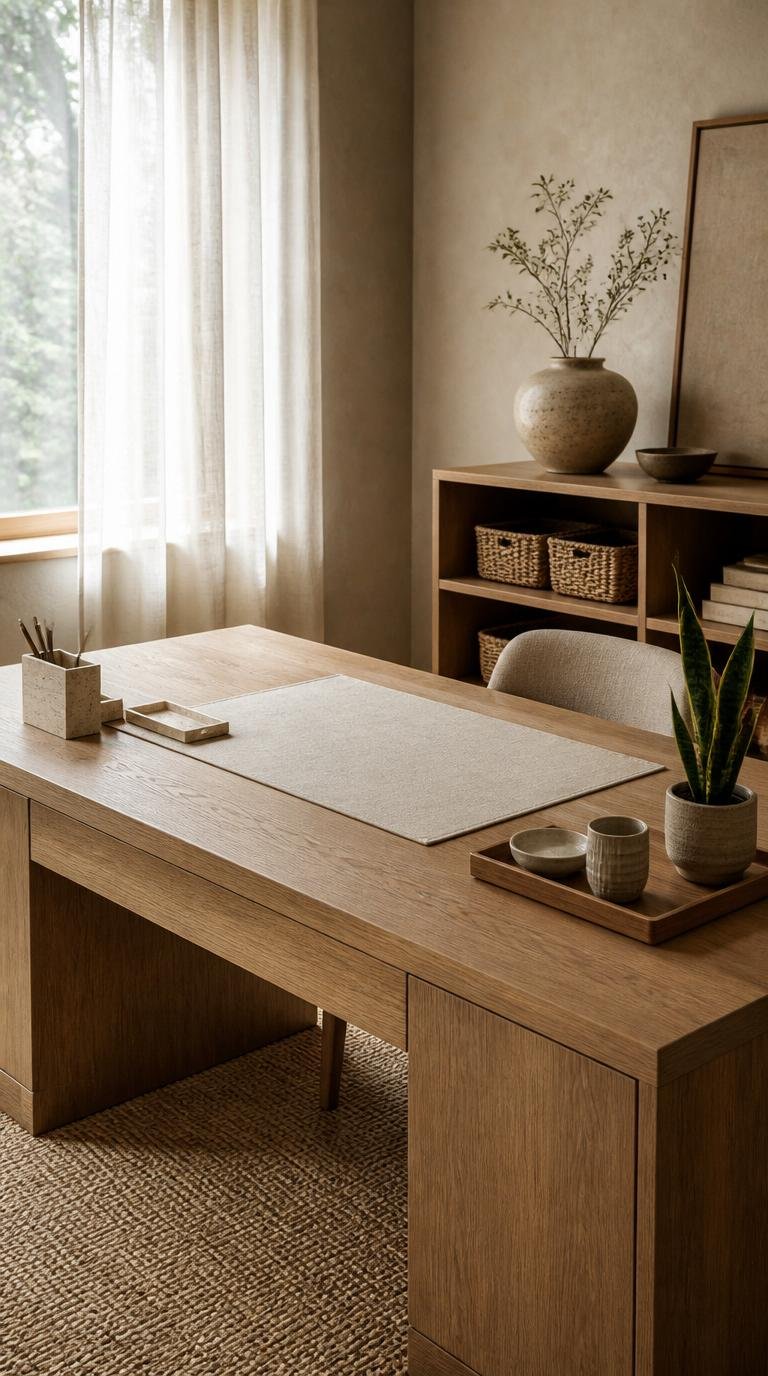
Layer natural materials for warmth without visual noise. A linen desk mat, a small stone or ceramic organizer, a wooden tray to corral everyday essentials — these textures signal calm to your nervous system in a way that synthetic materials simply can’t replicate.
Rattan baskets on shelves, a small jute rug underfoot, an oak-framed clock on the wall — small touches like these add warmth and dimension without adding clutter to your minimalist home office decor.
Plants as Productivity Partners
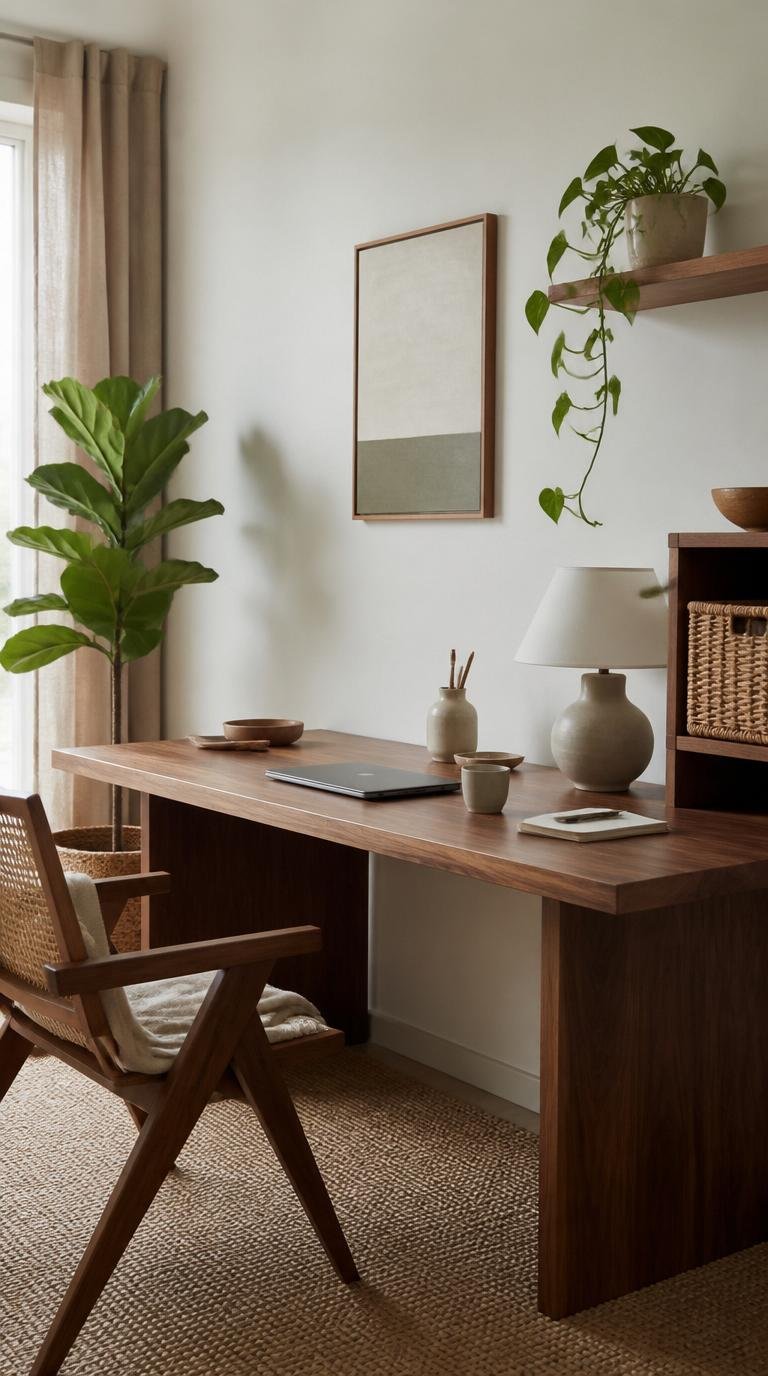
One or two plants are honestly non-negotiable in my minimalist home office setup. Snake plants, pothos, peace lilies, or a small fiddle-leaf fig work beautifully — they add softness, bring biophilic energy, and make the room feel alive in a way that no decor object can quite replicate.
Keep it to one or two statement plants rather than a full collection. In a minimalist home office, one thriving plant makes a much stronger impression than five small, competing ones.
Minimalist Office Decor and Wall Ideas
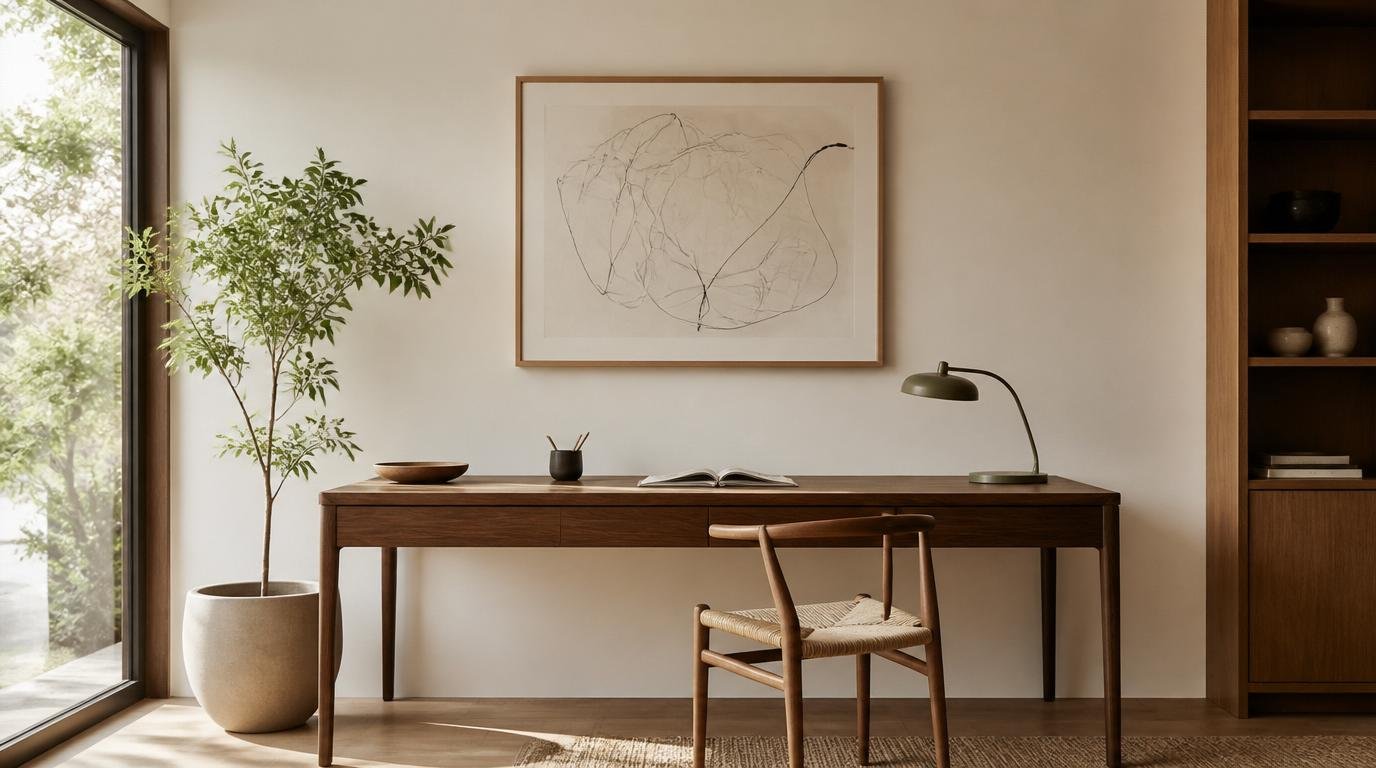
Your minimalist office decor choices are what transform a functional room into a space that genuinely inspires you. And the good news — you need far less than you think.
One Statement Piece, Not a Busy Gallery
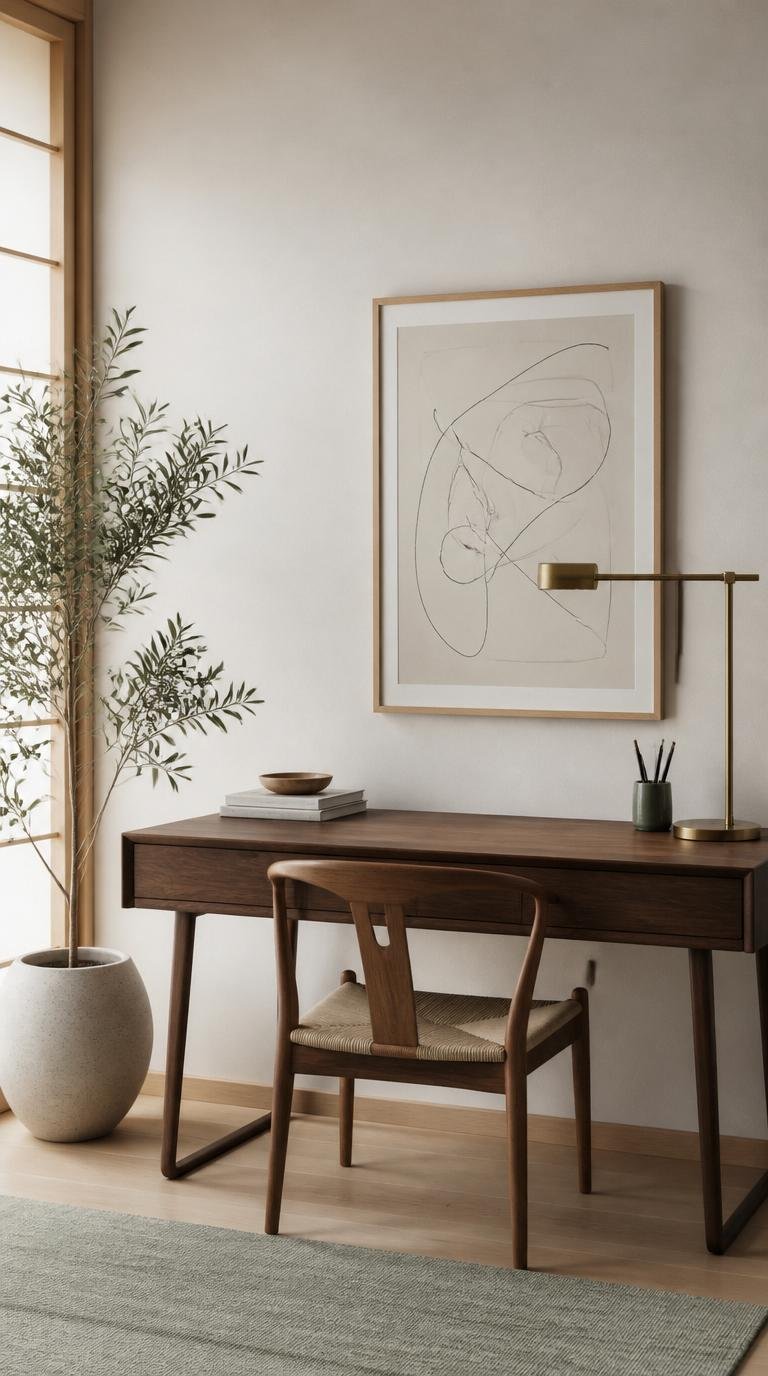
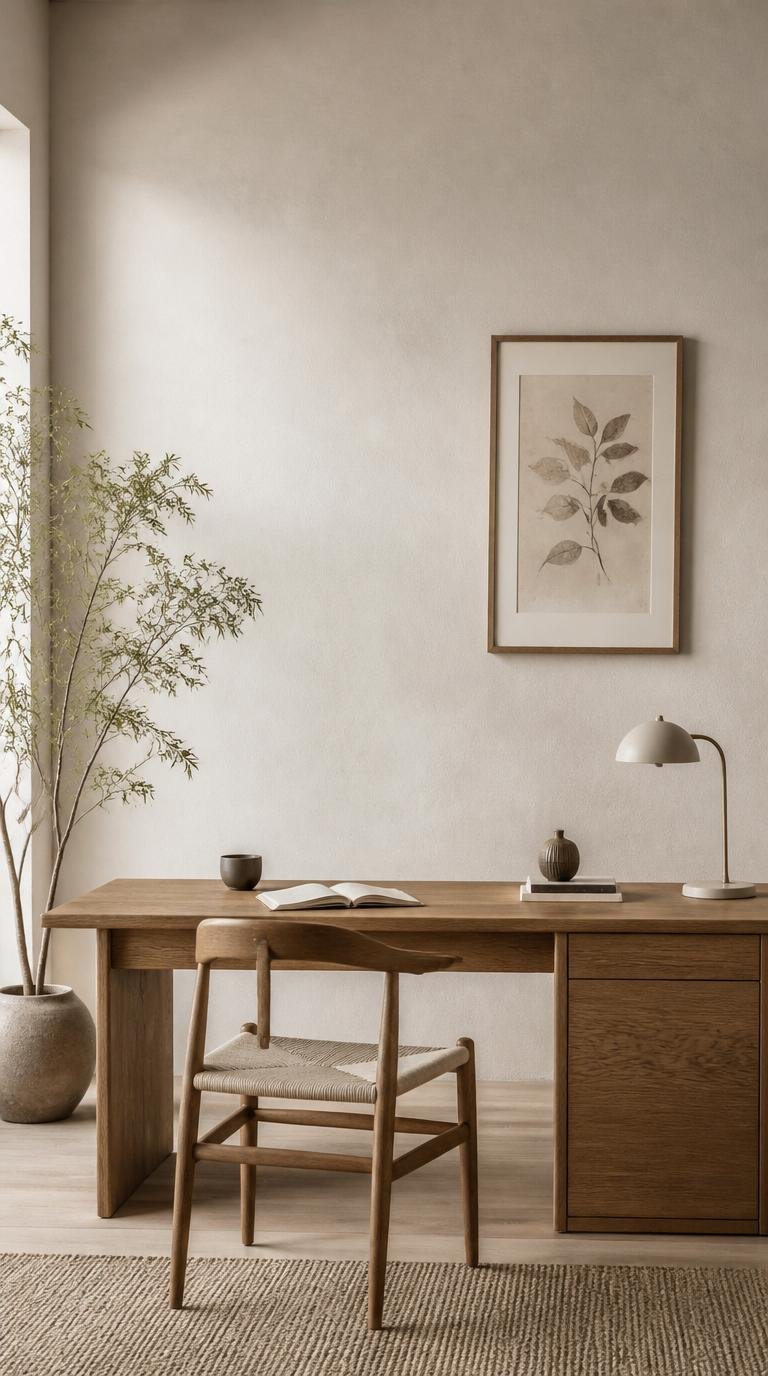
One or two framed prints in muted earth tones is genuinely all you need. Japanese botanical illustrations, abstract line art, or a single landscape print in a simple oak frame work beautifully — intentional rather than decorating-by-the-yard.
Resist the urge to fill every inch of wall space. In minimalist home office decor, negative wall space is part of the design. Let it breathe.
Floating Shelves for Function and Beauty
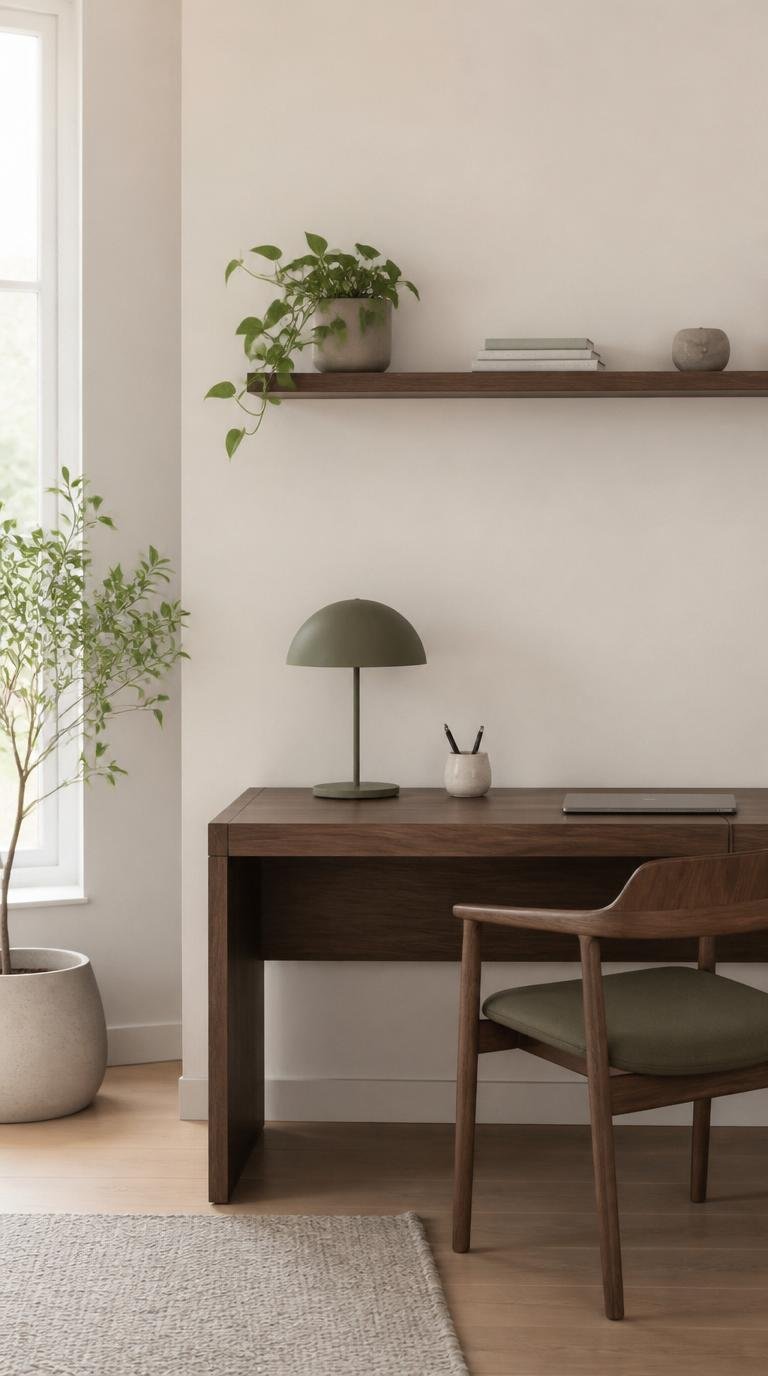
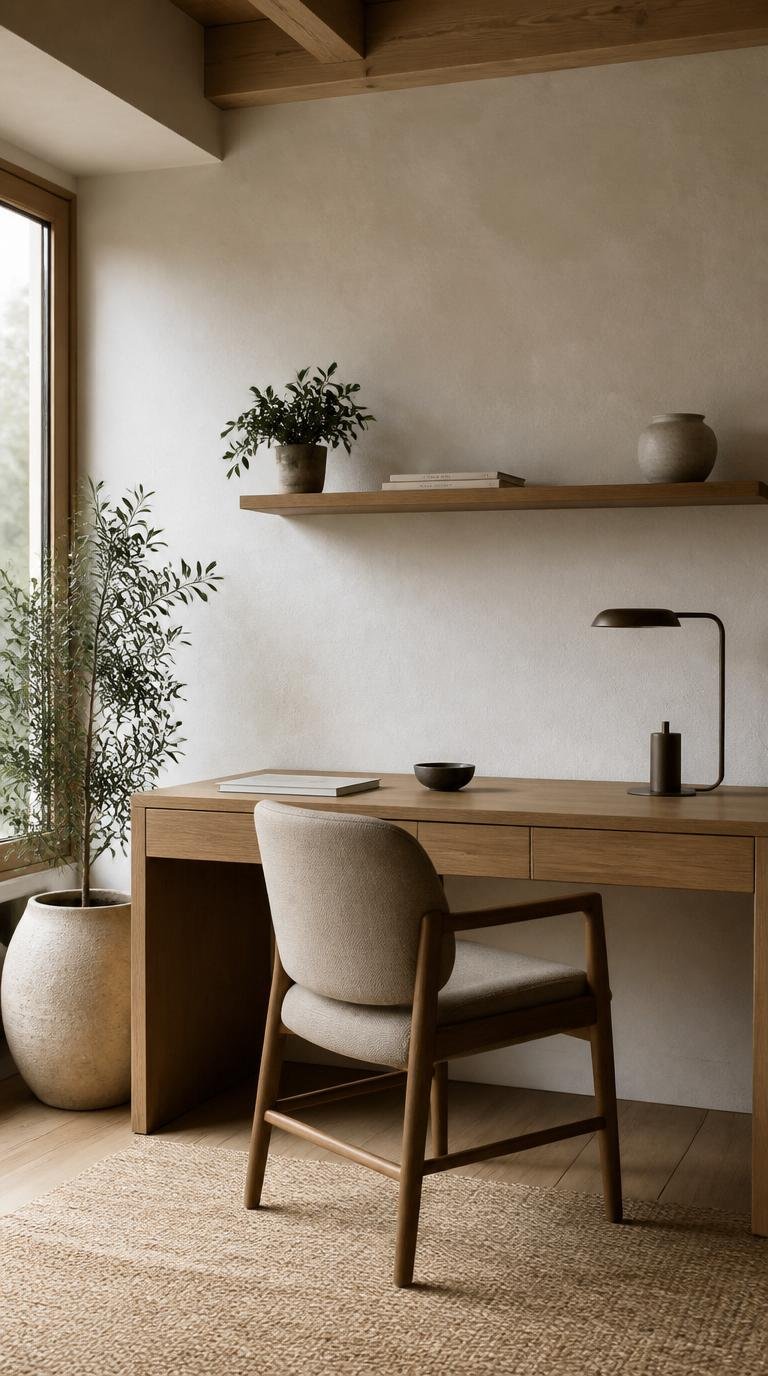
A single floating shelf above your desk — holding a small plant, one or two books, and one decorative object — is the perfect balance of function and beauty. It lifts your eye and adds dimension without cluttering your desk surface.
Keep the shelf edited: when it starts to look crowded, remove something. Always.
A Natural Wood Pegboard Can Work Beautifully
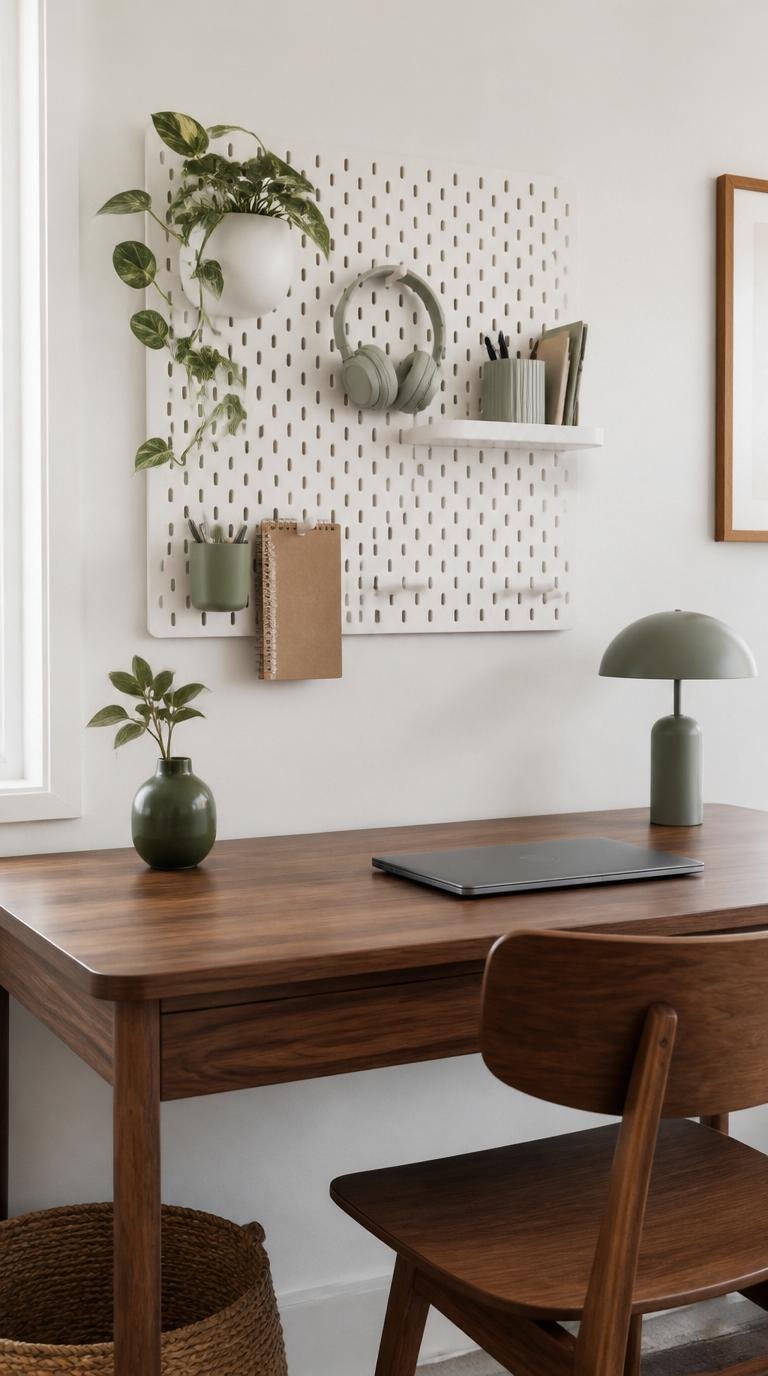
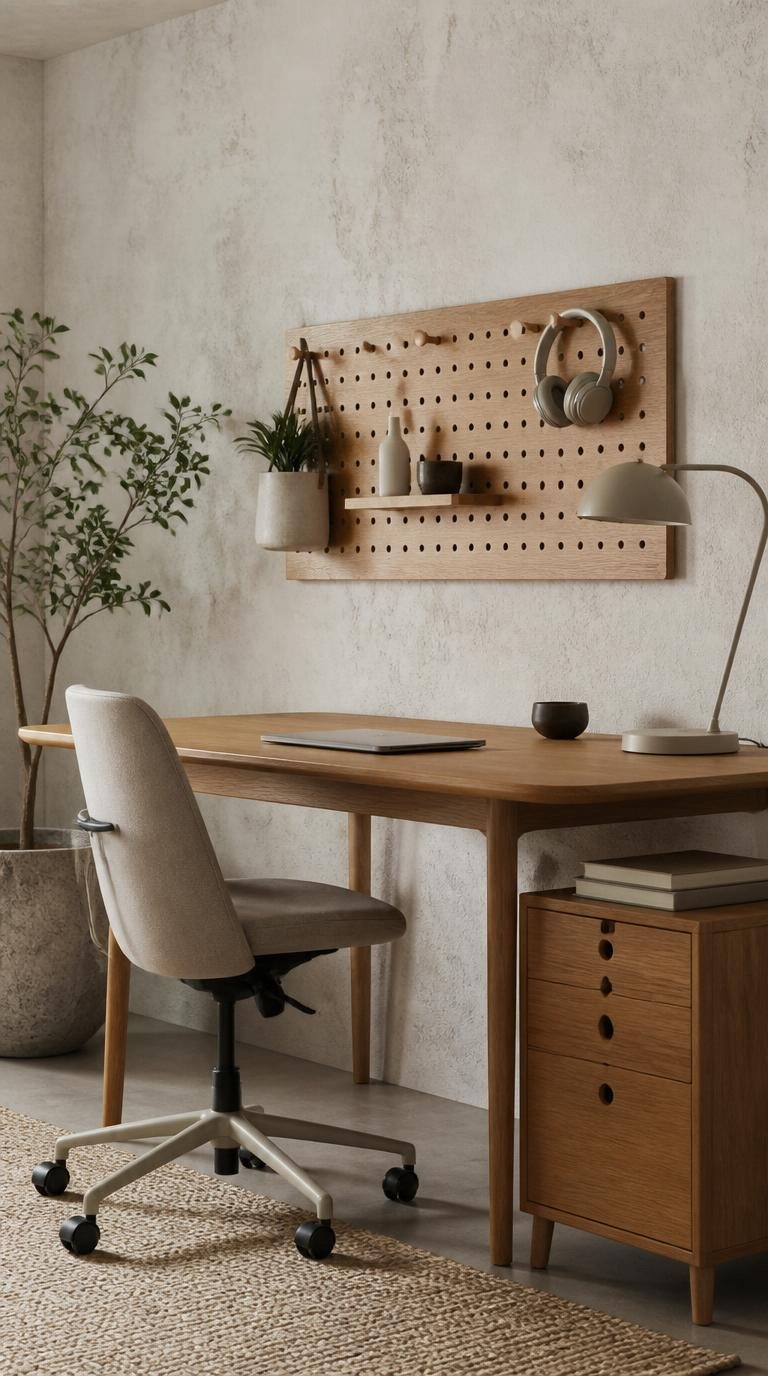
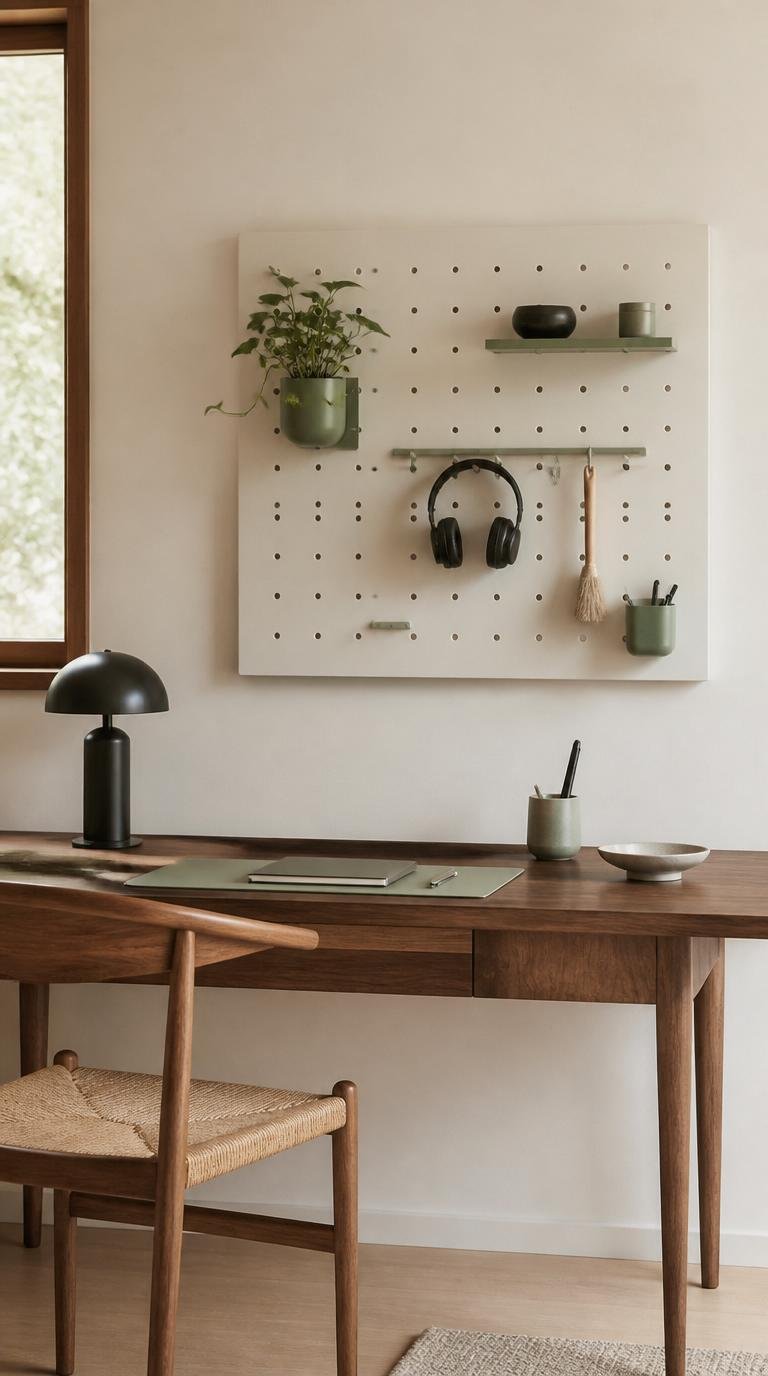
A natural wood or matte white pegboard with just a few hooks for headphones, a small shelf, and a plant holder is both highly functional and surprisingly elegant in a minimalist home office setup.
According to Architectural Digest, Japandi interiors excel at blending purposeful storage with visual calm — and a well-designed pegboard is a perfect small-scale example of this in a productive workspace.
Ideas For a Small Minimalist Home Office
No dedicated room? Honestly, a corner — done intentionally — can become a truly beautiful, productive space.
The Wall-Mounted Desk Trick
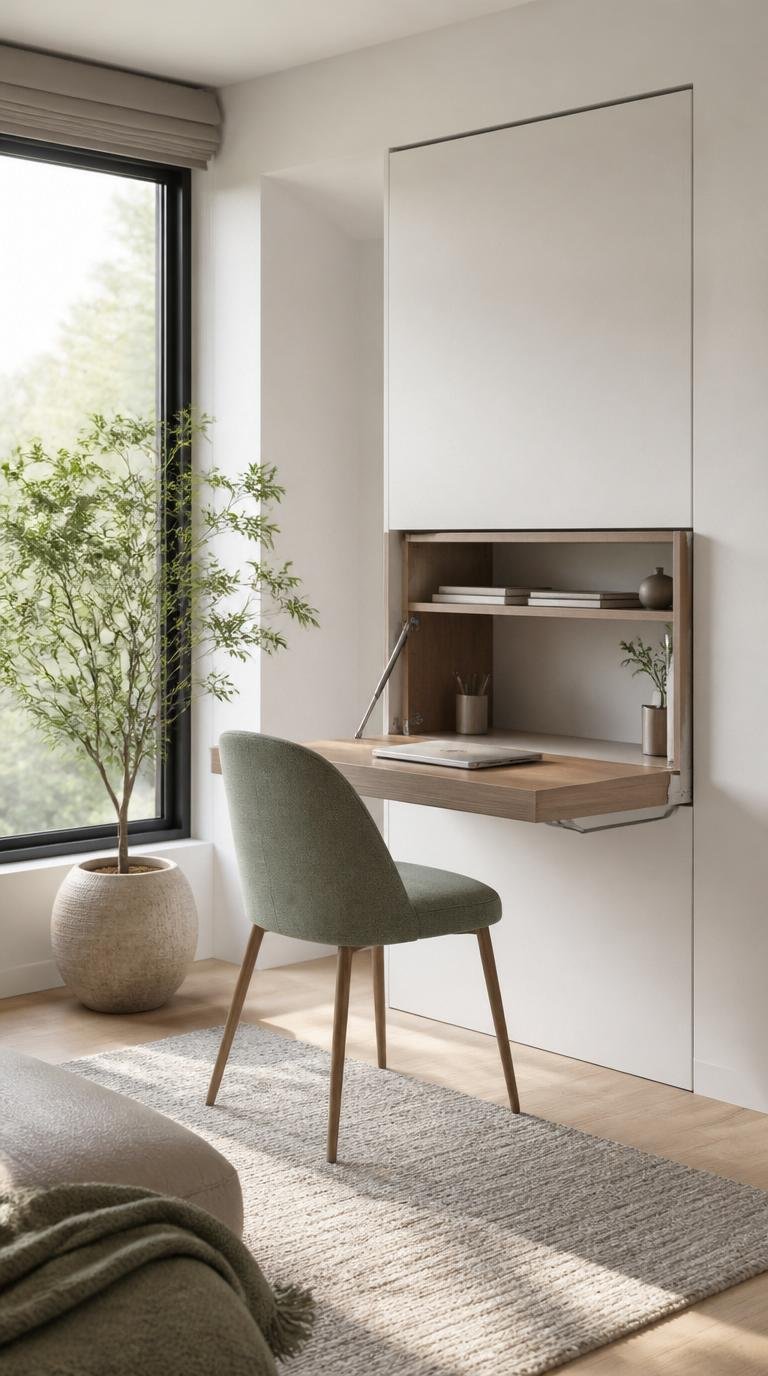
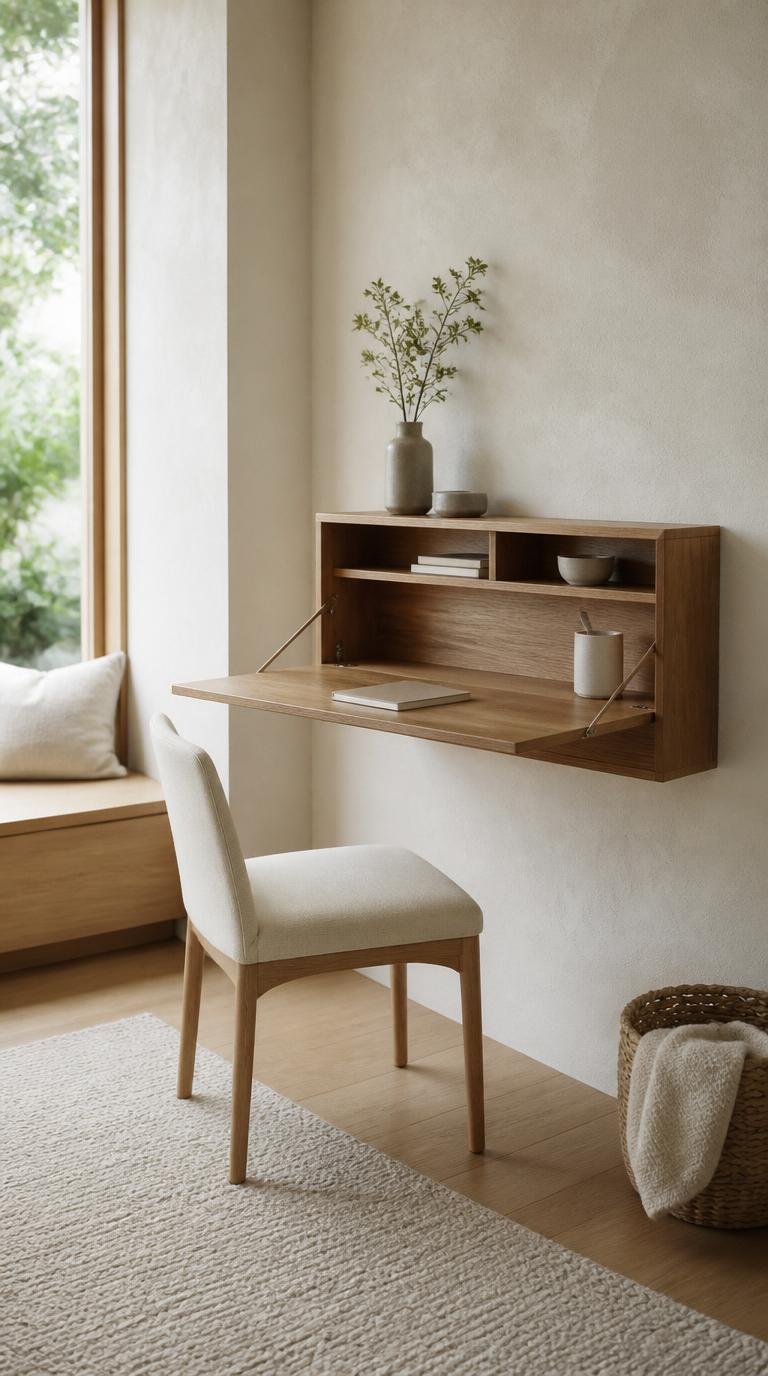
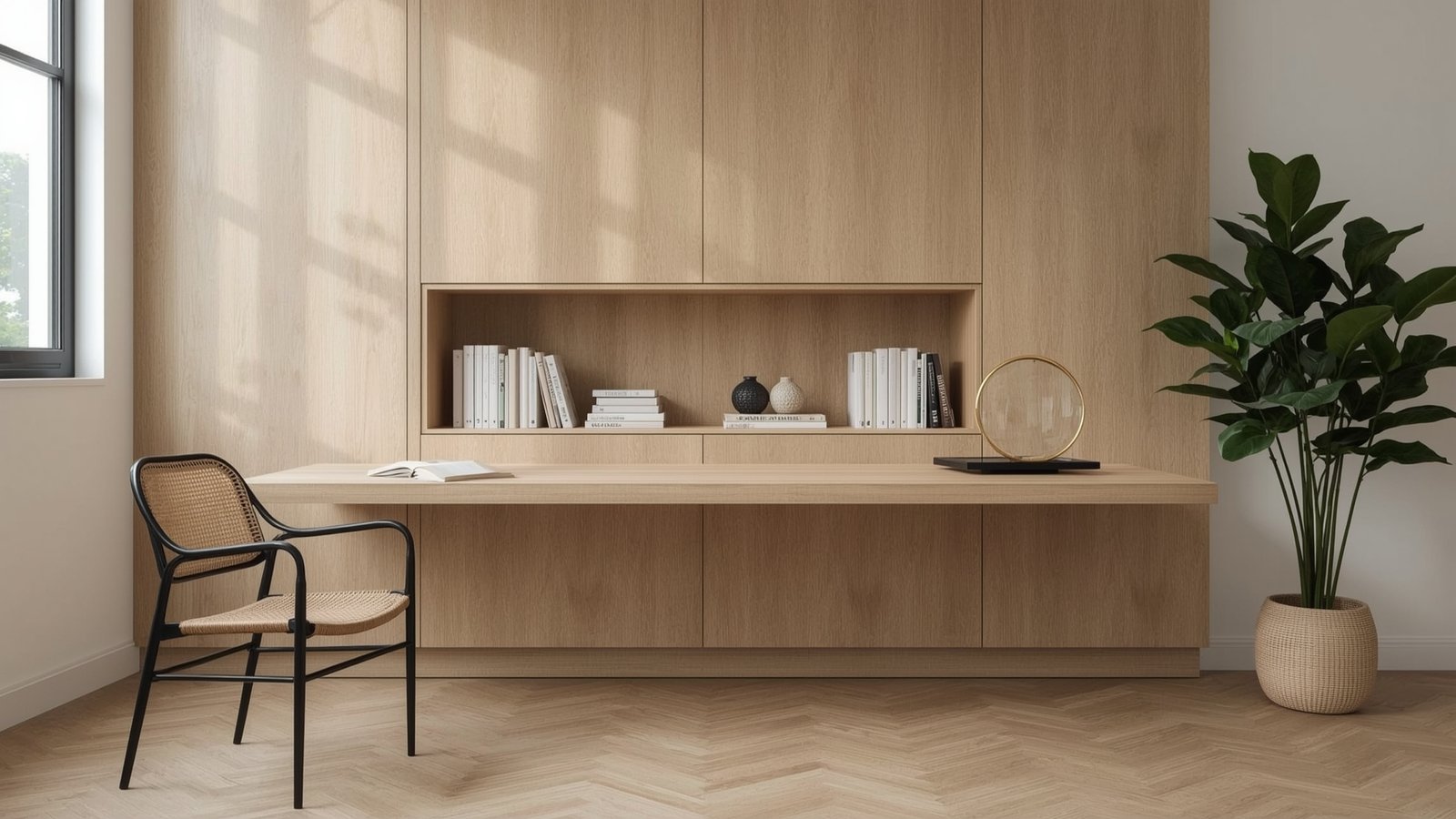
A fold-down or floating wall-mounted desk is a game-changer for small spaces. It disappears completely when you close your laptop, keeping the rest of the room feeling open, airy, and uncluttered.
Pair it with a slim, armless chair in a neutral fabric that tucks fully under the desk. Bonus: it forces you to be intentional about what stays on the surface — because there simply isn’t room for extras.
Use Vertical Space Aggressively
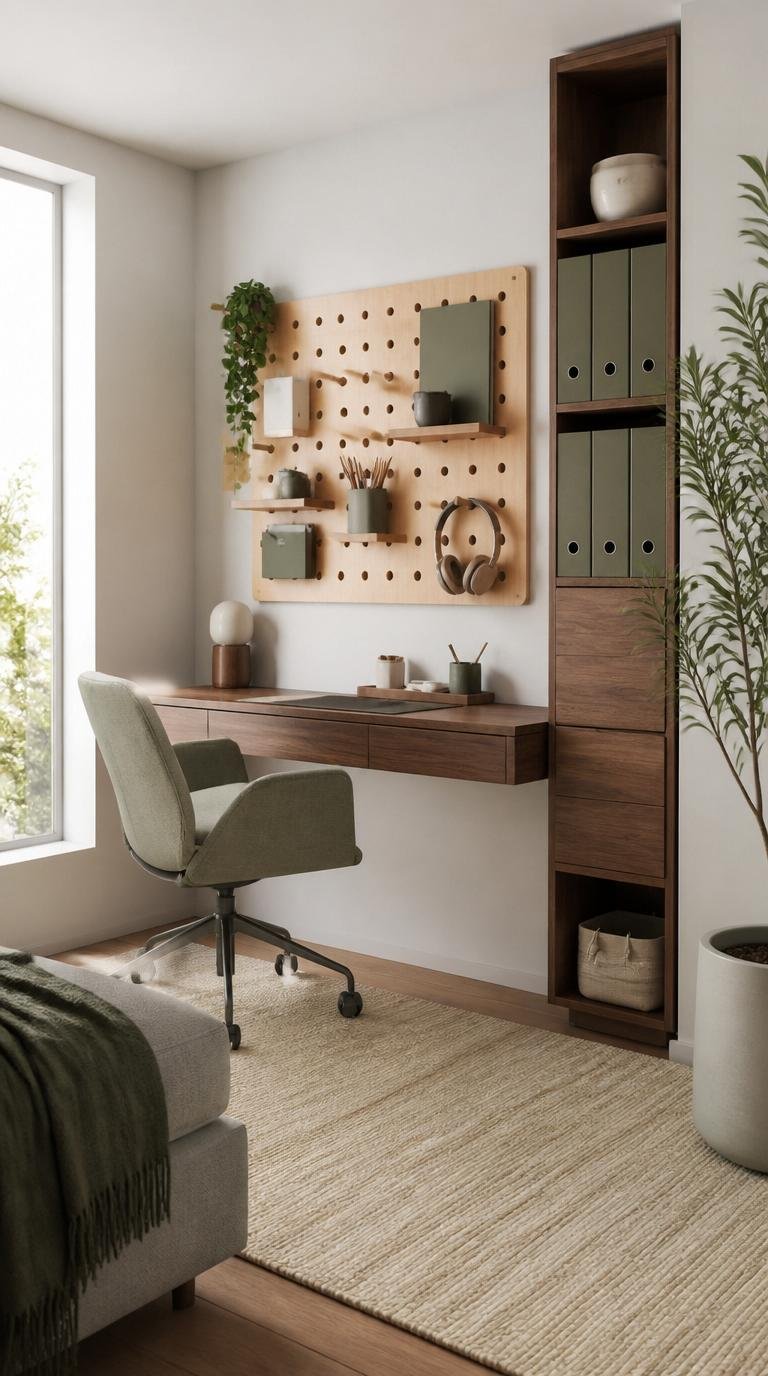
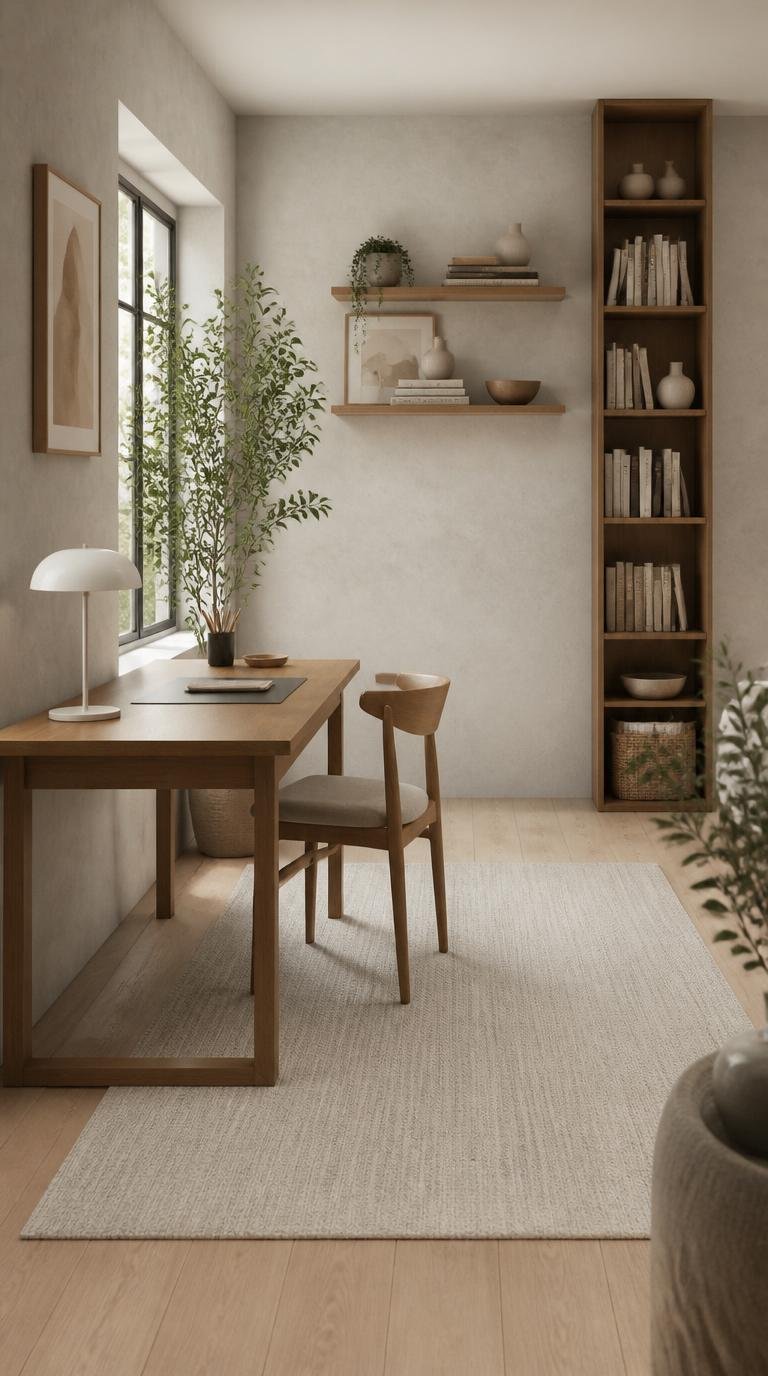
In a small minimalist home office, think up, not out. Stack storage vertically with slim floating shelves, a tall narrow bookcase, or wall-mounted pegboard. Keep your floor plan as clear as possible.
Even a small area rug can define the “office zone” within a larger shared room — no walls or dividers required.
Maximize a Corner Strategically
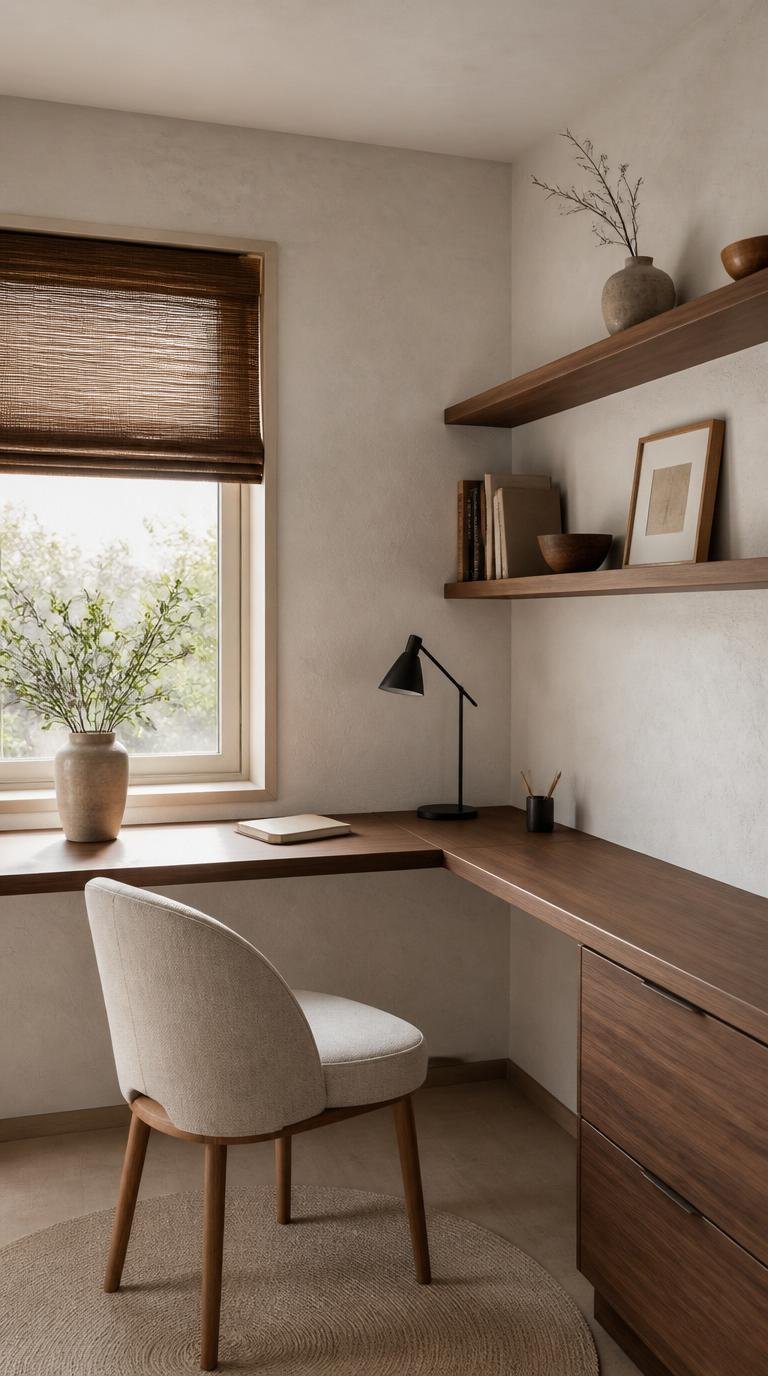
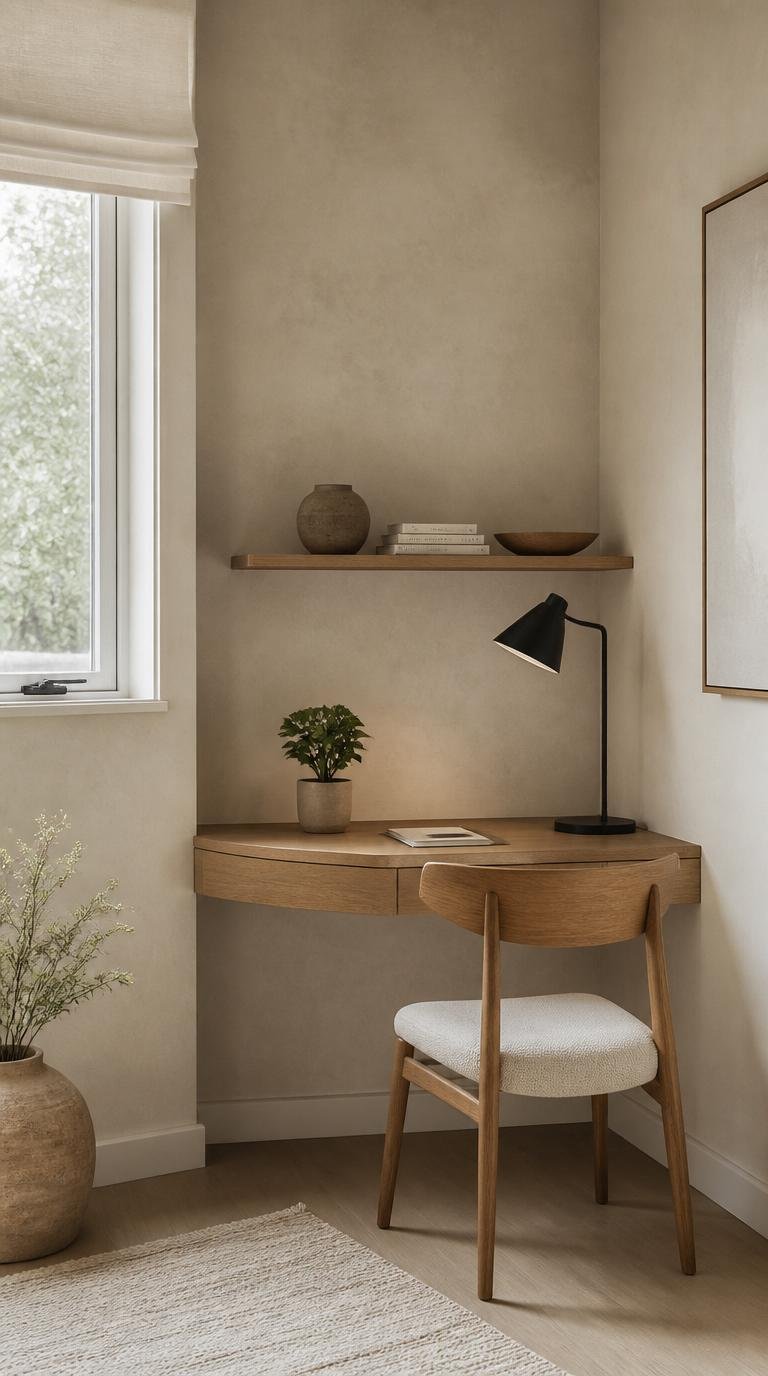
A corner desk arrangement maximizes a naturally underused space without crowding the room. Add your lamp, one small plant, and clean shelving above — and you have a fully functional minimalist home office in under 25 square feet. Seriously, it’s enough.
My Favorite Shops
Discover curated modern furniture from these premier online shops!
My Handpicked Selections
Joss & Main is honestly one of my go-to stops when I want solid wood that feels substantial — not veneer, not composite. Their Amelia Writing Desk is such a smart pick — clean, unadorned silhouette with beautiful natural wood grain, on legs that feel grounded without being heavy. I’d also look at their Lillian Writing Desk — it has that effortless, unfussy quality that works perfectly in a Japandi-inspired productive workspace.
2Modern is where I shop when I want pieces that feel truly design-forward, not just “minimalist adjacent.” Their Japandi desk collection is genuinely one of the best curated selections I’ve found — warm oak finishes, clean proportions, and that perfect balance between Japanese restraint and Scandinavian warmth. Their Scandinavian office chairs are a great pairing too — solid wood frames, thoughtful ergonomics, and a minimal silhouette that looks beautiful in a home office setting.
AllModern is my secret weapon for minimalist home office storage and shelving. Their Versa Solid Wood Bookcase caught my eye immediately — solid wood construction with that open-and-closed combination that’s ideal for a minimalist home office decor setup. Show off your most beautiful books on the open shelves, hide the clutter on the closed ones. Genius, simple, beautiful. Their wood desks collection is also worth a long scroll for variety at accessible price points.
FAQ
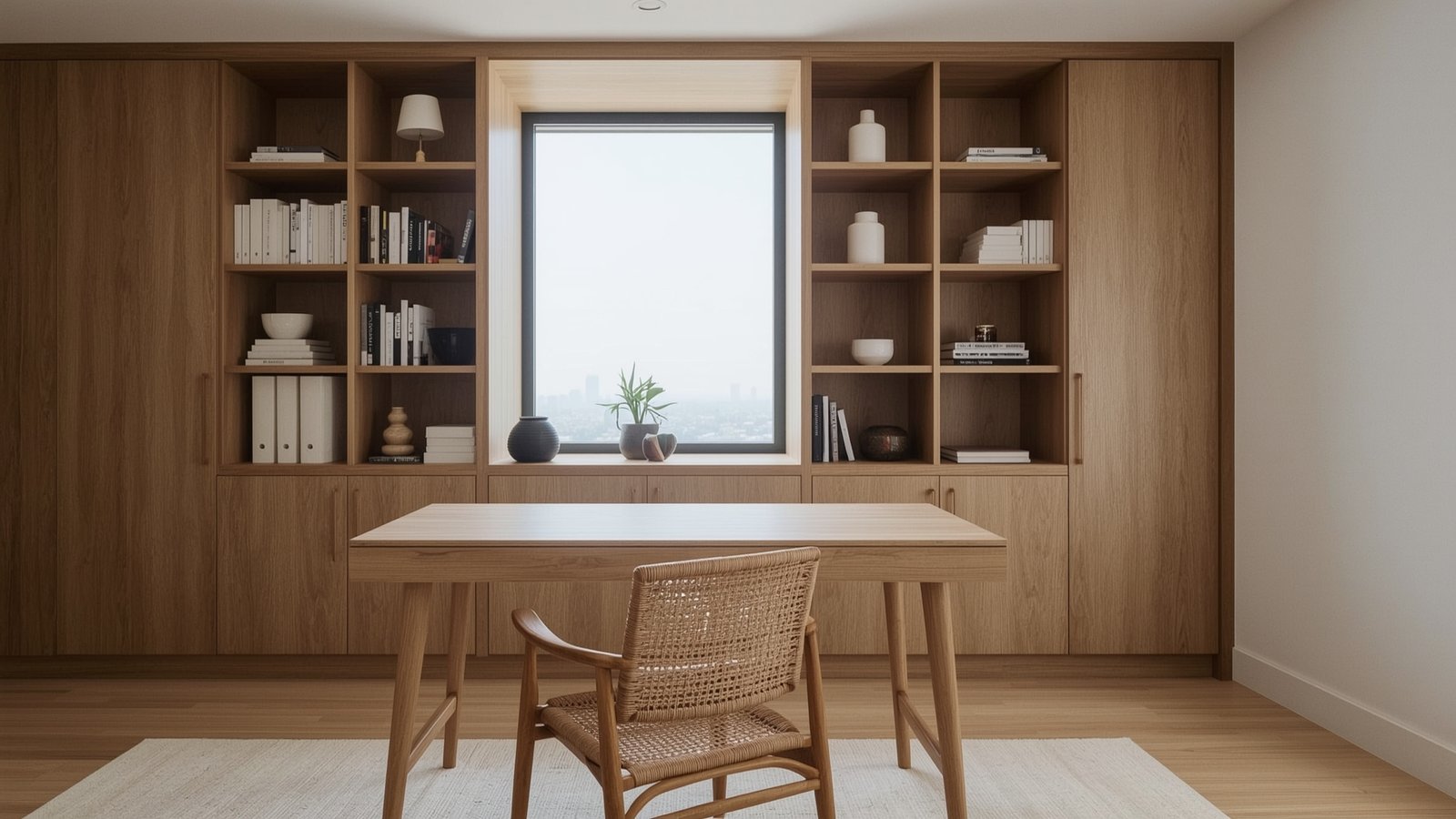
What is a minimalist home office?
A minimalist home office is a workspace intentionally designed to hold only what you need to work effectively. It prioritizes clear surfaces, hidden storage, and a calm aesthetic — typically using natural materials, muted colors, and clean-lined furniture. The goal is a space that supports deep focus without visual distractions.
What is the best color for a minimalist home office?
Warm neutrals work best — think warm white, soft greige, warm gray, or muted sage green. These tones reflect natural light gently and don’t compete with your concentration. Avoid stark cool white or high-contrast combinations, which can feel clinical and overstimulating in a productive workspace.
How do I keep a minimalist home office tidy long-term?
The one-in-one-out rule is your best friend here. Every time something new enters your office, something old leaves. Pair that with a daily 5-minute desk reset — returning everything to its home before you close out for the day — and tidiness becomes almost effortless over time.
What’s the difference between minimalist and Japandi home office style?
Minimalism focuses on reducing quantity — less stuff, less decoration. Japandi takes minimalism further by adding warmth and intentionality: natural materials, a wabi-sabi appreciation for imperfection, and a cozy hygge quality. A minimalist home office can sometimes feel cold; a japandi home office always feels serene and inviting.
Do I need a separate room for a minimalist home office?
Not at all! A dedicated corner, a nook under the stairs, or a well-organized section of your bedroom can become a beautiful, functional minimalist home office. The key is intentional design: the right desk, good lighting, and smart storage make even 20 square feet feel purposeful and calm.
What furniture does a minimalist home office need?
You really only need three things: a great desk, a supportive chair, and one or two storage solutions. Everything beyond that is optional. Start with these fundamentals in natural wood and neutral tones, and you’ll have a beautiful, functional minimalist home office that you genuinely love being in.
How do I add personality without adding clutter?
Choose a few deeply meaningful objects and let them be the stars: one piece of artwork you genuinely love, one beautiful plant, one ceramic or stone object on your desk. Meaningful minimalism isn’t about having nothing — it’s about having just the things that matter most.
What lighting is best for a minimalist home office?
Natural light is the gold standard — position your desk near a window whenever possible. When you need artificial light, layer ambient overhead lighting with a focused task lamp. Use warm white bulbs (2700K–3000K) to reduce eye strain and create a cozy, focused atmosphere throughout the day.
The Bottom Line
A minimalist home office isn’t about having less for the sake of less. It’s about creating a space where you can show up, focus, and do your best work — a space that feels like a genuine sanctuary instead of a source of stress. When your workspace is calm and intentional, your mind follows. That’s the real magic here.
Start small: clear your desk down to the essentials today, swap your bulb to warm white, and choose one beautiful natural object to anchor the space. You don’t need to redesign everything at once. The best minimalist home office ideas are the ones you actually implement — then build on slowly and intentionally. Joss & Main, 2Modern, and AllModern all make it easy to find pieces that bring this vision to life without blowing your budget.
I’d love to see how you style your minimalist home office! Share your photos and tag me on Instagram or Pinterest — it truly makes my day to see your beautiful, productive spaces come to life.


ABOUT the AUTHOR
TOKI; INTERIOR DESIGN & lifestyle CONTENT CREATOR.
Hey there! I’m Toki—the design-obsessed brain behind Dwell Studio 24. I’m a content creator passionate about interior design, photography, and creativity, living in a 77-year-old house with my husband and our awesome three kids. I write about interior design, furniture, home topics, and my lifestyle, including travel, recipes, skincare, and daily routines. I hope to inspire your next project and lifestyle!
ABOUT the AUTHOR
TOKI; INTERIOR DESIGN & lifestyle CONTENT CREATOR.
Hey there! I’m Toki—the design-obsessed brain behind Dwell Studio 24. I’m a content creator passionate about interior design, photography, and creativity, living in a 77-year-old house with my husband and our awesome three kids. I write about interior design, furniture, home topics, and my lifestyle, including travel, recipes, skincare, and daily routines. I hope to inspire your next project and lifestyle!
ABOUT the AUTHOR
TOKI; INTERIOR DESIGN & lifestyle CONTENT CREATOR.
Hey there! I’m Toki—the design-obsessed brain behind Dwell Studio 24. I write about interior design, furniture, home topics, and my lifestyle, including travel, recipes, skincare, and daily routines. I hope to inspire your next project and lifestyle!