Mudroom Ideas: Stylish Ways to Create a Practical Entryway
Mudroom ideas have taken over Pinterest and home design feeds for a reason — smart mudroom design makes the difference between a home that stays perpetually organized and one that’s constantly trying to catch up. And here’s the thing: you don’t need a dedicated room for a mudroom. Even a small section of your entryway mudroom space, a nook beside the back door, or a corner of the garage can be transformed into a highly functional drop zone that genuinely changes how your household runs.
In this guide, I’m sharing my favorite mudroom ideas for every home size and style — from classic built-in cubbies to Japandi-inspired minimalist drop zones. Whether you’re building something new or working with what you have, there’s a mudroom design here that will work for you.
Some of the links are affiliate links, so I may receive a small commission if you purchase through them (at no cost to you)! As an Amazon Associate I earn from qualifying purchases.
Key Takeaways
- These mudroom ideas don’t require a dedicated room — even a 3-foot section of wall can function as a drop zone
- The most functional mudroom ideas share four elements: coat hooks, shoe storage, a bench, and a landing surface for bags/keys
- Built-in cubbies maximize storage but aren’t necessary — furniture-based mudroom ideas work just as well and are more flexible
- Durable, easy-to-clean materials are non-negotiable: tile, wipeable paint finishes, and solid wood (not MDF) hold up best
- A mudroom works best when every family member has their own “zone” — personalized cubbies or hooks reduce household chaos significantly
1. The Four Elements Every Functional Mudroom Needs
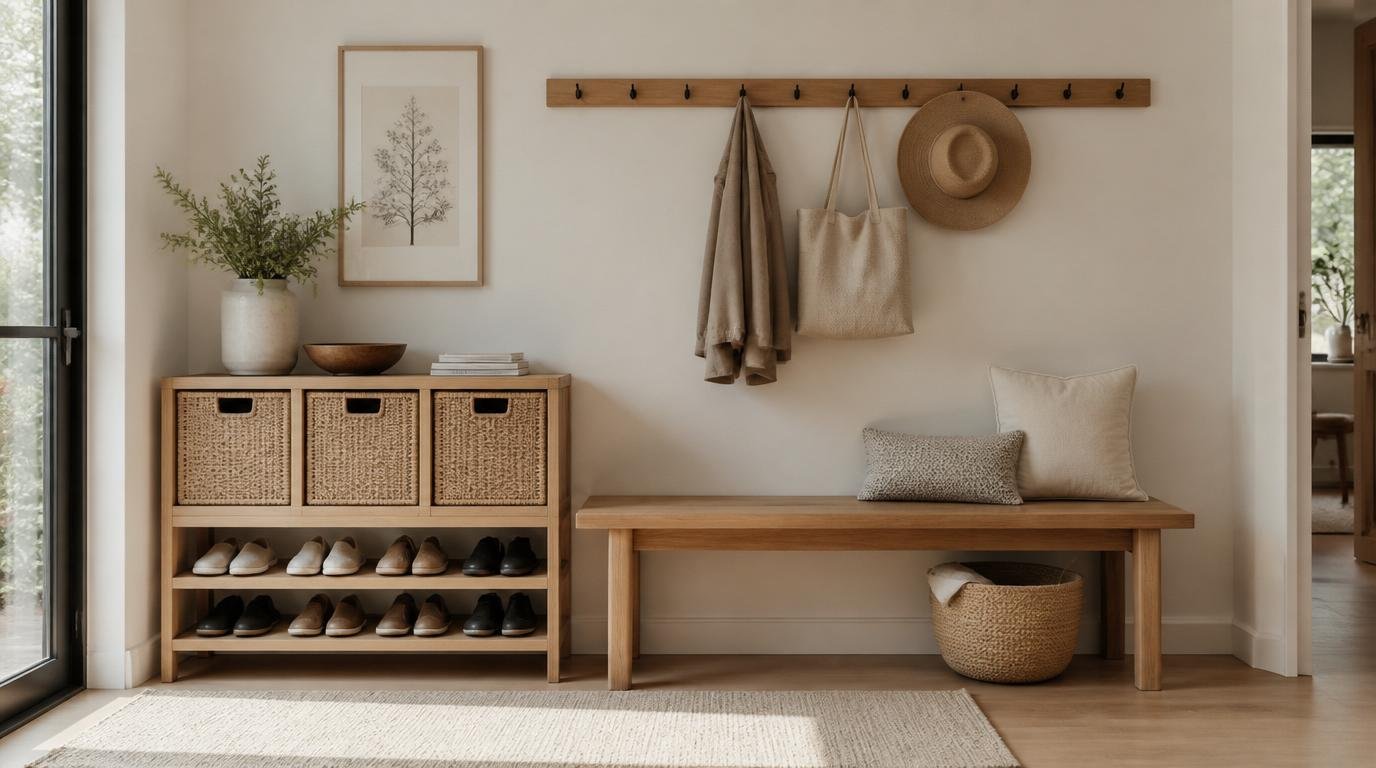
Before you start shopping or planning, it helps to understand what actually makes a mudroom work. Whether you’re designing a built-in system or piecing together freestanding furniture, the best mudroom ideas always include these four core elements — and the best ones integrate all four in a cohesive, intentional way.
Coat Hooks (the Non-Negotiable)
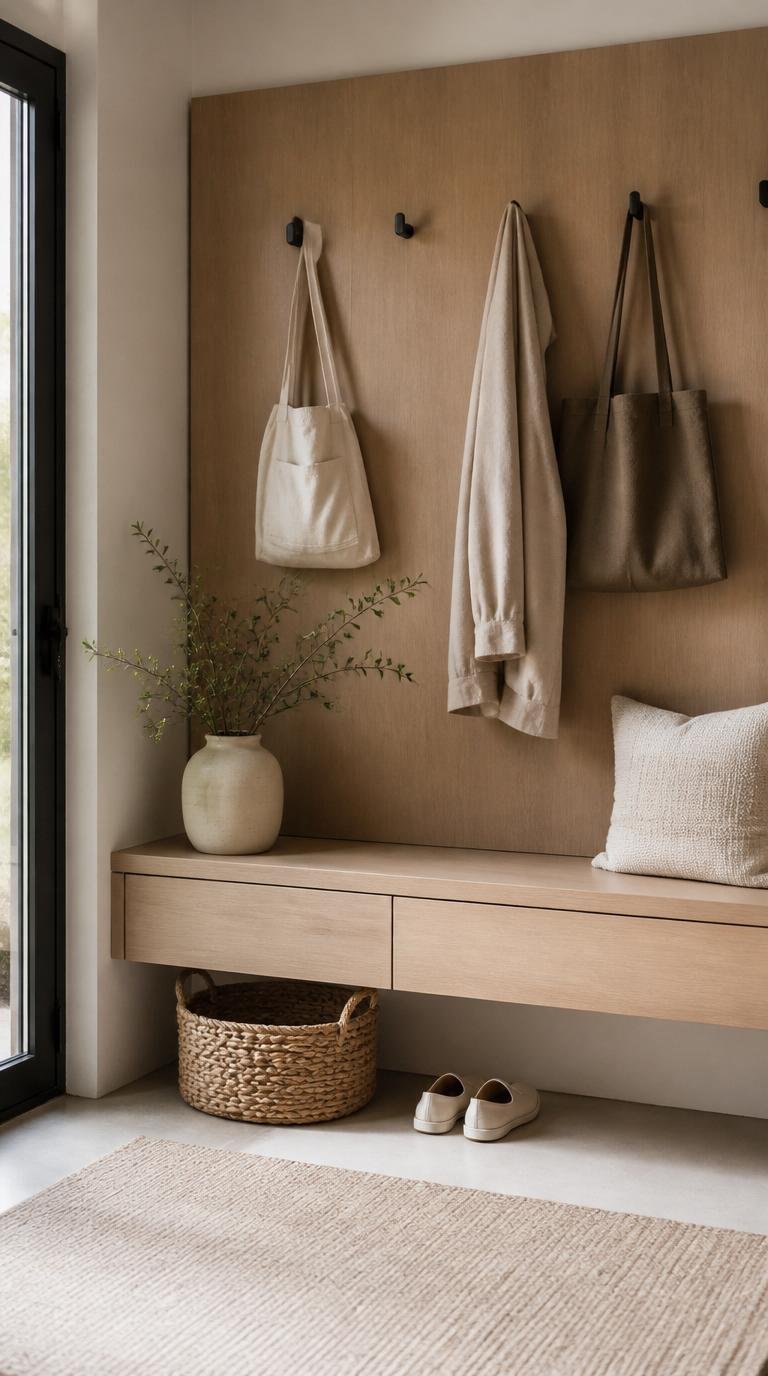
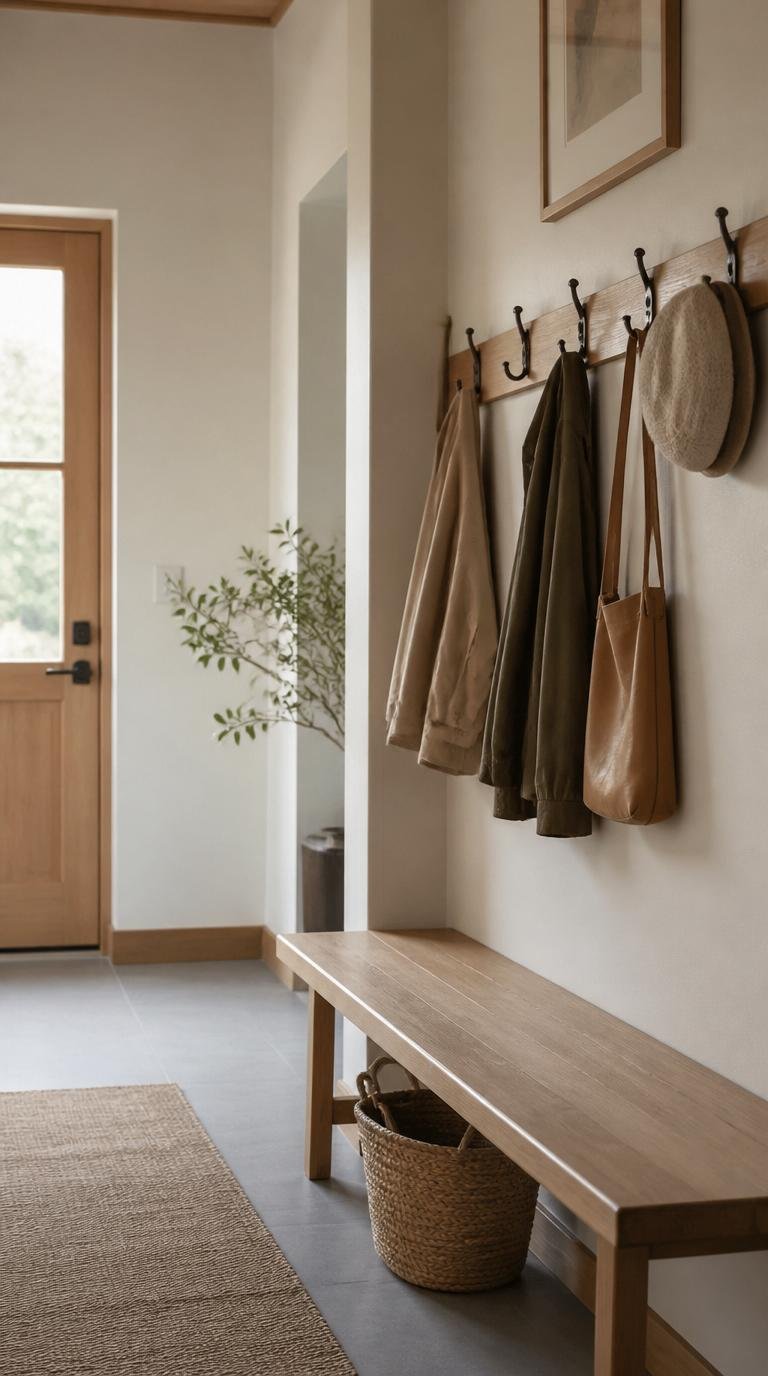
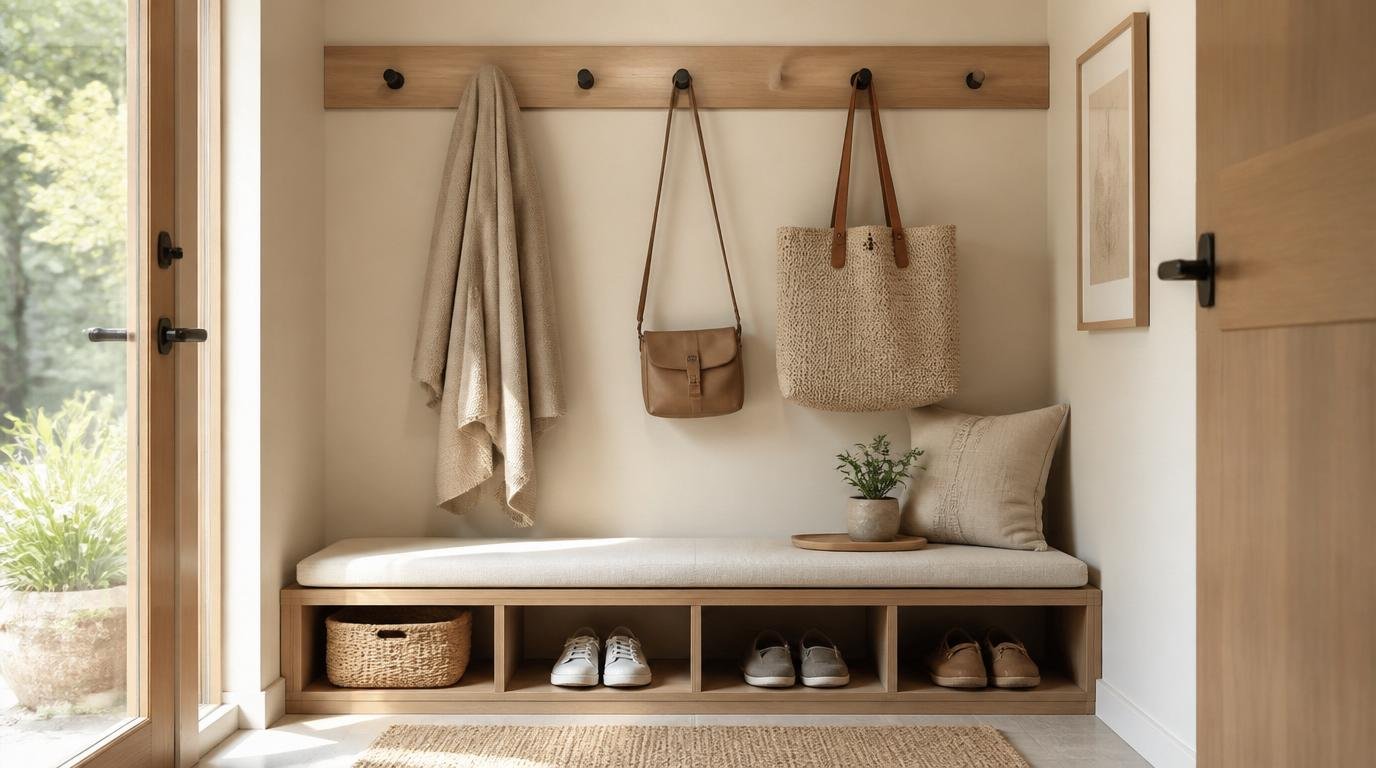
Coat hooks are the heart of any mudroom. Without them, coats end up on the floor, over chairs, or draped on the back of the sofa — the classic signs of a household without a proper drop zone. Install a row of quality hooks at adult shoulder height, with a second row below for kids if your household includes them. Aim for at least 2 hooks per person in the household.

🌿 My Top Tip: I love matte black or brushed brass hooks on a simple wood backboard — it looks intentional and polished but installs in about 20 minutes with just a drill.
Shoe Storage, Bench, and Landing Surface
| Element | Function | Best Options |
|---|---|---|
| Coat hooks | Outerwear off the floor | Wall-mounted hook rail, individual hooks, cubby hooks |
| Shoe storage | Footwear contained | Shoe cubbies, slim rack, closed cabinet, boot tray |
| Bench | Seating for shoe change | Storage bench, upholstered bench, built-in seat |
| Landing surface | Keys, bags, mail | Floating shelf, console top, cubby top |
2. Mudroom Cubby Ideas for Families
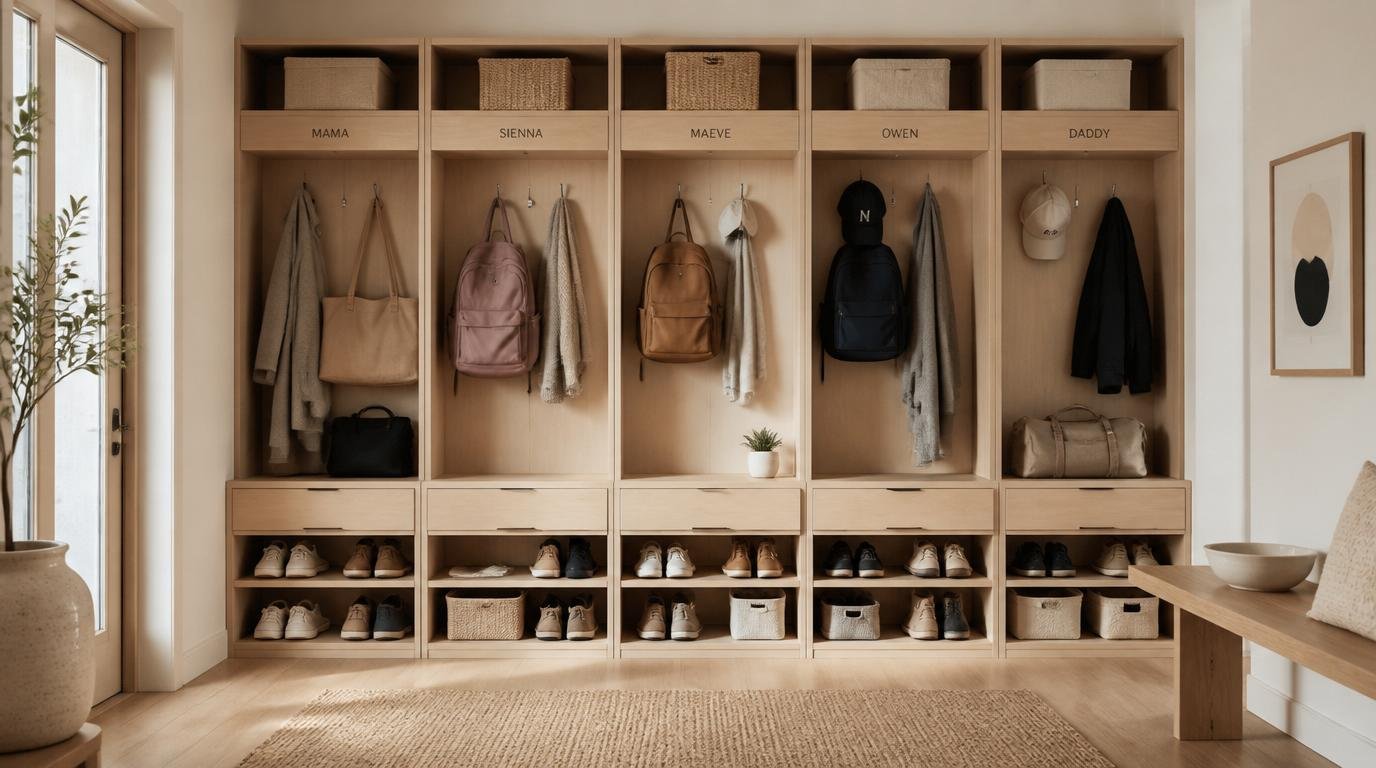
If you have kids, cubby systems are among the most transformative mudroom ideas you can implement. Each family member gets their own assigned cubby — and suddenly, the coat-on-the-floor problem essentially solves itself. No more “whose boots are these?”, no more morning pile-up of backpacks at the door.
Built-In Cubby Systems and Mudroom Lockers
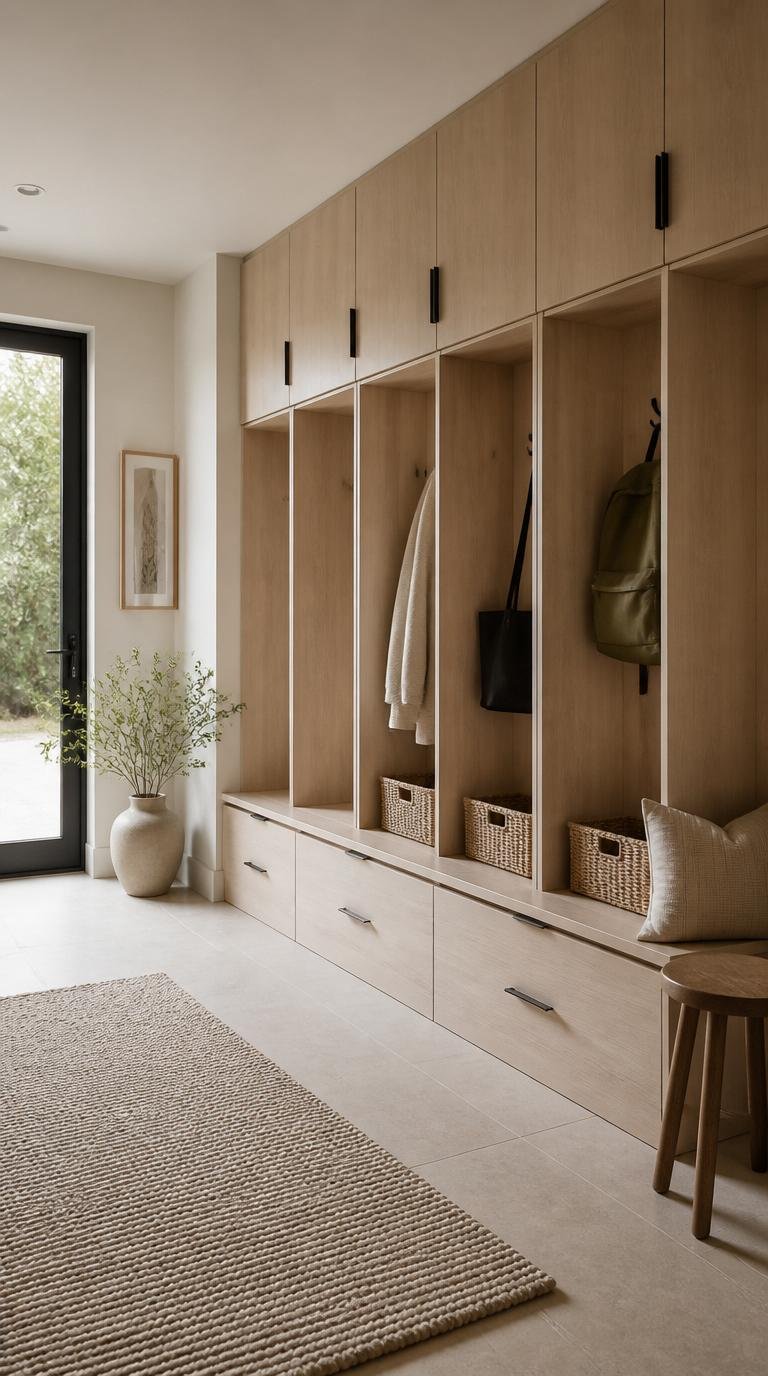
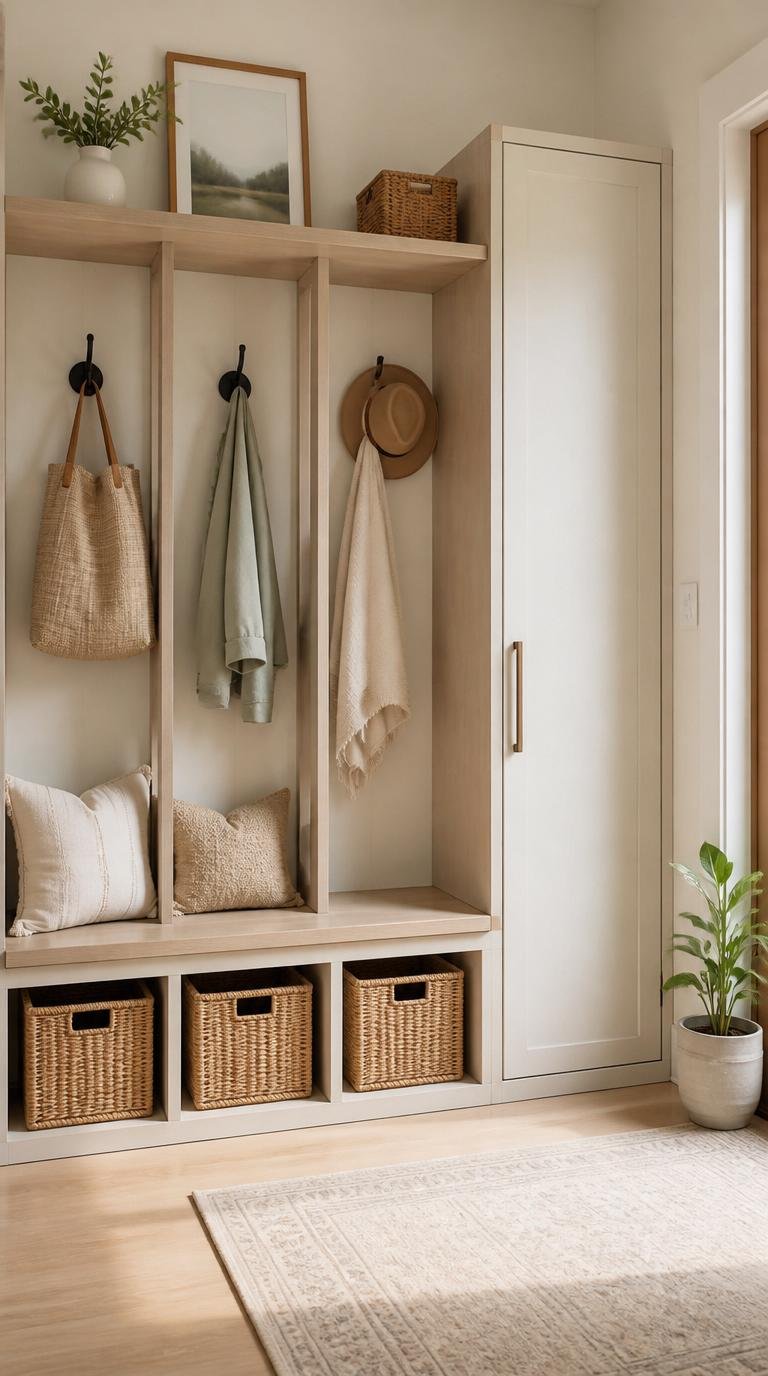
Mudroom lockers — individual floor-to-ceiling mudroom storage units with a hook rail, shelf, and sometimes a door — are the ultimate built-in cubby upgrade. They give every family member a fully contained personal storage zone, and the closed-front design keeps everything neatly hidden even when a backpack or coat has been tossed in haphazardly. Wayfair and Home Depot carry semi-custom mudroom locker kits that can be installed without a general contractor, making mudroom storage upgrades much more accessible than they used to be.
According to Architectural Digest, custom mudroom built-ins consistently rank among the home improvements that offer the best return in terms of daily quality of life — even small, simple systems create a measurable reduction in household stress and morning chaos.
Freestanding Cubby Furniture (No Custom Build Required)
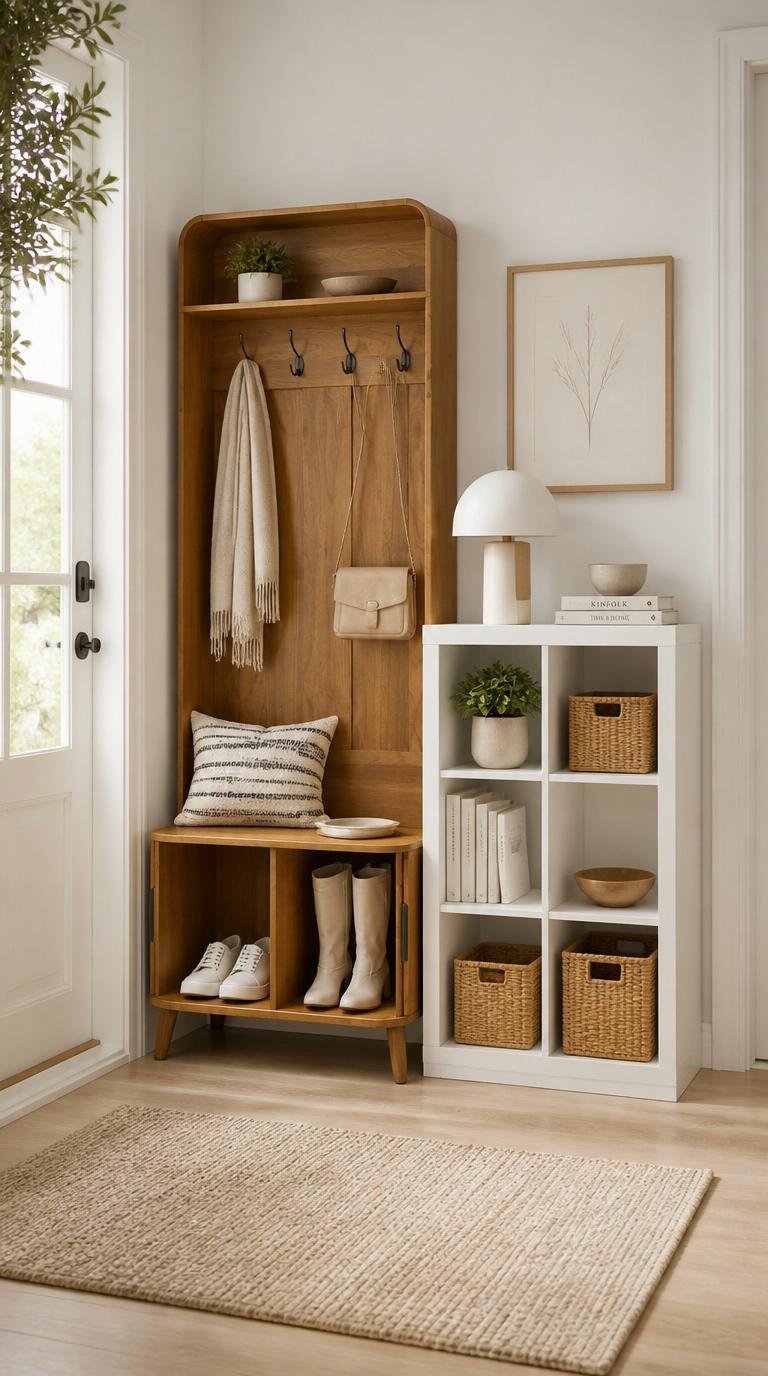
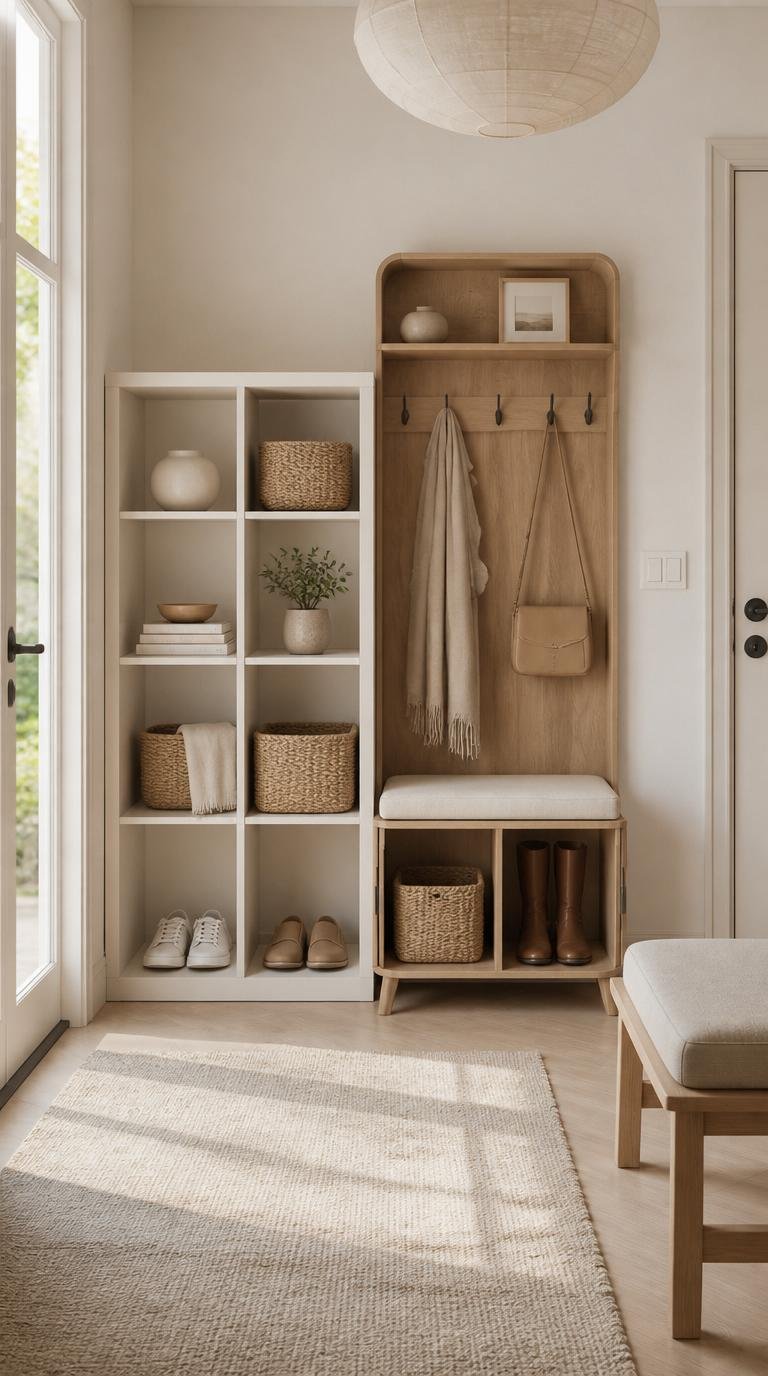
The good news with these mudroom ideas: you don’t need a custom build to get cubby-style organization. Freestanding hall tree units and modular cubes are a great mudroom organization solution that creates the same functional effect at a fraction of the cost. Look for units with individual hooks per section, open shelf storage at the bottom, and a closed cabinet option if you want to hide sports equipment or seasonal items. Painted the same color as your trim or walls, freestanding units can look nearly as built-in as custom millwork.
3. Small Mudroom Ideas: When Space Is Limited
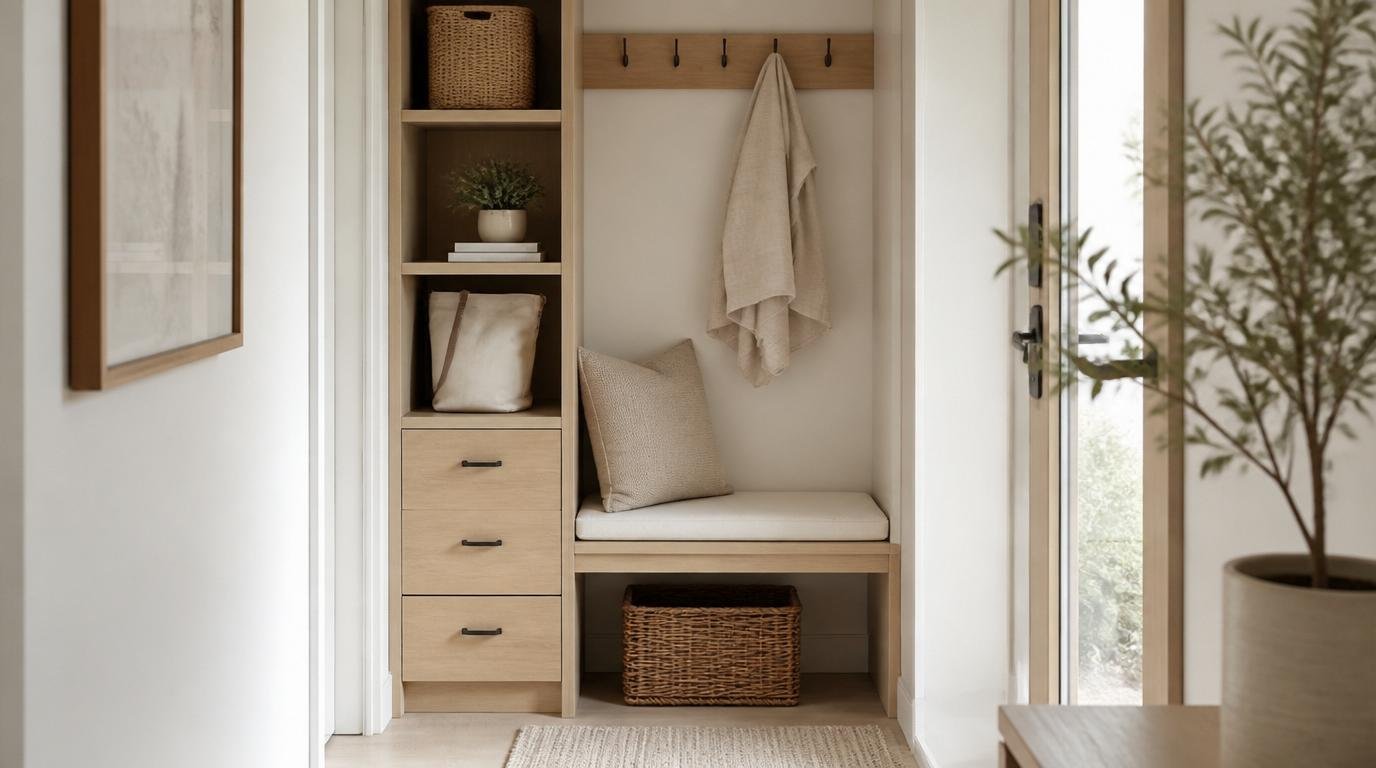
Not everyone has a dedicated mudroom — in fact, most homes don’t. But that doesn’t mean you can’t have the mudroom effect in a much smaller footprint. Here are my favorite strategies for creating mudroom functionality with minimal space.
The “Mudroom in a Corner” Approach
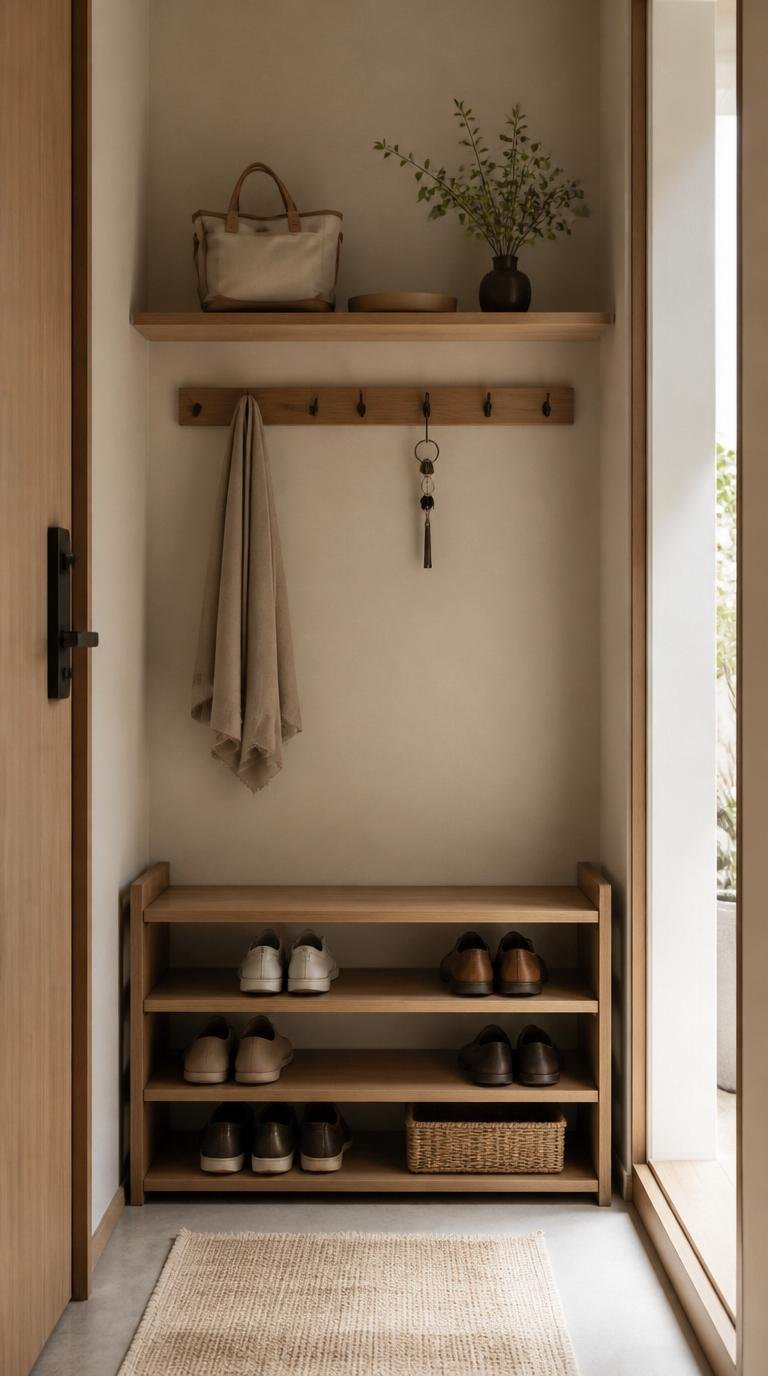
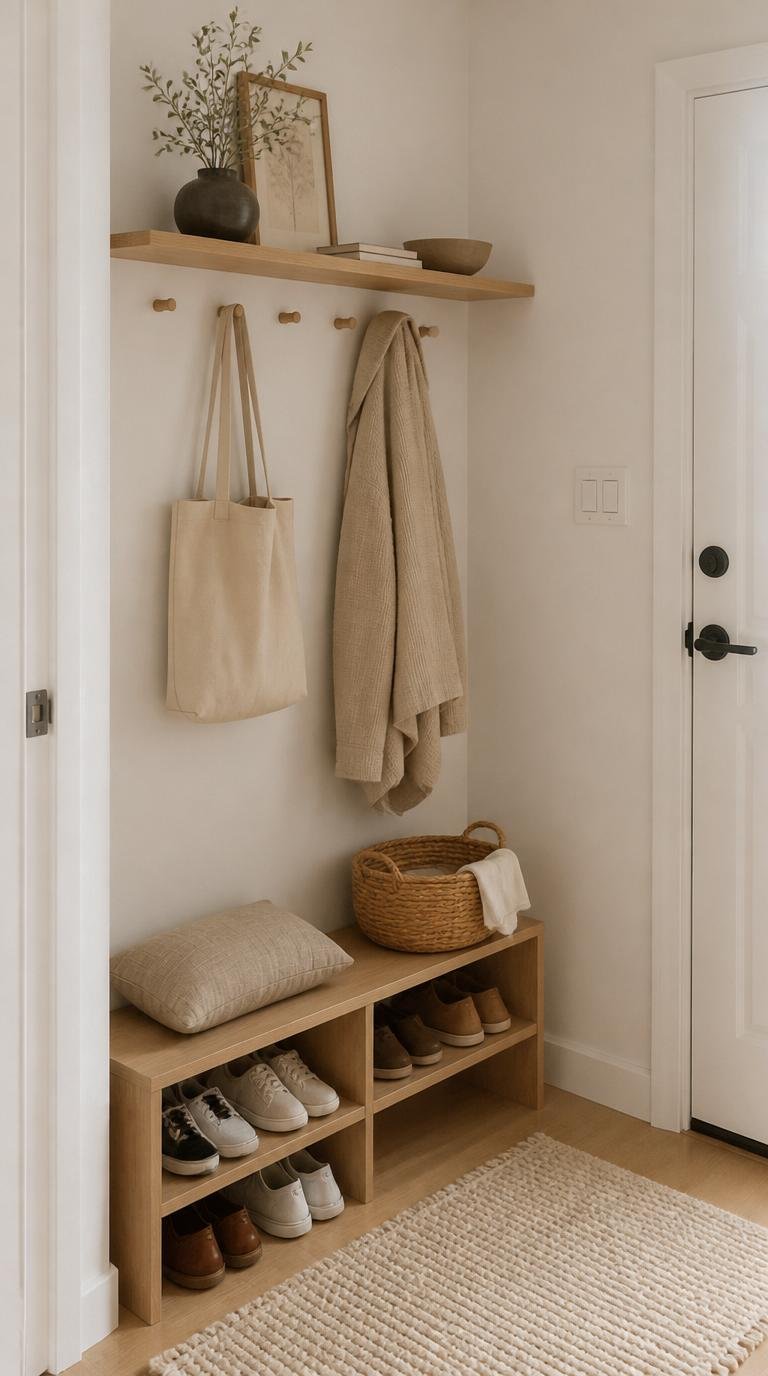
One of my favorite small mudroom ideas: designate a corner of your entryway or back hallway as the mudroom zone. Install a small hook rail on one wall, a slim shoe rack on the floor, and a narrow floating shelf above for bags and keys. Tie it together with a small rug underneath. This “mudroom in a corner” takes about 3–4 feet of wall space but delivers nearly all the functionality of a full mudroom room.
🌿 My Top Tip: Use a consistent material or color palette across all the pieces — even freestanding furniture looks cohesive and intentional when everything is in the same tone. I love matte black hardware + warm wood shelving + a natural fiber rug for a Japandi-adjacent mudroom nook.
5. Japandi Mudroom Ideas: Minimal, Functional, Beautiful
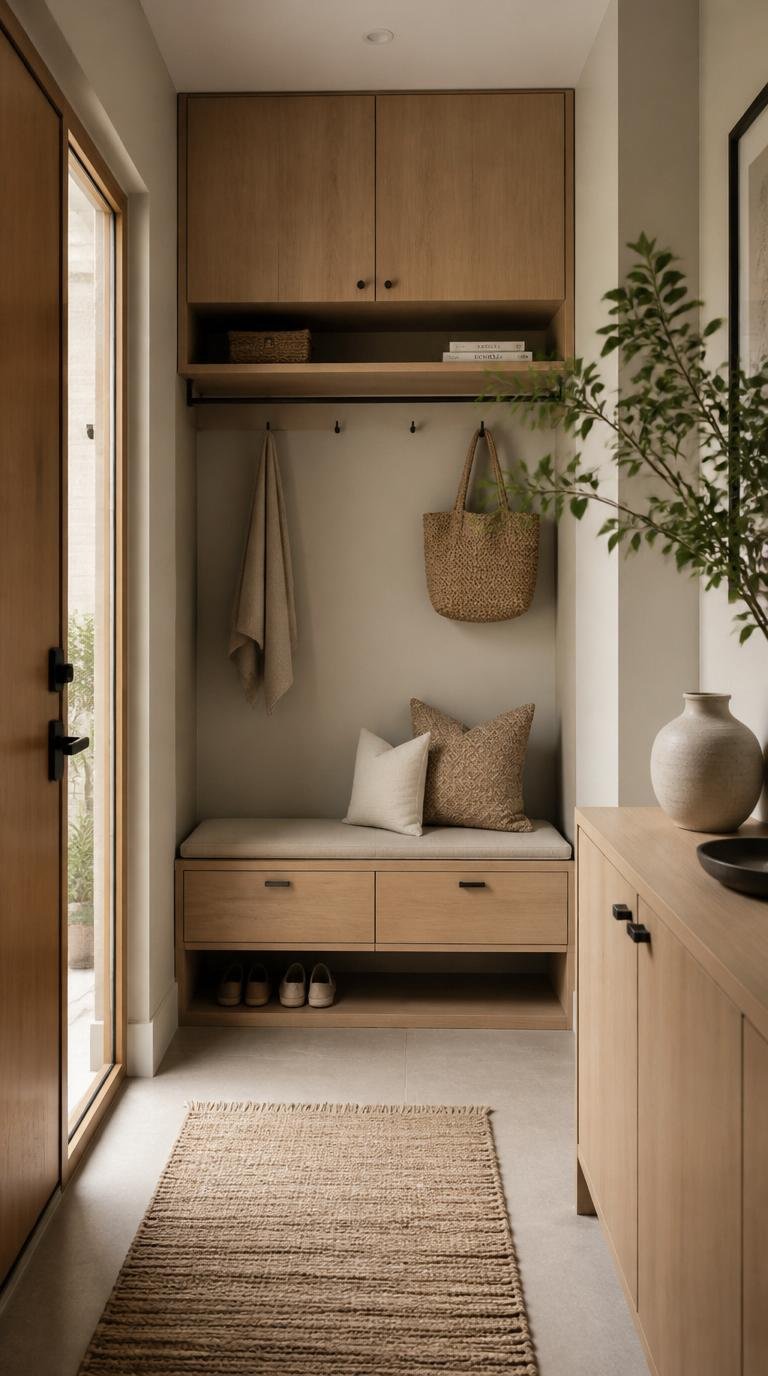
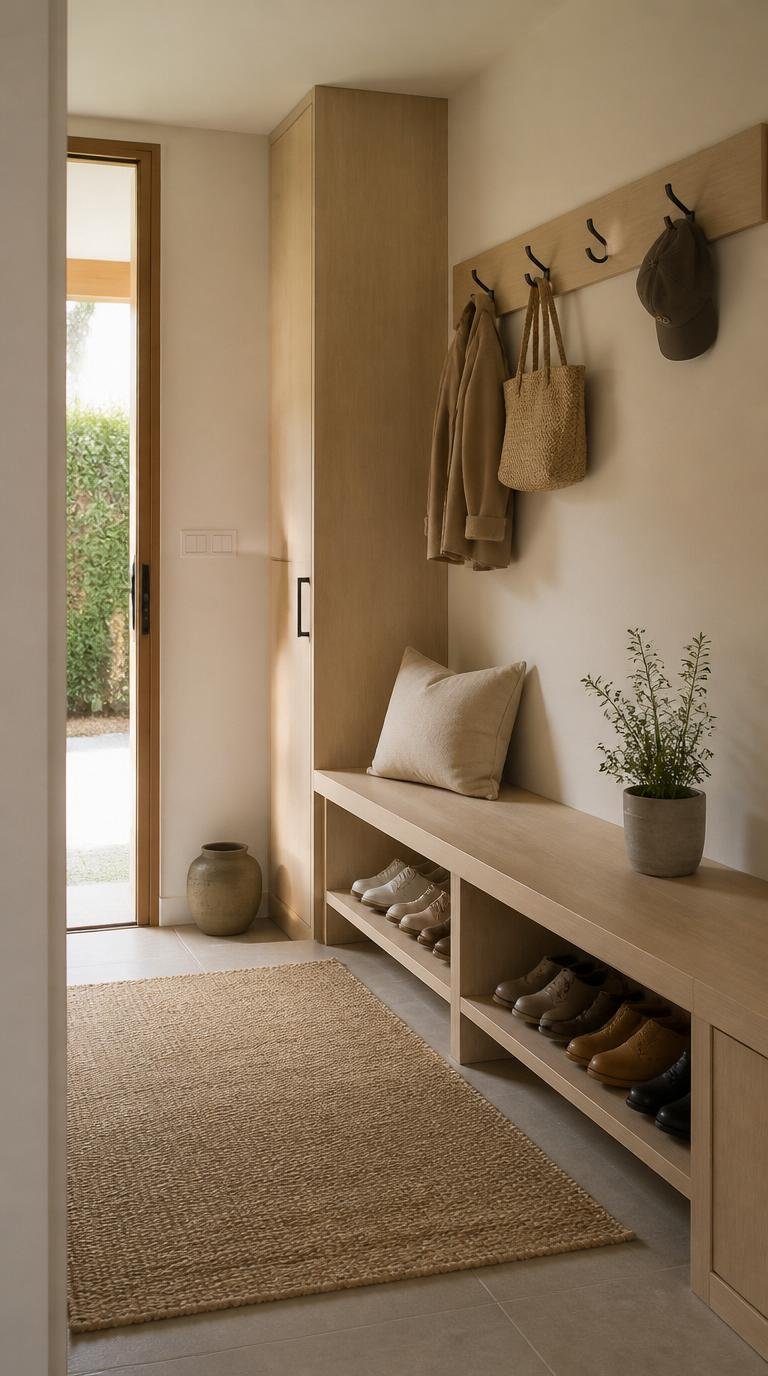
If you love Japandi mudroom ideas, you might wonder how to translate that minimalist, serene design sensibility into a space that’s essentially designed to contain chaos. Surprisingly, the two are a perfect match — Japandi design is fundamentally about considered organization and beauty through function, which is exactly what a great mudroom embodies.
Key Elements of a Japandi Mudroom
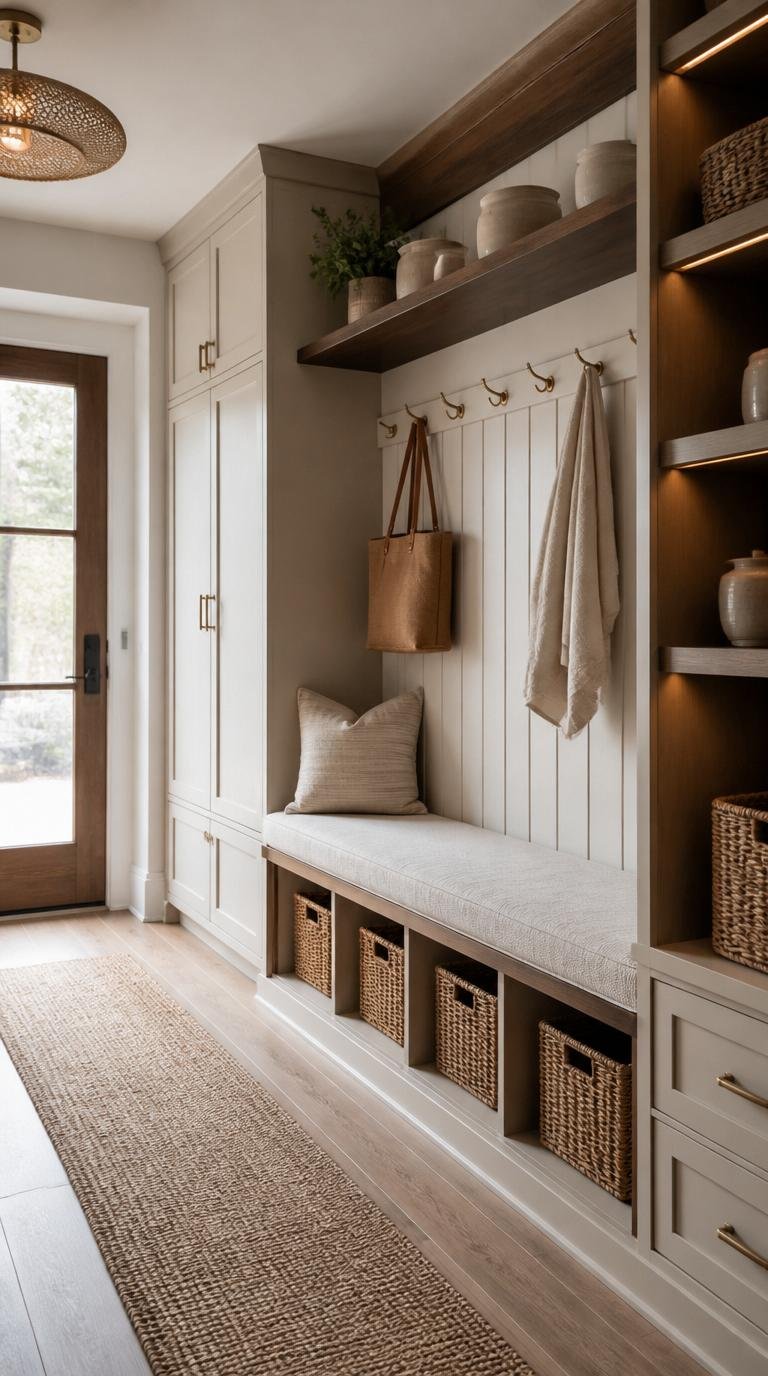
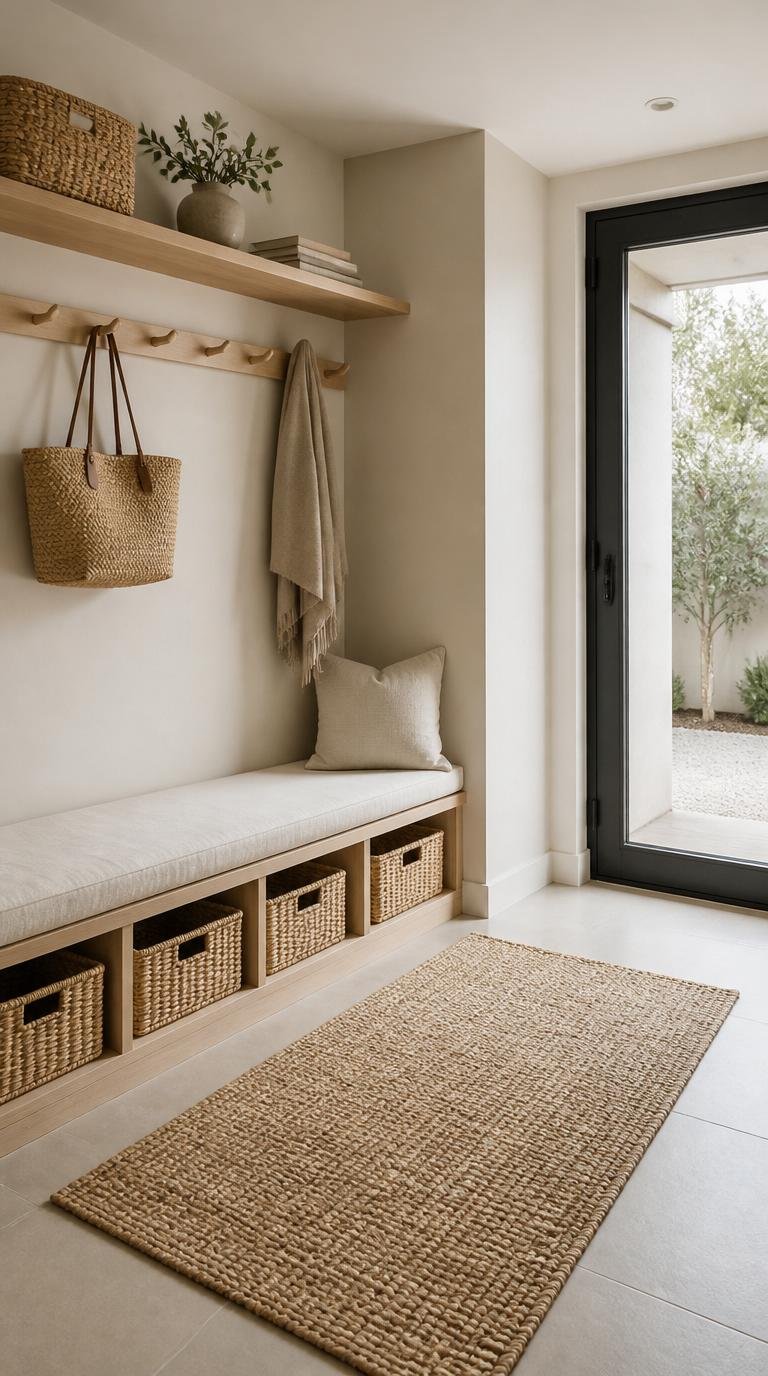
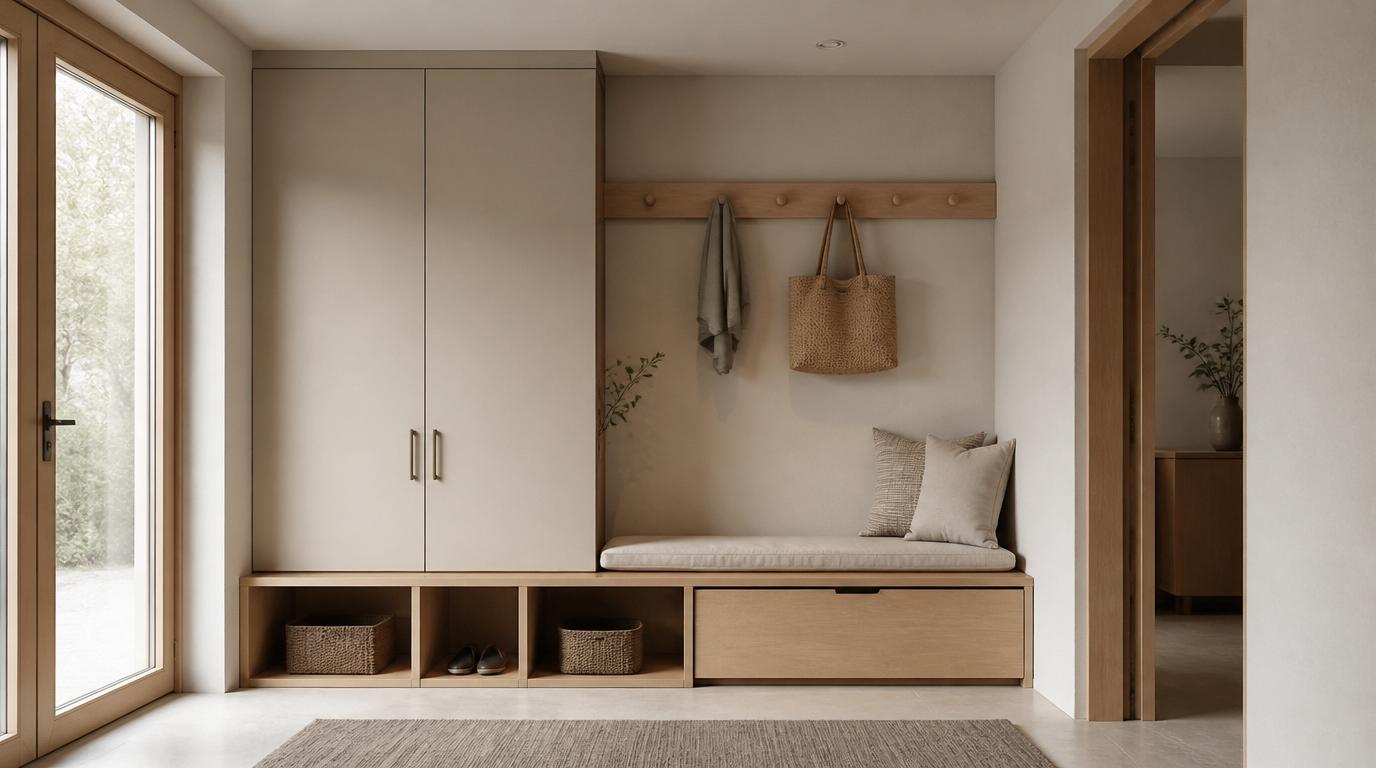
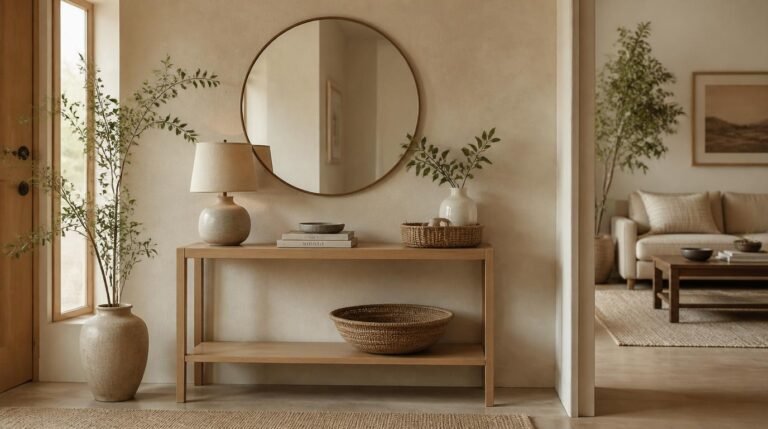
A Japandi mudroom prioritizes natural materials, clean lines, and a neutral palette. Think: warm white or greige walls, light oak or walnut wood hooks and shelving, woven baskets for shoe storage, a simple cotton or linen bench cushion, and a natural fiber rug. Hardware in matte black or brushed brass. No clutter visible — everything tucked away or stored in beautiful, matching containers.
6. Mudroom Bench with Cubbies: The All-in-One Drop Zone
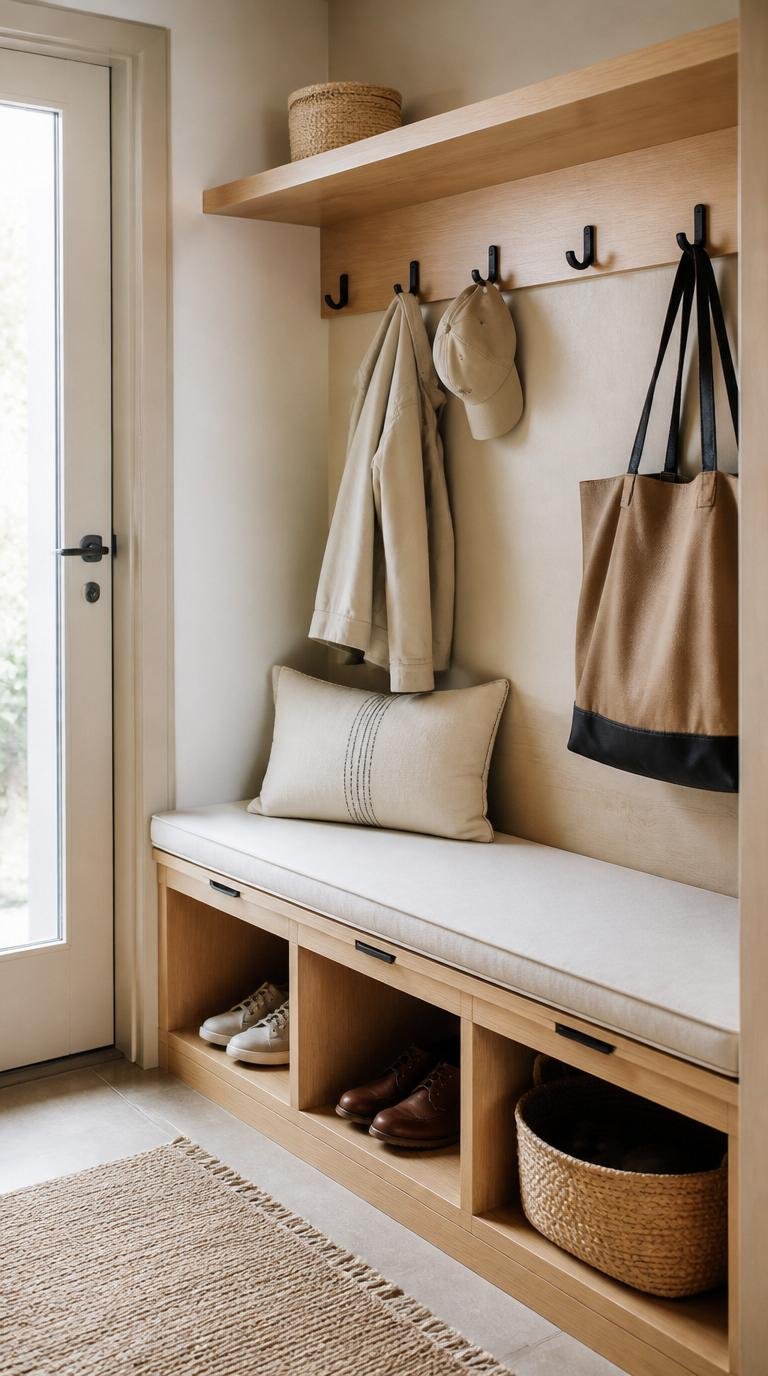
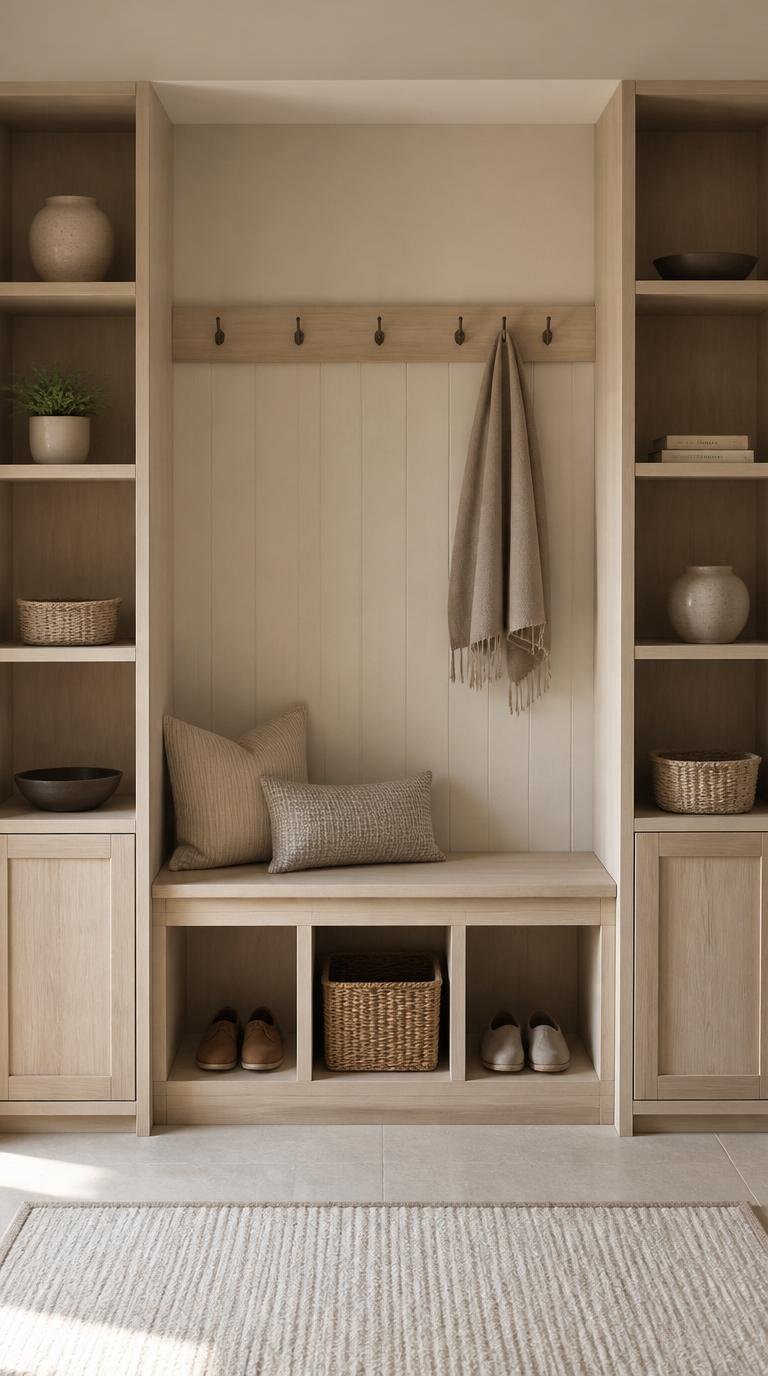
Among all mudroom ideas, if you could only choose one piece of mudroom furniture, make it a mudroom bench with cubbies. These purpose-built pieces combine a seat (for taking off shoes), open cubby storage on either side or below (for shoes, bags, and gear), and a hook rail above — all in one footprint. They’re the closest thing to a built-in system you can get without custom cabinetry, and they work beautifully in everything from traditional homes to modern Japandi-inspired spaces.
For families who want a step up from furniture-based solutions, custom mudroom cabinets are worth the investment. Custom-built mudroom storage is designed to fit your exact wall dimensions, ceiling height, and household needs — which means zero wasted space and a truly built-in look. Expect to pay $3,000–$8,000 for a professional custom mudroom install, though many cabinet companies now offer semi-custom kits in the $1,500–$3,500 range that you can install yourself or with a handyperson.
FAQ
Here are the mudroom ideas questions I get most often, whether you have a dedicated room or just a small corner to work with.
How much does it cost to build a mudroom?
Costs vary enormously. A furniture-based mudroom (hook rails, a storage bench, and a shoe rack from retail stores) can be done for $300–$800. A semi-custom built-in cubby system typically runs $2,000–$5,000 depending on size and materials. A fully custom built-in with professional installation can cost $5,000–$20,000 or more. For most families, the sweet spot is a semi-custom or DIY built-in — you get the look and function of custom work at a fraction of the price.
What should a mudroom include?
The best mudroom ideas all start with the same essentials. At minimum, a functional mudroom should include: coat hooks (at least 2 per family member), shoe storage (rack, cubbies, or cabinet), a bench for sitting while changing shoes, and a landing spot for keys and bags. Optional upgrades include a utility sink, a boot tray, a charging station, a mail sorter, a pet station, and extra cabinet storage for sports equipment and seasonal gear.
Can I create a mudroom without a dedicated room?
Absolutely — and most people do. You can create a “mudroom zone” in just 3–4 feet of wall space using a hook rail, slim shoe storage, and a small bench. A corner of the entryway, a section of the back hallway, or even a converted coat closet (door removed) can all function as mudrooms with the right storage pieces. The dedicated room is nice but genuinely not necessary for the mudroom to work.
The Bottom Line
A mudroom — whether it’s a full dedicated room, a built-in cubby wall, or a carefully arranged corner of your entryway — is one of the highest-impact organizational investments you can make for your home. When every family member has a place for their coats, shoes, and bags right at the door, the whole house stays calmer, mornings run smoother, and you stop finding random shoes under the kitchen table.
Start with the basics: hooks, a bench, and shoe storage. Layer in more function as your budget allows. You don’t need a renovation to create this — just intention and the right pieces. I’m so excited for you to experience the before-and-after!
Tag me at @dwellstudio24 when you set yours up — I love seeing your beautiful spaces! 🤍
Explore more ideas
View All

ABOUT the AUTHOR
TOKI; INTERIOR DESIGN & lifestyle CONTENT CREATOR.
Hey there! I’m Toki—the design-obsessed brain behind Dwell Studio 24. I’m a content creator passionate about interior design, photography, and creativity, living in a 77-year-old house with my husband and our awesome three kids. I write about interior design, furniture, home topics, and my lifestyle, including travel, recipes, skincare, and daily routines. I hope to inspire your next project and lifestyle!
ABOUT the AUTHOR
TOKI; INTERIOR DESIGN & lifestyle CONTENT CREATOR.
Hey there! I’m Toki—the design-obsessed brain behind Dwell Studio 24. I’m a content creator passionate about interior design, photography, and creativity, living in a 77-year-old house with my husband and our awesome three kids. I write about interior design, furniture, home topics, and my lifestyle, including travel, recipes, skincare, and daily routines. I hope to inspire your next project and lifestyle!
ABOUT the AUTHOR
TOKI; INTERIOR DESIGN & lifestyle CONTENT CREATOR.
Hey there! I’m Toki—the design-obsessed brain behind Dwell Studio 24. I write about interior design, furniture, home topics, and my lifestyle, including travel, recipes, skincare, and daily routines. I hope to inspire your next project and lifestyle!